You’re holding a slice of pizza, or perhaps a steaming cup of coffee, and you press a button. In mere minutes, your meal is heated, your beverage is warm. The magic behind this everyday convenience is, of course, the microwave oven, and at its heart lies a fascinating phenomenon: the electromagnetic field. To truly grasp how your microwave works, you need to understand this invisible force, how it’s generated, and how it interacts with the food you’re trying to heat. It’s not some mystical incantation; it’s pure physics, and with a little exploration, you’ll see how the electromagnetic field becomes your personal kitchen wizard.
Before diving into the specifics of microwaves, let’s establish a solid understanding of the electromagnetic field itself. Imagine two fundamental forces in nature, electricity and magnetism, not as separate entities, but as two sides of the same coin, intricately linked and constantly influencing each other. This interconnectedness is what defines the electromagnetic field.
Electric Fields: The Invisible Push and Pull
You’ve likely encountered the concept of electric charge. Protons carry a positive charge, electrons a negative one. Like charges repel, and opposite charges attract. This force of attraction or repulsion is mediated by an electric field. Think of it as an invisible aura surrounding any charged object. This field exerts a force on other charged objects that enter it.
Electric Field Lines: Visualizing the Force
To better visualize electric fields, we use electric field lines. These lines originate from positive charges and terminate on negative charges. The direction of the field line at any point indicates the direction of the force a positive charge would experience there. The density of the lines represents the strength of the field; closer lines mean a stronger field.
Voltage and Electric Potential: The Energy of the Field
The energy associated with an electric field is described by concepts like voltage and electric potential. Voltage is essentially the work done per unit charge to move a charge between two points in an electric field. You can think of it as the “pressure” that drives electric charge.
Magnetic Fields: The Force of Motion
Magnetic fields are generated by moving electric charges. This is why permanent magnets have a magnetic field – the electrons within the atoms are in constant motion. When you pass an electric current through a wire, you create a magnetic field around that wire. This is the principle behind electromagnets.
Magnetic Field Lines: Mapping the Influence
Similar to electric fields, magnetic fields are visualized using magnetic field lines. These lines form closed loops, emerging from the north pole of a magnet and entering the south pole. They indicate the direction of the force a north magnetic pole would experience.
Electromagnetism: The Intertwined Dance
The true magic, and the relevance to microwaves, lies in the interplay between electric and magnetic fields. A changing electric field generates a magnetic field, and a changing magnetic field generates an electric field. This dynamic relationship is the essence of electromagnetic induction and is fundamental to the propagation of electromagnetic waves.
Microwave ovens utilize electromagnetic fields to heat food efficiently, and understanding the science behind this technology can enhance our appreciation of its convenience. For a deeper dive into the principles of electromagnetic fields and their applications in everyday appliances, you can read a related article on this topic at Freaky Science. This resource provides insights into how microwaves interact with molecules, leading to the rapid heating process that we often take for granted.
Generating the Microwaves: The Magnetron’s Role
Now that you have a grasp of the fundamental forces at play, let’s look at the device that generates the specific electromagnetic waves used in your microwave oven: the magnetron. This is the heart of your appliance, and it’s a marvel of engineering.
The Anatomy of a Magnetron
A magnetron is essentially a vacuum tube that uses a combination of electric and magnetic fields to produce high-frequency electromagnetic waves, specifically microwaves. At its core are several key components:
A Cathode: The Source of Electrons
The process begins with a cathode, typically a heated filament. This heating causes the cathode to emit electrons through a process called thermionic emission. These free electrons are the raw material for the microwave generation.
An Anode: The Electric Field Creator
Surrounding the cathode is the anode. A high voltage is applied between the cathode and the anode, creating a strong electric field. This electric field draws the emitted electrons towards the anode.
Cavities: The Resonance Chambers
What makes a magnetron unique are the precisely shaped resonant cavities embedded within the anode structure. These cavities are crucial for generating specific frequencies. Think of them as tuning forks for electromagnetic waves.
Magnets: Shaping the Electron’s Path
Powerful permanent magnets are strategically placed around the magnetron. These magnets create a strong magnetic field that influences the path of the electrons moving from the cathode to the anode. Instead of traveling in straight lines, the electrons are forced into spiraling paths due to the combined influence of the electric and magnetic fields.
The Dance of Electrons and Waves
The magic happens as these spiraling electrons pass by the resonant cavities. As an electron cloud moves through a cavity, it induces an oscillating electric field within that cavity. This oscillation causes the electrons to bunch up and then spread out, creating a resonating electromagnetic field within the cavity. This process amplifies the electromagnetic oscillations.
Cyclotron Resonance: The Key to Frequency
The frequency of the microwaves produced by the magnetron is determined by the strength of the magnetic field and the applied voltage, and the physical dimensions of the resonant cavities. The electrons orbit in a specific way, and when this orbital frequency matches the resonant frequency of the cavities, a powerful microwave field is generated. This phenomenon is related to cyclotron resonance.
From Oscillation to Radiation
The oscillating electromagnetic fields within the cavities then couple to an antenna structure within the magnetron. This antenna radiates the high-frequency electromagnetic waves – the microwaves – out of the magnetron.
How Microwaves Heat Your Food: The Dielectric Heating Mechanism

Now that you understand how the microwaves are generated, the next crucial question is: how do they actually heat your food? It’s not by brute force, but by a clever interaction with the molecules within your food, primarily water.
Water Molecules: The Primary Targets
Most foods contain a significant amount of water. Water molecules (H₂O) are polar, meaning they have a slightly positive charge on the hydrogen side and a slightly negative charge on the oxygen side. This polarity makes them act like tiny magnets.
The Electric Field’s Influence
When microwaves, which are essentially oscillating electromagnetic fields, enter your food, the oscillating electric field component interacts with these polar water molecules. As the electric field oscillates back and forth, it tries to align the polar water molecules with its direction.
Rotational Motion: The Source of Heat
Imagine a vast number of tiny magnets constantly being pulled in opposing directions by a rapidly alternating force. The water molecules are forced to rapidly rotate back and forth, trying to keep up with the changing electric field. This constant, rapid rotation causes friction between the molecules.
Friction Generates Heat
This molecular friction is what generates heat. The more vigorously the water molecules rotate and collide, the hotter the food becomes. This process is called dielectric heating, and it’s remarkably efficient for foods with high water content.
Other Polar Molecules: A Supporting Role
While water is the primary player, other polar molecules in food, such as fats and sugars, also contribute to dielectric heating. They too will align themselves with the oscillating electric field and generate some heat through rotation and friction. Non-polar molecules, like air, are largely unaffected by the electric field and do not contribute significantly to the heating process.
The Importance of Water Content
This is why foods with lower water content, like dry crackers, don’t heat as effectively in a microwave as, say, a piece of juicy fruit or a bowl of soup. The effectiveness of microwave heating is directly related to the dielectric properties of the food, which are largely determined by its water content and molecular structure.
The Waveguide and Cavity: Directing the Energy

Once the microwaves are generated by the magnetron, they need to be efficiently directed into the cooking cavity where your food resides. This is the job of the waveguide and the cooking cavity itself.
The Waveguide: The Microwave Highway
The waveguide is a hollow metal tube, typically rectangular in shape, that connects the magnetron to the cooking cavity. Its dimensions are carefully chosen to match the wavelength of the microwaves being produced. This ensures that the microwaves travel efficiently from the magnetron to the cavity with minimal loss of energy.
Reflection and Propagation
The metal walls of the waveguide reflect the microwaves internally, guiding them along the tube. Think of it like a mirror-lined tunnel for electromagnetic waves. The waves bounce off the walls and continue to propagate forward.
Preventing Backflow
The design of the waveguide also helps to prevent the microwaves from traveling back into the magnetron, which could damage the magnetron.
The Cooking Cavity: A Reflective Environment
The cooking cavity, the metal box where you place your food, is also designed to work with the electromagnetic field. The metal walls of the cavity reflect the microwaves. This reflection creates a complex pattern of electromagnetic waves bouncing around inside the cavity.
Standing Waves: The Hot and Cold Spots
As the microwaves reflect off the walls and interfere with each other, they can create what are known as standing waves. These are stationary wave patterns where there are areas of high electromagnetic field intensity (hot spots) and areas of low intensity (cold spots).
Stirring for Uniform Heating
This phenomenon is why it’s often recommended to stir or rotate your food during microwave cooking. Stirring helps to move the food through these hot and cold spots, ensuring more even heating. Some microwave ovens have turntables to achieve this rotation automatically.
Mode Stirring: Advanced Designs
More advanced microwave ovens may employ “mode stirring” techniques, where the electromagnetic field pattern within the cavity is intentionally varied to create a more uniform heating distribution, reducing the likelihood of significant hot and cold spots.
Understanding the behavior of electromagnetic fields inside a microwave oven is crucial for grasping how these appliances heat food efficiently. For a deeper dive into the science behind microwave technology and its applications, you can explore this insightful article on Freaky Science. It provides a comprehensive overview of the principles at play, including the interaction of microwaves with various materials and the safety measures in place to ensure proper usage.
Safety and Perception: Understanding the Field’s Limits
“`html
| Metric | Value |
|---|---|
| Frequency | 2.45 GHz |
| Power density | 5 mW/cm² |
| Electric field strength | 5 kV/m |
| Magnetic field strength | 1.33 A/m |
“`
While the electromagnetic field in a microwave is a powerful tool for heating food, it’s also important to understand its limitations and address common concerns about safety.
Microwave Leakage: The Importance of Integrity
Microwave ovens are designed with safety interlocks and shielding to prevent microwave leakage. The metal cooking cavity and the door seal are crucial for containing the electromagnetic field. If the oven is damaged, particularly the door or its seal, there’s a risk of microwave leakage. However, the energy levels are generally low and decrease rapidly with distance, making such leaks unlikely to cause harm under normal circumstances. Regulatory bodies set strict limits on permissible leakage levels.
Biological Effects: What Happens to Us?
The primary biological effect of microwaves at the high power levels used in ovens is thermal heating. This is the same mechanism by which they heat food. However, the frequencies used in microwave ovens are non-ionizing, meaning they don’t have enough energy to damage DNA directly, unlike X-rays or gamma rays.
Non-Ionizing Radiation: A Key Distinction
It’s crucial to distinguish between ionizing and non-ionizing radiation. Ionizing radiation can strip electrons from atoms, causing chemical changes that can lead to cell damage and cancer. Non-ionizing radiation, like microwaves, does not have this capability. The heat generated by microwave exposure at very high levels can cause burns, but this is a thermal effect, not a direct molecular damage effect associated with ionizing radiation.
Perception vs. Reality: Debunking Myths
There are many misconceptions about microwave radiation. It’s important to rely on scientific evidence rather than anecdotal claims. The electromagnetic fields inside a properly functioning microwave are contained, and the heating mechanism is well understood. When you use your microwave safely and as intended, the risks are minimal. The “radiation” you might hear about is simply the electromagnetic waves doing their job of heating your food efficiently.
Understanding the electromagnetic field in your microwave oven transforms a commonplace appliance into a testament to scientific principles. From the intricate dance of electrons in the magnetron to the resonant interaction with water molecules, the electromagnetic field is the silent, invisible force that makes your daily life a little more convenient. By demystifying this phenomenon, you gain a deeper appreciation for the technology that heats your meals and warms your drinks, a true marvel of applied physics right in your kitchen.
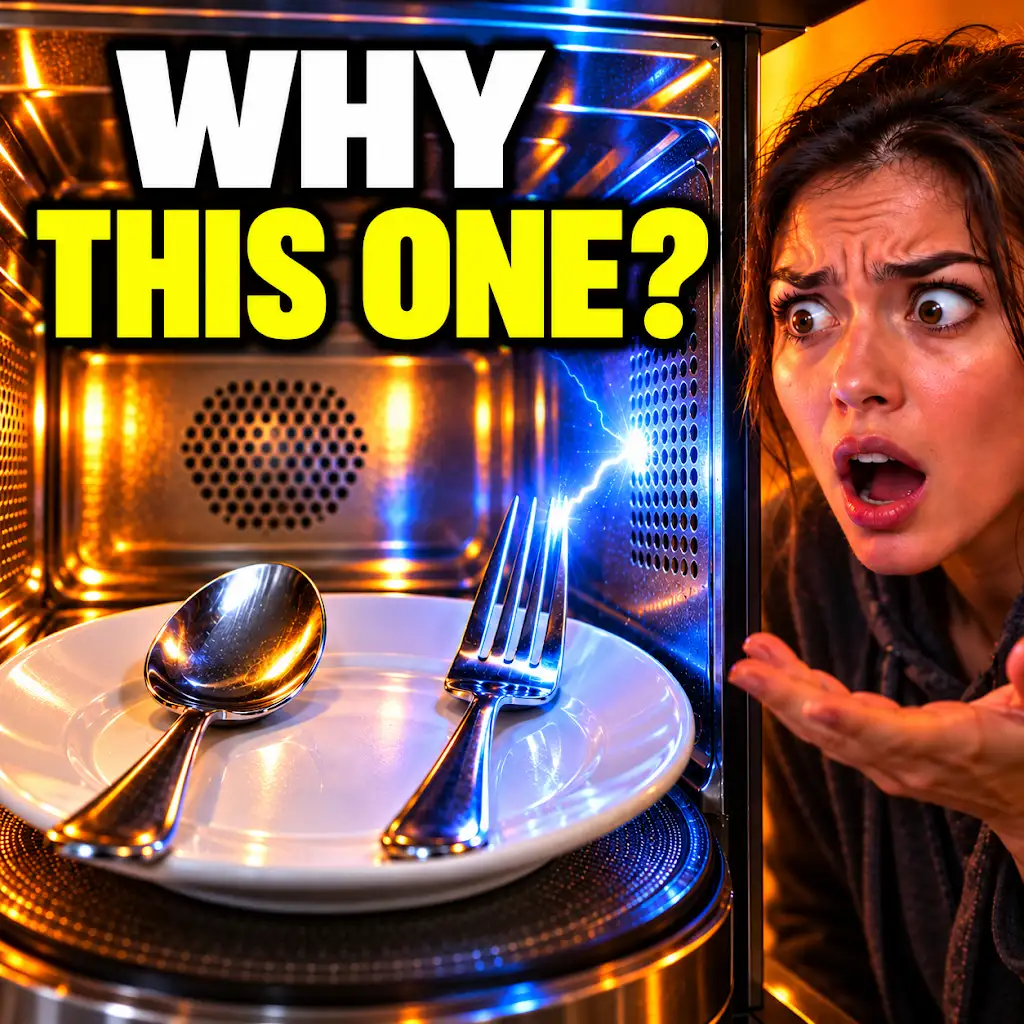
A Fork and a Spoon React Differently in a Microwave. Why?
FAQs
What is an electromagnetic field inside a microwave oven?
The electromagnetic field inside a microwave oven is the energy that is produced by the microwave’s magnetron, which creates electromagnetic waves. These waves cause the water molecules in food to vibrate, generating heat and cooking the food.
Is the electromagnetic field inside a microwave oven harmful?
The electromagnetic field inside a microwave oven is not harmful to humans when the oven is used according to its instructions. The design of the oven and the regulations set by the FDA ensure that the levels of radiation are within safe limits.
How does the electromagnetic field cook food in a microwave oven?
The electromagnetic field in a microwave oven causes the water molecules in food to vibrate, generating heat through friction. This heat cooks the food quickly and efficiently, making microwave ovens a popular choice for reheating and cooking.
Can the electromagnetic field inside a microwave oven leak out?
Microwave ovens are designed with a metal mesh in the door and safety interlocks to prevent the electromagnetic field from leaking out. When used properly and with no damage to the door or seals, microwave ovens should contain the electromagnetic field within the cooking chamber.
Are there any precautions to take regarding the electromagnetic field inside a microwave oven?
To ensure safety, it is important to follow the manufacturer’s instructions for using the microwave oven. This includes using microwave-safe containers, avoiding metal objects, and not tampering with the door or safety interlocks. It is also recommended to stand a safe distance away from the microwave while it is in use.