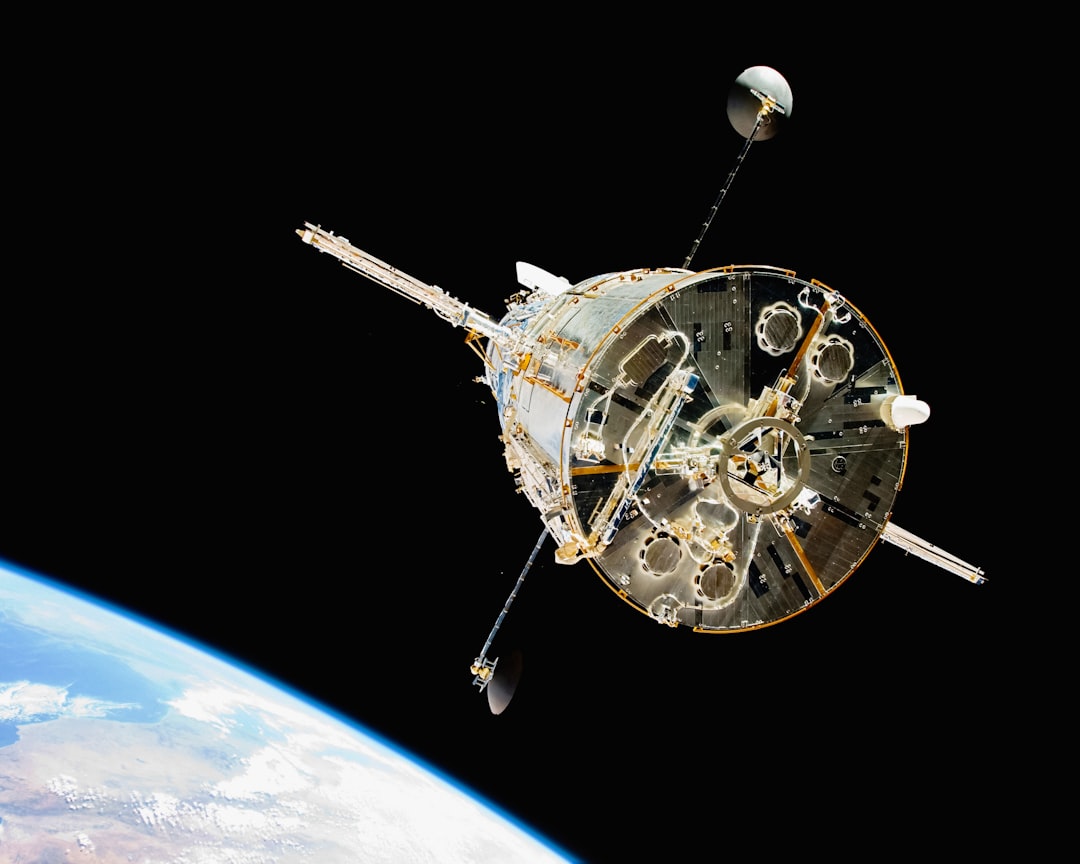
You’ve heard the term “spacetime” tossed around, perhaps in science fiction movies or documentaries about the universe. It sounds mysterious, complex, and maybe a little intimidating. But what exactly is spacetime, and why is it so important? You might be surprised to learn that it’s not as abstract as it seems, and understanding it can unlock a deeper appreciation for the cosmos. This article aims to demystify spacetime, breaking it down into manageable concepts so you can grasp its fundamental nature.
Imagine the universe as a static, unchanging stage where events unfold. This is the classical Newtonian view. Objects exist, they move, and gravity is a force pulling them together. Simple enough, right? But Albert Einstein, through his revolutionary theories of relativity, fundamentally changed this perspective. He proposed that the universe isn’t just a backdrop; it’s an active participant, a flexible, interwoven fabric known as spacetime. This fabric is not merely where things happen; it’s what dictates how things happen.
From Separate Dimensions to a Unified Whole
For centuries, we thought of space and time as distinct entities. Space was the three-dimensional arena – length, width, and height – in which everything resided. Time was a separate, unidirectional flow, ticking away independently. This made intuitive sense. You can move left or right in space, but you can only move forward in time. Einstein’s genius was in realizing that these two seemingly independent concepts are inextricably linked. They are not separate stages but components of a single, four-dimensional continuum.
The Birth of Spacetime
The concept of spacetime, formally developed by Hermann Minkowski in 1908 based on Einstein’s work, is the recognition that space and time are not absolute but relative, and that they are interwoven. Think of it like this: just as you can’t describe a point in a room without mentioning its height as well as its position on the floor, you can’t fully describe an event without considering both its spatial location and its temporal moment. An event occurs at a specific place and a specific time. These are not independent facts; they are inseparable parts of a single reality.
Why Does This Matter?
This unification of space and time is crucial because it allows us to understand phenomena that the old Newtonian physics couldn’t explain. It’s the bedrock upon which our modern understanding of gravity, black holes, and the evolution of the universe is built. Without spacetime, many of the most fascinating cosmic discoveries would remain a mystery.
If you’re looking for a straightforward explanation of spacetime, you might find this article helpful: Spacetime Explained Simply. It breaks down the complex concepts of spacetime into easy-to-understand terms, making it accessible for readers of all backgrounds. Whether you’re a science enthusiast or just curious about the universe, this article provides a clear overview of how space and time are interconnected.
Space, Time, and the Speed of Light: The Unbreakable Bond
One of the most mind-bending aspects of spacetime, and a direct consequence of Einstein’s special relativity, is the constancy of the speed of light. This seemingly simple observation has profound implications for how we perceive space and time.
The Universal Speed Limit
The speed of light in a vacuum, denoted by ‘c’, is approximately 299,792,458 meters per second. What makes this speed so special is that it’s not just a speed limit; it’s a constant for all observers, regardless of their own motion. This is radically different from our everyday experience. If you throw a ball forward from a moving train, its speed relative to the ground is the ball’s speed plus the train’s speed. Light, however, doesn’t play by these rules. If you shine a flashlight from a speeding spaceship, the light beam travels at ‘c’ relative to the spaceship, and it also travels at ‘c’ relative to someone stationary on Earth.
Time Dilation: Time Slows Down
This constancy of the speed of light leads to some bizarre consequences. One of the most famous is time dilation. Imagine you are traveling at a significant fraction of the speed of light. From your perspective, time would seem to pass normally. However, to an observer who is stationary relative to you, your time would appear to be ticking slower. This isn’t an illusion; it’s a real physical effect. The faster you move through space, the slower you move through time.
The Twin Paradox (A Thought Experiment)
The twin paradox illustrates this. Suppose you have identical twins. One stays on Earth, while the other travels on a spaceship at near the speed of light to a distant star and back. When the traveling twin returns, they will be younger than the twin who remained on Earth. This is because the traveling twin experienced less time due to their high speed. The “paradox” arises because motion is relative, but the asymmetry of the journey (one twin accelerates and decelerates) resolves it.
Length Contraction: Space Shrinks
Just as time is affected by speed, so too is space. Objects moving at relativistic speeds appear shorter in the direction of their motion to a stationary observer. This effect is called length contraction. So, if the traveling twin in our paradox were to look back at Earth from their high-speed spaceship, they would see Earth as being “squashed” in the direction of their travel.
The Interplay is Key
These effects – time dilation and length contraction – are not independent. They are two sides of the same coin, arising from the fundamental interconnectedness of space and time. Your speed through spacetime is constant. If you are stationary in space, you are moving at the maximum possible speed through time. As you start to move through space, some of your “speed” is diverted from time to space, causing time to slow down and distances to appear contracted to an external observer.
Gravity: Not a Force, But a Curvature of Spacetime

This is arguably the most profound revelation of Einstein’s theory of general relativity. For Newton, gravity was a mysterious force that acted instantaneously across any distance. Einstein, however, provided a completely new and elegant explanation for gravity: it’s not a force at all, but a manifestation of the curvature of spacetime.
Mass and Energy Warp Spacetime
Imagine placing a heavy bowling ball on a stretched rubber sheet. The bowling ball will cause the sheet to sag, creating a depression. Now, if you roll a small marble across the sheet, it will curve towards the bowling ball, not because of a direct pull, but because it’s following the curve in the sheet. This is an analogy for how mass and energy warp spacetime. Massive objects, like planets and stars, create curves in the fabric of spacetime around them.
The Geometry of the Universe
According to general relativity, what we perceive as the “force” of gravity is simply objects following the curves in spacetime created by other massive objects. A planet orbits a star not because the star is pulling it with an invisible rope, but because the star’s mass has curved the spacetime around it, and the planet is simply traveling along the “straightest possible path” (a geodesic) in that curved geometry.
Einstein Field Equations
The mathematical heart of general relativity lies in the Einstein Field Equations. These equations describe precisely how the distribution of mass and energy in the universe dictates the curvature of spacetime. They are a complex set of ten non-linear partial differential equations, but their essence is this: “Spacetime tells matter how to move; matter tells spacetime how to curve.”
The Consequences of a Curved Universe
This understanding of gravity has far-reaching implications:
Gravitational Lensing: Bending Light
Just as massive objects warp spacetime, they can also bend the path of light. When light from a distant star or galaxy passes by a massive object like another galaxy or a black hole, its path is deflected, much like a lens bends light. This phenomenon, known as gravitational lensing, allows astronomers to see objects that might otherwise be hidden and provides further evidence for Einstein’s theory. The light follows the curved spacetime, and we observe it as if it were bent by a lens.
Black Holes: The Ultimate Curvature
Black holes are regions of spacetime where gravity is so strong that nothing, not even light, can escape. This occurs when a tremendous amount of mass is compressed into an incredibly small volume, causing an extreme curvature of spacetime. The boundary beyond which escape is impossible is called the event horizon.
Gravitational Waves: Ripples in Spacetime
When massive objects accelerate, they create disturbances in the fabric of spacetime, much like dropping a pebble into a pond creates ripples. These ripples are called gravitational waves. Detecting gravitational waves, a feat achieved by LIGO and Virgo in 2015, opened a new window for observing the universe, allowing us to witness cataclysmic events like the merger of black holes and neutron stars.
Time Travel and Wormholes: Theoretical Possibilities in Spacetime
The interwoven nature of spacetime and the flexibility it exhibits have led to fascinating, albeit highly theoretical, ideas about time travel and shortcuts through the universe.
The Arrow of Time
While spacetime itself is a unified entity, our experience of time is predominantly linear, moving from past to future. This “arrow of time” is deeply ingrained in our perception. However, the fundamental equations of physics, including those of relativity, are largely time-symmetric. This means they would work just as well if time ran backward. So, where does the arrow of time come from? This remains one of the great mysteries in physics, with explanations often involving thermodynamics and the increasing entropy of the universe.
Closed Timelike Curves (CTCs)
In some theoretical solutions to Einstein’s field equations, it’s possible to have “closed timelike curves” (CTCs). These are paths through spacetime that loop back on themselves, allowing an object to return to its starting point in both space and time. If you could traverse a CTC, you would essentially be traveling back in time.
The Grandfather Paradox
The most famous paradox associated with time travel is the grandfather paradox: if you travel back in time and prevent your grandfather from meeting your grandmother, you would never be born, meaning you couldn’t have traveled back in time in the first place. Physicists have proposed various resolutions, including the idea that the universe might prevent such paradoxes from occurring, or that multiple universes might exist.
Wormholes: Shortcuts Through Spacetime
Another fascinating theoretical consequence of spacetime’s malleability is the concept of wormholes, also known as Einstein-Rosen bridges. These are hypothetical tunnels that could connect two distant points in spacetime, potentially allowing for faster-than-light travel or even travel between different universes.
The Requirements for a Wormhole
However, creating and stabilizing a traversable wormhole is currently considered beyond our technological capabilities. It’s theorized that exotic matter with negative mass or energy would be required to hold a wormhole open, and such matter has not been observed. Even if they exist, they might be incredibly unstable and fleeting.
The Role of Causality
The exploration of time travel and wormholes highlights the critical importance of causality – the principle that cause must precede effect. While the equations might allow for theoretical scenarios that challenge this, our current understanding suggests that nature likely has mechanisms to preserve causality.
If you’re curious about the concept of spacetime and want a straightforward explanation, you might find this article helpful. It breaks down the complexities of spacetime into easily digestible parts, making it accessible for everyone. For a deeper understanding, check out this informative piece on Freaky Science, which explores the fascinating relationship between space and time in a way that is engaging and easy to grasp.
Spacetime in Our Daily Lives and Beyond
| Concept | Explanation |
|---|---|
| Spacetime | The four-dimensional continuum in which all events occur, combining the three dimensions of space with the fourth dimension of time. |
| Gravity | The curvature of spacetime caused by mass, which dictates the motion of objects and the trajectory of light. |
| General Relativity | Einstein’s theory that describes how mass and energy in spacetime interact to produce gravity. |
| Time Dilation | The effect of time passing at different rates for observers in different gravitational fields or moving at different speeds. |
While the grandest implications of spacetime involve black holes and cosmic journeys, its principles are subtly woven into the fabric of our everyday existence and are essential for modern technologies.
GPS: A Spacetime Marvel
Your smartphone’s GPS (Global Positioning System) is a perfect, everyday example of spacetime in action. GPS relies on a network of satellites orbiting Earth. These satellites are moving at high speeds, and they are in a weaker gravitational field than we are on the ground. According to both special and general relativity, their clocks will run at different rates compared to clocks on Earth.
The Need for Relativistic Corrections
Special relativity dictates that the satellites’ clocks run slower due to their speed. General relativity dictates that their clocks run faster due to the weaker gravity. The general relativistic effect is actually larger. Without accounting for these relativistic time dilation effects, GPS systems would quickly become inaccurate. Within minutes, the calculated positions would be off by miles, rendering them useless. Engineers must precisely calculate and apply these spacetime corrections to ensure your navigation app works flawlessly.
Precision Timing is Crucial
The accuracy of GPS relies on incredibly precise timing. The signals from multiple satellites are used to triangulate your position. Even minuscule discrepancies in the timing of these signals, caused by ignoring relativistic effects, would lead to significant positional errors. It’s a testament to the practical applicability of Einstein’s theories that a device in your pocket relies on them every day.
Cosmology and the Evolution of the Universe
Spacetime is not just the stage for events; it’s also dynamic and evolving. The study of cosmology, the origin and evolution of the universe, is entirely framed within the context of spacetime.
The Expanding Universe
Observations have shown that the universe is expanding, and this expansion is accelerating. This expansion is not objects moving through space, but rather the fabric of spacetime itself stretching, carrying galaxies along with it. The Big Bang theory, the prevailing model for the universe’s origin, describes a hot, dense state from which spacetime expanded.
The Cosmic Microwave Background
The cosmic microwave background radiation, a faint glow of energy pervading the universe, is considered strong evidence for the Big Bang and the subsequent expansion of spacetime.
The Future of the Universe
Our understanding of spacetime also informs our predictions about the ultimate fate of the universe, depending on factors like the total amount of mass and energy within it. Will it continue to expand forever, or will it eventually collapse back on itself? These are questions that spacetime helps us address.
Looking Ahead: The Frontier of Understanding
While we’ve made incredible strides in understanding spacetime, there are still profound mysteries. Reconciling general relativity with quantum mechanics, the theory that governs the subatomic world, remains a major challenge. The “quantum foam” or “spacetime foam” concept suggests that at the smallest scales, spacetime might be incredibly turbulent and fluctuating.
The Quest for a Unified Theory
The ultimate goal is a unified theory of everything that can describe all fundamental forces and particles, including a quantum theory of gravity. This would unlock even deeper insights into the nature of spacetime and the universe itself. You are living in an era where our understanding of the cosmos is rapidly advancing, and spacetime is at the very heart of this revolution. By grasping its fundamental principles, you’re not just understanding abstract physics; you’re gaining a new perspective on the very reality you inhabit.

Einstein Says There Is No Universal “Now” in the Universe
FAQs
What is spacetime?
Spacetime is the four-dimensional framework in which all physical events occur. It combines the three dimensions of space with the fourth dimension of time into a single continuum.
How is spacetime related to Einstein’s theory of relativity?
Einstein’s theory of relativity describes how spacetime is curved by the presence of mass and energy. This curvature affects the motion of objects and the passage of time, leading to phenomena such as gravitational lensing and time dilation.
What is the significance of spacetime in understanding the universe?
Spacetime is crucial for understanding the behavior of celestial bodies, the nature of gravity, and the evolution of the universe. It provides a framework for explaining phenomena such as black holes, the expansion of the universe, and the bending of light.
How does spacetime differ from the traditional concept of space and time?
Spacetime differs from the traditional concept of space and time by treating them as interconnected aspects of a single entity. In spacetime, the three dimensions of space are inseparable from the dimension of time, leading to a unified description of the universe.
Can spacetime be visualized or experienced in everyday life?
While spacetime itself cannot be directly perceived, its effects can be observed in phenomena such as the bending of light around massive objects and the synchronization of clocks in different gravitational fields. These effects provide indirect evidence for the existence of spacetime.