Understanding Spacecraft Reentry Angles
The spectacle of a spacecraft descending through Earth’s atmosphere, often culminating in a fiery display, is a testament to the intricate dance of physics and engineering. Central to this dramatic process is the spacecraft’s reentry angle – the precise orientation at which it encounters the atmosphere. This seemingly simple concept is, in reality, a complex interplay of forces and considerations, dictating everything from thermal management and structural integrity to the ultimate fate of the craft and its occupants. Understanding reentry angles is paramount for mission success, safety, and the continued exploration of space. It is not merely about hitting the planet, but about doing so in a controlled and survivable manner.
Atmospheric entry is a critical phase in any space mission that involves returning to Earth or another celestial body with a substantial atmosphere. It is a transition from the vacuum of space, where orbital mechanics and minimal atmospheric drag dominate, to the dense embrace of an atmosphere, where aerodynamic forces become the primary drivers of motion. The physics at play during reentry are a fascinating blend of orbital mechanics, thermodynamics, and aerodynamics.
Orbital Mechanics and Deorbiting
Before a spacecraft can even begin its reentry, it must first break free from its orbit. This is typically achieved through a deorbit burn, a precisely timed firing of the spacecraft’s engines that reduces its velocity. This reduction in speed causes the spacecraft’s orbit to decay, bringing it closer to the planet. The deorbit burn is not just about slowing down; it’s also about shaping the trajectory for the subsequent atmospheric interface. The timing and magnitude of this burn are crucial. Too little velocity reduction, and the spacecraft may skip off the upper atmosphere or take an impractically long time to descend. Too much, and the reentry could be too steep, leading to excessive heating and g-forces. The deorbit maneuver effectively sets the initial conditions for the reentry angle.
The Role of Gravity and Inertia
Once the deorbit burn is complete, gravity begins its relentless pull, drawing the spacecraft back towards the planet. However, the spacecraft still possesses significant inertia from its orbital velocity. The interplay between these two forces – the inward pull of gravity and the outward momentum – determines the initial trajectory. Without atmospheric intervention, the spacecraft would continue in its orbital path, albeit decaying. The atmosphere, however, introduces a powerful new force: drag.
The Atmosphere as a Braking Mechanism
Earth’s atmosphere, while thin at high altitudes, becomes increasingly dense as a spacecraft descends. This density exerts a resistive force, known as atmospheric drag, which opposes the spacecraft’s motion. Drag is the primary mechanism by which a spacecraft slows down during reentry. The amount of drag experienced is directly proportional to the density of the atmosphere, the spacecraft’s velocity squared, and its aerodynamic properties (specifically, its drag coefficient and cross-sectional area). This is why the fiery reentry is not an explosion, but a consequence of immense kinetic energy being converted into heat through friction with the air molecules.
Understanding the intricacies of spacecraft reentry angles is crucial for ensuring safe landings. For a deeper dive into this topic, you can explore the article that explains the physics behind reentry and its implications for spacecraft design and mission success. Check out the related article here: Spacecraft Reentry Angle Explained.
Defining the Reentry Angle
The reentry angle, often referred to as the entry angle or angle of attack relative to the local horizontal, is a fundamental parameter that dictates the entire reentry trajectory. It is not a static value but rather a dynamic one that changes as the spacecraft descends and its velocity and attitude evolve. However, there is an initial, critical angle at which the spacecraft first encounters the denser layers of the atmosphere. This initial angle is the most influential in determining the subsequent events.
Initial Approach and Angle Measurement
The reentry angle is typically measured relative to the local horizontal of the planet’s atmosphere. Imagine a line tangent to the planet’s surface at the point of entry. The reentry angle is the angle between the spacecraft’s velocity vector and this tangent line. A shallow angle means the spacecraft is approaching the atmosphere at a very low inclination, almost skimming the upper layers. A steep angle, conversely, implies a direct, almost perpendicular descent. The initial velocity of the spacecraft as it enters the upper atmosphere is extremely high, often in the range of thousands of kilometers per hour.
The Criticality of the Initial Angle
The initial reentry angle is arguably the most critical factor in determining the success or failure of a reentry. It sets the stage for the entire atmospheric braking process. A slight deviation from the optimal angle can have catastrophic consequences. This is why mission planners invest immense effort in precisely calculating and controlling this parameter. The spacecraft’s trajectory leading up to reentry, including the deorbit burn, is meticulously designed to achieve the desired initial angle.
Dynamic Angle Changes During Descent
It is crucial to understand that the reentry angle is not a fixed value throughout the entire descent. As the spacecraft penetrates deeper into the atmosphere, its velocity decreases due to drag, and its orientation can be actively controlled by the spacecraft’s flight control system. This dynamic adjustment of the angle, often through the use of control surfaces or reaction control thrusters, is essential for managing the forces and heating experienced by the spacecraft. However, the initial angle sets the fundamental trajectory and the overall energy dissipation profile.
The Physics of Reentry: Heat and Forces
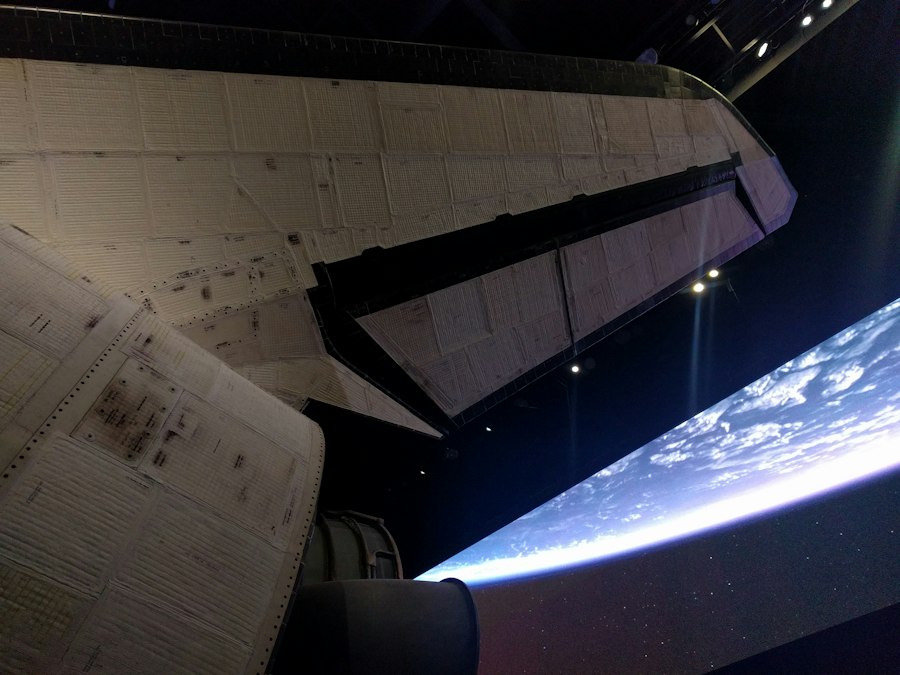
The descent through the atmosphere is characterized by two primary phenomena: intense heat generation and significant aerodynamic forces. The reentry angle plays a pivotal role in how these phenomena affect the spacecraft.
Aerodynamic Heating: The Fiery Shield
As the spacecraft plunges into the atmosphere at hypersonic speeds, it collides with air molecules. This collision is not a simple glancing blow; it compresses and heats the air in front of the spacecraft to incredibly high temperatures, often exceeding thousands of degrees Celsius. This superheated air then transfers energy to the spacecraft’s surface, leading to intense heating. This phenomenon is known as aerodynamic heating. The reentry angle directly influences the rate and intensity of this heating.
Hypersonic Flow and Shock Waves
At reentry velocities, the airflow around the spacecraft becomes hypersonic. This creates shock waves – abrupt changes in pressure, temperature, and density – that form around the vehicle. The shape and intensity of these shock waves are directly related to the spacecraft’s shape and its angle of attack. A steeper reentry angle tends to compress the air more directly in front of the spacecraft, leading to more intense shock waves and higher temperatures on the leading surfaces.
Heat Shielding: The First Line of Defense
To protect the spacecraft and its occupants from this extreme heat, a specialized heat shield is employed. These shields are made of ablative materials that are designed to absorb and dissipate heat by charring and vaporizing. The rate at which the heat shield ablates is a direct consequence of the heat flux it experiences, which is, in turn, influenced by the reentry angle. A carefully chosen reentry angle ensures that the heat flux is within the capacity of the heat shield to manage over the duration of the reentry.
Aerodynamic Forces: The G-Force Factor
In addition to heat, the atmosphere exerts significant aerodynamic forces on the spacecraft. These forces include drag, which slows the spacecraft down, and lift, which can be generated by the spacecraft’s shape and orientation. The cumulative effect of these forces results in deceleration, which is experienced by the occupants as g-forces. The reentry angle is instrumental in shaping the profile of these forces.
Drag and Deceleration
Drag is the primary force that slows the spacecraft. A steeper reentry angle generally results in a shorter, more intense period of deceleration. Conversely, a shallower angle spreads the deceleration out over a longer period but can lead to higher peak deceleration if not managed carefully. The precise control of drag is essential for ensuring that the g-forces remain within survivable limits.
Lift and Trajectory Control
While drag is always present, lift can also be generated, particularly by spacecraft with lifting body designs or wings. The reentry angle, combined with the spacecraft’s attitude control, allows for some degree of trajectory control during reentry. This is crucial for steering the spacecraft towards its landing zone and avoiding hazardous areas. A controlled angle allows for the management of both deceleration and lateral motion.
Reentry Angle Strategies: Balancing Risk and Performance

The optimal reentry angle is not a universal constant but rather a carefully chosen strategy that balances several competing factors. Mission designers must consider the spacecraft’s design, the payload it carries, and the desired landing accuracy. Different missions will necessitate different reentry angle approaches.
Steep Reentry: The “Ballistic” Approach
A steep reentry angle is characterized by a rapid descent into the atmosphere. This approach offers the advantage of a shorter reentry time, which can be beneficial for missions where rapid return is paramount, such as crewed missions returning from orbit. However, steep reentries come with significant challenges.
High Peak G-Forces
The rapid deceleration associated with a steep reentry results in very high peak g-forces. These forces can be taxing on both the spacecraft’s structure and its occupants. Specialized restraint systems and robust spacecraft design are essential to withstand these extreme loads. The human body can only tolerate so much acceleration before sustaining injury.
Intense Aerodynamic Heating
The direct impact with the denser atmosphere at a steep angle leads to extremely high peak heating rates. This requires more robust and often heavier heat shielding solutions. The margin for error in heat management is significantly reduced with a steeper entry.
Limited Maneuverability
Steep reentries offer very little opportunity for significant trajectory adjustments once atmospheric interface begins. The path is largely dictated by the initial deorbit trajectory. Precision in the deorbit burn is therefore absolutely critical.
Shallow Reentry: The “Skip” or “Glide” Approach
A shallow reentry angle involves the spacecraft entering the atmosphere at a low inclination. This approach is often employed when minimizing g-forces and heating is a primary concern, or when a longer glide phase is desired for targeting a specific landing zone.
Lower Peak G-Forces
By spreading the deceleration over a longer period and potentially utilizing lift, shallow reentries can achieve significantly lower peak g-forces. This is highly advantageous for crewed missions and for carrying sensitive payloads.
Extended Reentry Time
The downside of a shallow reentry is that it takes longer to reach the surface. This increases the overall time the spacecraft is exposed to atmospheric effects, though the peak intensity of those effects may be lower.
Increased Trajectory Control and Targeting
Shallow reentries often allow for more significant trajectory control. By generating lift and adjusting the angle of attack, the spacecraft can essentially “skip” or “glide” through the atmosphere, extending its range and enabling more precise targeting of landing zones. This is a key feature of vehicles like the Space Shuttle.
The Optimal Compromise: Guided Reentry
In practice, many modern reentry systems aim for a compromise between steep and shallow approaches, often referred to as a “guided reentry.” This involves a carefully managed trajectory that balances the benefits of both.
Initial High Entry Angle for Rapid Deceleration
The initial entry might be at a relatively steep angle to quickly shed orbital velocity and reduce the overall time spent in the upper atmosphere.
Gradual Adjustment of Angle for Force Management
As the spacecraft descends, the reentry angle is actively adjusted to manage the aerodynamic forces and heating. This might involve a transition to a shallower angle or employing control surfaces to generate lift and control the descent rate.
Precision Landing
This guided approach allows for a significant degree of control over the final landing location, making it ideal for land landings or precise splashdowns.
Understanding the reentry angle of spacecraft is crucial for ensuring a safe return to Earth, as it directly affects the thermal and aerodynamic forces experienced during descent. For those interested in exploring this topic further, a related article can provide additional insights into the physics behind reentry dynamics and the engineering challenges involved. You can read more about these fascinating concepts in this detailed article that delves into the intricacies of spacecraft reentry.
Factors Influencing the Choice of Reentry Angle
| Parameter | Description | Typical Values | Impact on Reentry |
|---|---|---|---|
| Reentry Angle | The angle at which a spacecraft enters the Earth’s atmosphere relative to the horizon. | 5° to 7° (steep), 1° to 3° (shallow) | Determines heating rate and deceleration forces; too steep causes high heat and g-forces, too shallow risks skipping off atmosphere. |
| Entry Velocity | Speed of the spacecraft as it enters the atmosphere. | 7.5 km/s (Low Earth Orbit reentry) | Higher velocity increases thermal load and deceleration forces. |
| Deceleration (g-forces) | Acceleration experienced by the spacecraft due to atmospheric drag. | 3g to 8g typical for crewed missions | High deceleration can be dangerous for crew and equipment. |
| Heat Shield Temperature | Maximum temperature experienced by the heat shield during reentry. | Up to 1,650°C (3,000°F) | Must be designed to withstand and dissipate extreme heat. |
| Flight Path Angle | Angle between the velocity vector and the local horizontal at reentry interface. | Typically between -1° and -7° | Controls trajectory and ensures safe descent through atmosphere. |
The decision of which reentry angle strategy to employ is a complex engineering and mission planning exercise, influenced by a multitude of factors. There is no single “best” reentry angle; rather, the optimal angle is mission-specific.
Spacecraft Design and Capabilities
The inherent design of the spacecraft plays a crucial role. A capsule-like vehicle, designed for pure ballistic reentry with robust heat shielding, might favor a steeper approach. A winged vehicle, like the Space Shuttle, is designed to generate significant lift and control, making shallower, gliding reentries its primary mode of operation. The strength of the structure, the capacity of the heat shield, and the sophistication of the attitude control system all influence the permissible range of reentry angles.
Payload and Crew Considerations
The nature of the payload and whether the mission includes human occupants are paramount. For crewed missions, minimizing g-forces is a top priority. This often leads to shallower or guided reentry profiles. For uncrewed cargo missions or scientific probes, the primary concerns might be cost, simplicity, and the survival of the scientific instruments, which might allow for more aggressive reentry profiles. The sensitivity of the payload to heat and acceleration must be carefully assessed.
Mission Objectives and Constraints
The specific goals of the mission dictate the reentry strategy. If rapid return is essential, a steeper angle might be considered. If precision landing at a specific location is critical, a shallower or guided reentry with significant control capabilities is necessary. Other constraints, such as the available landing sites or the environmental conditions at the intended landing zone, also influence the choice of angle. For instance, landing in water (splashdown) versus landing on land presents different challenges and opportunities for trajectory control.
Atmospheric Conditions and Predictability
While less controllable, prevailing atmospheric conditions can also be a consideration. Turbulence, wind shear, and the density profile of the atmosphere can affect the forces experienced. Mission planners rely on atmospheric models and real-time data to refine their reentry trajectories and ensure the chosen angle is suitable for the predicted conditions. The predictability of the atmosphere at different altitudes is a key factor in designing a safe reentry.
The Art and Science of Reentry Angle Control
Achieving and maintaining the desired reentry angle is a sophisticated feat of engineering that involves precise calculations, advanced control systems, and robust hardware. It is a testament to humanity’s ability to harness complex physical principles for practical application.
Pre-Mission Trajectory Planning
The reentry trajectory, including the initial reentry angle, is meticulously planned long before the spacecraft leaves Earth. Sophisticated trajectory optimization software is used to model the entire reentry process, considering all relevant forces and parameters. This planning phase involves numerous simulations and iterations to arrive at the safest and most effective trajectory. The deorbit burn is a critical component of this planning, as it sets the initial conditions for the reentry.
Onboard Flight Control Systems
Once the spacecraft begins its descent, onboard flight control systems take over. These systems use a combination of sensors (such as accelerometers, gyroscopes, and GPS) to determine the spacecraft’s position, velocity, and orientation. Based on this information and the pre-programmed reentry trajectory, the flight control system makes real-time adjustments to the spacecraft’s attitude.
Attitude Control Systems: Thrusters and Control Surfaces
The flight control system commands various actuators to maintain the desired reentry angle and trajectory. For capsule-like vehicles, this often involves firing small thrusters (reaction control system or RCS) to orient the spacecraft. For winged vehicles, control surfaces such as elevons and rudders are used to generate aerodynamic forces and steer the vehicle. The precision with which these systems operate is crucial for maintaining the optimal angle.
Aerodynamic Stability and Control
The aerodynamic forces acting on the spacecraft during reentry can be complex and dynamic. The flight control system must be able to counteract any destabilizing forces and maintain control even in turbulent atmospheric conditions. The shape of the spacecraft itself plays a significant role in its aerodynamic stability during reentry.
Real-time Monitoring and Adaptation
In some cases, especially for crewed missions, real-time monitoring of the reentry by ground control allows for potential adjustments or decision-making in response to unexpected events. However, the extreme speed and short duration of reentry mean that real-time control is primarily handled by the onboard systems. The ability of the system to adapt to minor deviations from the planned trajectory is a key aspect of safety.
In conclusion, the spacecraft reentry angle is far more than a simple geometric consideration. It is a critical parameter that dictates the balance between extreme forces and temperatures, directly impacting the survival of the spacecraft and its occupants. From the initial deorbit burn to the final moments before landing, the precise control and understanding of this angle are paramount. As humanity continues to push the boundaries of space exploration, the art and science of mastering spacecraft reentry angles will remain a cornerstone of safe and successful missions. The fiery descent is not a uncontrolled plunge, but a carefully orchestrated ballet between gravity, atmosphere, and sophisticated engineering, all orchestrated by the subtle yet profound influence of the reentry angle.

There’s Only One Safe Way Back to Earth From the Moon
FAQs
What is spacecraft reentry angle?
Spacecraft reentry angle refers to the angle at which a spacecraft enters the Earth’s atmosphere during its return journey from space.
Why is spacecraft reentry angle important?
The spacecraft reentry angle is crucial for ensuring a safe and controlled reentry into the Earth’s atmosphere. The angle determines how the spacecraft will interact with the atmosphere and affects factors such as heating, deceleration, and landing location.
How is spacecraft reentry angle calculated?
The spacecraft reentry angle is calculated based on various factors such as the spacecraft’s velocity, altitude, and desired landing location. Engineers use complex mathematical models and simulations to determine the optimal reentry angle for a safe return.
What happens if the spacecraft reentry angle is too steep?
If the spacecraft reentry angle is too steep, the spacecraft may experience excessive heating and deceleration, potentially leading to structural damage or disintegration. It could also result in the spacecraft overshooting its intended landing location.
What happens if the spacecraft reentry angle is too shallow?
If the spacecraft reentry angle is too shallow, the spacecraft may skip off the Earth’s atmosphere and reenter space, missing its intended landing location. This could result in the spacecraft being unable to return to Earth or landing far off course.