
Spacecraft Heat Shield Ablation: A Journey Through the Fiery Embrace
The silent void of space holds wonders beyond imagination, but the journey to and from celestial bodies is not without its perils. Among the most formidable challenges faced by spacecraft is the searing heat generated during atmospheric entry. As a vehicle hurtles through the atmosphere at hypersonic speeds, friction with air molecules transforms kinetic energy into intense thermal energy. To survive this fiery embrace, spacecraft rely on a sophisticated technology known as heat shield ablation. This process, seemingly destructive, is a masterful act of engineered sacrifice, designed to protect the precious payload and its occupants from unimaginable temperatures. Understanding spacecraft heat shield ablation is crucial to appreciating the ingenuity behind space exploration and the future of venturing further into the cosmos.
The Physics of Friction and Heat
When a spacecraft re-enters Earth’s atmosphere, it is essentially colliding with a vast ocean of gas at speeds often exceeding Mach 25. This colossal velocity, coupled with the increasing density of the atmosphere, generates immense aerodynamic drag. However, the primary source of heat during re-entry is not just simple friction. It’s the compression of the air in front of the spacecraft that creates a shock wave. This shock wave heats the air to thousands of degrees Celsius, creating a plasma that envelops the vehicle. This superheated plasma is what transfers the bulk of the thermal energy to the heat shield.
The Shock Wave Phenomenon
At hypersonic speeds, the flow of air around a spacecraft is no longer smooth and laminar. Instead, it becomes turbulent and compressed, forming a distinct shock wave. This shock wave stands off from the leading edges of the spacecraft, creating a region of extremely high temperature and pressure. The intensity of this shock wave is directly proportional to the speed of the spacecraft and the density of the atmosphere. As the spacecraft descends, the atmospheric density increases, leading to a stronger shock wave and, consequently, higher heat fluxes.
Consequences of Uncontrolled Heat
Without adequate thermal protection, the intense heat generated during atmospheric entry would rapidly degrade and melt the spacecraft’s structure. Critical components, including sensitive electronics, scientific instruments, and even the crew, would be exposed to temperatures far exceeding their operational limits. This would lead to catastrophic failure, rendering the mission unsuccessful and potentially endangering lives. Therefore, the development and implementation of effective heat shield technologies are paramount to successful space missions.
In understanding the critical role of heat shield ablation in spacecraft design, it’s essential to explore related topics that delve deeper into thermal protection systems. For a comprehensive overview of how these systems function and their importance during re-entry, you can read the article available at Freaky Science. This resource provides valuable insights into the materials used and the engineering challenges faced in developing effective heat shields for various space missions.
The Elegant Sacrifice: How Ablation Works
The Principle of Sacrificial Material
Heat shield ablation is a passive thermal protection system that relies on the controlled degradation of a specialized material. This material, known as the ablative material, is designed to absorb immense amounts of heat by undergoing a series of physical and chemical changes. As the heat shield is exposed to the extreme temperatures of re-entry, the ablative material begins to char, melt, and vaporize. This transformation is not a failure of the material; it is its intended function.
Phase Transitions and Energy Absorption
The effectiveness of an ablative material lies in its ability to absorb heat through multiple phase transitions. Initially, the material heats up, and its solid components may undergo chemical decomposition. As more heat is absorbed, the material melts, a process that requires significant energy (latent heat of fusion). Finally, the molten material vaporizes, turning into a gas. This vaporization process is highly endothermic, meaning it consumes a substantial amount of heat energy from the surrounding environment, thus cooling the underlying structure.
The Role of Char Layer Formation
Many ablative materials form a protective char layer on their surface during the process. This char layer, often porous and carbonaceous, acts as an insulating barrier. It reduces the rate at which heat can penetrate the material and also helps to carry away some of the heat through convection as gases escape from its pores. The char layer can also be very effective at radiating heat away from the spacecraft. The composition and structure of this char layer are critical to the overall performance of the ablative material.
Vaporization and Gas Production
The vaporization of the ablative material produces a significant volume of gases. These gases are typically hot and also contribute to the cooling effect. As these hot gases are expelled from the surface of the heat shield, they form a boundary layer that separates the superheated plasma from the solid surface. This boundary layer can further reduce the heat transfer rate to the spacecraft. The composition of these gases and their flow characteristics are actively studied to optimize the ablative process.
The Protective Boundary Layer
The combination of vaporized material and any gases released from the ablative process forms a boundary layer. This layer acts as a physical barrier between the spacecraft and the extreme heat of the re-entry plasma. The lower thermal conductivity of these gases compared to the plasma, along with their outward flow, effectively shields the underlying structure from the most intense heat. The dynamics of this boundary layer are complex and are influenced by factors such as the speed of re-entry, the angle of attack, and the properties of the ablative material.
Types of Ablative Materials and Their Properties

Phenolic Resins: The Workhorse of Re-entry
Phenolic resins are a class of thermosetting polymers that have been widely used as ablative materials for decades. They are often reinforced with materials like fiberglass, carbon fibers, or silica to enhance their mechanical strength and thermal stability. When exposed to heat, phenolic resins char and decompose, forming a protective carbonaceous layer. Their relatively low cost and well-understood properties make them a popular choice for many re-entry applications.
Charring and Carbonization
The primary mechanism by which phenolic resins protect a spacecraft is through charring. Upon heating, the polymer chains break down and rearrange, forming a rigid, porous char structure. This char is rich in carbon and has a high melting point, providing excellent thermal insulation. The process of char formation is gradual and controlled, allowing the heat shield to absorb energy over an extended period.
Reinforced Phenolics for Enhanced Performance
To improve the performance of phenolic resins, they are often combined with reinforcing fibers. These fibers, such as silica or carbon, contribute to the mechanical integrity of the heat shield, preventing it from breaking apart under the stresses of re-entry. They also influence the char formation process, leading to a more robust and effective protective layer. The choice of reinforcing material depends on the specific re-entry conditions and performance requirements.
Silicone-Based Materials: Flexibility and High-Temperature Resistance
Silicone-based materials, particularly those with high silica content, offer excellent high-temperature resistance and flexibility. These materials are often used in applications where the heat shield may experience some bending or deformation. They typically form a glassy or ceramic-like char layer that provides good thermal insulation. Their ability to withstand high temperatures without significant degradation makes them suitable for demanding re-entry scenarios.
Silica Reinforcement and Ceramic Char
Silicone-based ablators often incorporate silica fibers or particles. When these materials are heated, the silicone matrix decomposes, leaving behind a silica-rich char. This char has a high melting point and good thermal insulation properties. The glassy nature of the char can also contribute to its ablative performance by forming a smooth surface that minimizes aerodynamic heating.
Application in Flexible Heat Shields
The inherent flexibility of some silicone-based materials makes them ideal for applications where a rigid heat shield might be impractical or prone to cracking. This is particularly true for spacecraft with complex geometries or for components that experience significant structural loads during re-entry.
Carbon-Carbon Composites: Extreme Performance for Extreme Conditions
Carbon-carbon composites represent the pinnacle of ablative material technology. They consist of carbon fibers embedded in a carbon matrix. These materials possess exceptional strength, stiffness, and an incredibly high melting point. During re-entry, they can withstand extremely high temperatures and stresses, often undergoing minimal ablation compared to other materials. This makes them ideal for the most demanding re-entry profiles, such as those experienced by reusable spacecraft like the Space Shuttle.
Intrinsic High-Temperature Stability
The primary advantage of carbon-carbon composites is their intrinsic stability at extremely high temperatures. Unlike many other materials that decompose or melt, carbon-carbon composites retain their structural integrity even when exposed to temperatures exceeding 2000°C. This allows them to perform exceptionally well in the most severe re-entry environments.
Applications in Reusable Spacecraft
The durability and performance of carbon-carbon composites make them a preferred choice for reusable spacecraft. The ability of these materials to withstand multiple re-entries with minimal degradation significantly reduces the maintenance and replacement costs associated with thermal protection systems. They are often used in critical areas of the spacecraft that experience the highest heat loads.
Designing and Testing Heat Shields: A Rigorous Process
Computational Fluid Dynamics (CFD) and Thermal Modeling
Before a heat shield is ever built, its performance is meticulously analyzed using advanced computational tools. Computational Fluid Dynamics (CFD) simulations are used to model the complex flow of air around the spacecraft during re-entry, predicting the distribution of heat loads across the heat shield’s surface. Thermal modeling then takes these heat loads and predicts how the ablative material will respond, predicting the rate of ablation and the temperature experienced by the underlying structure.
Simulating Hypersonic Flow
CFD simulations are essential for understanding the intricate airflow patterns at hypersonic speeds. These simulations account for factors such as shock wave formation, turbulence, and the interaction between the plasma and the spacecraft’s geometry. The output of these simulations provides crucial data for heat load calculations.
Predicting Ablation Rates and Temperature Profiles
Thermal models use the heat load data from CFD to predict how the ablative material will degrade over time. These models consider the thermochemical properties of the material, including its decomposition kinetics, heat of vaporization, and thermal conductivity. The ultimate goal is to ensure that the temperature of the spacecraft’s internal structure remains within acceptable limits throughout the re-entry process.
Ground-Based Testing Facilities: Replicating Re-entry Conditions
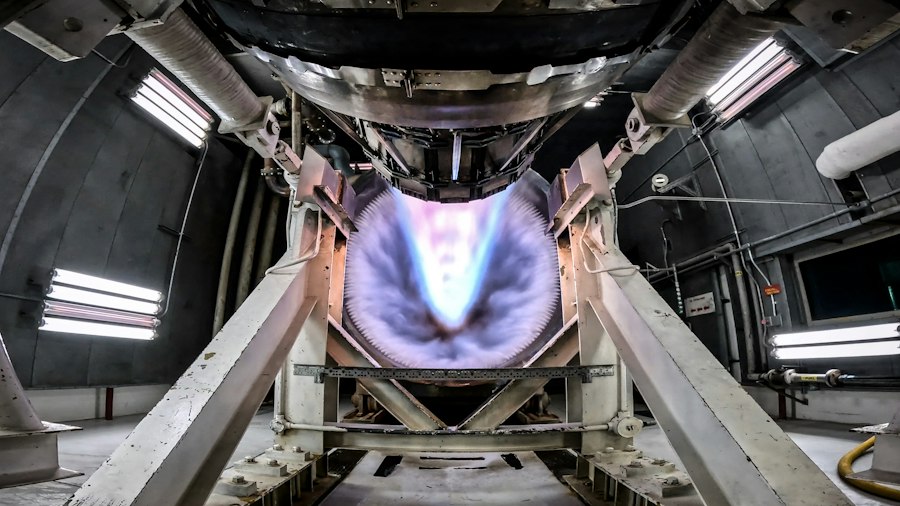
To validate the predictions from computational models and to test the actual performance of ablative materials, a variety of ground-based testing facilities are employed. These facilities are designed to replicate the extreme temperatures, pressures, and flow conditions encountered during atmospheric re-entry.
Arc Jet Facilities
Arc jet facilities use a high-energy electric arc to heat a gas (typically air or nitrogen) to temperatures similar to those found in re-entry plasma. This superheated gas is then directed at samples of ablative material to simulate the heat flux. These tests are crucial for understanding the material’s behavior under sustained high-temperature exposure.
Plasma Wind Tunnels
Plasma wind tunnels are more advanced facilities that can generate a plasma flow at hypersonic speeds, more closely mimicking the re-entry environment. These tunnels allow for the testing of ablative materials under conditions that include both high temperature and high velocity, providing a more comprehensive evaluation of their performance.
Shock Tubes and Hypersonic Tunnels
Shock tubes create a very rapid increase in pressure and temperature by the rupture of a diaphragm separating two chambers of gas at different pressures. This generates a shock wave that can be used to briefly expose samples to re-entry-like conditions. Hypersonic tunnels, on the other hand, use a nozzle to accelerate a gas to hypersonic speeds, creating a stable flow for testing.
Flight Testing: The Ultimate Validation
While ground-based testing is invaluable, the ultimate validation of a heat shield design comes through actual flight testing. This involves launching a spacecraft with the heat shield and subjecting it to the rigors of atmospheric re-entry. Data is collected throughout the descent, providing real-world performance metrics.
Data Acquisition and Analysis
During flight tests, an array of sensors are used to measure temperatures, pressures, heat fluxes, and material recession rates. This data is then meticulously analyzed to compare against predicted performance and to identify any areas for improvement in future designs.
Learning from Real-World Performance
Flight testing provides invaluable insights that cannot be fully replicated in laboratory settings. The complex interactions between the spacecraft, the atmosphere, and the heat shield under actual re-entry conditions offer the most definitive assessment of the thermal protection system’s effectiveness.
The concept of spacecraft heat shield ablation is crucial for ensuring the safety of missions entering planetary atmospheres, as it involves the gradual erosion of material to dissipate heat. For a deeper understanding of this fascinating process, you can explore a related article that delves into the science behind thermal protection systems and their design. This resource provides valuable insights into how engineers tackle the challenges of extreme temperatures during re-entry. To read more about this topic, check out the article on Freaky Science.
The Future of Heat Shield Technology
| Metric | Description | Typical Values | Units |
|---|---|---|---|
| Heat Shield Material | Material used for ablation to protect spacecraft from heat | Phenolic Impregnated Carbon Ablator (PICA), Avcoat | — |
| Ablation Temperature | Temperature at which the heat shield material begins to ablate | ~1,500 – 3,000 | °C |
| Heat Flux | Rate of heat energy transfer per unit area during reentry | 500 – 2,000 | kW/m² |
| Surface Temperature | Temperature on the heat shield surface during peak reentry | 1,600 – 2,800 | °C |
| Ablation Rate | Thickness of heat shield material lost per second due to ablation | 0.1 – 1.0 | mm/s |
| Heat Shield Thickness | Initial thickness of the ablative heat shield | 10 – 50 | mm |
| Reentry Velocity | Speed of spacecraft entering atmosphere causing heating | 7,000 – 11,000 | m/s |
| Heat Shield Mass | Mass of the ablative heat shield on spacecraft | 50 – 500 | kg |
| Gas Generation | Amount of gas released during ablation to form protective boundary layer | Variable, depends on material and conditions | — |
Advanced Materials and Nanotechnology
The quest for ever-more efficient and resilient heat shields continues. Researchers are exploring advanced materials, including novel ceramic composites, nanomaterials, and bio-inspired structures. Nanotechnology offers the potential to engineer materials at the atomic and molecular level, creating ablators with precisely controlled properties and enhanced performance.
Self-Healing Ablators
One area of significant research is the development of self-healing ablative materials. These materials would be designed to automatically repair any minor damage incurred during re-entry, extending their lifespan and reducing maintenance requirements. This could involve incorporating microcapsules that release a healing agent when activated by heat or mechanical stress.
Multifunctional Heat Shields
Future heat shields may go beyond just thermal protection. Researchers are investigating the possibility of creating multifunctional heat shields that can also perform other tasks, such as sensing atmospheric conditions, generating power, or even actively controlling the spacecraft’s trajectory during re-entry.
Reusable and Sustainable Thermal Protection
With the growing emphasis on space exploration and the development of reusable spacecraft, the focus is increasingly on sustainable and long-lasting thermal protection systems. This includes developing materials that can withstand multiple re-entries with minimal degradation, reducing the overall cost and environmental impact of space missions.
Enhancing Durability for Multiple Missions
The development of robust and durable ablative materials capable of surviving numerous re-entry cycles is a key objective. This involves understanding the long-term effects of thermal cycling and mechanical stress on these materials and designing them to resist wear and tear over time.
Minimizing Space Debris and Environmental Impact
As space activities increase, so does the concern about space debris and the environmental impact of re-entering spacecraft. Developing ablative materials that leave minimal residue or can be safely de-orbited and recovered contributes to a more sustainable approach to space exploration.
Martian and Other Planetary Entries
The challenges of atmospheric re-entry are not limited to Earth. Entering the thin atmospheres of Mars, Venus, or the icy moons of Jupiter presents unique thermal protection requirements. Understanding and adapting ablative technologies for these vastly different environments is crucial for future interplanetary missions.
Adapting to Different Atmospheric Compositions and Densities
The composition and density of planetary atmospheres vary dramatically. For instance, Mars has a very thin atmosphere, requiring different thermal protection strategies compared to Earth’s denser atmosphere. Venus, on the other hand, has a thick, corrosive atmosphere that presents its own set of challenges.
Designing for Mission-Specific Requirements
Each planetary re-entry mission will have its own specific set of requirements based on the spacecraft’s velocity, trajectory, and the planet’s atmospheric characteristics. This necessitates the design of highly customized heat shield solutions tailored to each unique mission profile.
Conclusion: The Silent Guardians of Spaceflight
Spacecraft heat shield ablation, though a process of controlled destruction, is a testament to human ingenuity and our relentless pursuit of understanding and exploring the cosmos. These silent guardians, made of specialized materials, absorb the fury of atmospheric re-entry, sacrificing themselves to ensure the safe passage of our missions. From the fundamental physics of hypersonic flow to the intricate design and testing of advanced materials, the field of heat shield technology is a vibrant and continuously evolving discipline. As we push the boundaries of space exploration, venturing further and undertaking more ambitious missions, the role of these fiery shields will only become more critical, ensuring that humanity’s reach for the stars remains a safe and triumphant endeavor. The elegant sacrifice of ablative materials is a vital chapter in the ongoing story of our cosmic journey.

There’s Only One Safe Way Back to Earth From the Moon
FAQs
What is spacecraft heat shield ablation?
Spacecraft heat shield ablation is the process in which the heat shield of a spacecraft dissipates heat by gradually burning away or vaporizing during reentry into the Earth’s atmosphere.
How does spacecraft heat shield ablation protect the spacecraft?
During reentry, the heat shield ablation process absorbs and dissipates the intense heat generated by friction with the Earth’s atmosphere, preventing the spacecraft and its contents from burning up.
What materials are commonly used for spacecraft heat shield ablation?
Materials such as phenolic resin, carbon phenolic, and ablative cork are commonly used for spacecraft heat shield ablation due to their ability to withstand high temperatures and gradually erode away without transferring heat to the spacecraft.
How does the rate of ablation affect spacecraft reentry?
The rate of ablation is carefully controlled to ensure that the heat shield erodes at a consistent pace, allowing for a controlled descent and preventing overheating of the spacecraft.
Are there any challenges associated with spacecraft heat shield ablation?
One challenge is ensuring that the heat shield ablates evenly to maintain stability and control during reentry. Additionally, designing a heat shield that can withstand the extreme conditions of reentry while also being lightweight is a complex engineering task.