
Solar flares, powerful bursts of radiation from the Sun, pose significant threats to Earth’s technological infrastructure. Understanding these phenomena and their terrestrial impacts, particularly on electrical grids through transformer saturation, is crucial for mitigating potential disruptions and ensuring grid resilience. This article explores the mechanics of solar flares, their interaction with Earth’s magnetic field, and the specific mechanisms by which they can induce transformer saturation, a condition that can lead to widespread power outages.
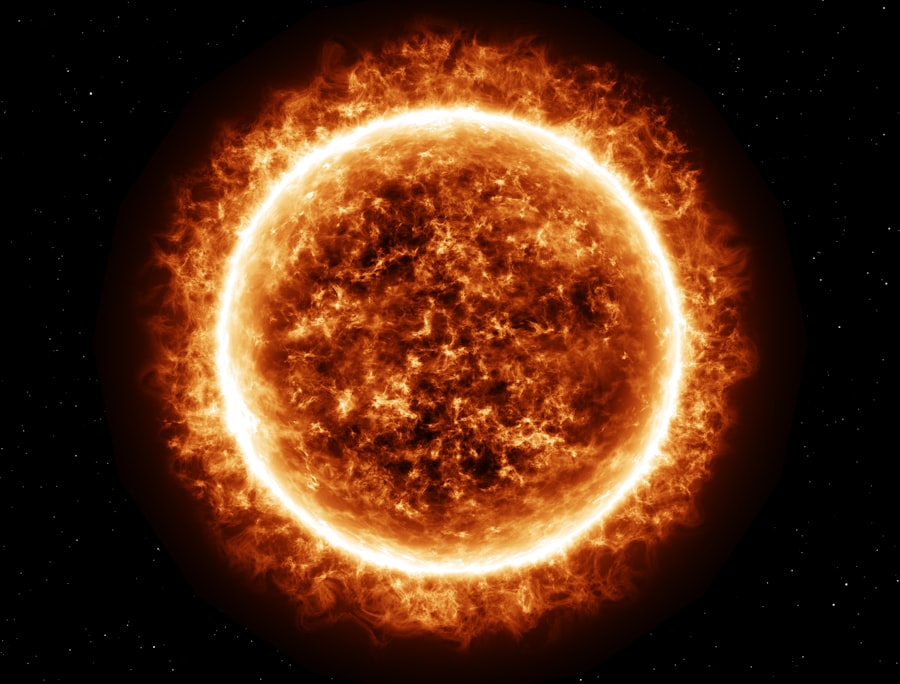
Solar flares are intense bursts of electromagnetic radiation originating from the Sun’s surface. These events are often associated with sunspots, regions of intense magnetic activity on the photosphere. The energy released during a solar flare is equivalent to millions of hydrogen bombs detonating simultaneously, propelling a torrent of high-energy particles and radiation into space.
Classification of Solar Flares
Solar flares are categorized based on their X-ray brightness as measured by satellites. This classification system, logarithmic in scale, provides a standard for comparing the intensity of different events.
- A-class flares: These are the smallest and most frequent flares, often indistinguishable from the background X-ray flux. They typically have no noticeable effects on Earth.
- B-class flares: Slightly more powerful than A-class flares, B-class events also generally have minimal impact on terrestrial systems.
- C-class flares: These are common and can produce minor, temporary disruptions to radio communications on Earth.
- M-class flares: Medium-sized flares, M-class events can cause brief radio blackouts at high latitudes and minor radiation storms.
- X-class flares: These are the largest and most powerful flares, capable of causing widespread and prolonged radio blackouts, satellite disruptions, and significant geomagnetic storms. An X-class flare, for example, can be hundreds of times more powerful than a B-class flare. The largest X-class flare ever recorded, occurring in 2003, saturated the X-ray detector on the GOES satellite, leading to an estimated X45 classification.
Solar Flare Mechanisms
The underlying mechanism for solar flares is the sudden release of magnetic energy stored in the Sun’s corona. This process is akin to a stretched elastic band snapping.
- Magnetic Reconnection: In regions of complex magnetic fields, especially around sunspots, magnetic field lines can become highly stressed and twisted. When these field lines cross and subsequently “reconnect,” their energy is violently released as radiation and accelerated particles. This reconnection process is a rapid reconfiguration of magnetic field lines, transforming stored magnetic energy into kinetic and thermal energy.
- Particle Acceleration: The sudden energy release during magnetic reconnection accelerates charged particles, primarily electrons and protons, to relativistic speeds. These accelerated particles then emit various forms of electromagnetic radiation, including X-rays, gamma rays, and radio waves.
Associated Solar Phenomena
Solar flares are often accompanied by, or are precursors to, other significant solar events that also impact Earth.
- Coronal Mass Ejections (CMEs): CMEs are massive expulsions of plasma and magnetic field from the Sun’s corona. While not all flares are accompanied by CMEs, and vice versa, strong flares are very often associated with CMEs. When a CME is directed towards Earth, it can create a geomagnetic storm.
- Solar Energetic Particle (SEP) Events: These events involve extremely high-energy protons and heavier ions accelerated by flares or CMEs. SEPs can pose radiation hazards to astronauts and spacecraft.
Solar flares, which are intense bursts of radiation from the sun, can significantly impact the Earth’s magnetic field and lead to transformer saturation in electrical grids. This phenomenon can cause voltage spikes and disrupt power distribution systems. For a deeper understanding of the relationship between solar activity and its effects on electrical infrastructure, you can read a related article that explores these dynamics in detail. Check it out here: Freaky Science.
Earth’s Magnetic Shield and its Vulnerabilities
Earth’s magnetosphere, generated by the planet’s molten iron core, acts as a protective shield, deflecting most of the charged particles emanating from the Sun. However, this shield is not impenetrable, and intense solar events can temporarily distort and compress it, allowing energetic particles to penetrate closer to the surface.
Geomagnetic Storms
When a CME or a high-speed solar wind stream impacts Earth’s magnetosphere, it can trigger a geomagnetic storm. These storms are characterized by rapid fluctuations in Earth’s magnetic field.
- Magnetospheric Compression: The arrival of a CME or high-speed solar wind compresses the dayside magnetosphere. This compression can generate electric currents in the ionosphere and magnetosphere.
- Substorm Activity: Geomagnetic storms are often accompanied by substorms, which involve the sudden release of energy stored in the magnetotail. This energy release leads to intense auroral displays and further disturbances in Earth’s magnetic field.
- Induced Geomagnetic Currents (GICs): The fluctuating magnetic field during a geomagnetic storm induces electric currents in long conductors on Earth’s surface, such as power transmission lines, pipelines, and railway tracks. These currents are known as Geomagnetically Induced Currents (GICs). The magnitude and direction of GICs are dependent on the conductivity of the underlying geology and the orientation of the infrastructure relative to the induced electric fields.
Transformer Saturation: A Consequence of GICs

GICs are quasi-DC currents, meaning they flow slowly and in a largely unidirectional manner, unlike the alternating current (AC) that powers electrical grids. When these GICs enter power transformers, they can have detrimental effects, leading to a phenomenon known as transformer saturation.
Transformer Basics
To understand saturation, it is useful to briefly review how transformers operate. Transformers are essential components of electrical grids, used to increase or decrease AC voltage. They consist of two or more coils of wire, called windings, wrapped around a common ferromagnetic core.
- Primary and Secondary Windings: An alternating current in the primary winding creates a fluctuating magnetic field in the core. This magnetic field, in turn, induces an alternating current in the secondary winding, with the voltage ratio determined by the ratio of turns in the windings.
- Ferromagnetic Core: The core, typically made of laminated silicon steel, is designed to efficiently channel the magnetic flux. Its ferromagnetic properties mean it can concentrate magnetic fields effectively.
The Mechanism of Saturation
Transformer saturation occurs when the magnetic flux density in the transformer’s core exceeds its maximum capacity, causing the core material to lose its ability to effectively channel the magnetic field.
- DC Offset from GICs: GICs, being quasi-DC, create an additional, steady magnetic flux in the transformer core. This DC flux effectively pre-biases the core, pushing it closer to its saturation point. Imagine a seesaw that is typically balanced by the alternating current; the GIC adds a constant weight to one side, tilting it before the AC even begins to swing.
- Distorted AC Waveform: When the core becomes saturated during parts of the AC cycle, its magnetic permeability drops drastically. This means the core can no longer efficiently transfer the magnetic flux from the primary to the secondary winding during those specific phases of the AC cycle. As a result, the AC current waveform becomes highly distorted, deviating significantly from its ideal sinusoidal shape.
- Half-Cycle Saturation: GICs preferentially cause saturation during one half-cycle of the AC waveform. This is because the DC component adds to the AC magnetic flux in one direction and subtracts from it in the other. When the combined flux exceeds the saturation limit, the transformer essentially behaves as if it’s operating with an air core during that half-cycle.
Impacts of Saturation on Transformers and the Grid
Transformer saturation can have a cascade of negative effects, threatening the stability and reliability of the entire power grid.
- Increased Reactive Power Demand: Saturated transformers appear to the system as large inductors, drawing significant amounts of reactive power from the grid. Reactive power is essential for maintaining voltage stability but does not do useful work (like powering your appliances). An excessive demand for reactive power can lead to voltage sags and instability.
- Harmonic Generation: The distorted current waveform produced by saturated transformers contains significant harmonic frequencies (multiples of the fundamental 50 or 60 Hz frequency). These harmonics can interfere with protective relays, control systems, and other sensitive electronic equipment on the grid, leading to malfunctions or false tripping.
- Overheating: When saturated, transformers experience increased excitation currents, which contribute to resistive heating in the windings. This overheating can severely degrade insulation, reduce the lifespan of the transformer, and in extreme cases, lead to permanent damage or even explosive failure. Prolonged saturation can increase the transformer’s operating temperature by tens of degrees Celsius, significantly accelerating aging.
- Protection System Malfunctions: The distorted waveforms and increased reactive power demand can confuse protective relays, which are designed to detect faults and isolate damaged sections of the grid. This can lead to false tripping, where healthy parts of the grid are disconnected, or, more dangerously, prevent actual faults from being cleared, exacerbating damage.
- Widespread Blackouts: If multiple critical transformers in a power grid saturate simultaneously, the cumulative effect can overwhelm the system, leading to voltage collapse and widespread, prolonged power outages. The 1989 Quebec blackout, which lasted for nine hours and affected six million people, is a prime example of such an event, directly attributed to GICs from a geomagnetic storm.
Mitigating the Risks: Protecting Our Grids
Given the significant threat posed by solar flares and transformer saturation, various strategies are being developed and implemented to protect electrical grids.
Monitoring and Forecasting Space Weather
Accurate and timely space weather forecasting is the first line of defense. Knowing when a significant solar event is likely to impact Earth allows grid operators to take proactive measures.
- Satellite Constellations: Space agencies like NASA and NOAA operate constellations of satellites (e.g., GOES, SOHO, STEREO) that continuously monitor the Sun for flares, CMEs, and solar wind conditions.
- Ground-Based Observatories: Terrestrial observatories contribute to solar observation and geomagnetic field monitoring, providing additional data for forecasting models.
- Predictive Models: Advanced numerical models are used to predict the arrival time, intensity, and potential impact of solar phenomena on Earth’s magnetosphere and ionosphere.
Grid Hardening and Operational Measures
Power grid operators are implementing various measures to harden their infrastructure against GICs and to manage the grid during geomagnetic storms.
- Transformer Design Modifications: Engineers are exploring and implementing transformer designs that are inherently more resilient to saturation. This can involve increasing the size of the core, using different core materials, or incorporating DC blocking devices.
- Neutral-Point Resistors: Installing resistors in the neutral connections of transformers can limit the flow of GICs by increasing the resistance in the path of the induced current. However, this also has implications for ground fault protection.
- Static Var Compensators (SVCs) and STATCOMs: These devices can rapidly inject or absorb reactive power to help stabilize grid voltage during periods of high reactive power demand caused by transformer saturation.
- Operational Procedures: During a predicted geomagnetic storm, grid operators can take pre-emptive actions, such as temporarily reducing voltage levels, shedding non-critical loads, or adjusting generator outputs to create additional reactive power reserves.
- GIC Monitoring Systems: Deploying GIC monitors in substations provides real-time data on the magnitude and direction of induced currents, allowing operators to assess the immediate threat and respond accordingly.
Research and Development
Ongoing research is crucial for developing more effective mitigation strategies and for a deeper understanding of space weather phenomena and their impacts.
- Advanced Modeling: Developing more sophisticated models that accurately simulate the interaction of GICs with complex power distribution networks and the resulting effects on individual transformers.
- Novel Materials: Research into new magnetic materials for transformer cores that exhibit higher saturation limits or operate more efficiently under DC bias conditions.
- Interdisciplinary Collaboration: Fostering collaboration between space physicists, electrical engineers, and grid operators to bridge the gap between space weather science and practical grid operations.
Understanding the intricate relationship between solar flares, geomagnetic storms, and transformer saturation is paramount for ensuring the resilience of our modern technological society. As our reliance on electricity grows, so too does the imperative to protect our grids from these inevitable and powerful forces of nature. Continued investment in monitoring, mitigation technologies, and scientific research is essential to safeguard this vital infrastructure from the Sun’s cosmic fury.
FAQs
What are solar flares?
Solar flares are sudden, intense bursts of radiation and energy released from the sun’s surface, often associated with sunspots and magnetic activity.
How do solar flares affect the Earth’s magnetic field?
Solar flares emit charged particles and electromagnetic radiation that can disturb the Earth’s magnetosphere, causing geomagnetic storms and fluctuations in the magnetic field.
What is transformer saturation?
Transformer saturation occurs when the magnetic core of a transformer becomes fully magnetized and cannot handle additional magnetic flux, leading to distortion in the transformer’s output and potential overheating.
How do solar flares cause transformer saturation?
Solar flares induce geomagnetically induced currents (GICs) in power lines and transformers, which can drive the transformer core into saturation by creating abnormal DC-like currents, disrupting normal operation.
What are the consequences of transformer saturation caused by solar flares?
Transformer saturation can lead to increased heating, reduced efficiency, voltage distortion, and in severe cases, damage or failure of the transformer, potentially causing power outages.