The Orange Tinge: Unraveling the Science Behind Orange Cat Coat Colors
The unmistakable hue of orange fur adorning many feline companions has long captivated cat enthusiasts. From the palest creams to the deepest gingers, this vibrant coloration is more than just aesthetic; it’s a fascinating window into the world of genetics. Understanding the science behind why some cats are born orange while others aren’t involves delving into the intricate interplay of genes, pigments, and their inheritance patterns. This article aims to demystify the genetics of orange cat coloration, exploring the key genes involved, their mechanisms of action, and the diverse patterns that emerge from their expression. By shedding light on these fundamental biological processes, we can gain a deeper appreciation for the genetic artistry that paints our feline friends in such striking shades.
If you’re curious about the fascinating world of orange cat genetics, you might find this article particularly enlightening. It breaks down the complex genetic factors that contribute to the orange coat color in cats in a way that’s easy to understand. For more information, check out the article here: Orange Cat Genetics Explained Simply.
The Genetic Basis of Orange Pigmentation
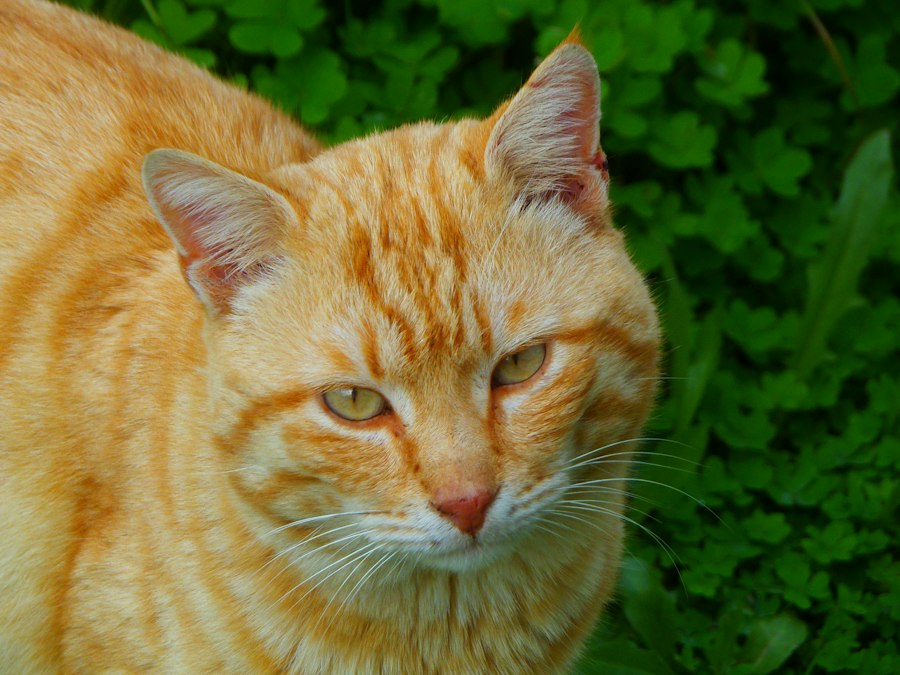
At the heart of orange coloration in cats lies a specific gene that dictates the production of a particular pigment. This gene, known as the Orange gene (often abbreviated as ‘O’ or ‘o’), is located on the X chromosome. Its primary function is to control the production and distribution of pheomelanin, a reddish-yellow pigment. Conversely, the absence of this gene’s dominant allele, or the presence of its recessive allele, allows for the production of eumelanin, the black or brown pigment responsible for a cat’s base coat color. The interaction between these two pigment types, and how they are expressed, is crucial to understanding the spectrum of orange and tabby patterns observed in cats.
The Role of the Orange Gene (O)
The Orange gene is a prime example of a gene that exhibits sex-linked inheritance, a concept fundamental to understanding orange cat genetics. This means the gene resides on the X chromosome, and since females have two X chromosomes (XX) while males have one X and one Y chromosome (XY), their genetic makeup regarding this trait differs significantly. The dominant allele for the Orange gene (O) is responsible for producing pheomelanin. When a cat inherits at least one copy of the dominant ‘O’ allele on its X chromosome, it will express orange coloration. This pheomelanin is what gives the fur its characteristic reddish or yellowish hue. The intensity and specific shade of orange can be further influenced by other genes, which we will discuss later, but the ‘O’ gene is the primary determinant of whether orange pigment is produced at all.
Eumelanin Versus Pheomelanin: The Pigment Palette
To truly grasp orange cat genetics, it’s essential to understand the two primary types of pigments found in mammalian fur: eumelanin and pheomelanin. Eumelanin is responsible for black, brown, and diluted shades like blue (grey) and lilac. The gene responsible for controlling eumelanin production is the non-agouti gene (a), and its presence leads to a solid, unpatterned coat. Pheomelanin, on the other hand, is the pigment that produces red, orange, and cream colors. The ‘Orange’ gene, as discussed, is the key player in enabling the production of pheomelanin. In cats that do not carry the dominant ‘O’ allele, eumelanin is the primary pigment, resulting in black, brown, grey, or other non-orange colors. The interplay between these two pigments, and how they are distributed across the coat, is what creates the diverse tapestry of feline coat colors and patterns.
Sex-Linked Inheritance and Its Implications
The sex-linked nature of the Orange gene has profound implications for the distribution of orange coloration in the feline population. Females, possessing two X chromosomes, can be homozygous dominant (OO), heterozygous (Oo), or homozygous recessive (oo). If a female is OO, both her X chromosomes carry the allele for orange, and she will be orange. If she is oo, neither X chromosome carries the allele for orange, and she will not be orange. The most interesting case is the heterozygous female (Oo). In cats, there’s a phenomenon called X-chromosome inactivation, or lyonization. This means that early in embryonic development, one of the two X chromosomes in each cell is randomly inactivated. For heterozygous females (Oo), this random inactivation means that some of their cells will express the ‘O’ allele, producing pheomelanin, while other cells will express the ‘o’ allele, allowing for eumelanin production. This mosaic expression is what leads to the unique tortoiseshell and calico patterns, where patches of orange are interspersed with patches of black or brown. Males, with only one X chromosome (XY), are either OY (carrying the ‘O’ allele on their X) or oY (carrying the ‘o’ allele on their X). Therefore, if a male inherits an X chromosome with the ‘O’ allele, he will be orange. If he inherits an X chromosome with the ‘o’ allele, he will not be orange. This explains why orange cats are overwhelmingly male.
The Influence of Other Genes on Orange Expression
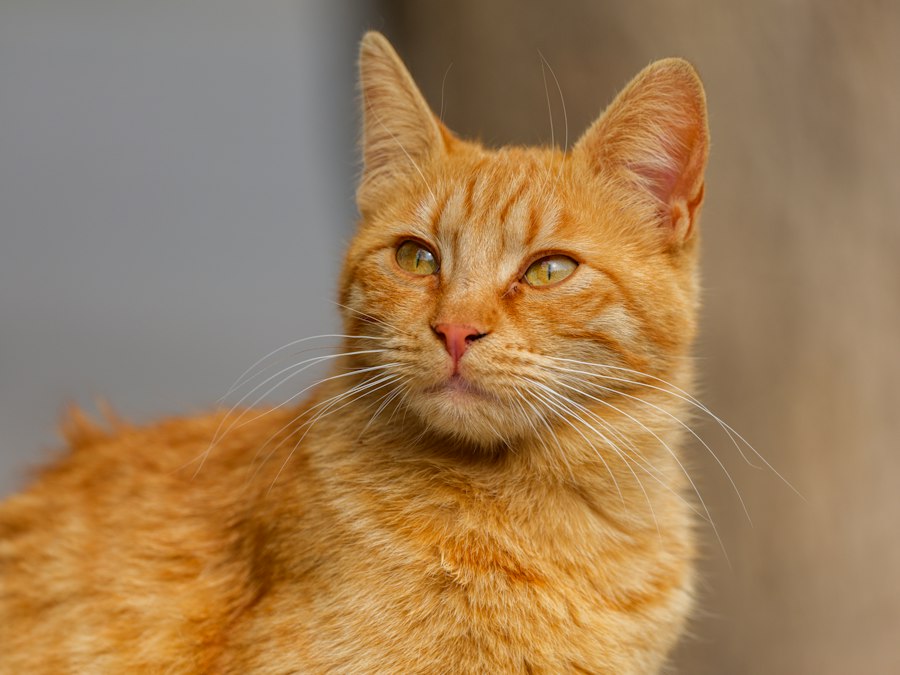
While the Orange gene is the primary determinant of pheomelanin production, its expression is not always straightforward. Several other genes act as modifiers, influencing the intensity, distribution, and overall appearance of the orange hue. These modifier genes can transform a vibrant orange into a pale cream or introduce subtle variations in pattern. Understanding these additional genetic players provides a more comprehensive picture of why no two orange cats are exactly alike.
Dilution Gene: Softening the Orange Hue
The dilution gene, located on a different chromosome than the Orange gene, acts to lighten the base color of a cat’s fur. When the dominant allele for this gene (D) is present, it allows for full expression of the underlying pigment. However, if a cat inherits two copies of the recessive allele (dd), it causes dilution of both eumelanin and pheomelanin. In orange cats, the dilution gene transforms the rich orange pigment into a softer, paler color known as cream. Therefore, a cat that is genetically orange (carrying the ‘O’ allele) and also carries two copies of the dilution gene (dd) will appear as a cream-colored cat. This gene works independently of the Orange gene, meaning a cat can be orange and also carry the dilution gene, resulting in a spectrum of cream shades.
Tabby Pattern Genes: Stripes, Swirls, and Patches
The gene responsible for producing tabby patterns plays a crucial role in how the orange pigment is displayed. The tabby pattern is not a separate color but rather a specific arrangement of pigment. Cats with the dominant tabby allele (T) will exhibit tabby markings, regardless of their base color. There are three main types of tabby patterns: mackerel (striped), classic (swirled), and ticked (agouti). In orange cats, these patterns are expressed as variations in the distribution of pheomelanin. For instance, mackerel tabbies will have darker orange stripes against a lighter orange background, while classic tabbies will have bolder swirls. The agouti gene (A) acts as a master switch for tabby patterns. If a cat has the dominant agouti allele (A), the tabby pattern is expressed. If it has two copies of the recessive non-agouti allele (aa), the coat will be solid, meaning the tabby pattern is masked, and the orange color will be uniformly distributed (though subtle banding might still be present if other factors are at play). This is why a solid orange cat is genetically an orange tabby that has inherited the non-agouti gene, preventing the full expression of the tabby markings.
The Role of the Agouti Gene in Solid Orange Cats
The agouti gene is a critical factor in determining whether a cat will display a solid coat or a tabby pattern. The dominant allele ‘A’ allows for the expression of the tabby pattern, meaning that pigment is distributed in bands along individual hairs, creating the characteristic stripes, swirls, or ticking. The recessive allele ‘a’ is non-agouti, which means it inhibits the expression of the tabby pattern, resulting in a solid-colored coat. Therefore, a cat that appears to be a “solid” orange cat is, in fact, genetically an orange tabby that has inherited two copies of the recessive non-agouti allele (aa). This genetic configuration prevents the tabby markings from being visible, giving the illusion of a uniform orange coat. The pheomelanin is still present, but its distribution is not segmented into distinct bands.
Understanding Calico and Tortoiseshell Patterns
The intricate mosaics of orange, black, and white found in calico and tortoiseshell cats are among the most visually striking expressions of feline genetics. These patterns are a direct consequence of the sex-linked inheritance of the Orange gene and the phenomenon of X-chromosome inactivation in females. The presence of white spotting also adds another layer of complexity to their coloration.
The Genetic Dance of X-Chromosome Inactivation
As previously mentioned, female cats possess two X chromosomes. The Orange gene resides on the X chromosome. In heterozygous females (Oo), early in embryonic development, one of the two X chromosomes in each cell is randomly inactivated. This means that in some cells, the X chromosome carrying the ‘O’ allele is active, leading to the production of pheomelanin (orange). In other cells, the X chromosome carrying the ‘o’ allele is active, allowing for the production of eumelanin (black or brown). This random inactivation creates a mosaic of pigment-producing cells throughout the cat’s body. If the cat also carries the gene for white spotting, patches of white will appear where no pigment is produced. The distribution of these patches and the extent of orange and black coloration are determined by the random nature of X-chromosome inactivation.
Tortoiseshell Cats: The Orange and Black Blend
Tortoiseshell cats are females that are heterozygous for the Orange gene (Oo) and do not have the white spotting gene (or have very minimal white). The random inactivation of one X chromosome in each cell leads to patches of orange and patches of black or brown intermingled across their coat. The “tortie” pattern can range from a brindled mixture of colors to distinct, clearly defined patches. The specific coloration is a direct result of the cellular lottery, where different cells express either the orange or the black/brown pigment.
Calico Cats: The Addition of White
Calico cats are essentially tortoiseshell cats with the addition of significant white spotting. The gene for white spotting is epistatic to the Orange gene, meaning it can mask the expression of other color genes. In calicos, the white spotting gene causes large areas of the coat to be white, interrupting the tortoiseshell pattern. The remaining colored patches will exhibit the typical orange and black/brown mottling characteristic of tortoiseshells. Therefore, a calico cat has inherited the heterozygous orange genotype (Oo), the gene for white spotting, and the genes that determine whether the colored patches are orange and black.
If you’re curious about the fascinating world of orange cat genetics, you might find it helpful to explore a related article that breaks down the science in an easy-to-understand way. This article explains how the unique coat color of orange cats is determined by their genetic makeup and the role of specific genes in this process. For a deeper dive into this topic, check out this informative piece on Freaky Science, where you can learn more about the intriguing traits of these beloved felines.
Breeding Orange Cats: Expectations and Realities
| Genetic Trait | Description | Chromosome Location | Inheritance Pattern | Effect on Coat Color |
|---|---|---|---|---|
| O Gene (Orange) | Controls orange pigment production (pheomelanin) | X Chromosome | X-linked dominant | Converts black pigment to orange |
| o Allele (Non-Orange) | Does not convert black pigment; results in black or brown fur | X Chromosome | X-linked recessive | Black or brown coat color |
| Sex Chromosomes | Males have XY, females have XX | Sex chromosomes | N/A | Males are either orange or non-orange; females can be orange, non-orange, or tortoiseshell |
| Tortoiseshell Pattern | Occurs when female has one O and one o allele | X Chromosome | Heterozygous females | Patchy orange and black fur |
| Male Orange Frequency | About 1 in 3 male cats are orange | N/A | N/A | Depends on population genetics |
Understanding orange cat genetics provides valuable insights for those interested in breeding these colorful felines. While the basics are straightforward, predicting the exact outcome of a breeding pair can be influenced by the modifier genes and the inherent randomness of inheritance. This section explores the common expectations when breeding orange cats and the factors that contribute to variations in offspring.
Male and Female Orange Offspring Ratios
Given the sex-linked nature of the Orange gene, the gender distribution of orange offspring is highly predictable. If an orange male (OY) is bred with a non-orange female (oo), all their male offspring will inherit the Y chromosome from him and an X chromosome with the ‘o’ allele from their mother, making them non-orange. All their female offspring will inherit the X chromosome with the ‘O’ allele from their father and an X chromosome with the ‘o’ allele from their mother, making them heterozygous (Oo) tortoiseshell or calico cats. If a non-orange male (oY) is bred with an orange female (OO), all their male offspring will inherit the X chromosome with the ‘O’ allele from their mother and the Y chromosome, making them orange. All their female offspring will inherit an X chromosome with the ‘O’ allele from their mother and an X chromosome with the ‘o’ allele from their father, making them heterozygous tortoiseshell or calico cats. Breeding two orange cats, where the male is orange (OY) and the female is orange (OO), will result in all orange offspring, both male and female. If an orange male (OY) breeds with a tortoiseshell or calico female (Oo), approximately half of their male offspring will be orange, and half will be non-orange. Approximately half of their female offspring will be tortoiseshell or calico, and half will be non-orange.
The Role of the Dam in Tortoiseshell and Calico Litters
When considering litters with potential for tortoiseshell or calico kittens, the mother (dam) plays a pivotal role. As explained earlier, tortoiseshell and calico patterns arise from X-chromosome inactivation in heterozygous females (Oo). Therefore, a litter can only produce tortoiseshell or calico kittens if the mother is herself a tortoiseshell or calico cat. If the mother is tortoiseshell or calico, and the father is either orange or non-orange, the offspring will inherit a mix of genes that can lead to these unique patterns. The father’s contribution will determine whether the offspring are orange or not, while the mother’s heterozygous status for the Orange gene, coupled with X-chromosome inactivation, creates the characteristic color combinations.
Managing Expectations with Modifier Genes
While the primary genes for orange color and tabby patterns are well-understood, the subtle variations seen in different orange cats are often due to the influence of modifier genes. These genes can affect the intensity of the orange pigment, the clarity of tabby markings, and the extent of dilution. For example, a cat might be genetically orange but appear a pale ginger due to the presence of other genes that lighten the pheomelanin. Similarly, some cats might have very faint tabby markings masked by a strong overall orange hue. Predicting the exact shade and pattern of offspring can therefore be challenging, even with knowledge of the parents’ genotypes, as the interplay of multiple modifier genes adds an element of unpredictability to the genetic outcome. Careful observation of the parents’ traits and their extended family can offer clues, but ultimately, nature plays its part in the final expression of these beautiful colors.
Beyond the Orange: Exploring Related Colors and Patterns
The genetics of orange coloration extends beyond the simple presence of the ‘O’ allele. Understanding how this gene interacts with other genetic factors opens up a broader appreciation for the diverse palette of feline coat colors. From the subtle variations within the orange spectrum to the dilution and patterning of other colors, the underlying genetic principles offer a fascinating glimpse into the complexity of animal coloration.
The Spectrum of Red and Cream Shades
The terms “red” and “orange” are often used interchangeably when describing the coloration of these cats, but in genetic terms, they both refer to the expression of pheomelanin. The intensity of this pheomelanin production is influenced by various factors, including the specific alleles present at the Orange gene locus and the presence of other modifying genes. A cat with strong pheomelanin production will appear as a vibrant ginger or marmalade. Conversely, if pheomelanin production is less intense, or if the dilution gene is present, the resulting color will be a paler cream. The “tabby” gene also plays a role, creating darker bands of orange against a lighter orange background, which can contribute to the perception of different “shades” of red or orange.
Understanding Black and Brown Variants
While this article focuses on orange genetics, it’s important to remember that the same fundamental genetic principles apply to other base colors. The eumelanin pigment is responsible for black and brown coats. The gene controlling eumelanin is independent of the Orange gene. Black cats possess the dominant allele for eumelanin production and are typically non-agouti (aa) for a solid black appearance. Brown cats have different alleles at the gene locus controlling eumelanin. Furthermore, dilution genes affect these colors as well, turning black into blue (grey) and brown into lilac. The interaction between the Orange gene and the genes for black/brown coloration, as seen in tortoiseshell and calico cats, highlights the intricate ways in which these pigments are regulated and expressed.
The Significance of White Spotting and Other Genes
White spotting, as discussed in the context of calico cats, is a separate genetic trait that influences the distribution of color. The gene responsible for white spotting can create large or small patches of white, often appearing on the paws, chest, and face. The extent of white spotting is determined by the specific alleles inherited for this trait. Beyond white spotting, other genes can further modify coat color and pattern. For example, the gene for the Siamese point coloration, where the extremities are darker, is another example of how specific genes can influence pigment production and distribution in different parts of the body. By understanding these various genetic influences, we can appreciate the remarkable diversity and beauty found in the feline coat colors that surround us.
Which Cat Color Lives Longest? The Research Has a Twist
FAQs
What determines the color of an orange cat?
Orange cats get their color from a pigment called pheomelanin, which is responsible for producing red and yellow hues in their fur.
Are all orange cats male?
No, both male and female cats can be orange. However, orange cats are more commonly male, with only about 20% being female.
Can two orange cats have non-orange kittens?
Yes, two orange cats can have kittens of various colors. The color of the kittens is determined by the combination of genes inherited from both parents.
What are the different patterns of orange cats?
Orange cats can have various patterns, including solid orange, tabby (striped), and bi-color (orange and white). These patterns are determined by different genetic factors.
Can orange cats have blue eyes?
While it is rare, some orange cats can have blue eyes. The presence of blue eyes in orange cats is usually due to a genetic mutation that affects the pigmentation of the eyes.