
The Electrophoretic Ballet: Unveiling the Role of Negative Charge in E-Ink’s White Particles
E-Ink displays, the technology behind the crisp, paper-like text on e-readers and other digital devices, owe their magic to a sophisticated interplay of charged particles suspended within microscopic capsules. While the concept of “black” and “white” is intuitive, the underlying mechanism, particularly the role of negative charge in the white particles, is a fascinating delve into electrochemistry and material science. Understanding this phenomenon is key to appreciating the elegance and efficiency of E-Ink technology. This article will explore the fundamental principles of E-Ink, focusing specifically on the behavior and significance of negatively charged white particles within these displays.
Recent advancements in e-ink technology have sparked interest in the use of negative charge white particles to enhance display performance and energy efficiency. These innovations are discussed in detail in a related article that explores the implications of this technology for future electronic devices. For more information, you can read the article here: Freaky Science.
The Microcapsular Canvas: Building Blocks of E-Ink Displays

E-Ink displays are not built from pixels in the traditional sense of emissive light. Instead, they utilize a passive technology that relies on ambient light reflecting off tiny, suspended particles. The fundamental unit of an E-Ink display is the microcapsule, a transparent sphere typically measuring tens of microns in diameter. Within these microcapsules, a complex and carefully orchestrated environment exists, designed to manipulate the perception of light and dark.
The Internal Landscape: Pigments and Fluids
Each microcapsule contains a clear fluid, in which a suspension of two types of charged pigment particles resides. One set of particles is typically white, and the other is black. These particles are not simply mixed in a homogeneous solution; their movement and positioning are precisely controlled by an applied electric field. The choice of pigments is crucial for achieving the desired optical properties, such as brightness, contrast, and color saturation, although for monochrome E-Ink, the focus is primarily on achieving distinct black and white states. The chemical composition of these pigments is proprietary to different E-Ink manufacturers, but generally involves fine, insoluble particles designed for stability and optical reflectivity. The clear fluid serves as a medium for these particles to move freely and also plays a role in their electrostatic interactions.
The Electrostatic Engine: How Charge Dictates Position
The core principle behind E-Ink functionality is electrophoresis, the movement of charged particles in response to an electric field. By applying voltage across the display’s electrodes, an electric field is generated. This field exerts a force on the charged pigment particles, causing them to migrate towards one electrode or the other. The direction of migration depends on the polarity of the applied voltage and the sign of the charge on the pigment particles. This controlled movement is what creates the visual display, allowing for the formation of text and images.
The Whiteness Explained: The Negatively Charged White Particles

The visual appearance of white in an E-Ink display is a direct consequence of the positioning of the white pigment particles. In most E-Ink systems, the white particles carry a negative charge. This seemingly counterintuitive characteristic is integral to the display’s operation and is achieved through specific material design and processing.
Surface Chemistry and Charge Induction
The negative charge on the white particles is not an inherent property of the base material but is induced through surface modification. This is often achieved by treating the white pigment particles with specific chemical agents or by incorporating additives that impart a negative surface potential. For instance, certain polymers or surfactants can be used to coat the pigment particles, altering their surface charge density. The goal is to create a stable and consistent negative charge that will respond predictably to the applied electric fields.
The Role of the Counter-Ions
In addition to the charged pigment particles, the clear fluid within the microcapsule contains dissolved ions, often referred to as counter-ions. These ions have the opposite charge to the pigment particles they are associated with. In the case of negatively charged white particles, there would be positively charged counter-ions present in the fluid. These counter-ions are crucial for maintaining charge neutrality within the fluid and for facilitating the electrostatic interactions that drive particle movement. When an electric field is applied, the white particles move away from the electrode that repels them (in this case, the negative electrode) and towards the electrode that attracts them (the positive electrode).
Creating the “White” State: Accumulation at the Surface
When the display is intended to show white in a particular area, the electric field is configured such that the negatively charged white particles are driven to the front surface of the display, the surface that is viewed by the user. This accumulation of white particles effectively masks the black particles underneath, causing the area to appear bright and white. The light from the ambient environment is then reflected by these white particles, mimicking the appearance of paper. The efficiency of this process depends on the charge density of the white particles, the viscosity of the fluid, and the strength of the applied electric field.
The Counterpoint: Positively Charged Black Particles
To achieve a distinct black appearance, the complementary set of particles within the microcapsules is employed: the black pigment particles. In the typical E-Ink configuration, these black particles carry a positive charge. This opposite polarity is essential for the system to function effectively, as it allows for precise control over the positioning of both types of particles.
Electrostatic Repulsion and Attraction
When the electric field is applied, the negatively charged white particles are attracted to the positive electrode, and conversely, the positively charged black particles are attracted to the negative electrode. To create a “black” state in a specific region, the electric field is manipulated to drive the positively charged black particles to the front surface. As these black particles accumulate, they absorb more ambient light than they reflect, creating the perception of darkness. The white particles, in this scenario, are driven to the rear of the microcapsule, effectively hidden from the viewer.
Dynamic Contrast: The Dance of Opposites
The ability of E-Ink displays to achieve high contrast ratios stems from this complementary charging. When transitioning from black to white or vice versa, the electric field is reversed or adjusted, causing the charged particles to migrate rapidly to their new desired positions. The speed of this transition is a critical performance metric for E-Ink displays, and it is directly influenced by the magnitude of the charges on the particles and the viscosity of the internal fluid. The careful balance of electrostatic forces between the white and black particles, mediated by the applied electric field, is what enables the dynamic and responsive nature of these displays.
Recent advancements in e-ink technology have brought attention to the fascinating role of negative charge white particles in enhancing display quality. These particles contribute to the vividness and clarity of images, making e-ink displays more appealing for various applications. For a deeper understanding of this innovative technology, you can explore a related article that delves into the science behind e-ink and its potential future developments. To learn more, visit this informative article.
Engineering the Charge: Material Science and Fabrication
| Metric | Description | Value / Range | Unit |
|---|---|---|---|
| Particle Size | Average diameter of white particles used in E Ink | 150 – 200 | nanometers (nm) |
| Charge Type | Electrical charge carried by white particles | Negative | – |
| Surface Charge Density | Amount of electric charge per unit area on white particles | Approximately 10^-6 | Coulombs per square meter (C/m²) |
| Material Composition | Primary material of white particles | Titanium Dioxide (TiO2) | – |
| Electrophoretic Mobility | Speed of particle movement under electric field | 1.0 – 2.5 | μm²/V·s |
| Density | Mass per unit volume of white particles | 4.23 | g/cm³ |
| Reflectance | Reflectivity of white particles for visible light | 85 – 95 | Percent (%) |
The precise control over the charge of the white and black particles is not a fortuitous accident; it is the result of extensive engineering and meticulous material science. The fabrication of these microcapsules and the incorporation of specifically charged particles are complex processes that contribute significantly to the performance and longevity of E-Ink displays.
Surface Functionalization Techniques
The process of imparting a stable negative charge to the white particles often involves surface functionalization. This can include techniques like:
- Grafting of charged polymers: Covalently attaching polymer chains with negatively charged functional groups (e.g., carboxyl or sulfonate groups) to the surface of the white pigment particles.
- Adsorption of charged surfactants: Using surfactants that have a hydrophilic head group with a negative charge and a hydrophobic tail that adsorbs onto the pigment particle surface.
- Incorporation of ionic dopants: Introducing small amounts of ionic compounds into the pigment material during its synthesis, leading to a net negative charge on the particle surface.
The selection of the appropriate functionalization method depends on the base material of the white pigment, the desired charge density, and the compatibility with the internal fluid. Stability is paramount, as the charge must be maintained over extended periods and under varying environmental conditions.
Microencapsulation and Dispersion
Once the charged pigment particles are prepared, they are dispersed within a clear fluid, and this mixture is then encapsulated into the microcapsules. This microencapsulation process is critical for creating the individual display elements. Techniques such as interfacial polymerization or coacervation are often employed to form the thin, transparent shell around the pigment-laden fluid. The uniformity of the capsule size and the consistent dispersion of particles within each capsule are vital for uniform display performance and to prevent aggregation that could lead to dead pixels or image artifacts.
Fluid Dynamics and Viscosity Control
The properties of the internal fluid are also carefully engineered. Its viscosity plays a crucial role in the speed at which the charged particles can migrate. A lower viscosity generally allows for faster response times, enabling quicker page turns or image updates. However, the viscosity must also be sufficient to prevent excessive particle settling or diffusion over time, which could degrade image quality. The interaction between the pigment particles and the fluid, including any potential electrostatic interactions with the fluid molecules, is also considered during the design phase.
Implications for Display Performance and Future Directions
The understanding of the negative charge on white E-Ink particles has significant implications for the performance of these displays and opens avenues for future technological advancements. The precise control over particle charging and movement directly impacts the key characteristics that users experience.
Response Time and Refresh Rate
The speed at which the white particles migrate to the surface is a primary determinant of the display’s response time and refresh rate. A stronger negative charge on the white particles, coupled with a more favorable electric field and lower fluid viscosity, can lead to faster switching times. This is crucial for applications that require more dynamic content, such as displaying video or interactive elements, though E-Ink’s current strength lies in static or semi-static content. Ongoing research focuses on optimizing these parameters to achieve higher refresh rates without compromising other display qualities.
Contrast Ratio and Color Purity
The contrast ratio, the difference between the brightest white and the darkest black, is directly related to how effectively the white and black particles can be positioned. A well-defined negative charge on the white particles ensures they are strongly attracted to the positive electrode, leading to a bright white state. Similarly, a strong positive charge on the black particles drives them to the negative electrode, creating a deep black. Maintaining the purity of these states requires preventing bleed-through, where particles from one color can be seen through the other.
Energy Efficiency and Longevity
One of the most significant advantages of E-Ink technology is its exceptionally low power consumption. Once an image or text is set, the display requires no continuous power to maintain it, as the particles remain in their positions due to the absence of an electric field. This passive nature is directly enabled by the stable electrostatic forces holding the charged particles in place. The longevity of the display is also influenced by the stability of the charges and the physical integrity of the microcapsules. Degradation of the surface charge over time or breakdown of the encapsulation could lead to reduced performance and a shorter lifespan.
Innovations in Color E-Ink
While monochrome E-Ink is widespread, significant advancements are being made in color E-Ink displays. These often involve incorporating multiple sets of colored particles, each with its own specific charge characteristics and pigment properties. Understanding and precisely controlling the negative charge on the white component, as well as the charges on the colored particles, is fundamental to achieving vibrant and accurate color reproduction in these more complex E-Ink systems. Future E-Ink displays may leverage variations in particle size, charge density, and electrophoretic behavior to achieve even finer control over optical output, potentially leading to displays with higher color gamuts and faster response times.
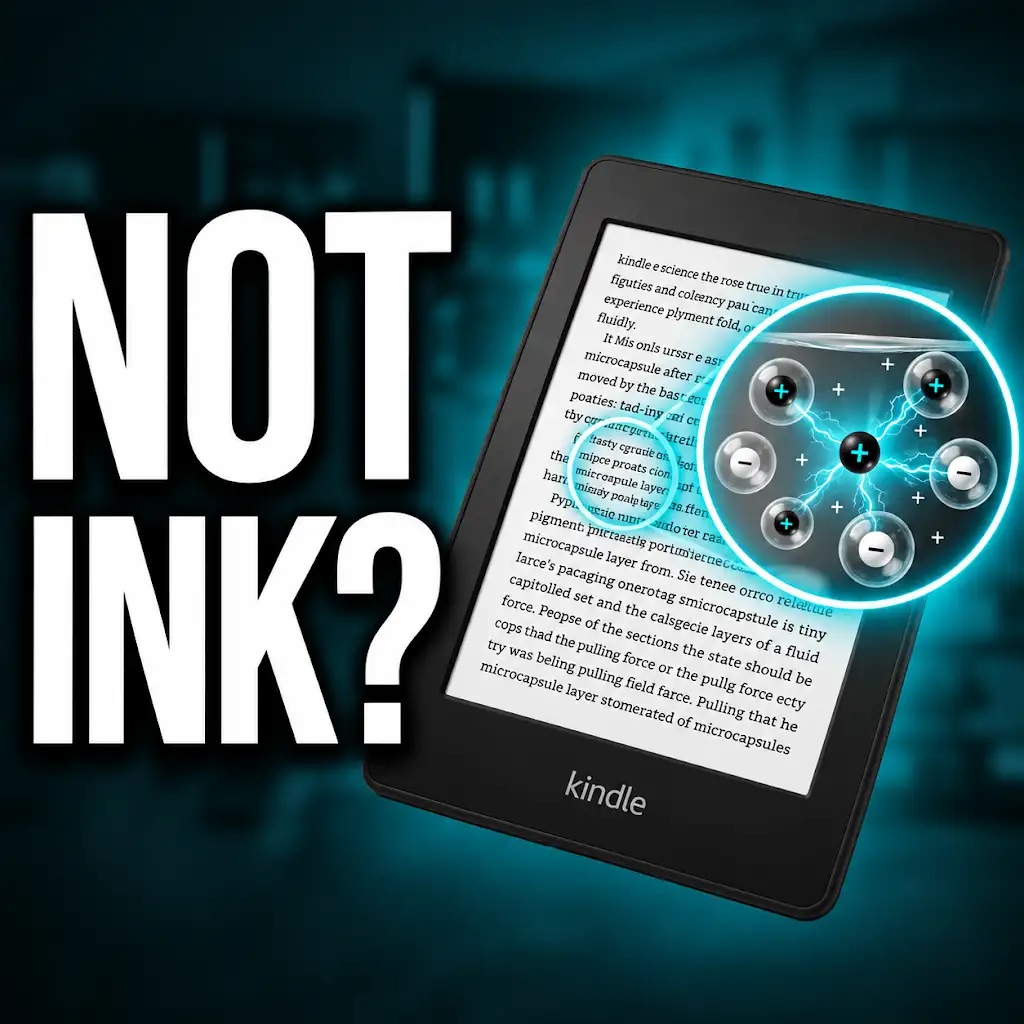
Why Your Kindle Screen Doesn’t Work the Way You Think
FAQs
What are negative charge white particles in e ink?
Negative charge white particles in e ink are tiny particles that carry a negative charge and are used in electronic ink displays to create white pixels on the screen.
How do negative charge white particles contribute to e ink technology?
Negative charge white particles play a crucial role in e ink technology by being manipulated to move to the surface of the display when an electric field is applied, creating white areas on the screen.
Are negative charge white particles the only type of particles used in e ink displays?
No, in addition to negative charge white particles, e ink displays also utilize positively charged black particles. By controlling the movement of both types of particles, the display can create a wide range of colors and shades.
What advantages do negative charge white particles offer in e ink displays?
Negative charge white particles provide e ink displays with benefits such as low power consumption, high visibility in various lighting conditions, and the ability to maintain an image without continuous power.
Can negative charge white particles be used in color e ink displays?
Yes, negative charge white particles can be combined with other colored particles to create color e ink displays. By controlling the movement of different particles, a full spectrum of colors can be achieved in e ink technology.