
You’ve probably encountered them countless times. That humming box in your kitchen, capable of transforming chilled leftovers into piping hot meals in mere minutes. But have you ever stopped to wonder about the magic happening inside? You’re not just blasting food with heat; you’re manipulating fundamental forces of nature. The secret lies within the microwave cavity electromagnetic field, a carefully engineered space where invisible waves perform their culinary alchemy. This article will guide you, the curious user, into the intricate world of this field, demystifying its generation, behavior, and the reasons behind its effectiveness.
The Genesis of the Field: From Magnetron to Cavity
Your microwave oven’s ability to heat food relies entirely on the generation and containment of microwave radiation. This process begins with a vital component: the magnetron. You don’t need to be an electrical engineer to grasp its essence. Think of it as a specialized vacuum tube, designed to emit a specific frequency of electromagnetic waves – typically around 2.45 gigahertz (GHz).
How the Magnetron Works: A Simplified View
The magnetron’s operation is a marvel of physics, involving the interaction of electrons, electric fields, and magnetic fields.
Electrons in Motion: The Electron Cloud
Inside the magnetron’s vacuum chamber, a heated filament (the cathode) releases electrons. These electrons are then accelerated by a powerful DC electric field applied between the cathode and the anode.
The Guiding Hand of Magnetism: The Lorentz Force
This accelerating cloud of electrons is then subjected to a strong magnetic field, usually provided by permanent magnets. This magnetic field doesn’t push the electrons directly; instead, it deflects their path, causing them to spiral.
Creating the Waves: Resonant Cavities and Oscillation
The anode of the magnetron isn’t a simple solid structure. It’s actually a series of interconnected resonant cavities. As the spiraling electrons pass by these cavities, they interact with them, inducing an oscillating electromagnetic field within each cavity. This oscillation, akin to a musical instrument resonating at a specific pitch, is what generates the microwave radiation. The design of these cavities is crucial for determining the precise frequency of the microwaves produced. The 2.45 GHz frequency is chosen because it’s highly effective at exciting water molecules in food, leading to rapid heating.
Directing the Energy: The Waveguide
Once generated, these powerful microwave energy waves need to be channeled from the magnetron to the food. This is the job of the waveguide.
The Waveguide’s Role: A Metallic Tunnel
Imagine a hollow metal tube. This is essentially what a waveguide is. It’s meticulously constructed from conductive material, typically aluminum, with specific dimensions. Its shape and size are critical; they are engineered to efficiently guide the microwave energy from the magnetron towards the cooking cavity while minimizing energy loss. The dimensions of the waveguide are designed to allow the propagation of the dominant microwave mode, ensuring that the energy travels in a controlled manner.
Preventing Backflow: The Circulator (Optional but Important)
In some more sophisticated microwave ovens, you might find a component called a circulator. While not always present in basic models, it plays a vital role in protecting the magnetron.
The Circulator’s Function: Protecting the Source
The circulator is a passive device that directs microwave energy in a specific direction. It ensures that microwaves travel from the magnetron to the waveguide and then to the cavity. Crucially, it prevents any reflected microwave energy from bouncing back into the magnetron. Reflections can occur when microwaves interact with the food and are not fully absorbed. If these reflected waves were to return to the magnetron, they could damage it or reduce its efficiency.
Microwave cavity electromagnetic fields play a crucial role in various scientific and engineering applications, including telecommunications and quantum computing. For a deeper understanding of this topic, you can explore an insightful article that delves into the principles and applications of microwave cavities. This article provides a comprehensive overview of how electromagnetic fields behave within these structures and their significance in modern technology. To read more, visit Freaky Science.
The Heart of the Operation: The Microwave Cavity
Now, we arrive at the microwave cavity itself – the inner chamber of your oven. This is where the magic truly happens, where the channeled microwave energy is contained and distributed to interact with your food. The cavity is not just an empty box; it’s a precisely designed resonant structure.
The Cavity as a Resonator: Amplifying and Sustaining Waves
The term “cavity” implies a hollow space, but in the context of microwaves, it’s much more. The microwave cavity acts as a resonant cavity. This means that when microwaves of the correct frequency are introduced, they can be sustained and amplified within the cavity, much like blowing across the top of a bottle produces a tone.
Boundary Conditions: The Walls That Matter
The conductive walls of the microwave cavity play a critical role. They are designed to be highly reflective of microwaves. This reflectivity ensures that the microwave energy bounces around inside the cavity, rather than escaping. This bouncing is not random; it creates a complex pattern of standing waves within the cavity.
Standing Waves: The Stationary Symphony of Waves
When waves of the same frequency travel in opposite directions and interfere with each other, they can create standing waves. Imagine a jump rope being swung at a steady rhythm; the rope appears to form stationary loops. In the microwave cavity, these standing waves have fixed points of maximum and minimum electric and magnetic field strength. These points are known as antinodes (maximum amplitude) and nodes (zero amplitude). Understanding these standing waves is crucial for understanding how food is heated.
The Role of the Turntable and Stirrer: Ensuring Even Heating
You’ve likely noticed the rotating turntable in your microwave. This isn’t just for aesthetics; it’s a clever engineering solution to a fundamental problem related to the standing wave patterns.
Addressing Hot and Cold Spots: The Standing Wave Challenge
Because of the stationary nature of standing waves, there are areas within the cavity where the microwave field is strongest (antinodes) and areas where it is weakest or even zero (nodes). If your food remained stationary, it would be heated unevenly, with some parts becoming overcooked while others remain cold.
The Turntable’s Solution: Constant Movement
The turntable’s rotation moves the food through these different field strengths. By continuously repositioning the food, it ensures that all parts of the food are exposed to varying intensities of microwave energy, leading to more uniform heating.
The Stirrer Fan: Another Approach to Distribution
Some microwave ovens utilize a stirrer fan, usually located at the top of the cavity. This fan is made of a reflective material and rotates, subtly altering the shape and reflections of the cavity.
The Stirrer’s Purpose: Disrupting Static Patterns
By changing the effective geometry of the cavity, the stirrer fan helps to “scramble” the standing wave patterns. This dynamic alteration of the field distribution further contributes to more even heating by preventing any single spot from being consistently exposed to a node or antinode for too long.
The Electromagnetic Field: A Closer Look
Now, let’s delve deeper into the nature of the electromagnetic field itself within the cavity. It’s a dynamic interplay of electric and magnetic fields oscillating at high frequency.
Electric Fields: The Force Behind Molecular Vibration
The electric field component of the microwave radiation is the primary driver of food heating.
Oscillating Electric Fields and Polar Molecules
Most food substances contain water, which is a polar molecule. This means that water molecules have a slight positive charge on one end and a slight negative charge on the other, like tiny magnets. When an oscillating electric field is applied, these polar molecules try to align themselves with the changing direction of the field.
Friction Generates Heat: The Molecular Dance
As the electric field rapidly oscillates (billions of times per second at 2.45 GHz), the water molecules are constantly jostled and twisted as they try to keep up. This frantic molecular motion creates friction between the molecules, and this friction is what generates heat. It’s like rubbing your hands together very, very quickly – the friction produces heat.
Dielectric Heating: The Principle at Play
This process is known as dielectric heating. The microwave energy is absorbed by the food, causing the polar molecules within it to vibrate and generate heat internally. This is why microwave ovens are so efficient at heating foods with high water content.
Magnetic Fields: A Supporting Role
While the electric field is the primary heating agent, the magnetic field component of the electromagnetic wave also plays a role, though its direct heating effect on food is generally less significant compared to the electric field’s interaction with polar molecules.
Induced Currents: Faraday’s Law in Action
The oscillating magnetic field within the cavity can induce eddy currents in conductive materials. This phenomenon is described by Faraday’s Law of Induction. If you were to place a metallic object in a microwave, these induced currents could become quite significant.
The Danger of Metal: Arcing and Sparks
This is why metal is generally not recommended for microwave use. The induced currents in metal can become so strong that they cause sparks and arcing, which can damage the oven and even be a fire hazard. The uneven distribution of these induced currents in complex metal shapes is what leads to this phenomenon.
Field Interactions: A Complex Dance
The electric and magnetic fields are inextricably linked in an electromagnetic wave. They oscillate perpendicular to each other and also perpendicular to the direction of wave propagation. Within the cavity, these fields interact with the boundaries and with each other, creating the complex standing wave patterns we discussed.
Understanding Energy Distribution and Absorption
The effectiveness of your microwave oven lies in how well the generated electromagnetic field is distributed and absorbed by the food. This involves understanding the nuances of the field within the cavity.
The Concept of Electromagnetic Field Patterns
As we’ve touched upon, the microwave cavity isn’t a uniform field. It’s a complex distribution of electric and magnetic field strengths.
Nodes and Antinodes Revisited: Where Energy is Concentrated
The standing wave patterns create distinct regions within the cavity. Antinodes represent areas of maximum electric field intensity, where the molecules will experience the most vigorous jostling and thus heat up most rapidly. Nodes, on the other hand, are points where the electric field is close to zero, leading to minimal heating.
Mode of Propagation: How Waves Travel
The way microwaves propagate within the cavity is also important. In a rectangular cavity, like most microwave ovens, specific modes of propagation exist. These modes describe the pattern of electric and magnetic fields. The dominant mode, often denoted as the TE10 mode in a rectangular waveguide, is typically the primary mode used to excite the cavity. Higher-order modes can also exist, contributing to a more complex field distribution.
Factors Affecting Absorption: Food Properties Matter
The way your food interacts with the electromagnetic field is not solely dependent on the field itself. The properties of the food play a crucial role.
Water Content: The Key Ingredient for Heating
As mentioned, water is the primary absorber of microwave energy due to its polarity. Foods with higher water content will heat up faster and more efficiently. This is why fruits, vegetables, and many cooked dishes heat well in a microwave.
Dielectric Properties: A Measure of Absorption
The dielectric properties of a food item quantify how effectively it absorbs microwave energy. These properties include dielectric constant (which relates to the ability of the material to store electric energy) and dielectric loss factor (which relates to the dissipation of energy as heat). Different foods have different dielectric properties, explaining why a slice of bread might heat differently than a piece of meat, even if their water content is similar.
Density and Structure: Obstacles to Penetration
The density and internal structure of food can also influence microwave penetration. Denser foods may require longer cooking times as the microwaves need to travel further and overcome more resistance. The presence of air pockets or irregular structures can also affect the uniformity of heating.
The Limits of Penetration: Not a Magic Wand
It’s important to understand that microwaves don’t penetrate infinitely deep into food. The depth of penetration depends on the microwave frequency and the dielectric properties of the food. For typical microwave oven frequencies, the penetration depth in water-rich foods is generally a few centimeters.
Surface vs. Internal Heating: A Balance
This limited penetration means that microwaves primarily heat the outer layers of food. The internal heating of larger or denser food items often occurs through conduction – the transfer of heat from the hotter outer layers to the cooler inner core. This is another reason why standing time after microwaving is often recommended; it allows the internal heat to distribute evenly.
In exploring the intricate dynamics of microwave cavity electromagnetic fields, one can gain deeper insights by referring to a related article that delves into the fundamental principles governing these phenomena. This article provides a comprehensive overview of how microwave cavities function and their applications in various scientific fields. For those interested in expanding their understanding, the article can be found here, offering valuable information that complements the study of electromagnetic fields in microwave technology.
Troubleshooting and Optimizing Your Microwave Experience
Understanding the microwave cavity electromagnetic field can empower you to use your oven more effectively and troubleshoot common issues.
Uneven Heating: The Persistent Problem
This is perhaps the most common complaint about microwave ovens. You’ve followed the instructions, but one part of your meal is scalding hot while another is still lukewarm.
Diagnosing the Cause: Field Patterns and Food Placement
As we’ve discussed, uneven heating is often a direct result of the standing wave patterns and inadequate distribution. If your turntable isn’t rotating properly or your stirrer is malfunctioning, you’re more likely to experience these hot and cold spots. Incorrect food placement, especially for larger items that might partially obstruct the wave propagation, can also contribute.
Solutions: Turntable, Stirrer, and Food Arrangement
- Ensure the Turntable Works: Make sure the turntable is properly seated and rotating freely. Clean any debris that might impede its movement.
- Observe the Stirrer: If your oven has a stirrer, ensure it’s not blocked and appears to be rotating.
- Strategic Food Arrangement: For larger items, consider arranging them in a ring shape rather than a solid mass. This allows microwaves to reach more of the food’s surface. If you’re heating multiple items, place them closer to the center of the turntable where the field might be more uniform.
- “Standing Time” is Your Friend: Allow food to stand for a minute or two after microwaving. This allows heat to conduct from hotter areas to cooler ones.
- Stirring or Repositioning: For certain foods, like soups or stews, pausing the microwave halfway through and stirring can significantly improve evenness.
Why Some Foods Don’t Microwave Well
You’ve probably noticed that certain foods are better suited for microwaving than others. This often comes down to their interaction with the electromagnetic field.
Foods with Low Water Content: Lack of Absorption
Foods with very low water content, such as dry crackers or some baked goods, will not heat effectively because there are fewer polar molecules to interact with the electric field. They might become brittle or stale rather than hot.
Foods with Significant Metal Components: The Danger Zone
As we’ve discussed, metal reflects microwaves and can cause arcing. This makes foods with metal packaging or significant metal components (like some frozen meals) unsuitable for microwaving.
Foods with Intricate Shapes: Complex Field Interactions
Foods with very irregular or complex shapes can lead to unpredictable heating patterns. Some parts might be exposed to strong fields, while others are shielded.
Optimizing Cooking Times and Power Levels
Understanding the field helps you make better decisions about cooking.
Power Levels: Controlling Intensity, Not Frequency
When you adjust the power level on your microwave, you’re not changing the frequency of the microwaves (that’s fixed by the magnetron). Instead, you’re controlling the duty cycle of the magnetron – essentially, how long it’s turned on and off. A lower power setting means the magnetron is pulsed on and off more frequently, delivering less energy over a given period. This is useful for gentle heating or defrosting.
Matching Time to Food and Field
Knowing that microwaves heat by exciting water molecules, you can better estimate cooking times. Foods with more water will cook faster. For uneven heating issues, consider slightly increasing the cooking time and allowing for standing time, which can compensate for localized cold spots through conduction.
The Future of Microwave Cavity Technology
The principles behind microwave cavity electromagnetic fields are well-established, but innovation continues.
Advanced Cavity Designs: Towards Greater Uniformity
Researchers are constantly exploring new cavity designs and antenna configurations to achieve even more uniform microwave distribution. This includes investigating multi-frequency operation and more sophisticated field shaping techniques.
Smart Ovens and Sensor Technology: Adapting to the Food
The integration of sensors and intelligent algorithms is leading to “smart” ovens that can detect the food’s composition and moisture content. These ovens can then dynamically adjust the microwave power and duration to achieve optimal cooking results, effectively compensating for the inherent variability in food properties and field distribution.
Energy Efficiency and Sustainability: Minimizing Waste
As energy efficiency becomes increasingly important, advancements in magnetron technology and cavity design are focused on minimizing energy loss and maximizing the efficient transfer of microwave energy to the food.
By understanding the fundamental principles of the microwave cavity electromagnetic field, you gain a deeper appreciation for the technology in your kitchen and can use your microwave with greater confidence and effectiveness. It’s a testament to human ingenuity that these invisible waves, precisely controlled and contained, can so efficiently transform our food.
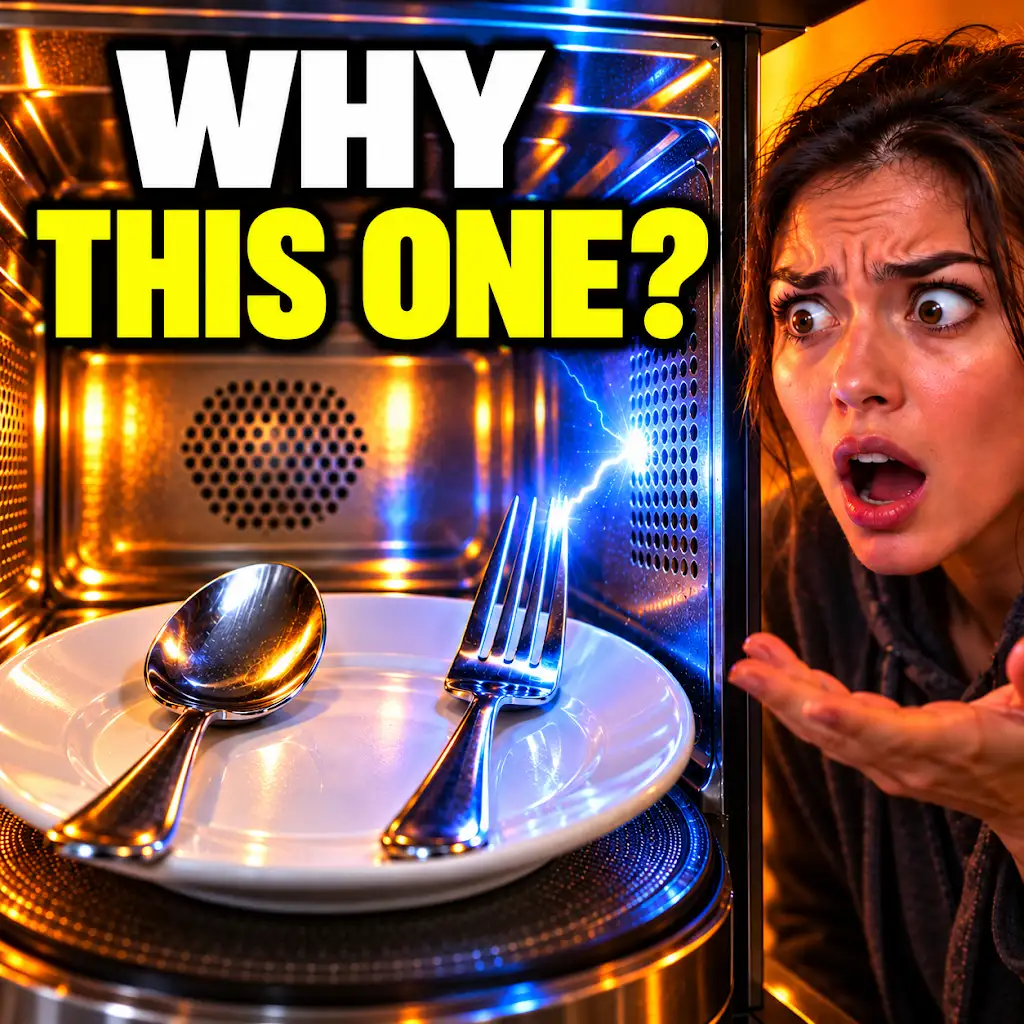
A Fork and a Spoon React Differently in a Microwave. Why?
FAQs
What is a microwave cavity electromagnetic field?
A microwave cavity electromagnetic field refers to the electromagnetic field that is present within a microwave cavity, which is a metallic enclosure used to contain and control electromagnetic fields in the microwave frequency range.
How is a microwave cavity electromagnetic field generated?
A microwave cavity electromagnetic field is generated by introducing microwave energy into the cavity through a waveguide. The energy then bounces back and forth between the cavity walls, creating standing waves and a strong electromagnetic field.
What are the applications of microwave cavity electromagnetic fields?
Microwave cavity electromagnetic fields are used in various applications such as microwave heating, microwave spectroscopy, and in devices like microwave ovens, particle accelerators, and cavity resonators in microwave communication systems.
What are the characteristics of a microwave cavity electromagnetic field?
The characteristics of a microwave cavity electromagnetic field include standing wave patterns, strong electric and magnetic fields, and the ability to efficiently transfer energy to materials placed within the cavity.
How is a microwave cavity electromagnetic field measured and controlled?
Microwave cavity electromagnetic fields can be measured using specialized equipment such as microwave probes and field meters. They can be controlled by adjusting the dimensions of the cavity, the frequency of the input energy, and the placement of materials within the cavity.