You’ve probably seen it before, a disconcerting flash of light and a crackling sound emanating from your microwave oven. It’s not just a quirky malfunction; it’s a fascinating phenomenon involving microwave arcing and plasma formation. Understanding what’s happening inside your appliance can demystify these occurrences and help you prevent them, ensuring your microwave remains a safe and efficient tool in your kitchen. This article will guide you through the science behind these events, from the basic principles of microwaves to the complex physics of electrical discharges.
Before diving into the complexities of arcing and plasma, it’s crucial to grasp the fundamental principles of how your microwave oven operates. It’s a surprisingly ingenious piece of technology that uses electromagnetic radiation to heat your food.
The Electromagnetic Spectrum and Microwaves
You’re likely familiar with the electromagnetic spectrum, a range of all types of radiation, from radio waves to gamma rays. Microwaves occupy a specific, relatively narrow band within this spectrum, typically between 300 megahertz (MHz) and 300 gigahertz (GHz). Your kitchen microwave oven is designed to operate at a frequency of around 2.45 GHz. This specific frequency is chosen because it’s particularly effective at interacting with water molecules, the primary component of most foods.
The Magnetron: The Heart of the Microwave
The component responsible for generating these microwaves is the magnetron. Think of it as the powerhouse of your microwave oven. The magnetron is a vacuum tube that uses a combination of strong magnetic fields and electric fields to accelerate electrons. As these electrons move in specific patterns within the tube, they generate electromagnetic waves – microwaves. These waves are then channeled through a waveguide into the cooking cavity.
The Cooking Cavity and Waveguides
The cooking cavity is the metal box where you place your food. The metal walls are crucial because they reflect microwaves, preventing them from escaping the oven. This reflection ensures that the energy is contained and directed towards your food. The waveguide is a hollow metal tube that guides the microwaves from the magnetron to the cavity. Without the waveguide, the microwaves would dissipate harmlessly.
How Microwaves Heat Food: Dielectric Heating
The magic of microwave cooking lies in a process called dielectric heating. When microwaves enter the cooking cavity, they interact with polar molecules in your food, most notably water. Polar molecules have a positive and a negative end, like tiny magnets. The oscillating electric field of the microwaves causes these polar molecules to rapidly rotate back and forth, trying to align themselves with the changing field. This constant jostling and friction between molecules generates heat, cooking your food from the inside out.
Microwave arcing and plasma phenomena can often lead to unexpected and sometimes dangerous situations when using a microwave oven. For a deeper understanding of these concepts, you can explore the article that explains the science behind microwave arcing and the formation of plasma in detail. This informative piece provides insights into the mechanisms at play and offers safety tips to avoid potential hazards. To read more, visit this article.
Understanding Electrical Arcing
Electrical arcing is a sudden, uncontrolled electrical discharge that occurs when the air or another insulating medium between two conductors breaks down due to a high voltage. It’s a phenomenon you’ll encounter in various electrical contexts, from lightning strikes to the sparks you might see in a faulty appliance.
The Breakdown Voltage of Air
Air, at normal atmospheric pressure and temperature, is a good insulator. However, like any insulator, it has a limit to how much electric field it can withstand before it breaks down. This limit is known as the dielectric strength of air. When the electric field between two conductors exceeds this breakdown voltage, the air molecules become ionized. This means electrons are stripped from the atoms, creating a plasma – a highly conductive medium.
The Role of Conductors and Insulators
In the context of your microwave oven, arcing typically involves conductors. Conductors are materials that allow electricity to flow easily, such as metals. Insulators, on the other hand, resist the flow of electricity. The metal walls of your microwave oven are conductors, as are the metal racks, utensils, or even the foil you might accidentally leave inside. The air within the oven cavity acts as the insulating medium.
The Path of Least Resistance
When a sufficiently high voltage is applied across two conductors separated by an insulator, the electric field lines concentrate around any imperfections or sharp points. This concentration of the electric field can reach the breakdown voltage of the insulator at specific points. Once the insulator breaks down, it creates a conductive path, and a rapid flow of electrical current, known as an arc, occurs. This arc essentially creates a temporary, highly conductive “wire” of ionized gas between the conductors, allowing electricity to jump the gap.
Why Metal Objects Cause Arcing in Microwaves
This is where understanding arcing becomes crucial for microwave users. Metal objects placed inside a microwave oven can create ideal conditions for arcing.
Faraday Cages and Reflection
The metal interior of your microwave oven acts as a Faraday cage, reflecting the microwaves. This reflection is what keeps the energy contained. However, when you introduce a metal object into this environment, it can interact with these reflected microwaves in complex ways.
Charge Buildup on Metal Surfaces
Metal objects within the microwave cavity can accumulate electrical charges. The oscillating electromagnetic field of the microwaves induces currents within conductive materials. If the object is not properly grounded or has sharp points, these induced charges can build up to very high potentials.
Point Discharge and Corona Discharge
Sharp edges, points, or thin metal foils are particularly prone to accumulating high charge densities. When the electric field at these points becomes strong enough, it can ionize the surrounding air, leading to a phenomenon called “point discharge” or “corona discharge.” This is a faint, often invisible glowing of ionized gas around the sharp object. While less dramatic than a full arc, it’s a precursor to more significant arcing.
The Critical Gap Distance
The likelihood of arcing depends heavily on the distance between conductors and the sharpness of the points. If two metal objects are too close, or if a metal object is too close to the metal walls of the oven, the electric field between them can become strong enough to overcome the insulating properties of the air, leading to a visible arc. Think of it like a mini-lightning bolt.
The Science of Plasma Formation

Plasma, often referred to as the “fourth state of matter” (alongside solid, liquid, and gas), is an ionized gas. It’s a complex and energetic medium with unique properties that are fundamental to understanding microwave arcing.
Ionization: The Birth of Plasma
Plasma formation begins with ionization. This is the process by which neutral atoms or molecules lose or gain electrons, becoming electrically charged ions. In the context of your microwave, ionization is triggered by the intense electromagnetic fields.
Electron Collisions and Energy Transfer
The microwaves within the oven carry energy. When these microwaves interact with the air molecules, they can transfer energy to the electrons within those molecules. If an electron gains enough energy, it can be ejected from the atom, leaving behind a positively charged ion. This process is accelerated when there are already free electrons present, which can be further accelerated by the microwave field and then collide with neutral atoms, causing further ionization.
The Self-Sustaining Nature of Plasma
Once a few ions and free electrons are created, the process can become self-sustaining. The electric field of the microwaves accelerates the free electrons. These accelerated electrons then collide with neutral gas molecules, knocking off more electrons and creating more ions. This cascade effect leads to a rapidly growing population of charged particles, forming a plasma.
Properties of Plasma
Plasma is a highly conductive medium because of the abundance of free charged particles (electrons and ions). It also emits light, which is why you see a flash when arcing occurs. The color of the emitted light can vary depending on the gases present and the energy of the plasma.
Electromagnetic Interactions
Plasma is highly interactive with electromagnetic fields. The charged particles within the plasma are influenced by external fields, and conversely, the movement of these charged particles generates its own electromagnetic fields. This is why plasma can absorb, reflect, and refract microwaves.
High Temperatures and Energy
Plasma is an extremely energetic state of matter. The collisions between charged particles and neutral atoms are energetic, leading to high temperatures. The visible arc in your microwave is a manifestation of this intense energy release.
Plasma in the Microwave Oven
When arcing occurs in your microwave, it’s essentially the creation of a small, localized plasma discharge. The intense electric field at a point of high charge concentration ionizes the air, creating a conductive channel of plasma. This plasma then readily conducts the electrical current, producing the bright flash and crackling sound. The microwaves are then absorbed and scattered by this plasma, which can lead to localized overheating and further damage.
Common Causes of Microwave Arcing
Identifying the common culprits behind microwave arcing is key to preventing these alarming events and protecting your appliance. It often boils down to the presence of conductive materials or their improper use.
Metal Utensils and Containers
This is perhaps the most well-known cause. Placing metal forks, spoons, knives, or even metal-rimmed plates in the microwave is a surefire way to invite arcing. The metal reflects microwaves, leading to charge buildup and potential discharges.
Thin Metal Foils and Wrappers
Even seemingly innocuous items like aluminum foil or metallic food packaging can cause problems. Their thinness and often irregular shapes create points where electric fields can concentrate, leading to corona discharge and potentially full arcing. While some microwave-safe packaging might have specific metallic elements, it’s always best to err on the side of caution.
Metal Racks and Accessories
If your microwave came with a metal rack, ensure it’s placed correctly and not touching the walls or other metal components in a way that creates a short circuit. Accidental placement of other metal objects, like a stray pan lid, can also be a source of arcing.
Unintended Metal Objects
Sometimes, metal objects find their way into the microwave by accident. This could be a forgotten twist tie on a bag, a piece of a broken appliance, or even a paperclip. Thoroughly checking the contents of your food packaging is always a good practice.
Deteriorated or Damaged Interior Components
Over time, the interior of your microwave can degrade. Peeling paint or damaged areas on the metal walls can sometimes create rough surfaces or expose underlying conductive materials, increasing the likelihood of arcing.
Damaged Waveguide Cover
The waveguide cover, often a mica or plastic sheet, protects the waveguide opening from food splatter. If this cover is damaged, cracked, or has food buildup, it can interfere with microwave distribution and potentially lead to arcing.
Warped or Bent Metal Components
If any of the internal metal components, including the door seals or the cavity walls themselves, become significantly warped or bent, they might create a smaller gap between conductive surfaces. This reduced gap can facilitate the electric field buildup necessary for arcing.
Improperly Installed Aftermarket Accessories
If you’ve installed any aftermarket accessories or repairs yourself, ensure they are done according to manufacturer instructions. Improperly fitting or insulated metal components can introduce new arcing hazards.
Microwave arcing can be a fascinating phenomenon, often leading to the creation of plasma within the microwave oven. This occurs when metal objects are placed inside, causing sparks and potentially damaging the appliance. For a deeper understanding of this intriguing subject, you can explore a related article that explains the science behind microwave arcing and plasma in detail. To learn more, visit this informative resource that delves into the mechanics of how these processes work.
Preventing Arcing and Ensuring Safe Operation
| Aspect | Explanation |
|---|---|
| Microwave Arcing | Occurs when electrical sparks are produced inside the microwave due to metal objects or foil being placed inside. |
| Plasma | A state of matter in which gas becomes ionized, creating a highly reactive and energetic substance. |
| Cause of Arcing | Metal objects reflect microwaves, causing electrical currents to form and potentially leading to arcing. |
| Prevention | Avoid putting metal objects or foil in the microwave, and use microwave-safe containers. |
The good news is that microwave arcing is largely preventable with a little awareness and careful practice. By following a few simple guidelines, you can keep your microwave functioning safely and effectively for years to come.
The Golden Rule: No Metal Inside (Unless Specified)
This is the most critical rule. Never place regular metal utensils, cookware, or foil in your microwave oven unless the manufacturer specifically states it is safe. Always check the user manual for guidance on what materials are permissible.
Understanding “Microwave-Safe” Labels
Be discerning about what is labeled “microwave-safe.” While many ceramics and plastics are safe, anything with metallic trim, metallic paint, or actual metallic components should be treated with extreme caution.
The Exception: Specific Microwave-Safe Metal Components
Some microwaves come with specially designed metal racks or accessories. These are engineered to work within the microwave’s specific electromagnetic field and should be used only as intended. Similarly, some food packaging may contain small amounts of metal designed for specific heating purposes, but these are clearly indicated and should be used with care.
Inspecting Your Food and Packaging
Before placing anything in the microwave, take a moment to inspect it. Remove any twist ties, metallic labels, staples, or other metal fasteners from food packaging. If you’re unsure about a piece of packaging, it’s always safer to transfer the food to a microwave-safe dish.
Keeping Your Microwave Clean and Well-Maintained
Regular cleaning is not just about aesthetics; it’s also crucial for preventing arcing. Food debris can accumulate on the interior walls and near the waveguide cover, potentially becoming conductive or creating hotspots.
Cleaning the Cavity and Door Seals
Wipe down the interior of your microwave regularly with a damp cloth and mild detergent. Pay special attention to the door seals, ensuring they are free from food particles and grime. A good seal is essential for containing microwaves and preventing energy leakage.
Cleaning the Waveguide Cover
The waveguide cover is often made of mica or a similar material and can get splattered with food. Gently clean it with a damp cloth. If it appears significantly damaged or has large food accumulations that cannot be removed, it may need to be replaced.
Using Microwave-Safe Dishes and Containers
Always opt for dishes and containers specifically labeled as “microwave-safe.” These are typically made of glass, ceramic, or certain types of plastic that are designed to withstand microwave radiation without heating up excessively or degrading.
Avoiding Cracked or Chipped Dishes
Cracked or chipped dishes, even if they are otherwise microwave-safe, can pose a risk. These imperfections can create stress points or expose materials that might not react well to microwave energy.
Proper Usage and Avoiding Overheating
While not directly a cause of arcing, understanding how to use your microwave correctly can indirectly contribute to its longevity and safety.
Following Cooking Times and Power Levels
Avoid using the highest power level for extended periods for all types of food. Overheating can stress the microwave’s components. Follow recommended cooking times and power levels for optimal results and to prevent damage.
Not Running the Microwave Empty
Running a microwave oven when it’s empty can be detrimental. Without a load (food) to absorb the microwaves, the energy is reflected back to the magnetron, potentially damaging it.
Recognizing Signs of Trouble
If you do experience arcing or notice unusual behavior from your microwave, it’s important to take action.
Stop Immediately and Unplug
If you see a flash or hear crackling, immediately stop the microwave and unplug it from the power outlet. Do not attempt to continue cooking.
Inspect for Damage
Once unplugged, carefully inspect the interior of the microwave for any signs of damage, such as burn marks, melted plastic, or warped components.
Seek Professional Repair
If you suspect damage or if arcing occurs repeatedly, do not attempt to repair it yourself. Microwaves contain high-voltage components that can be dangerous. Contact a qualified appliance repair technician.
The Role of Arcing in Microwave Malfunctions
While preventing arcing is the goal, understanding how it can lead to malfunctions is also important. The intense heat and electrical discharge associated with arcing can have lasting negative effects on your microwave’s components.
Damage to the Magnetron
The magnetron is a sensitive component. Repeated exposure to arcing, especially if the arc is near the magnetron’s output or waveguide, can cause it to overheat and eventually fail. This is often a costly repair.
Damage to Internal Wiring and Components
The electrical arcs generate significant heat and can melt or degrade internal wiring, insulation, and other electronic components within the microwave. This can lead to intermittent problems or complete failure of the appliance.
Punctures and Pitting of Metal Surfaces
The intense energy of an arc can literally burn or pit the metal surfaces of the microwave cavity. This damage can create new areas where charge can concentrate, making future arcing more likely.
Impact on the Turntable Mechanism
In some cases, significant arcing near the base of the turntable or its motor can damage the mechanism, leading to the turntable not rotating or rotating unevenly.
Degradation of Door Seals and Interlocks
The heat and electrical discharge can also affect the door seals and the safety interlock switches. Damaged seals can allow microwaves to escape, and faulty interlocks can prevent the microwave from operating or cause it to operate unsafely.
The Vicious Cycle
Once damage occurs from arcing, it can create a vicious cycle. The compromised components or altered surfaces can make the microwave more susceptible to future arcing, leading to further damage and eventual failure. This is why it’s crucial to address any instances of arcing promptly and to maintain your microwave in good condition.
By understanding the fundamental principles of how your microwave operates, the science behind electrical arcing and plasma formation, and the common causes and prevention strategies, you can become a more informed and safer user of this essential kitchen appliance. Remember, a little caution goes a long way in ensuring your microwave serves you well without incident.
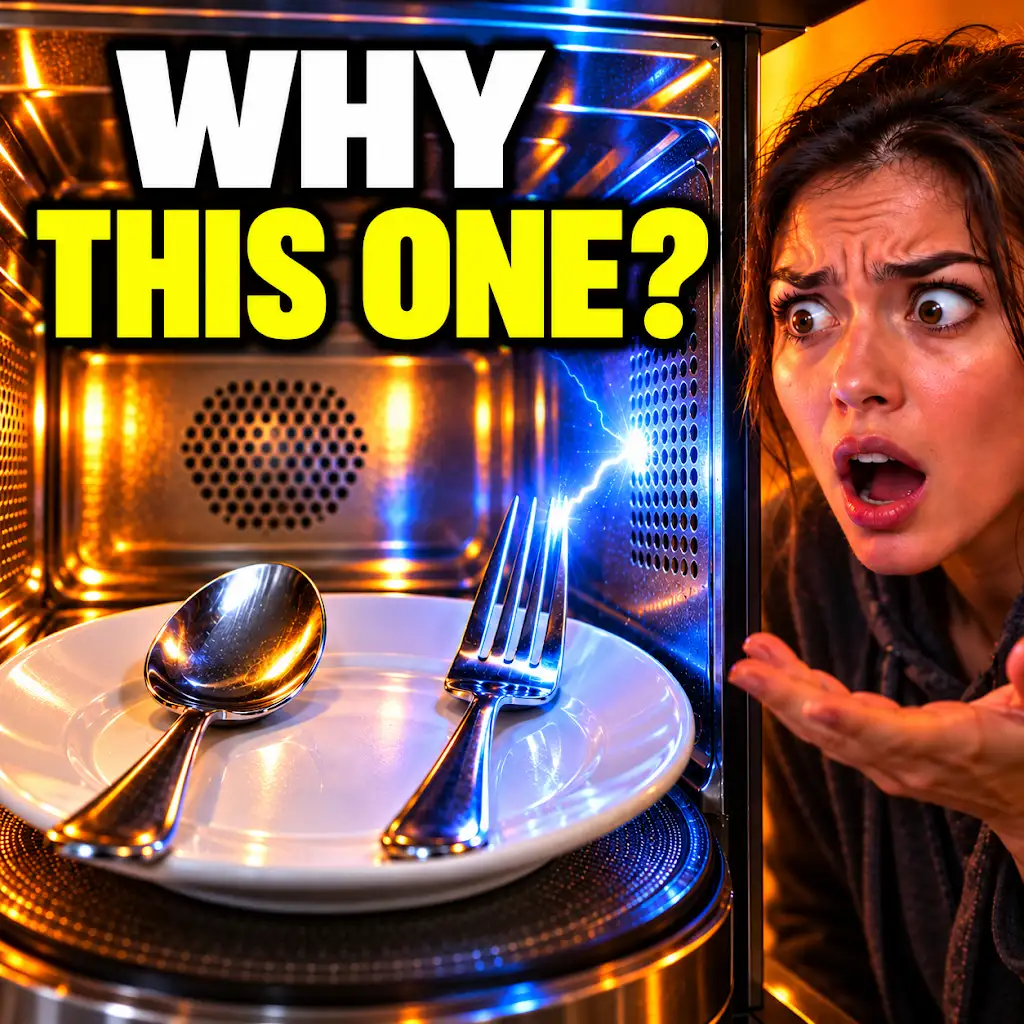
A Fork and a Spoon React Differently in a Microwave. Why?
FAQs
What is microwave arcing?
Microwave arcing occurs when an electrical discharge, or spark, is produced within the microwave oven cavity. This can be caused by various factors such as metal objects inside the microwave, food with metal packaging, or food with a high mineral content.
What causes microwave arcing?
Microwave arcing is typically caused by the presence of metal objects or materials with a high mineral content inside the microwave oven. When these materials are exposed to the microwave radiation, they can create a conductive path for electrical discharge, leading to arcing.
Is microwave arcing dangerous?
Microwave arcing can be dangerous as it can lead to damage to the microwave oven, as well as potential fire hazards. Additionally, if the arcing occurs while the microwave is in operation, it can cause damage to the food being heated and may result in a loss of efficiency in the microwave’s heating capabilities.
What is microwave plasma?
Microwave plasma is a state of matter that is created when the microwave radiation interacts with certain materials, such as gases or vapors, inside the microwave oven. This interaction can lead to the formation of a glowing, ionized gas known as plasma.
How can microwave arcing and plasma be prevented?
To prevent microwave arcing, it is important to avoid placing metal objects or materials with high mineral content inside the microwave oven. Additionally, ensuring that the microwave is clean and free of any food debris can help prevent arcing. To prevent microwave plasma, it is important to avoid heating materials that can produce gases or vapors that may lead to plasma formation.