
You’re standing in your kitchen, a steaming mug of tea in one hand and a bowl of leftover pasta in the other. The microwave hums, a familiar whir that promises quick, warm sustenance. But have you ever stopped to wonder why it works? Specifically, how the heat that makes your food so delightfully edible actually gets generated? It’s a complex dance of electromagnetic waves interacting with the very molecules that make up your meal, and today, you’re going to delve into the fascinating world of microwave absorption, focusing on two of the most common and crucial components of your diet: fats and sugars.
Before you can understand how fats and sugars specifically absorb microwaves, you need to grasp the fundamental principle of microwave heating. It’s not like a conventional oven, where heat is generated externally and then conducted inwards. Instead, microwaves are a form of electromagnetic radiation, just like radio waves or visible light, but with a specific frequency (typically around 2.45 gigahertz for domestic ovens). This frequency is chosen for a very important reason: it’s highly effective at interacting with certain molecules, particularly polar ones, which are abundant in food.
The Electromagnetic Spectrum and Microwaves
Imagine the electromagnetic spectrum as a vast highway of energy waves, each traveling at the speed of light but differing in their wavelength and frequency. Radio waves, with their long wavelengths and low frequencies, are used for broadcasting. Visible light, which you can see, occupies a narrower band. Microwaves sit somewhere between radio waves and infrared radiation. Their specific frequency of 2.45 GHz is crucial because it resonates with the natural vibrational frequencies of water molecules.
Dielectric Heating: The Core Mechanism
The primary way microwaves heat food is through a process called dielectric heating. This happens when the electromagnetic field of the microwaves causes polar molecules within the food to rotate and align themselves with the changing electric field. Think of it like tiny magnets trying to keep up with a spinning magnet. As these molecules rapidly vibrate and collide with their neighbors, they generate kinetic energy, which we perceive as heat.
The Role of Water: A Universal Absorber
Water (H₂O) is a highly polar molecule. Its oxygen atom has a slightly negative charge, while its hydrogen atoms have slightly positive charges. This polarity makes water molecules excellent absorbers of microwave energy. When microwaves penetrate food, they cause these water molecules to constantly flip and rotate, generating friction and thus heat. This is why foods with high water content, like vegetables and fruits, tend to heat up quickly and evenly in the microwave.
Beyond Water: Other Polar Molecules
While water is the star of the microwave heating show, other polar molecules also contribute to the absorption process. This is where fats and sugars come into play. Although they have different chemical structures and properties compared to water, they also possess characteristics that allow them to interact with microwaves and generate heat.
Understanding how fats and sugars absorb microwave energy is crucial for optimizing cooking techniques and improving food quality. For a deeper dive into the science behind microwave cooking and how different ingredients interact with microwave radiation, you can refer to this insightful article on the topic. It explores the mechanisms of energy absorption in various food components, providing valuable information for both home cooks and culinary professionals. To learn more, visit Freaky Science.
Fats: More Than Just Flavor and Texture
Fats, or lipids, are essential components of our diet, providing energy, aiding in nutrient absorption, and contributing to the palatability of food. When you microwave a fatty dish, you’re not just heating the water content; you’re also engaging the fat molecules themselves in the process. Understanding how fats absorb microwaves reveals a nuanced interaction that can impact cooking time and final texture.
The Molecular Structure of Fats
Fats are primarily composed of triglycerides, which are molecules made up of a glycerol backbone attached to three fatty acid chains. The fatty acid chains are long hydrocarbon chains, and it’s the nature of these chains that influences their behavior in a microwave. Saturated fatty acids have only single bonds between carbon atoms, making them relatively straight. Unsaturated fatty acids have one or more double bonds, which can cause kinks or bends in the chain.
Polarity and Dielectric Properties of Fats
While fats are generally considered less polar than water, they are not entirely non-polar. The ester linkages within the triglyceride molecule, where the fatty acids are attached to glycerol, do possess some degree of polarity. This slight polarity allows fat molecules to exhibit some dielectric loss when exposed to microwaves. However, their absorption is generally weaker and slower compared to water.
Factors Influencing Fat Absorption
The specific type of fat significantly influences its microwave absorption.
Saturated vs. Unsaturated Fats
Saturated fats, with their straight chains, tend to pack more closely together. This can lead to more efficient energy transfer through collisions. Unsaturated fats, with their kinks, may have slightly less efficient energy transfer due to steric hindrance. However, the double bonds in unsaturated fats can also contribute to other dielectric relaxation mechanisms, making the picture more complex.
Chain Length and Degree of Saturation
Longer fatty acid chains can influence the viscosity and mobility of the fat molecules, potentially affecting how they respond to the oscillating electric field. A higher degree of saturation generally leads to a more solid fat at room temperature, which might have different absorption characteristics than a liquid oil.
Free Fatty Acids and Emulsifiers
The presence of free fatty acids (triglycerides that have broken down) or emulsifiers (substances that help mix oil and water) can also alter the dielectric properties of fats. Free fatty acids, with their carboxyl group (-COOH), are more polar than the ester linkages in triglycerides, potentially increasing absorption.
The Microwave Heating of Fats: A Secondary Player
In most foods, water is the primary driver of microwave heating. Fats, with their weaker absorption, often heat up indirectly as they come into contact with superheated water molecules. However, in foods with very high fat content and low water content (think a piece of bacon or a fatty cut of meat), the fat itself becomes a more significant contributor to the overall heating. This can lead to more rapid cooking of the fatty portions.
Impact on Texture and Flavor
The way fats absorb microwaves can have a noticeable impact on the final texture and flavor of your food. Uneven heating of fats can lead to some parts becoming overly crisp or even burning, while other parts remain undercooked. The rapid heating of fats can also contribute to rendering, where the fat melts and separates from the meat, influencing the juiciness and mouthfeel.
Sugars: Sweetness and Energy Transfer

Sugars, or carbohydrates, are another fundamental macronutrient, providing the body with its primary source of energy. Like fats, they also play a role in how your food heats up in the microwave, albeit through different mechanisms and with varying degrees of effectiveness.
The Molecular Structure of Sugars
Sugars exist in various forms, from simple monosaccharides like glucose and fructose to disaccharides like sucrose (table sugar) and complex polysaccharides like starch. The key feature of sugars relevant to microwave heating is the presence of hydroxyl groups (-OH).
The Polarity of Hydroxyl Groups
The hydroxyl groups are highly polar due to the electronegativity difference between oxygen and hydrogen. This polarity makes sugar molecules capable of interacting with microwaves. When exposed to the oscillating electric field, the polar hydroxyl groups attempt to align themselves, causing the sugar molecules to vibrate and rotate.
Hydration and Sugar Absorption
A crucial aspect of sugar absorption in microwaves is hydration. Sugars, especially crystalline sugars, readily absorb water from their surroundings. This absorbed water is then heated efficiently by the microwaves, and this heat is transferred to the sugar molecules themselves. Therefore, the microwave absorption of sugars is often intertwined with the absorption of water.
Different Sugars, Different Behaviors
Just as with fats, different types of sugars exhibit varying degrees of microwave absorption.
Monosaccharides and Disaccharides
Simple sugars like glucose, fructose, and sucrose have a relatively high proportion of hydroxyl groups. This high polarity makes them reasonably good absorbers of microwave energy, especially when dissolved or in a hydrated state.
Polysaccharides and Starch
More complex carbohydrates like starch, which are long chains of glucose units, can also absorb microwaves, particularly through their associated water molecules. However, their absorption might be less efficient than simple sugars due to their larger size and potentially less accessible hydroxyl groups.
Caramelization and Browning Reactions
The intense heat generated by microwaves can also trigger chemical reactions in sugars, such as caramelization and the Maillard reaction. Caramelization, the browning of sugars when heated, is a complex process that can be accelerated in a microwave. The Maillard reaction, which involves sugars and amino acids, is responsible for the desirable browning and flavor development in many cooked foods. The rapid and localized heating of sugars by microwaves can contribute to these reactions happening more quickly.
The Impact of Sugar Concentration
The concentration of sugar in food significantly affects its microwave heating behavior. Highly concentrated sugary solutions or foods with high sugar content can heat up very rapidly. This is because there are more polar sugar molecules and associated water molecules to absorb the microwave energy. However, this rapid heating can also lead to localized overheating and burning if not managed carefully.
Water, Fat, and Sugar: A Cooperative Heating System

It’s crucial to understand that in most foods, microwave heating is not a singular process driven by one component. Instead, it’s a cooperative system where water, fats, and sugars all play a role, often influencing each other.
The Dominance of Water
As established, water is the most significant microwave absorber in most foods due to its strong polarity and abundance. Its rapid heating creates a significant thermal load that then transfers heat to other components.
Fats and Sugars as Heat Modifiers
Fats and sugars act as modifiers of this heating process. Their presence alters the overall dielectric properties of the food, influencing how effectively the microwaves penetrate and are absorbed.
Indirect Heating of Fats and Sugars
In many cases, fats and sugars are heated indirectly. The superheated water molecules transfer their kinetic energy to the adjacent fat and sugar molecules through conduction. This is a primary mechanism for heating these components in typical food items.
Synergistic Effects
There can be synergistic effects at play. For example, the presence of sugars can increase the water-holding capacity of some foods, indirectly enhancing microwave absorption. Similarly, the way fats are dispersed within a food matrix can influence the penetration of microwaves and the subsequent heating of water.
Understanding Different Food Matrices
The relative proportions and arrangement of water, fats, and sugars within a food’s matrix are critical. A dense, watery vegetable will heat differently than a fatty piece of meat or a sugary dessert. This is why different foods require different cooking times and power settings in a microwave.
Understanding how fats and sugars absorb microwave energy can significantly impact cooking techniques and food preparation. For a deeper dive into this fascinating topic, you might find the article on microwave energy absorption particularly insightful. It explores the science behind how different food components interact with microwaves, which can enhance your culinary skills. You can read more about it in this related article.
Factors Affecting Microwave Absorption in Fats and Sugars
| Material | Microwave Absorption |
|---|---|
| Fats | High absorption due to molecular structure |
| Sugars | Low absorption due to crystalline structure |
Beyond the intrinsic molecular properties, several external factors can influence how effectively fats and sugars absorb microwave energy. Understanding these factors allows you to optimize your microwave cooking.
Water Content: The Universal Amplifier
The presence and availability of water are paramount. Even in fatty or sugary foods, if there is sufficient water, it will dominate the heating process. As water heats up, it transfers energy to the surrounding fats and sugars. Conversely, in very dry or dehydrated foods with high fat or sugar content, the fat and sugar themselves will become more significant absorbers, but the overall heating might be slower due to lower overall absorption.
Physical State and Morphology
The physical state of fats and sugars matters. A solid block of fat will behave differently than dispersed oil droplets. Crystalline sugar will absorb water and heat differently than dissolved sugar. The surface area exposed to microwaves also plays a role. Smaller fat droplets or finely dispersed sugar particles might heat up more uniformly than larger, consolidated masses.
Chemical Environment and Interactions
The chemical environment in which fats and sugars are found can influence their dielectric properties. The presence of salts, acids, or other compounds can alter the polarity or mobility of these molecules, affecting their interaction with microwaves. For example, salts are ionic compounds that can increase the conductivity of the food, leading to more rapid heating and a greater risk of arcing (sparking).
Temperature Dependence
The microwave absorption of fats and sugars can be temperature-dependent. As fats melt or sugars dissolve, their molecular mobility and dielectric properties can change. This is why the heating behavior of a food item can evolve as it cooks.
Microwave Power and Frequency
While domestic microwaves operate at a standard frequency, the power level you select directly impacts the intensity of the microwave field. Higher power levels mean more energy is delivered per unit of time, leading to faster heating. Different microwave frequencies can also interact with molecules differently, but for practical purposes in home cooking, the standard 2.45 GHz is the focus.
Optimizing Microwave Cooking of Fats and Sugars
Armed with this understanding, you can now make more informed decisions about how you use your microwave, particularly when dealing with foods rich in fats and sugars.
Pre-treatment and Preparation
Consider the pre-treatment of your food. If you have a very fatty item, you might want to pierce it to allow rendered fat to escape, preventing excessive splattering and uneven cooking. For sugary items, adding a small amount of water can ensure more uniform heating and prevent burning.
Power Level Management
Don’t always default to high power. For delicate items or those with high sugar content that are prone to burning, using a lower power setting and cooking for a longer duration can lead to more even and controlled heating. This allows heat to dissipate more effectively from the superheated areas.
Stirring and Rotation
Stirring or rotating your food periodically is a simple yet effective technique to ensure more uniform microwave absorption. This breaks up hot spots and allows cooler parts of the food to come into contact with the microwave field. Many microwaves have turntables for this very purpose.
Understanding Cookware
The type of cookware you use is also important. Metal containers are a no-go, as they reflect microwaves and can cause arcing. Microwave-safe glass, ceramic, and certain plastics are best. The material and thickness of the cookware can also influence how heat is transferred to the food. Some microwave-safe dishes are designed to absorb and retain heat, which can aid in more even cooking.
Experimentation and Observation
Ultimately, the best way to understand microwave absorption in your specific dishes is through observation and experimentation. Pay attention to how different foods heat up. Note which parts tend to cook faster or slower. Learn to recognize the signs of overheating or undercooking. This hands-on experience will build your intuition and improve your microwave cooking skills.
By demystifying the science behind microwave absorption in fats and sugars, you gain a deeper appreciation for the technology and the culinary possibilities it offers. It’s not magic; it’s physics, and a little bit of chemistry, working together to bring warmth and deliciousness to your plate. So, the next time you press that start button, you can do so with a newfound understanding of the invisible forces at play, turning simple ingredients into satisfying meals.
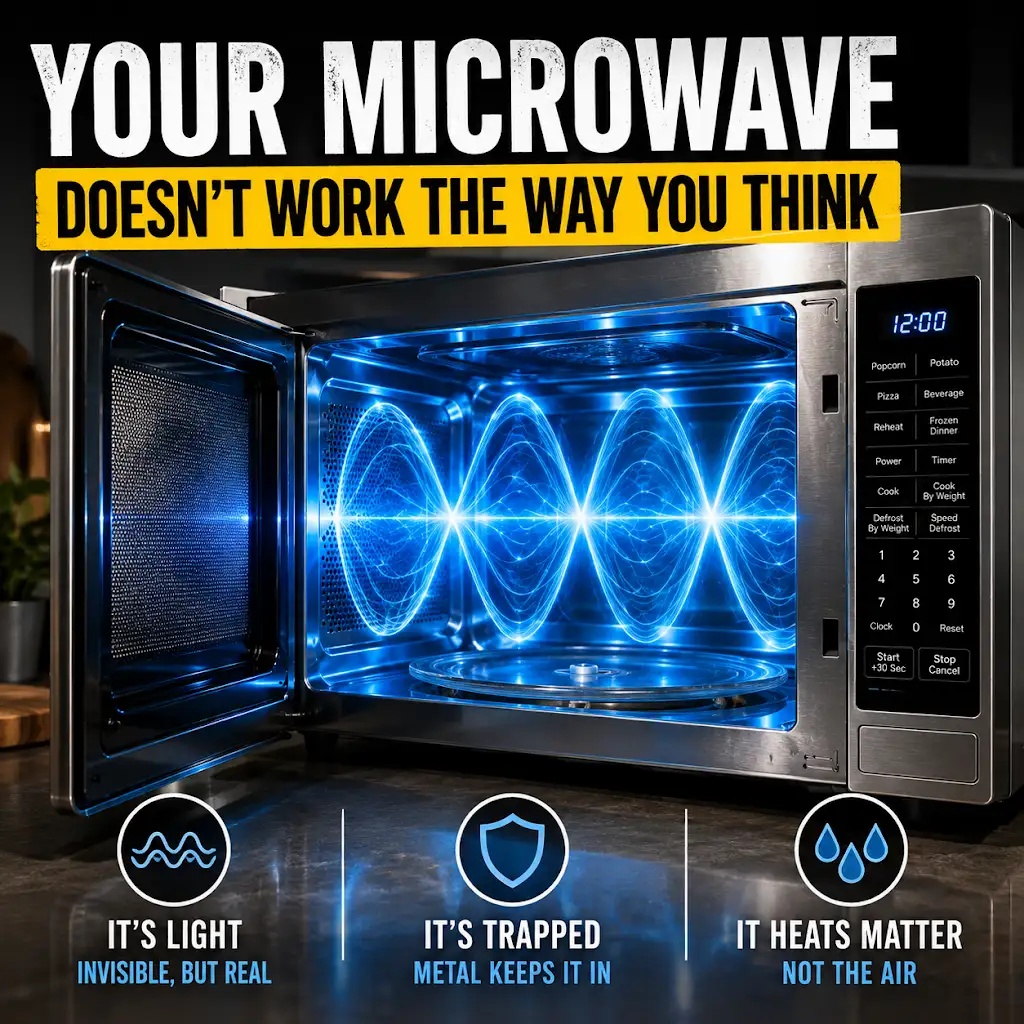
Your Microwave Doesn’t Work the Way You Think
FAQs
What happens when fats and sugars absorb microwave energy?
When fats and sugars absorb microwave energy, they begin to vibrate and generate heat. This heat is what cooks or heats up the food containing fats and sugars.
Why do fats and sugars absorb microwave energy differently?
Fats and sugars absorb microwave energy differently because they have different molecular structures. Fats have long hydrocarbon chains that can easily absorb microwave energy, while sugars have shorter chains and may not absorb as much energy.
Can fats and sugars cause uneven heating in microwave cooking?
Yes, fats and sugars can cause uneven heating in microwave cooking. This is because they can absorb microwave energy at different rates, leading to hot spots in the food. Stirring or rotating the food can help distribute the heat more evenly.
Are there any safety concerns related to fats and sugars absorbing microwave energy?
There are no specific safety concerns related to fats and sugars absorbing microwave energy. However, it’s important to follow proper microwave cooking guidelines to ensure that food is heated or cooked thoroughly and evenly.
How can I optimize microwave cooking with fats and sugars?
To optimize microwave cooking with fats and sugars, it’s important to use microwave-safe containers and cover the food to retain moisture. Stirring or rotating the food during cooking can also help distribute the heat more evenly.