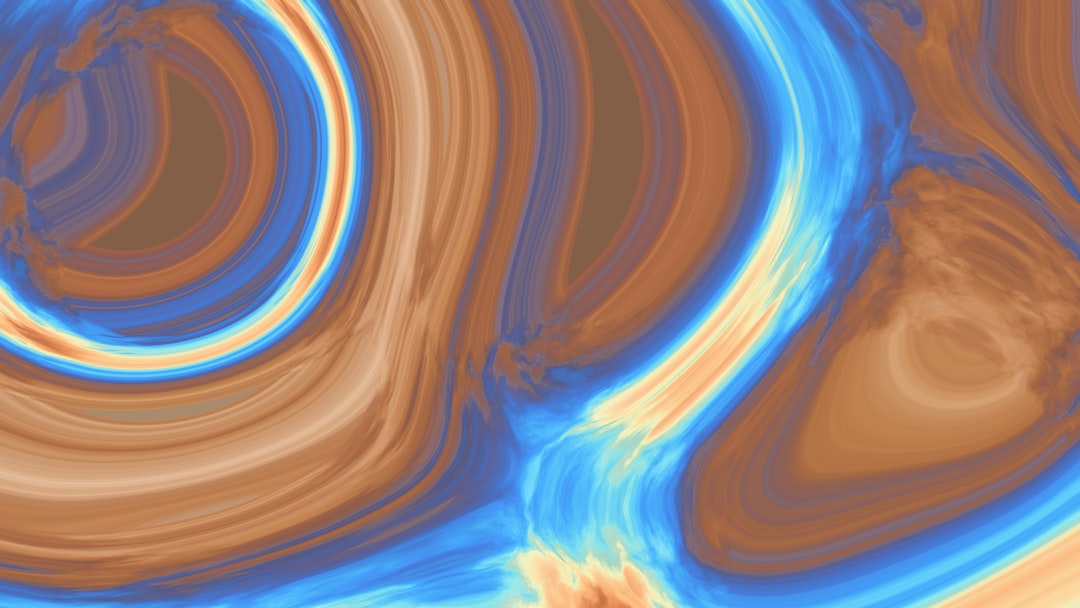
The Earth’s magnetic field, a vast and invisible shield, plays a crucial role in protecting our planet from harmful solar and cosmic radiation. This geodynamo, originating deep within the Earth’s molten outer core, is not a static entity. Rather, it is a dynamic system undergoing constant change. The most prominent and observable of these changes is known as secular variation. Understanding this phenomenon is akin to deciphering the Earth’s slow, deep breaths, revealing the intricate workings of our planet’s internal engine.
Secular variation refers to the gradual changes in the Earth’s magnetic field vector – its strength and direction – over time scales ranging from years to millennia. These variations are not random fluctuations but rather systematic drifts that paint a picture of the processes occurring beneath our feet. While the field as a whole exhibits long-term stability, its local components are in perpetual flux, like a complex weather system on a planetary scale. The magnetic poles wander, the intensity of the field waxes and wanes, and the overall shape of the magnetic field is subtly altered. Studying these shifts allows scientists to peer into the heart of the Earth, providing invaluable insights into the convection patterns of the liquid iron in the outer core.
The Origin of Earth’s Magnetic Field: The Geodynamo
To grasp secular variation, one must first understand its source: the geodynamo. This is a complex geophysical process occurring within the Earth’s molten outer core, a region composed primarily of iron and nickel. The immense pressure and heat in this layer prevent the iron from solidifying, allowing it to exist in a liquid state.
Convection Currents in the Outer Core
The temperature gradient between the inner core (hotter) and the core-mantle boundary (cooler) drives convection currents within the liquid outer core. This is analogous to the boiling of water in a pot; hotter liquid rises, cools, and sinks, creating a continuous circulation. These convection currents are not uniform and exhibit complex swirling patterns, influenced by the Earth’s rotation (the Coriolis effect). As the electrically conductive liquid iron moves, it generates electric currents, which in turn produce magnetic fields.
The Regenerative Cycle of a Dynamo
The geodynamo is a self-sustaining system, meaning that the magnetic field it generates also influences the flow of the molten iron and the electric currents. This is the essence of a dynamo: a portion of the magnetic field is converted into electrical energy, which then sustains the magnetic field itself. This intricate feedback loop, described by the dynamo theory, necessitates the presence of a rotating, convecting, electrically conductive fluid. The Earth’s outer core perfectly fits this description. The magnetic field lines, therefore, are not rigid but are carried along and deformed by the turbulent motion of the liquid iron, leading to the observed secular variations. The complexity of these flows means that the resulting magnetic field is also complex, with both large-scale dipolar components dominant, and smaller, more localized, non-dipolar features.
Observing Secular Variation: A Global Effort
The study of secular variation relies on a global network of observatories and historical data. Measuring the Earth’s magnetic field requires precise instruments and consistent methodologies, allowing for the tracking of even minute changes over time.
Magnetic Observatories and Their Role
Modern magnetic observatories, scattered across the globe, continuously record the Earth’s magnetic field at specific locations. These observatories house highly sensitive magnetometers that measure the intensity and direction of the magnetic field in three dimensions. By comparing data from different observatories, scientists can map out the spatial patterns of secular variation. This is like having a network of weather stations that map wind patterns and temperature gradients across a continent.
Historical Records and Paleomagnetism
Beyond direct measurements, historical records provide invaluable long-term perspectives. Ship’s logs from centuries ago often included magnetic compass readings, offering glimpses into the field’s behavior before the advent of modern observatories. Furthermore, paleomagnetism, the study of the remanent magnetism in rocks, unlocks an even deeper archive of the Earth’s magnetic past. When volcanic rocks cool or sedimentary particles align in a magnetic field, they effectively record a snapshot of the Earth’s magnetic field at that time. By analyzing these ancient magnetic signatures in rocks of different ages, scientists can reconstruct past field configurations and track secular variation over geological timescales, stretching back millions of years. This is akin to reading the rings of a tree to understand past climatic conditions, but on a much grander, planetary scale.
Manifestations of Secular Variation: A Shifting Landscape
Secular variation manifests in several key ways, each providing a distinct window into the dynamics of the Earth’s core. The most prominent of these are the movement of the magnetic poles and changes in the overall magnetic field strength.
The Wandering Magnetic Poles
Perhaps the most visually striking aspect of secular variation is the apparent movement of the magnetic poles. The geomagnetic north pole, the point where the Earth’s magnetic field lines are directed vertically downwards, is not fixed. It drifts erratically year by year. This wandering is a direct consequence of the churning molten iron in the outer core. Imagine a vast, invisible river beneath the Earth’s surface – the magnetic poles are like buoys bobbing on this ever-shifting current. Historically, this drift has been relatively slow, but in recent decades, the rate of drift has accelerated, prompting ongoing scientific scrutiny. The secular variation at different points on the Earth’s surface also varies considerably, creating a complex pattern of change.
Changes in Magnetic Field Intensity
The intensity, or strength, of the Earth’s magnetic field is also not constant. It varies geographically and temporally. Secular variation accounts for gradual changes in this intensity. Observations have shown that the magnetic field strength has been decreasing globally over the past couple of centuries, at an average rate of about 5% per century. This decrease is not uniform; some regions are experiencing stronger declines than others. This weakening could be a precursor to a more dramatic event, such as a magnetic pole reversal, although the timescale for such an event is vast. The Earth’s magnetic field, in essence, is like a beating heart, and its varying pulse indicates the health and state of the core dynamo.
Secular Variation and Geomagnetic Storms: A Tale of Two Timescales
While secular variation describes slow, gradual changes, it is important to distinguish it from the rapid, energetic fluctuations associated with geomagnetic storms. Both are products of the Earth’s magnetic field, but they operate on vastly different timescales and have different underlying causes.
The Dominance of Short-Term Events
Geomagnetic storms are sudden, intense disturbances in the Earth’s magnetosphere, primarily caused by solar activity such as coronal mass ejections and solar flares. These events involve massive releases of charged particles from the Sun that interact with the Earth’s magnetic field, leading to rapid and dramatic changes in the field’s strength and direction, often manifesting as auroras. These are the fleeting gusts of wind that can whip through a calm atmosphere, contrasting with the slow, steady sea currents that drive secular variation.
The Slow Unfolding of Core Dynamics
Secular variation, on the other hand, is the result of the slow, persistent churning of the liquid iron in the Earth’s outer core. These changes are deep-seated and unfold over decades, centuries, and millennia. While geomagnetic storms are a direct response to external solar influences, secular variation is an internal phenomenon, a testament to the ongoing processes within the Earth’s interior. Understanding the distinction is crucial, as it allows scientists to isolate the signals of core dynamics from the noise of solar activity.
Predicting Secular Variation: Challenges and Opportunities
Predicting the future course of secular variation is a significant challenge in geophysics. The complexity of the outer core’s fluid dynamics makes precise long-term forecasts difficult, akin to predicting the exact path of a hurricane months in advance. However, ongoing research is improving our predictive capabilities.
The Role of Sophisticated Models
Scientists employ sophisticated computer models to simulate the geodynamo process. These models, running on powerful supercomputers, aim to replicate the complex interactions between fluid motion, electric currents, and magnetic fields in the Earth’s outer core. By feeding observational data into these models, researchers can refine their simulations and attempt to predict how the magnetic field will evolve in the coming years and decades. This is a continuous iterative process of observation, modeling, and refinement.
Navigating the Uncertainties
Despite advancements, significant uncertainties remain. The deep origin of the fluctuations in the outer core and the precise mechanisms driving rapid changes in secular variation are still areas of active investigation. While short-term predictions of magnetic field changes for navigation and technological applications are becoming increasingly accurate, long-term forecasts, particularly regarding the timing of pole reversals, remain a subject of ongoing research. The quest to understand and predict secular variation is a testament to humanity’s enduring curiosity about the hidden workings of our planet.

WATCH NOW ▶️ The Earth’s Shield Is Failing (And Nobody Is Safe)
FAQs
What is magnetic field secular variation?
Magnetic field secular variation refers to the slow and continuous change in the Earth’s magnetic field over time, typically occurring over years to centuries. It involves gradual shifts in the intensity and direction of the magnetic field.
What causes secular variation in the Earth’s magnetic field?
Secular variation is primarily caused by the dynamic movements of molten iron and other metals in the Earth’s outer core. These fluid motions generate and alter the geomagnetic field through the geodynamo process.
How is secular variation measured?
Secular variation is measured using magnetic observatories, satellite data, and historical records of magnetic field measurements. Scientists track changes in magnetic declination, inclination, and intensity to study these variations.
Why is understanding secular variation important?
Understanding secular variation is crucial for navigation, as it affects compass readings. It also helps scientists study the Earth’s interior processes, predict geomagnetic storms, and understand long-term changes in the planet’s magnetic environment.
Can secular variation lead to magnetic pole reversals?
While secular variation involves gradual changes, it is distinct from magnetic pole reversals, which are complete flips of the Earth’s magnetic poles occurring over thousands to millions of years. However, secular variation is part of the processes that can eventually lead to such reversals.