So, you’ve noticed some of your streetlights turning a bit… purple? It’s a common sight these days, and it’s usually down to how the LEDs inside are aging. Essentially, the blue LEDs, which are key to creating white light, are breaking down faster than the other colors, leading to that purplish hue.
The Blue LED’s Aging Process
Think of white light from an LED as a recipe. You’ve got your primary colors mixed just right. For white LEDs, this typically involves a blue LED chip coated with a phosphor material. When the blue light from the chip hits the phosphor, it excites it, causing it to emit yellow light. The combination of the original blue light and the emitted yellow light creates what we perceive as white light.
Phosphor Coating Breakdown
The culprit for the purple tint is often the phosphor coating. This coating isn’t immortal. Over time, and especially when exposed to heat and certain atmospheric conditions, the phosphors can degrade. This degradation isn’t uniform. Usually, the phosphors responsible for producing the yellow component of white light are more susceptible to breakdown. As these phosphors wear out, they emit less yellow light. This means the blue light from the LED chip starts to dominate the output, resulting in that characteristic purple or pinkish hue.
What Accelerates Phosphor Degradation?
Several factors can speed up this process. Heat is a big one. LEDs generate heat, and while they’re designed to manage it, prolonged exposure to high temperatures, especially in enclosed fixtures, can stress the phosphor material. Moisture is another enemy. If water or high humidity gets into the LED fixture, it can react with the phosphor coating, causing it to break down more rapidly. Even the manufacturing quality of the phosphor coating plays a role. Variations in thickness, composition, or application can lead to some LEDs degrading faster than others.
Recent studies have highlighted the issue of LED streetlight degradation, particularly focusing on the phenomenon of purple light emissions as the lights age. This degradation not only affects the quality of illumination but also raises concerns about its impact on wildlife and human health. For a deeper understanding of the implications and potential solutions related to this topic, you can read a related article at Freaky Science.
Environmental Stressors and Their Impact
It’s not just the internal workings of the LED that matter. The environment in which streetlights operate can significantly influence how they age. These fixtures are out in the elements 24/7, facing a barrage of natural and sometimes man-made challenges.
Heat and Thermal Cycling
As mentioned, heat is a major factor. Streetlights are often mounted on poles, and the metal housing can absorb a lot of solar radiation during the day. This heat, combined with the heat generated by the LED itself, can create a high-temperature environment inside the fixture. When the lights turn off at night, they cool down. This constant heating and cooling, known as thermal cycling, puts stress on the materials within the LED, including the phosphor coating and the semiconductor chip itself. Over thousands of cycles, this can lead to micro-cracks and structural weaknesses that accelerate degradation.
Moisture and Chemical Exposure
Rain, dew, and even airborne pollutants can introduce moisture and chemicals into the streetlight fixture. While fixtures are designed to be weather-resistant, seals can degrade over time, allowing ingress. Once inside, moisture can cause corrosion and react with the LED components. Airborne pollutants, such as sulfur dioxide from industrial sources or salt spray in coastal areas, can also be particularly damaging, creating corrosive compounds that attack the phosphor and other sensitive parts of the LED. This chemical assault can strip away protective layers and accelerate the breakdown of the light-emitting materials.
UV Radiation and Its Role
While LEDs themselves emit blue light, which is a component of UV, prolonged exposure to external UV radiation from the sun can also contribute to phosphor degradation. The phosphor materials can absorb UV energy, and if they’re not adequately protected, this can lead to photo-degradation. Think of it like leaving certain plastics out in the sun for too long – they become brittle and discolored. The phosphor coating can experience a similar, albeit slower, process.
Manufacturing Defects and Material Science

Sometimes, the problem isn’t entirely the environment but rather how the LEDs were made in the first place. Even with stringent quality control, manufacturing processes can introduce subtle flaws that manifest over time.
Variations in Phosphor Quality
The phosphor layer is a critical component. Its thickness, uniformity, and chemical composition directly influence its performance and lifespan. If there are inconsistencies in how the phosphor is applied during manufacturing – perhaps some areas are thinner, or the chemical blend isn’t perfect – these areas will be more prone to degradation. This can happen on a microscopic level, making it hard to detect during initial testing but leading to premature failure and color shifts in specific diodes or sections of the phosphor.
Encapsulation and Sealing Issues
LEDs are typically encapsulated in a protective material, often a resin or silicone, to shield them from the environment and to help manage light output. The quality of this encapsulation is crucial. If there are voids, micro-cracks, or poor adhesion within the encapsulation material, it can allow moisture and contaminants to reach the sensitive LED chip and phosphor. Similarly, the seal between the LED package and the rest of the streetlight fixture is vital for preventing ingress. If these seals are imperfect from the start, or if they degrade due to thermal stress, it opens the door for environmental damage.
Substrate and Chip Quality
Beyond the phosphor, the underlying semiconductor chip itself can have manufacturing variations. The quality of the materials used to create the blue LED chip, the precision of the etching processes, and the integrity of the electrical connections all play a part. A less robust chip or poorly made connections might be more susceptible to electrical stress or heat-induced damage, which can indirectly affect the phosphor and lead to color shift.
The Science Behind the Purple Tint
Let’s dive a little deeper into why the blue light becomes so dominant. It all comes back to the way white light is generated in these LEDs.
The Luminary Spectrum Shift
White LEDs typically use a blue LED chip paired with a yellow phosphor. The blue light excites the phosphor, which then emits yellow light. When these two colors combine, we see white. The ideal combination is a specific balance. As the phosphor degrades, it loses its ability to efficiently convert blue light into yellow light. This means more of the original blue light from the chip passes through or is emitted directly, while the yellow output diminishes. The spectrum of light emitted by the LED shifts, with the blue component becoming proportionally larger.
The Diminishing Yellow Contribution
Imagine you have a recipe for a perfect cake that calls for equal parts flour and sugar. If the “sugar” component (the yellow phosphor output) starts to decrease, but the “flour” (the blue light) remains constant, the cake will taste much more like flour. In the same way, as the yellow light contribution from the phosphor dwindles, the blue light becomes the dominant color, and our eyes perceive this shift towards the cooler, bluer end of the spectrum. When the degradation is uneven, or if some of the blue light itself starts to weaken slightly while the yellow-producing phosphor weakens more, the resulting imbalance strongly leans towards blue, often giving that purplish-pinkish cast.
Why Not Other Colors?
The reason it’s typically a purple or pinkish tint and not green or red is tied to the specific phosphors used to create white light in common LEDs. The most prevalent type for general lighting uses cerium-doped yttrium aluminum garnet (YAG:Ce) phosphors, which emit a broad yellow spectrum. These YAG phosphors are particularly susceptible to degradation under the combined stresses of heat, moisture, and operational cycling. Other color-emitting phosphors used in different types of LEDs might have different degradation pathways, but for the typical white LED streetlights, the yellow-producing phosphors are the weak link leading to blue dominance.
Recent studies have highlighted the issue of LED streetlight degradation, particularly focusing on the phenomenon of purple light emissions as the lights age. This degradation can not only affect visibility but also impact the overall aesthetic of urban environments. For a deeper understanding of this topic, you can explore a related article that discusses the implications of LED lighting in public spaces. To learn more about this important issue, visit this article.
Mitigation Strategies and Future Trends
| Parameter | Value | Unit | Description |
|---|---|---|---|
| Initial Luminous Flux | 1000 | lm | Initial brightness of the LED streetlight |
| Degradation Rate | 5 | % per 1000 hours | Percentage decrease in luminous flux over time |
| Color Shift | Purple Hue | n/a | Observed color change due to degradation |
| Operating Temperature | 85 | °C | Temperature at which degradation accelerates |
| Lifetime | 50,000 | hours | Expected operational life before significant degradation |
| LED Chip Material | InGaN | n/a | Material commonly used in blue LEDs that can degrade to purple |
| Degradation Mechanism | Phosphor degradation | n/a | Cause of purple color shift in LED streetlights |
Recognizing these issues is the first step, but what are we doing about it, and what does the future hold? There’s a lot of research and development going into making LEDs more robust.
Improved Phosphor Formulations
Manufacturers are constantly working on developing more stable and durable phosphor materials. This includes exploring new chemical compositions, better encapsulation techniques for the phosphors themselves, and coatings that offer increased resistance to heat, moisture, and UV radiation. The goal is to create phosphors that maintain their light-emitting properties for much longer, even under harsh operating conditions.
Enhanced Thermal Management
Better thermal management within the streetlight fixture is another key area. This involves designing heatsinks that are more efficient at drawing heat away from the LED chips, using thermal interface materials that conduct heat more effectively, and ensuring adequate ventilation within the fixture. Some advanced designs even incorporate active cooling systems, although these are less common in standard streetlights due to cost and complexity. By keeping the LEDs cooler, their lifespan is significantly extended, and the rate of phosphor degradation is reduced.
Robust Fixture Design and Sealing
The overall design of the streetlight fixture is also being improved. This includes using more durable materials for the housing and optics, and employing more advanced sealing technologies to prevent moisture and contaminant ingress. Gaskets made from high-quality, UV-resistant silicone or EPDM rubber, along with well-designed interlocking components, can make a big difference in keeping the internal environment clean and dry.
Advances in LED Technology
Looking ahead, there are also advancements in LED chip technology itself. Research into alternative methods of producing white light, such as using different phosphor combinations or even exploring quantum dot technology, could lead to more stable and color-consistent lighting solutions. The industry is also moving towards more standardized testing protocols to better predict and identify potential degradation issues during the design and manufacturing phases.
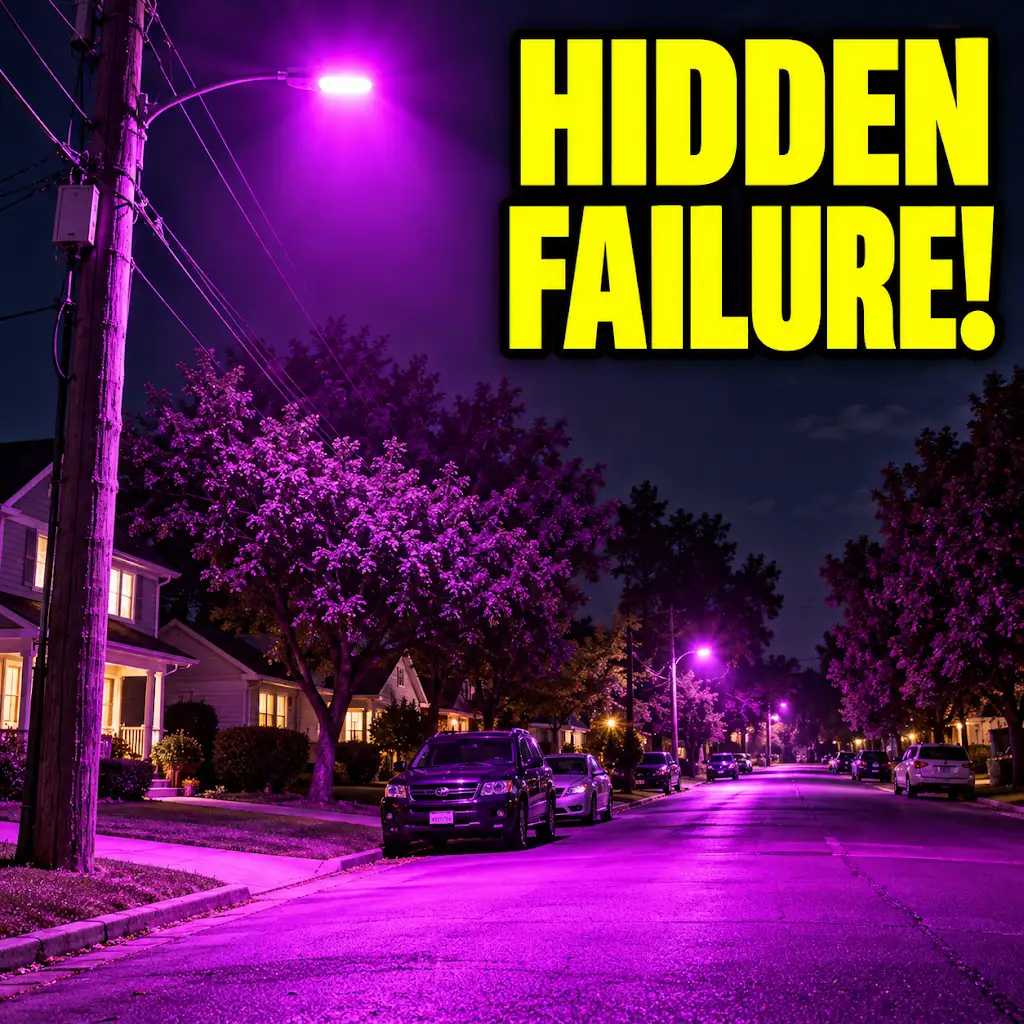
Why The Streetlights Are Turning Purple
FAQs
What causes LED streetlights to degrade and turn purple over time?
LED streetlights degrade and turn purple over time due to a combination of factors such as heat, moisture, and the breakdown of phosphor coatings on the LED chips.
How does the degradation of LED streetlights affect their performance?
The degradation of LED streetlights can lead to a decrease in light output, color shift towards the blue end of the spectrum, and reduced energy efficiency.
Can the purple degradation of LED streetlights be reversed or fixed?
Unfortunately, once LED streetlights start degrading and turning purple, the process is irreversible, and the only solution is to replace the affected fixtures.
Are there any ways to prevent or slow down the degradation of LED streetlights?
To prevent or slow down the degradation of LED streetlights, proper thermal management, quality components, and regular maintenance can be implemented to extend the lifespan of the fixtures.
How can municipalities address the issue of LED streetlight degradation turning purple in their communities?
Municipalities can address the issue of LED streetlight degradation by monitoring the performance of the fixtures, scheduling regular inspections, and budgeting for replacements as needed to maintain proper lighting levels and safety in their communities.