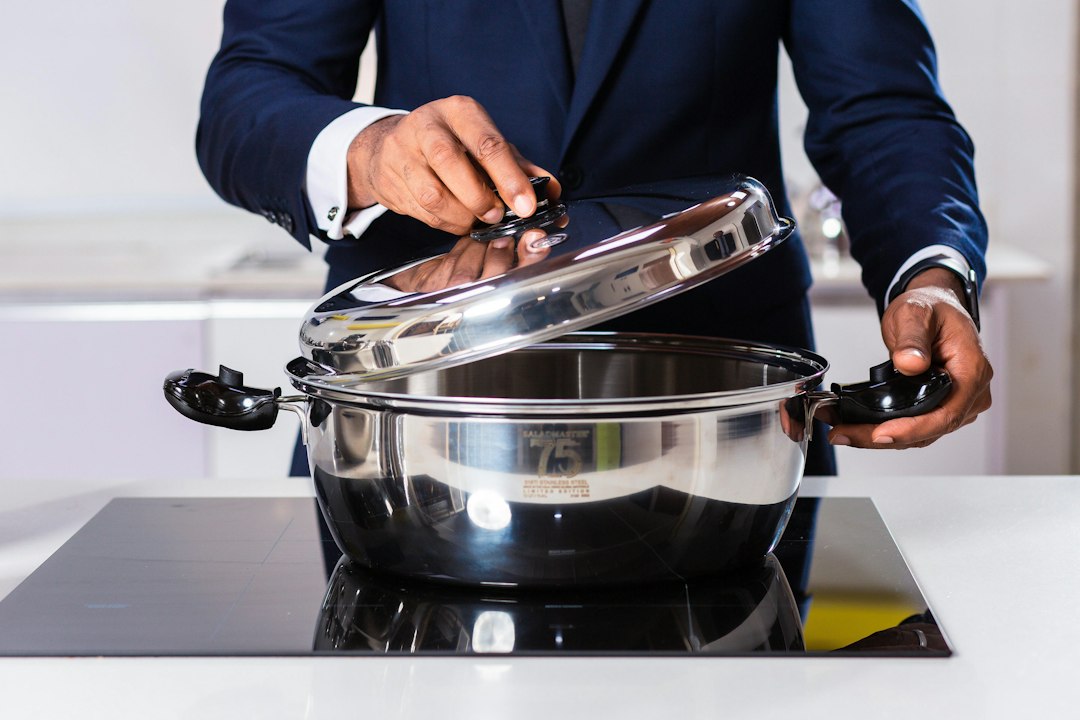
You’ve probably seen them, perhaps even considered one: sleek, modern induction cooktops gracing the kitchens of friends or splashed across glossy magazine pages. They promise faster cooking, incredible precision, and a touch of futuristic flair. But when you dig a little deeper, you might find yourself wondering, “How does this actually work?” The magic behind these culinary marvels lies in a principle you might recall from your physics classes: Joule heating. Understanding this fundamental concept is the key to unlocking the efficiency and brilliance of induction stove technology.
This article is your guide to demystifying induction. We’ll peel back the layers of this fascinating technology, starting with the very basics of Joule heating and progressing to how it’s ingeniously applied to create the responsive and powerful stovetops you see today. Prepare to gain a profound appreciation for the science that transforms raw electricity into perfectly cooked meals.
At its core, Joule heating, also known as resistive heating or ohmic heating, is the process by which an electric current flowing through a conductor generates heat. You can think of it as a consequence of resistance. Imagine electricity as a flow of tiny particles – electrons – moving through a material. This material, the conductor, isn’t perfectly smooth; it has imperfections and atoms that impede the free movement of these electrons. As the electrons collide with these obstacles, they transfer their kinetic energy, and this energy manifests as heat.
Electrical Resistance: The Invisible Barrier
To truly grasp Joule heating, you need to understand electrical resistance. Every material has a property called resistance, which quantifies how much it opposes the flow of electric current. This resistance is an inherent characteristic of the material’s atomic structure.
Atomic Collisions and Energy Transfer
When you apply a voltage across a conductor, you create an electric field that pushes the electrons. However, these electrons don’t have a clear, unimpeded path. They constantly bump into the atoms that make up the conductor. Each collision is like a tiny nudge, and with each nudge, the electron loses a bit of its momentum. This lost momentum isn’t just vanishing; it’s transferred to the atoms of the conductor, causing them to vibrate more vigorously. Increased atomic vibration is precisely what we perceive as heat.
Factors Influencing Resistance
The amount of heat generated by Joule heating is directly related to the electrical resistance of the conductor. Several factors play a role in determining this resistance:
- Material Type: Different materials have vastly different resistances. For example, copper has very low resistance, making it an excellent conductor, while materials like nichrome (an alloy of nickel and chromium) have higher resistance, making them suitable for heating elements.
- Length of the Conductor: The longer the path the current has to travel, the more opportunities there are for collisions. Therefore, a longer conductor will have higher resistance.
- Cross-Sectional Area: A thicker conductor (larger cross-sectional area) provides more pathways for electrons, reducing the overall resistance. Conversely, a thinner conductor has higher resistance.
- Temperature: For most conductors, resistance increases with temperature. As the conductor gets hotter, its atoms vibrate more intensely, making it harder for electrons to pass through.
The Joule Heating Equation: Quantifying the Heat
The relationship between electrical current, resistance, and the heat generated is precisely defined by Joule’s Law. For a conductor with resistance ‘R’ through which a current ‘I’ flows, the power dissipated as heat (P) is given by the equation:
P = I²R
This equation is incredibly important because it tells us that the heat generated is proportional to the square of the current. This means that even a small increase in current can lead to a significant increase in heat. If you double the current, the heat generated will quadruple!
Power Dissipation and Heat Output
The ‘P’ in the equation represents power, which is the rate at which energy is transferred or converted. In the context of Joule heating, power is measured in watts (W), and it directly corresponds to the rate at which heat is being produced. A higher power output means more heat is generated per unit of time.
The Role of Current and Resistance
As the equation highlights, both the current flowing through the conductor and the conductor’s resistance are crucial determinants of the heat output.
- Increasing Current: To generate more heat using Joule heating, you can increase the electric current flowing through the conductor. This is a primary method used in many resistive heating appliances.
- Increasing Resistance: Alternatively, you can increase the resistance of the conductor. This is why heating elements in toasters and electric stoves are often made of resistive alloys like nichrome – their high resistance makes them excellent at converting electrical energy into heat.
Everyday Examples of Joule Heating
You encounter Joule heating every day, often without realizing it. Think about these common appliances:
- Toasters: The glowing red wires inside a toaster are made of a resistive material that heats up intensely when electricity passes through them, toasting your bread.
- Electric Heaters: Many space heaters and radiant heaters use resistive coils to generate heat, warming the surrounding air.
- Incandescent Light Bulbs: Although largely phased out for energy efficiency, the filament in an incandescent bulb heats up to such a high temperature that it emits visible light. This is a dramatic example of Joule heating.
- Hair Dryers and Curling Irons: These appliances utilize resistive heating elements to produce the heat needed for styling.
These examples illustrate the fundamental principle: electricity flows, encounters resistance, and generates heat. Induction cooktops, however, take this principle and apply it in a far more sophisticated and efficient manner.
If you’re interested in learning more about the principles behind Joule heating and its applications in modern cooking technology, you might find this related article on the science of induction stoves particularly insightful. It delves into how electromagnetic fields generate heat directly in the cookware, making cooking faster and more energy-efficient. For more information, you can check out the article here: Freaky Science.
Induction Technology: Harnessing Electromagnetic Fields
Now that you have a solid understanding of Joule heating, let’s dive into how induction cooktops leverage this principle. Unlike traditional electric stoves that rely on resistive heating elements directly, induction cooktops use a clever application of electromagnetism to generate heat within your cookware. This is where things get particularly interesting.
The Heart of the Matter: Electromagnetism at Play
At the core of every induction cooktop is a coil of wire, typically copper, embedded beneath the ceramic glass surface. When you turn on the cooktop, an alternating electric current is passed through this coil. This alternating current, by its very nature, creates a fluctuating magnetic field. This is the crucial first step.
Alternating Current (AC) and Magnetic Fields
Remember that electricity is the movement of charged particles. When these charged particles move in a consistent direction, they create a steady magnetic field. However, when the direction of the current reverses repeatedly (as in alternating current), the magnetic field it generates also reverses its direction and intensity repeatedly. This dynamic, oscillating magnetic field is the driving force behind induction.
Faraday’s Law of Induction: The Key Principle
The entire process is governed by Faraday’s Law of Electromagnetic Induction. This law states that a changing magnetic field through a loop of conductive material will induce an electromotive force (EMF) – essentially, a voltage – in that material. If the conductive material forms a closed circuit, this induced EMF will drive an electric current.
Creating Eddy Currents in Cookware
This is where your cookware becomes an active participant in the heating process. When you place a pot or pan made of a ferromagnetic material (like cast iron or magnetic stainless steel) on an induction cooktop, the fluctuating magnetic field generated by the coil penetrates the base of your cookware. As this magnetic field changes, it induces electrical currents within the metal of the cookware itself. These induced currents are called “eddy currents.”
Ferromagnetic Materials: The Perfect Recipe
The effectiveness of induction relies heavily on the properties of the cookware. Ferromagnetic materials are essential because they have a high magnetic permeability, meaning they can be easily magnetized and allow magnetic fields to pass through them readily. This property is critical for efficiently coupling the magnetic field from the cooktop to the cookware.
- Why Cast Iron and Magnetic Stainless Steel Work: These materials are readily attracted to a magnet. This attraction is a good indicator that they will respond effectively to the changing magnetic field of an induction cooktop.
- Materials That Don’t Work: Non-ferromagnetic materials like aluminum, copper, or glass will not be heated by induction because they don’t respond to the magnetic field in the same way. They can be used as a layer in cookware, but the base needs to be ferromagnetic for the induction to work.
The Role of Eddy Currents in Heating
These eddy currents, circulating within the base of your pot or pan, are essentially tiny electrical currents. And what happens when electricity flows through a resistive material? You guessed it – Joule heating occurs! The metal of your cookware, acting as a conductor with its own inherent resistance, heats up due to the passage of these induced eddy currents.
The Induction Coil and Magnetic Field Interaction
The efficiency of this process hinges on the close coupling between the induction coil and the cookware. The closer the base of the pot is to the coil, and the more magnetic the material of the cookware, the stronger the induced eddy currents will be, and consequently, the more heat will be generated.
Proximity is Key
The design of induction cooktops ensures that the coil is positioned very close to the cooking surface. This proximity minimizes any loss of magnetic field strength before it reaches the cookware. This is a significant reason why induction is more efficient than traditional radiant electric or gas stoves, where heat is lost to the surrounding air before reaching the pot.
Magnetic Permeability and Coupling Strength
The magnetic permeability of the cookware material directly influences how well the magnetic field from the coil can induce eddy currents. Materials with higher magnetic permeability allow the magnetic field to penetrate more deeply and effectively, leading to stronger eddy currents and more efficient heating.
Efficiency and Control: The Advantages of Induction

The precise application of Joule heating within the cookware, facilitated by electromagnetic induction, results in several significant advantages that distinguish induction cooktops from their predecessors. These advantages directly translate into a better cooking experience for you.
Superior Energy Efficiency
One of the most celebrated benefits of induction cooking is its remarkable energy efficiency. Because the heat is generated directly within the cookware, there’s very little wasted energy lost to the surrounding air.
Direct Heat Transfer
In contrast to a gas burner, where a significant portion of the heat escapes around the sides of the pot, or a radiant electric burner, where heat is transferred through a hot element and then to the pot, induction directly heats the vessel. This means that almost all the energy supplied by the cooktop is used to heat your food.
Minimizing Heat Loss
Traditional stovetops lose heat through convection (hot air rising), radiation (heat radiating from the burner), and conduction (heat lost to the surrounding countertop). Induction significantly minimizes these losses. The only heat you feel emanating from an induction cooktop is the residual heat from the cookware itself after cooking is complete.
Unparalleled Temperature Control
The ability to precisely control the heat output is a game-changer for any cook. Induction cooktops offer an level of control that is often compared to gas, but with greater accuracy and responsiveness.
Rapid Response to Setting Changes
When you adjust the power setting on an induction cooktop, the change in the magnetic field is almost instantaneous. This means the eddy currents in the cookware immediately increase or decrease, leading to a rapid and noticeable change in cooking temperature. You can go from a rapid boil to a gentle simmer in seconds, without the lag often experienced with electric resistance cooktops.
Fine-Tuning Heat Levels
The power levels on induction cooktops are typically divided into numerous discrete settings, allowing for incredibly fine-tuning of the heat. This is invaluable for delicate tasks like melting chocolate, simmering sauces without scorching, or keeping food warm without overcooking.
Safety Features: A Cooler Surface
The fact that the cooktop surface itself doesn’t get directly heated is a significant safety advantage. While it will warm up from contact with hot cookware, it remains considerably cooler than a traditional electric or gas burner.
Reduced Risk of Burns
This cooler surface dramatically reduces the risk of accidental burns, making induction cooktops a safer choice, especially in households with children or individuals who may be more prone to accidents.
Automatic Shut-off
Most induction cooktops are equipped with automatic shut-off features. If no cookware is detected on a heated zone, or if cookware is removed, the cooktop will automatically turn off the magnetic field, preventing unnecessary energy consumption and potential hazards.
The Cookware Connection: What You Need for Induction

As we’ve established, the type of cookware you use is paramount to the success of induction cooking. Not all pots and pans are created equal when it comes to this technology.
Ferromagnetic Requirements: The Magnet Test
The simplest way to determine if your existing cookware is induction-compatible is to perform the “magnet test.” Hold a refrigerator magnet to the base of your pot or pan.
When Your Magnet Sticks: Induction-Ready
If the magnet adheres firmly to the base of your cookware, it means the material is ferromagnetic and will work with your induction cooktop. This includes most cast iron skillets and many stainless steel pots and pans.
When Your Magnet Doesn’t Stick: Not Induction-Ready
If the magnet does not stick, or only weakly adheres, the cookware is likely made of aluminum, copper, glass, or non-magnetic stainless steel. These materials will not be heated directly by induction.
Understanding Different Cookware Materials
While the magnet test is a good starting point, understanding the characteristics of different cookware materials can help you make informed choices.
Cast Iron: The Classic Performer
Cast iron cookware is inherently ferromagnetic and an excellent conductor of heat once it’s heated. It heats relatively evenly, although it can take a bit longer to reach temperature initially due to its magnetic properties. It’s a popular choice for its durability and heat retention.
Magnetic Stainless Steel: Versatile and Responsive
Many modern stainless steel cookware sets are designed with a ferromagnetic core or base, making them induction-compatible. These are often lighter than cast iron and respond quickly to changes in temperature. Look for cookware explicitly labeled as “induction compatible” or featuring a magnetic base.
Multi-Ply Construction: Combining Benefits
Many high-quality pots and pans feature multi-ply construction, often with layers of stainless steel sandwiching a core of aluminum or copper. For induction compatibility, the outermost layer that contacts the cooktop must be ferromagnetic. This construction allows for the responsiveness and even heating of aluminum or copper while retaining induction compatibility.
Cookware to Avoid for Induction
As mentioned, certain materials simply will not work with induction technology.
Aluminum and Copper
Pure aluminum and copper are excellent heat conductors, but they are not ferromagnetic. While they can be used in a layered construction with a magnetic base, a solid aluminum or copper pot will not heat up on an induction cooktop.
Glass and Ceramic
Glass and ceramic cookware, while beautiful and often oven-safe, are not conductive in a way that allows for eddy current generation. Therefore, they are incompatible with induction.
Non-Magnetic Stainless Steel
Some stainless steel alloys are not ferromagnetic. If your magnet doesn’t stick, it’s best to assume it’s not induction-compatible.
If you’re interested in understanding the principles behind Joule heating and how it applies to modern cooking appliances, you might find this article on the science of induction stoves particularly enlightening. It delves into the mechanics of how these stoves utilize electromagnetic fields to generate heat efficiently, making cooking faster and safer. For more detailed insights, you can check out the related article here.
The Induction Cooking Process in Action
| Metric | Description | Typical Value | Unit |
|---|---|---|---|
| Operating Frequency | Frequency of the alternating current used to generate the magnetic field | 20,000 – 50,000 | Hz |
| Power Consumption | Electrical power consumed by the induction stove during operation | 1000 – 3000 | Watts |
| Heating Efficiency | Percentage of electrical energy converted into heat in the cookware | 80 – 90 | % |
| Coil Resistance | Electrical resistance of the induction coil causing Joule heating | 0.1 – 0.5 | Ohms |
| Induced Current | Current induced in the cookware by the magnetic field | 10 – 50 | Amperes |
| Temperature Rise Rate | Rate at which the cookware temperature increases due to Joule heating | 5 – 15 | °C per minute |
| Cookware Material | Material type suitable for induction heating (ferromagnetic) | Cast iron, Stainless steel | N/A |
Now, let’s walk through the steps of how an induction cooktop brings your food to a delicious state of readiness, bringing together all the principles we’ve discussed.
Step 1: Power On and Setting Selection
You place your induction-compatible cookware on the designated cooking zone. When you turn on the cooktop and select a heating level (e.g., high, medium, low, or a specific power number), you activate the internal electronics.
Activating the Induction Coil
This action sends an alternating electric current through the induction coil beneath the ceramic glass surface of the cooktop. The frequency and intensity of this current are precisely controlled by the cooktop’s settings.
Step 2: Generating the Magnetic Field
The alternating current flowing through the induction coil creates a rapidly fluctuating magnetic field. This magnetic field extends outwards from the coil, directly interacting with the base of your cookware.
The Invisible Dance of Magnetism
This is an invisible process, but the magnetic field is actively oscillating, changing its direction and strength with each cycle of the alternating current.
Step 3: Inducing Eddy Currents
When this fluctuating magnetic field encounters the ferromagnetic material of your cookware, it induces electrical currents within that material. These are the eddy currents we’ve discussed.
The Birth of Heat Within the Pot
These eddy currents are essentially mini-electrical circuits swirling within the metal of your pot. The faster and stronger the magnetic field fluctuates, the more intense these eddy currents become.
Step 4: Joule Heating in the Cookware
As the eddy currents flow through the resistive material of your cookware, they generate heat through the principle of Joule heating. The electrical energy of the eddy currents is converted into thermal energy.
Your Pot Becomes the Heating Element
Crucially, the heat is generated directly within the base of your pot or pan, not on the cooktop surface itself. This is the fundamental difference and the source of induction’s efficiency and speed.
Step 5: Cooking Your Food
The heat generated within the cookware then transfers to your food, cooking it thoroughly and efficiently. Because the heat is so localized and responsive, you can achieve precise cooking results.
Rapid Heating and Precise Control
From a rapid boil that brings water to a rolling boil in mere minutes, to a gentle simmer that maintains a perfect temperature for delicate sauces, the induction process offers unparalleled control over your culinary creations. The direct and immediate transfer of heat ensures that your food cooks evenly and quickly.
By understanding these steps, you can see how induction technology elegantly combines the principles of electromagnetism and Joule heating to create a cooking experience that is faster, more efficient, and more controlled than ever before. You’re not just turning a dial; you’re orchestrating a sophisticated scientific process that culminates in delicious meals.
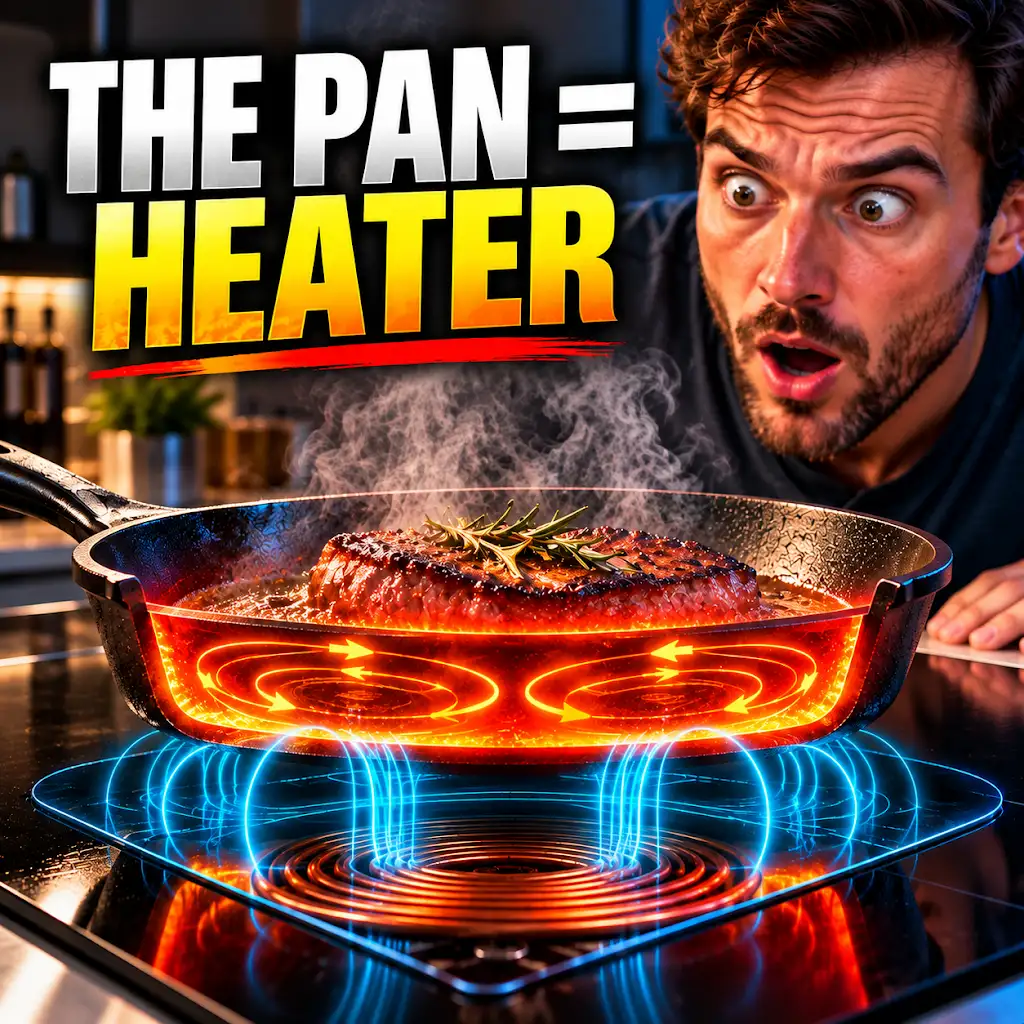
The Pan Is the Heater: How Induction Cooking Really Works
FAQs
What is Joule heating induction stove?
Joule heating induction stove is a type of cooking appliance that uses electromagnetic induction to heat cookware directly, without the need for a traditional heating element.
How does Joule heating work in an induction stove?
Joule heating in an induction stove works by creating a magnetic field that induces electrical currents in the cookware. These currents generate heat through resistance, heating up the cookware and the food inside it.
What are the advantages of using a Joule heating induction stove?
Some advantages of using a Joule heating induction stove include faster heating times, precise temperature control, energy efficiency, and a safer cooking surface since the cooktop itself does not get hot.
Is Joule heating induction stove more energy-efficient than traditional stoves?
Yes, Joule heating induction stoves are more energy-efficient than traditional stoves because they heat the cookware directly, resulting in less heat loss and faster cooking times.
Are there any limitations to using a Joule heating induction stove?
One limitation of using a Joule heating induction stove is that it requires cookware that is compatible with induction cooking, typically made of ferrous materials like cast iron or stainless steel. Additionally, the initial cost of an induction stove may be higher than traditional stoves.