You’re standing in your kitchen, a sleek new induction cooktop gleaming before you. The instructions for your new cookware are on the counter, a seemingly simple set of rules about magnetism. You’ve heard the buzz about induction cooking – its speed, efficiency, and precision – but the whole “magnetic cookware” thing still feels a little… mysterious. What exactly is going on under the surface? Why do some of your old pots and pans just won’t work, while others hum to life? This article is your guide to unraveling the magic behind induction cooking and understanding why the right cookware is the essential key to unlocking its full potential.
Forget the coils of red-hot metal you might associate with traditional electric stoves. Induction cooking is a fundamentally different beast, relying on electromagnetism to generate heat directly within your cookware. It’s a remarkably efficient process that offers a level of control and responsiveness that gas and conventional electric stoves simply can’t match.
The Electromagnetic Field: The Invisible Engine
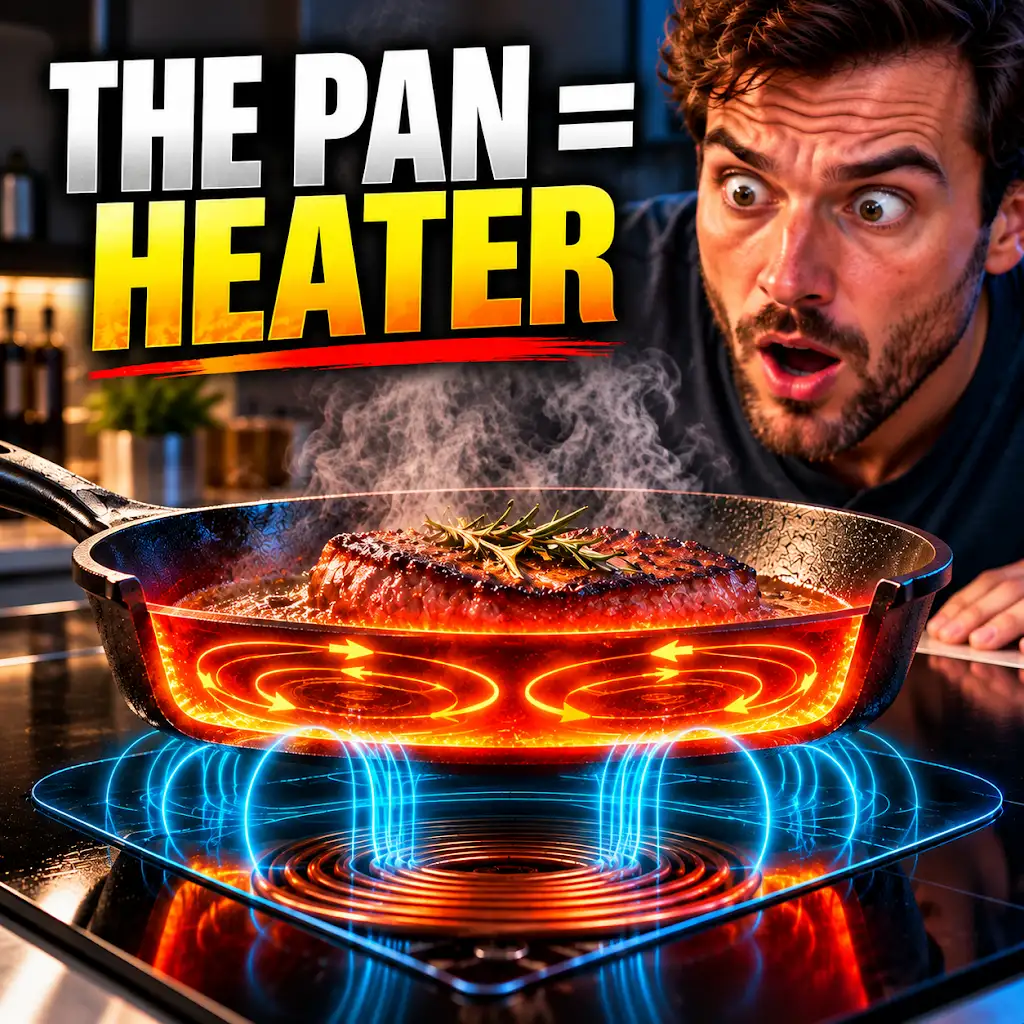
At the heart of your induction cooktop lies a powerful electromagnetic coil. When you turn on the cooktop, an alternating electric current flows through this coil. This current, in turn, generates a fluctuating magnetic field that extends upwards, just above the cooktop’s surface. This magnetic field is the invisible engine that drives the entire cooking process. Think of it as an invisible force field, poised and ready to interact with the right kind of pan.
Eddy Currents: The Tiny Whirlpools of Heat
This magnetic field is designed to interact specifically with ferromagnetic materials – in simpler terms, materials that can be magnetized. When you place a pot or pan made of such a material onto the induction surface, the fluctuating magnetic field penetrates the base of the cookware. This penetration causes a phenomenon called “eddy currents” to form within the metal of the pan. These are essentially tiny, circular electric currents that swirl within the cookware’s base.
Resistance and Friction: The Birth of Heat
Now, here’s where the heat generation happens. The metal of your cookware, while a good conductor of electricity for these eddy currents to form, also possesses some electrical resistance. As these eddy currents flow and swirl within the metal, they encounter this resistance. This resistance causes the metal to heat up due to a process very similar to friction. Imagine millions of tiny electrons bumping into each other and into the metal’s atoms as they flow – this microscopic collision creates heat. The stronger the magnetic field and the more resistant the cookware material, the more eddy currents will form, and the hotter your pan will get.
Direct Heat Transfer: Efficiency Personified
The crucial point here is that the heat is generated directly within the base of your cookware. The induction element itself never actually gets hot. Instead, it energizes the pan, which then heats your food. This is why induction cooktops are so incredibly efficient. There’s no wasted energy heating up the air around the pan, no heat loss through radiant elements, and no fuel burning inefficiently. The energy is precisely targeted, making it a far more eco-friendly and energy-saving cooking method. You’re not just heating the pan; the pan becomes the heat source.
Rapid Response and Precise Control: The Cook’s Advantage
This direct heat generation also leads to another significant advantage: incredibly rapid response times and precise temperature control. When you turn up the heat on an induction cooktop, the eddy currents intensify almost instantly, and your pan heats up in seconds. Conversely, when you lower the heat, the eddy currents dissipate just as quickly, and the pan cools down rapidly. This responsiveness allows you to sear meats with perfect precision, simmer delicate sauces without scorching, and control your cooking temperatures with an accuracy that even experienced chefs will appreciate. You’ll find yourself making adjustments on the fly with a confidence you might not have had before.
Magnetic cookware is essential for induction cooking, as it relies on the principle of electromagnetic induction to generate heat directly in the cookware itself. This process occurs when a magnetic field is created by the induction cooktop, which then induces an electric current in the ferrous material of the cookware. For a deeper understanding of how this technology works and its benefits, you can read a related article at Freaky Science. This resource provides insights into the science behind induction cooking and the types of materials that are suitable for use on induction cooktops.
The Magic Ingredient: Why Your Cookware Needs to Be Magnetic
This brings us to the core of understanding induction cooking: the cookware. As we’ve established, induction works by creating an electromagnetic field that induces currents in the cookware itself. This fundamental principle dictates that not all cookware is compatible. Your cookware needs to have a specific property to “catch” that magnetic field and transform it into usable heat.
Ferromagnetic Properties: The Key to Compatibility
The crucial property your cookware needs is ferromagnetism. Ferromagnetic materials are those that can be strongly attracted to a magnet and can also be magnetized themselves. Common examples of ferromagnetic metals include iron and nickel. Stainless steel can also be ferromagnetic, depending on its composition. This is why when you test your cookware for induction compatibility, the magnet test is so effective. If a magnet sticks firmly to the bottom of your pan, it’s likely made of a ferromagnetic material and will work on an induction cooktop.
The Magnet Test: Your Simple Verification
The simplest and most reliable way to determine if your existing cookware is induction-compatible is to perform the “magnet test.” Grab a common refrigerator magnet (one that actually sticks to your fridge, not a flimsy promotional one). Place the magnet on the bottom of your pot or pan. If the magnet adheres strongly, your cookware is ferromagnetic and suitable for induction cooking. If it wobbles, slides off easily, or doesn’t stick at all, it’s likely not compatible. This simple test can save you from purchasing a new cooktop only to find half your beloved pots and pans are useless.
Materials that Work: The Induction-Friendly Lineup
So, what materials are generally considered induction-friendly?
- Cast Iron: This is a classic for a reason. Cast iron is highly ferromagnetic and heats evenly and retains heat exceptionally well. It’s a champion of induction cooking.
- Enameled Cast Iron: Similar to regular cast iron, the enamel coating doesn’t interfere with the magnetic properties of the iron base.
- Magnetic Stainless Steel: Not all stainless steel is created equal. Many modern stainless steel cookware sets are designed with a ferromagnetic core or base to be induction-compatible. Look for cookware explicitly labeled as induction-compatible.
- Carbon Steel: Another excellent choice, carbon steel pans are lightweight, responsive, and highly magnetic.
- Aluminum and Copper with Magnetic Bases: While aluminum and copper are excellent conductors of heat, they are not inherently magnetic. However, many manufacturers bond a ferromagnetic layer to the base of aluminum or copper cookware, making them induction-compatible. You’ll often see this described as a “sandwich” or “ply” construction.
Materials that Don’t Work (Generally): The Non-Magnetic Exclusion
Conversely, you’ll find that cookware made from purely non-ferromagnetic materials will not work on an induction cooktop without a special magnetic adapter. These include:
- Pure Aluminum: While a great conductor, it lacks the necessary magnetic properties.
- Pure Copper: Similar to aluminum, it’s an excellent conductor but not magnetic.
- Glass: Obviously, glass is non-magnetic and will not generate heat.
- Ceramic: Unless it has a magnetic layer incorporated, ceramic cookware won’t work.
It’s important to remember that these are general guidelines. Always check the manufacturer’s specifications for both your cooktop and your cookware to ensure compatibility. A quick glance at the packaging or product description for “induction compatible” is your best bet.
Decoding Cookware Construction: What to Look For
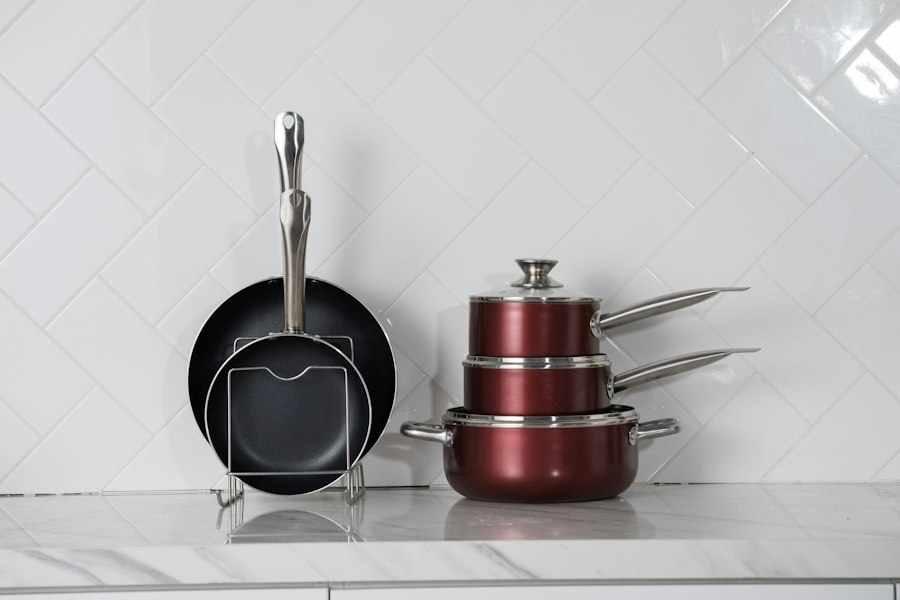
Understanding the materials is one thing, but the construction of your cookware also plays a vital role in how well it performs on an induction cooktop. The design of the pan’s base is paramount to efficiently capturing and transferring that magnetic energy.
The Importance of a Flat and Thick Base
For optimal induction performance, you want cookware with a flat and sufficiently thick base. Why?
- Flatness: The fluctuating magnetic field needs to interact with the cookware’s surface. If the base is warped, uneven, or heavily ridged, the magnetic field’s connection will be inconsistent. This can lead to uneven heating, “hot spots,” and reduced efficiency. A perfectly flat bottom ensures maximum contact with the induction element, allowing the magnetic field to work its magic uniformly.
- Thickness: A thinner base might heat up quickly, but it can also lead to faster heat dissipation and a tendency to warp over time, especially with rapid temperature changes. A thicker base, particularly one with a ferromagnetic core, distributes heat more evenly and helps to retain that heat, leading to more consistent cooking results and greater durability. It also provides a more robust surface for the eddy currents to form and generate heat.
Multi-Ply Construction: The Engineered Advantage
Many high-quality induction-compatible cookware pieces feature multi-ply or “sandwich” construction. This is where different layers of metal are bonded together to create a superior cooking surface.
- Core Layers: Often, the core layers will include highly conductive materials like aluminum or copper to promote even heat distribution throughout the pan.
- Magnetic Outer Layers: The outer layers, particularly the base, will be made of ferromagnetic materials (like stainless steel or cast iron) to interact with the induction cooktop’s magnetic field.
This combination offers the best of both worlds: the magnetic responsiveness needed for induction heating and the excellent heat conductivity and distribution of other metals. You’ll find this in high-end skillets, saucepans, and stockpots.
Understanding “Induction Ready” Labels and Symbols
Manufacturers are well aware of the need for clarity. You’ll often find specific labels or symbols on cookware packaging and directly on the product itself that indicate induction compatibility.
- The Induction Coil Symbol: This is the most common and recognizable symbol. It depicts a series of wavy lines or a coiled shape, often within a square or circle, signifying that the cookware is designed for induction cooktops.
- Explicit Text: Look for phrases like “Induction Compatible,” “Induction Ready,” or “Works on Induction.”
- Manufacturer’s Specifications: Always refer to the product’s detailed specifications provided by the manufacturer. This is the most definitive source of information.
When in doubt, always perform the magnet test. It’s your foolproof way to confirm if a piece of cookware will sing on your new induction stove.
The Benefits of Magnetic Cookware on Induction: Beyond Just Working

It’s not just about whether your pan will heat up; using the right magnetic cookware on an induction cooktop unlocks a host of benefits that elevate your cooking experience. This symbiotic relationship between the cooktop and the pan leads to superior results.
Unmatched Efficiency and Energy Savings
As we’ve touched upon, the direct heat generation within the cookware is the key to induction’s remarkable efficiency. Magnetic cookware is the conduit for this energy.
- Minimal Heat Loss: Unlike conventional electric or gas stoves where a significant amount of heat escapes into the surrounding air, induction cooking directs almost all the energy to the pan. This means less wasted electricity and faster cooking times.
- Faster Heating: Because the heat is generated directly in the base, your magnetic cookware heats up almost instantaneously. Boiling water, for example, can be significantly faster on an induction cooktop compared to other methods. This translates to less time spent waiting and more time enjoying your meals.
- Reduced Energy Bills: Over time, this efficiency can translate into noticeable savings on your energy bills. You’re using less power to achieve the same cooking results.
Superior Temperature Control and Responsiveness
The precise nature of induction cooking is amplified by the responsiveness of magnetic cookware.
- Instantaneous Adjustments: When you turn the dial on your induction cooktop, the magnetic field changes immediately, and your magnetic cookware responds in kind. This allows for incredibly precise temperature control. You can go from a high sear to a gentle simmer in seconds, without the lag you might experience with other cooktops.
- Preventing Scorching and Burning: This fine-tuned control is invaluable for delicate dishes. You can maintain a precise simmer for sauces, prevent milk from scalding, and perfectly caramelize onions without the risk of burning.
- Consistent Cooking: The even heat distribution facilitated by well-constructed magnetic cookware ensures that your food cooks consistently from edge to edge, eliminating frustrating hot spots and undercooked or overcooked areas.
Enhanced Safety Features
Induction cooktops are renowned for their safety features, and magnetic cookware plays a subtle but important role.
- Cooler Surface: Because the cooktop surface itself doesn’t get hot, only the cookware does, there’s a significantly lower risk of accidental burns. The cooktop surface might become warm from residual heat radiating from the pan, but it never reaches the scorching temperatures of traditional electric elements.
- Automatic Shut-Off: Most induction cooktops have sensors that detect the presence of cookware. If you remove the magnetic pot or pan, the cooktop will automatically shut off the heat, preventing potential fires or wasted energy. This is a crucial safety net for busy kitchens.
- No Open Flames: Unlike gas stoves, induction cooking involves no open flames, eliminating the risk of gas leaks or accidental ignition of flammable materials.
Durability and Longevity
Well-made magnetic cookware, particularly pieces designed for induction, are often built to last.
- Robust Construction: The emphasis on flat, thick bases and multi-ply construction in induction-compatible cookware means these pieces are generally more durable and less prone to warping or damage from thermal shock.
- Investment in Quality: Choosing high-quality magnetic cookware for your induction cooktop is an investment that will pay dividends in terms of performance, longevity, and your overall cooking enjoyment.
Induction cooking has gained popularity due to its efficiency and speed, and understanding how magnetic cookware works is essential for maximizing its benefits. Unlike traditional cooking methods, induction relies on magnetic fields to generate heat directly in the cookware, which means that only pots and pans made from ferrous materials can be used. For a deeper insight into the science behind this innovative cooking technique, you can read a related article that explains the principles of induction cooking and its advantages. To explore more about this fascinating topic, visit this article.
Troubleshooting Common Issues with Magnetic Cookware on Induction
| Metric | Description | Typical Value/Range | Unit |
|---|---|---|---|
| Magnetic Permeability | Ability of cookware material to support magnetic field lines | High (e.g., iron, stainless steel) | Relative permeability (μr) |
| Electrical Conductivity | Conductivity of cookware material affecting eddy current generation | Low to moderate (to reduce energy loss) | Siemens per meter (S/m) |
| Induction Coil Frequency | Frequency of alternating current in induction cooktop coil | 20,000 – 50,000 | Hertz (Hz) |
| Eddy Current Generation | Induced currents in cookware that produce heat | Depends on cookware material and coil power | Amperes (A) |
| Heat Transfer Efficiency | Percentage of electrical energy converted to heat in cookware | 80% – 90% | Percent (%) |
| Cookware Base Thickness | Thickness of magnetic layer affecting induction heating | 1 – 3 | Millimeters (mm) |
| Minimum Cookware Diameter | Smallest base diameter to activate induction cooktop sensor | 10 – 12 | Centimeters (cm) |
Even with the best intentions and the right cookware, you might occasionally encounter a hiccup. Understanding common issues and their solutions can save you frustration and ensure your induction cooking experience remains seamless.
Pan Not Heating At All: The Initial Inductive Hurdle
This is the most common issue newcomers face.
- Check the Magnet Test: First and foremost, re-confirm that your cookware is indeed magnetic. Is the magnet sticking firmly? If not, the material is likely the problem, and you’ll need induction-compatible cookware.
- Pan Placement: Ensure the pan is centered on the induction element. Most cooktops have specific zones, and the pan needs to be within that zone.
- Cooktop Power Setting: Double-check that you haven’t accidentally set the power to zero or a very low setting where heat generation is minimal.
- Cooktop Lock Feature: Some induction cooktops have a child lock or control lock feature that might be engaged. Consult your cooktop’s manual to ensure it’s not accidentally activated.
- Cooktop Malfunction: In rare cases, there might be an issue with the cooktop itself. If all your cookware is magnetic and properly placed, and still nothing heats, consult your appliance manual or contact customer support.
Uneven Heating: The Wobble in Your Sauce
You’re cooking, but parts of your food are cooking faster than others.
- Pan Base Flatness: Inspect the base of your cookware. Is it perfectly flat? A warped or warped base will lead to inconsistent contact with the induction element, resulting in uneven heating.
- Cookware Material Quality: While magnetic, some lower-quality magnetic cookware might have uneven distribution of the ferromagnetic material in its base, leading to localized hot spots.
- Cookware Size vs. Element Size: Ensure the diameter of your cookware is appropriate for the size of the induction element. A very small pan on a large element, or vice-versa, can lead to inefficient heating.
- Moving the Pan: For certain dishes that require very even cooking, like pancakes or delicate crepes, occasionally shifting the pan on the element can help distribute heat more uniformly.
Strange Noises: The Hum, Buzz, and Click
Induction cooktops can sometimes make noises that might be unfamiliar.
- Humming or Buzzing: This is often normal. It’s caused by the rapid cycling of the alternating current and the magnetic field. The noise level can vary depending on the power setting and the cookware being used. Higher power settings and thinner-based cookware can sometimes produce more noticeable humming.
- Clicking or Popping: This can sometimes occur when the cooktop’s internal components are cycling or adjusting power. It’s usually harmless.
- Loud, Persistent Buzzing: If the buzzing is excessively loud, constant, and seems to be getting worse, it might indicate an issue with the cookware or the cooktop. Ensure your cookware is stable and not vibrating against the surface. If the noise persists and is concerning, consult your appliance manual.
- Cookware Resonance: Some cookware, particularly very thin-walled aluminum or copper without a proper ferromagnetic base, can resonate with the magnetic field and produce a high-pitched whine. This is another indicator that the cookware might not be ideal for induction.
Cookware Scratches: Protecting Your Investment
Induction cooktops often have smooth, glass-ceramic surfaces that can be scratched.
- Avoid Dragging Cookware: Always lift your cookware, don’t drag it across the cooktop surface. This is the most common cause of scratches.
- Cleanliness is Key: Keep both the cooktop surface and the bottom of your cookware clean. Food particles or debris can act like sandpaper if the pan is dragged.
- Use Appropriate Cookware: While some stainless steel can be durable, avoid cookware with very rough or unfinished bases that could potentially scratch the glass.
- Follow Manufacturer’s Cleaning Instructions: Your cooktop manufacturer will provide specific cleaning recommendations to avoid damage.
By understanding the principles behind induction cooking and the crucial role of magnetic cookware, you’re well on your way to mastering this innovative and efficient way to cook. Embrace the precision, revel in the speed, and enjoy the culinary adventures that await you.
The Pan Is the Heater: How Induction Cooking Really Works
FAQs
What is induction cooking?
Induction cooking is a method of cooking that uses electromagnetic fields to heat up cookware directly, rather than relying on a flame or electric heating element.
How does magnetic cookware work on induction cooktops?
Magnetic cookware is essential for induction cooking because it allows the electromagnetic field to generate heat within the cookware itself. The cookware needs to have a magnetic bottom in order to work effectively on an induction cooktop.
What types of cookware are suitable for induction cooking?
Cookware made from materials such as cast iron, stainless steel, or certain types of magnetic alloys are suitable for use on induction cooktops. Non-magnetic materials like aluminum or copper will not work on induction cooktops unless they have a magnetic base.
Are there any advantages to using magnetic cookware on induction cooktops?
Using magnetic cookware on induction cooktops can result in faster heating times, more precise temperature control, and increased energy efficiency compared to traditional cooking methods.
Can I use regular cookware on an induction cooktop?
Regular cookware that is not magnetic will not work on an induction cooktop. However, there are induction disk converters available that can be placed under non-magnetic cookware to make them compatible with induction cooking.