
You’re standing in your kitchen, staring at that sleek, flat stovetop. It looks modern, efficient, and maybe a little intimidating. You’ve heard whispers about induction cooking, how it’s faster, safer, and more precise than your old gas or electric stove. But what is it, exactly? How does it manage to heat your pan without a visible flame or glowing coils? Buckle up, because we’re about to demystify induction cooking, and by the end, you’ll not only understand its magic but might just be eager to experience it yourself.
Forget everything you thought you knew about stovetops. Induction isn’t about direct heat transfer. There’s no burner that gets red-hot, no open flame licking your pots. Instead, induction cooking relies on a fascinating principle of electromagnetism. Imagine a hidden force, an invisible current, working diligently beneath the smooth ceramic surface of your cooktop. This force is the key to induction’s speed and efficiency, and understanding it is the first step to appreciating its unique cooking capabilities.
The Heart of the Matter: The Electromagnetic Coil
At the core of every induction element lies a carefully crafted copper coil. This isn’t just any wire; it’s designed to conduct electricity with minimal resistance. When you turn on an induction burner, an alternating electrical current is sent through this copper coil. This alternating current is crucial. It constantly reverses direction, creating a fluctuating magnetic field. Think of it like a rapidly oscillating invisible wave emanating from the coil. This fluctuating magnetic field is the invisible force we mentioned, and it’s the engine of induction cooking.
The Dance of Electrons: Understanding Alternating Current
Why alternating current (AC)? Direct current (DC) flows in one direction. If you applied DC to the coil, you’d get a steady magnetic field, which wouldn’t generate heat in the cookware. AC, on the other hand, rapidly switches polarity. This rapid switching means the magnetic field it generates is also constantly changing, oscillating back and forth. This dynamism is what makes induction possible. It’s the rapid back-and-forth motion of electrons in the coil that generates the equally dynamic magnetic field.
The Magnetic Field’s Reach: How Far Does It Extend?
The magnetic field generated by the coil extends upwards, through the ceramic glass surface of the cooktop. It’s designed to be concentrated and localized to the cooking zone. This is why you don’t see magnetic fields radiating across your entire kitchen. The field’s strength diminishes rapidly with distance, and it’s specifically engineered to interact with the cookware placed directly above it. The thickness and material of the ceramic glass play a role in how effectively this field is transmitted, but it’s designed to be transparent to the magnetic waves.
Induction cooking is an innovative method that uses electromagnetic fields to directly heat pots and pans, making it a highly efficient cooking option. For a deeper understanding of the science behind this technology and its benefits compared to traditional cooking methods, you can refer to a related article on the topic. To learn more, visit Freaky Science for insightful information and explanations.
The Magnetic Attraction: Why Your Cookware Matters
This is where the “induction-ready” label on your pots and pans becomes critically important. Not all cookware is created equal when it comes to induction. The magic of induction relies on a specific interaction between the magnetic field and the material of your pot or pan. If your cookware isn’t compatible, nothing will happen. It’s like trying to start a car with the wrong key; the mechanism simply won’t engage.
Ferromagnetism: The Secret Ingredient
The key to induction-compatible cookware is ferromagnetism. This is a property of certain materials, most notably iron and its alloys, that allows them to be strongly attracted to magnets. When the fluctuating magnetic field from the induction coil interacts with a ferromagnetic pot or pan, something remarkable happens within the metal itself.
Eddy Currents: The Tiny Whirlpools of Energy
The alternating magnetic field penetrates the base of your ferromagnetic cookware. As the field fluctuates, it induces tiny electrical currents within the metal. These currents are called “eddy currents” because they flow in circular paths, much like eddies in a stream. It’s these eddy currents that are the direct source of heat. They are essentially microscopic electrical currents zipping back and forth within the metal of your pan.
Resistance is Futile: Heat Generation Through Electrical Resistance
Now, metals, while they conduct electricity, also have electrical resistance. Think of it like trying to push water through a narrow pipe; there’s some resistance to the flow. When these eddy currents are forced to flow through the resistive metal of your cookware, they encounter friction. This friction, much like the friction that makes your hands warm when you rub them together, generates heat. The more resistance the eddy currents encounter, the hotter the cookware becomes. This is the fundamental principle of how induction cooking works: generating heat within the pan itself.
The Role of Pan Material: Beyond Just Being Magnetic
While ferromagnetism is essential, other properties of your cookware also play a role in how efficiently it heats and how evenly it distributes that heat.
Cast Iron: The Classic Choice
Pure cast iron is inherently ferromagnetic and a fantastic conductor of heat. Its density and thickness mean it can hold and distribute heat very well, making it a popular choice for induction cooking. However, cast iron can be heavy and may require seasoning to prevent sticking.
Enameled Cast Iron: The Best of Both Worlds
Enameled cast iron cookware, like Dutch ovens, offers the heat retention and distribution of cast iron with a non-reactive, easy-to-clean enameled surface. The iron core ensures magnetic compatibility, and the enamel makes it a joy to cook with.
Stainless Steel with a Magnetic Core: The Versatile Option
Many modern stainless steel pans are designed for induction by incorporating a layer of ferromagnetic material (often aluminum or copper sandwiched between layers of stainless steel, or a magnetic stainless steel base) within their construction. This allows them to benefit from the even heating of stainless steel while still being responsive to the induction field. Look for pans specifically labeled as “induction compatible” or that have a magnet that sticks firmly to the base.
Aluminum and Copper: Not Directly Induction-Ready
Pure aluminum and copper are excellent conductors of heat, but they are not ferromagnetic. This means they will not directly respond to the induction field and will not heat up on their own. However, many cookware manufacturers create “clad” pots and pans where a layer of aluminum or copper is bonded to a ferromagnetic base. This gives you the superior heat distribution of aluminum or copper while ensuring magnetic compatibility with your induction cooktop.
The Induction Cooktop: A Symphony of Engineering and Electronics

Your induction cooktop is more than just a pretty surface; it’s a sophisticated piece of engineering that orchestrates the entire cooking process. It’s designed to be safe, efficient, and offer precise control over your cooking temperature. Understanding the components and how they work together will give you a deeper appreciation for this modern kitchen marvel.
The Ceramic Glass Surface: More Than Just Aesthetics
The smooth, flat surface you see is typically made of durable ceramic glass. This material is chosen for its ability to withstand high temperatures and resist scratches. Crucially, it’s also non-conductive and transparent to magnetic fields. This means the magnetic field generated by the coil below can easily pass through the glass to interact with your cookware, while the glass itself doesn’t get hot from direct electrical current.
Heat Transfer Through the Glass: The “Hot” Surface Misconception
It’s important to understand that the ceramic glass surface of an induction cooktop does not get directly heated by electricity, unlike a radiant electric cooktop. While the glass will eventually warm up due to residual heat from the cookware after cooking, its primary function is to provide a stable, easy-to-clean surface that allows the magnetic field to pass through. Any heat you feel on the glass is a consequence of the pan heating up, not from the cooktop itself generating direct heat.
Cleaning and Maintenance: A Simple Wipe-Down
The smooth, seamless nature of ceramic glass makes cleaning a breeze. Spills and splatters can usually be wiped away with a damp cloth and a mild cleaner. Avoiding abrasive sponges or harsh chemicals will help maintain the pristine appearance of your cooktop.
The Control Panel: Your Gateway to Precision
The control panel is your interface with the induction cooktop. It’s where you select the heat level, set timers, and engage various cooking functions. Modern induction cooktops often feature touch-sensitive controls, offering a sleek and intuitive user experience.
Power Levels and Temperature Control: Granular Adjustments
Induction cooktops offer a remarkable level of control. Instead of vague “low,” “medium,” and “high” settings, many induction cooktops allow you to select from a wide range of power levels, often numbered from 1 to 10 or even higher. This granular control translates to precise temperature management, allowing you to achieve delicate simmering or rapid boiling with ease.
Boost and Power Sharing: Maximizing Efficiency
Many induction cooktops feature a “boost” function that temporarily overrides the standard power setting to deliver maximum heat for a short period. This is incredibly useful for quickly bringing water to a boil or searing food. Some cooktops also feature “power sharing,” where the total power output is distributed across the available burners. If you activate boost on one burner, another might reduce its power output to compensate, ensuring the cooktop’s overall electrical load isn’t exceeded.
Safety Features: Peace of Mind in the Kitchen
Induction cooking is renowned for its safety features, providing an added layer of security for you and your family.
Automatic Shut-Off: No More Forgotten Pots
One of the most significant safety features is automatic shut-off. If you remove a pot or pan from an active burner, the induction element will automatically turn off after a short period. This eliminates the risk of leaving a burner on accidentally, preventing potential fires or burns.
Residual Heat Indicators: Knowing When It’s Safe
Even though the cooktop surface doesn’t get directly hot, the cookware does. Many induction cooktops have residual heat indicators – small lights or icons that illuminate to warn you when a burner or the surrounding surface is still warm from previous use. This helps you avoid accidental burns.
Pan Detection: No Power Wasted
Induction cooktops will only activate and generate heat when they detect the presence of a compatible, ferromagnetic pan. This means if you accidentally turn on a burner without a pot, it won’t heat up, saving energy and preventing potential hazards.
The Benefits of Induction Cooking: Why It’s Worth Considering

So, you understand how it works. Now, let’s talk about why you might want to make the switch. Induction cooking isn’t just a trend; it offers tangible advantages that can elevate your cooking experience and make your time in the kitchen more enjoyable and efficient.
Speed and Responsiveness: A Kitchen That Keeps Up with You
One of the most immediate and noticeable benefits of induction cooking is its speed. Because the heat is generated directly within the cookware, it heats up incredibly quickly. You can boil water in a fraction of the time it takes on a traditional electric or gas stove. This responsiveness is a game-changer for busy cooks who need to get meals on the table quickly.
Boiling Water in Record Time: The Proof is in the Pudding (or the Pasta)
Imagine needing to boil water for pasta or tea. With induction, you’ll be surprised at how quickly it comes to a rolling boil. This translates to significant time savings throughout your day. No more waiting around for water to heat up; you can move on to the next step of your recipe almost immediately.
Searing and Browning: Achieving Perfect Results
The ability to rapidly reach high temperatures makes induction ideal for searing meats and achieving a beautiful brown crust. The precise control also allows you to adjust the heat instantly, preventing burning while still getting that perfect sear.
Energy Efficiency: Smarter Cooking, Lower Bills
Induction cooking is remarkably energy-efficient. Because the heat is generated directly in the cookware and there’s very little heat loss to the surrounding air, more of the energy from the electrical outlet makes it to your food. This translates to lower energy consumption and potentially lower electricity bills.
Minimizing Heat Loss: No Wasted Energy
Unlike gas stoves, where a significant amount of heat escapes around the sides of the pot, or radiant electric stoves, where the burner itself heats up and loses heat to the air, induction focuses the energy precisely where it’s needed – in the pan. This direct transfer means less energy is wasted.
Faster Cooking Times: Less Time on, Less Energy Used
As we’ve already discussed, induction cooks faster. Shorter cooking times naturally mean less overall energy is consumed. It’s a win-win for both your cooking efficiency and your environmental impact.
Precision and Control: The Chef’s Best Friend
For those who appreciate fine-tuning their cooking, induction offers unparalleled precision. The ability to adjust heat levels in small increments means you can achieve delicate simmering for sauces, gently melting chocolate without scorching, or maintaining a perfect low temperature for slow cooking.
Simmering Sauces: The Art of the Gentle Heat
Achieving a perfect, gentle simmer without bubbling over can be challenging on some stovetops. Induction’s precise control allows you to dial in the exact low heat needed for delicate sauces, custards, and reductions, ensuring smooth textures and preventing scorching.
Melting Chocolate: A Delicate Operation Made Easy
Melting chocolate can be a nail-biting experience. Too much heat, and it seizes; too little, and it takes forever. Induction’s ability to provide very low, consistent heat makes melting chocolate a much more controlled and successful endeavor.
Safety and Cleanliness: A Healthier and Tidier Kitchen
As mentioned in the safety features section, induction cooktops are inherently safer. The absence of open flames and the automatic shut-off feature significantly reduce the risk of accidents. Furthermore, the smooth, flat surface is incredibly easy to clean, making kitchen maintenance a breeze.
No Open Flames: Eliminating Gas-Related Risks
For those concerned about the safety of open flames with gas stoves, induction offers a welcome alternative. This eliminates the risk of gas leaks or accidental ignition.
Easy-to-Clean Surface: Spills Happen, Cleaning Doesn’t Have to Be a Chore
The seamless ceramic glass surface means there are no grates or crevices for food to get trapped in. Spills and splatters can be wiped away effortlessly, keeping your kitchen looking pristine.
Induction cooking is an innovative method that utilizes electromagnetic fields to heat cookware directly, making it a highly efficient and safe option for modern kitchens. If you’re curious about the science behind this technology and how it compares to traditional cooking methods, you might find this related article insightful. It delves into the principles of induction cooking and its advantages over gas and electric stoves. For more information, you can read the article here.
Overcoming the Induction Hurdle: What to Know Before You Buy
| Aspect | Description | Metric / Data |
|---|---|---|
| Heating Method | Uses electromagnetic induction to directly heat cookware | Frequency: 20-50 kHz |
| Energy Transfer | Induction coil generates magnetic field inducing electric currents in the pot | Efficiency: 80-90% |
| Cookware Requirement | Must be ferromagnetic (e.g., cast iron, stainless steel) | Magnetic permeability > 1 |
| Heating Speed | Rapid heating due to direct energy transfer to cookware | Time to boil 1L water: ~4-5 minutes |
| Temperature Control | Precise and instant adjustment of heat output | Power range: 500W to 3500W |
| Safety Features | Surface remains cool except under the pot, automatic shutoff | Auto shutoff delay: ~30 seconds without cookware |
While induction cooking offers a wealth of benefits, there are a few considerations you should keep in mind before making the leap. Understanding these points will help you make an informed decision and ensure a smooth transition.
The Cookware Conundrum: Investing in Compatibility
As we’ve emphasized, induction-ready cookware is non-negotiable. If your current pots and pans aren’t compatible, you’ll need to invest in new ones. This can be an initial cost, but it’s essential for unlocking the full potential of induction.
The Magnet Test: A Simple Way to Check
A quick and easy way to test if your existing cookware is induction-compatible is to hold a magnet to the base of the pot or pan. If the magnet sticks firmly, it’s likely ferromagnetic and will work on an induction cooktop. If the magnet slides off easily or doesn’t stick at all, you’ll need to replace it.
Building Your Induction-Ready Arsenal: A Gradual Approach
You don’t necessarily need to replace your entire cookware collection overnight. You can start by investing in a few key pieces, like a good frying pan and a saucepan, and gradually build your induction-ready arsenal over time. Look for durable, well-made pieces that will serve you well for years to come.
The Learning Curve: Adapting to New Technology
While induction is intuitive, there can be a slight learning curve as you adapt to its responsiveness and precision. You might find yourself adjusting cooking times and heat levels initially as you get a feel for how quickly things heat up and cool down.
Mastering Temperature Control: Experiment and Observe
Don’t be afraid to experiment with different heat settings and observe how your food cooks. Pay attention to how quickly things heat up and cool down, and make notes of what works best for different recipes. With a little practice, you’ll quickly master the art of induction cooking.
Understanding Power Levels: Finding Your Sweet Spot
Familiarize yourself with the power levels on your specific induction cooktop. Understand what each level generally equates to in terms of heat output and what types of cooking it’s best suited for. This knowledge will empower you to cook with confidence.
Initial Investment: Weighing the Costs
Induction cooktops can sometimes have a higher upfront cost compared to traditional electric or gas ranges. However, it’s important to consider the long-term benefits, such as energy efficiency and durability, which can offset the initial investment over time.
The Long-Term Value Proposition: Efficiency and Durability
While the initial price tag might seem higher, think about the energy savings, the reduced risk of accidents, and the longevity of a quality induction cooktop. These factors contribute to a better long-term value proposition.
Considering Your Needs: Not All Induction Cooktops Are Created Equal
When shopping for an induction cooktop, consider your specific needs and budget. There are a wide range of models available, from basic cooktops to high-end ranges with multiple features. Research different brands and models to find one that best fits your lifestyle and kitchen.
In conclusion, induction cooking is a testament to modern innovation, offering a faster, more efficient, safer, and more precise way to prepare your meals. By understanding the invisible forces at play – the electromagnetic coils, the eddy currents, and the role of ferromagnetic cookware – you can unlock a new world of culinary possibilities. So, the next time you see that sleek induction cooktop, don’t be intimidated. Embrace the science, get ready to experiment, and prepare to be amazed by the power and precision of induction cooking. Your kitchen, and your taste buds, will thank you for it.
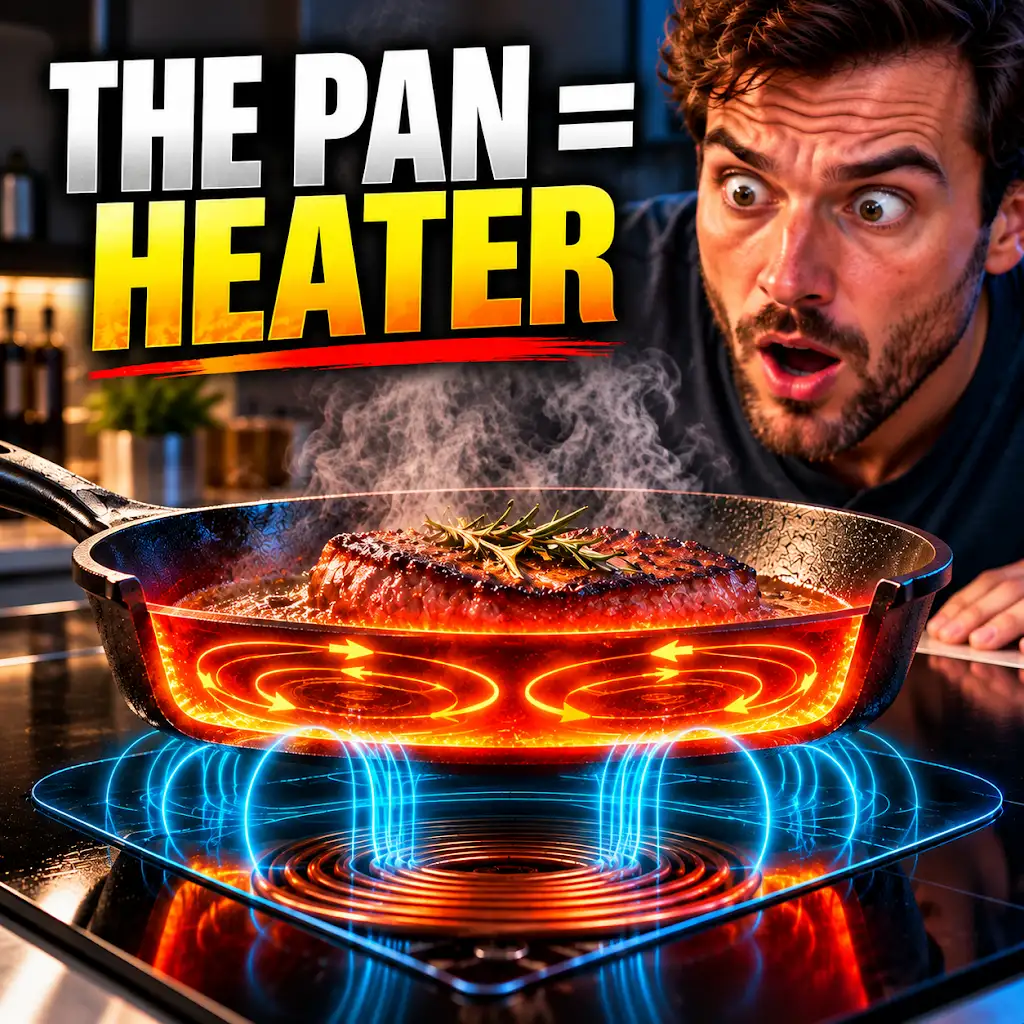
The Pan Is the Heater: How Induction Cooking Really Works
FAQs
What is induction cooking?
Induction cooking is a method of cooking that uses electromagnetic energy to heat cookware directly, without the need for a traditional heating element like a gas flame or electric coil.
How does induction cooking work?
Induction cooking works by using electromagnetic induction to heat the cookware directly. When an induction-compatible pot or pan is placed on the induction cooktop, an electric current is passed through a coil beneath the cooktop’s surface, creating a magnetic field. This magnetic field then induces a current in the cookware, generating heat and cooking the food inside the pot or pan.
What are the advantages of induction cooking?
Some advantages of induction cooking include faster heating times, precise temperature control, energy efficiency, and safety. Induction cooktops are also easier to clean and maintain compared to traditional gas or electric cooktops.
Is special cookware required for induction cooking?
Yes, special induction-compatible cookware is required for induction cooking to work effectively. Cookware must be made of ferrous materials like cast iron or magnetic stainless steel in order to generate heat through electromagnetic induction.
Are there any limitations to induction cooking?
One limitation of induction cooking is that it requires cookware with a flat, magnetic bottom to make proper contact with the induction cooktop. Additionally, induction cooktops may be more expensive upfront compared to traditional gas or electric cooktops.