You’re likely interacting with technology right now that owes its existence to a fundamental principle of physics: electromagnetic induction. From the charging of your smartphone to the electricity powering your home, this phenomenon is woven into the fabric of our modern lives. At its heart lies Faraday’s Law of Induction, a brilliant insight that elegantly connects magnetism and electricity. But what exactly is electromagnetic induction, and how does Faraday’s Law illuminate this connection? Let’s dive in and demystify it, unlocking the secrets behind how changing magnetic fields can conjure up electric currents.
Imagine a world where magnets and electricity were entirely separate entities. That was largely the understanding for centuries. Scientists meticulously studied the properties of magnets, their poles, and their attractive and repulsive forces. Simultaneously, others explored the mysteries of static electricity and the behavior of electric charges. However, the profound interplay between these two forces remained elusive. It wasn’t until the early 19th century that the groundbreaking connection began to unfold, a connection that would revolutionize technology and our understanding of the universe.
Before Faraday: Laying the Groundwork
Before Michael Faraday’s pivotal discoveries, the scientific community had already begun to suspect a relationship. Hans Christian Ørsted’s accidental discovery in 1820 that an electric current produced a magnetic field sent ripples through the scientific world. This was a crucial first step, demonstrating that electricity could create magnetism. However, the reverse – whether magnetism could create electricity – was still an open question. Many brilliant minds, including André-Marie Ampère, were working to understand the mathematical relationships governing electricity and magnetism, but the concept of inducing a current through magnetism remained a puzzle.
The Quest for the Missing Link
Scientists were actively searching for this reciprocal relationship. They hypothesized that if electricity could generate magnetism, then perhaps magnetism, under the right circumstances, could generate electricity. This was a tantalizing prospect, hinting at a deeper, unified understanding of these fundamental forces. It was this very quest that would lead to Faraday’s groundbreaking work.
Electromagnetic induction is a fundamental concept in physics, and Faraday’s law plays a crucial role in understanding this phenomenon. For a deeper exploration of Faraday’s law and its applications, you can refer to the article available at Freaky Science. This resource provides a comprehensive explanation of how changing magnetic fields can induce electric currents, along with practical examples and experiments that illustrate the principles of electromagnetic induction.
Faraday’s Eureka Moment: The Genesis of Induction
Michael Faraday, a self-taught genius with an insatiable curiosity, was one of the key figures in this scientific exploration. Working in the labs of the Royal Institution in London, he dedicated years to meticulously experimenting with magnets and coils of wire. His approach was largely empirical; he didn’t rely heavily on abstract mathematical theories but rather on hands-on observation and experimentation. This methodical approach, driven by intuition and a deep understanding of physical phenomena, would prove incredibly fruitful.
The Crucial Experiment: A Moving Magnet
Faraday’s breakthrough came through a series of experiments involving a coil of wire connected to a galvanometer, a device sensitive to electric currents. He discovered that simply placing a stationary magnet near the coil, or even holding it close, produced no current. The real magic happened when there was motion.
The Initial Observation: Current on the Move
Faraday found that when he moved a magnet into or out of a coil of wire, the galvanometer needle would deflect, indicating the flow of an electric current. Crucially, this current only flowed while the magnet was in motion. Once the magnet became stationary, the current ceased. This was a profound revelation: a changing magnetic field was the key.
The Direction of Motion Matters
He further observed that the direction of the induced current depended on the direction of the magnet’s motion. Moving the magnet inwards would induce a current in one direction, while moving it outwards would induce a current in the opposite direction. This indicated a direct relationship between the change in the magnetic field and the direction of the induced current.
Beyond the Bar Magnet: The Power of Electromagnets
Faraday didn’t stop at simple bar magnets. He realized that the source of the magnetic field was not as important as the change in that field. He conducted experiments using electromagnets – magnets created by passing electric current through a coil of wire.
Inducing Current with Electromagnets
When he activated or deactivated an electromagnet near another coil, he again observed the induction of a current in the second coil. This reinforced his conclusion: it was the change in the magnetic field, whether from a permanent magnet or an electromagnet, that was responsible for inducing the electric current.
Faraday’s Law of Induction: Quantifying the Phenomenon
The observations from Faraday’s experiments coalesced into a powerful mathematical description, known as Faraday’s Law of Induction. This law provides a quantitative relationship between the changing magnetic field and the induced electromotive force (EMF), which is the driving force behind electric current.
The Core Principle: Changing Magnetic Flux
At the heart of Faraday’s Law lies the concept of magnetic flux. Imagine magnetic field lines passing through a given area. Magnetic flux is a measure of the total number of magnetic field lines that pass through a particular surface. It’s essentially the “amount” of magnetic field piercing through an area.
What is Magnetic Flux?
Mathematically, magnetic flux ($\Phi_B$) is defined as the dot product of the magnetic field vector ($\mathbf{B}$) and the area vector ($\mathbf{A}$): $\Phi_B = \mathbf{B} \cdot \mathbf{A}$. If the magnetic field is uniform and perpendicular to the area, then $\Phi_B = BA$. If the field is at an angle to the area, then $\Phi_B = BA \cos(\theta)$, where $\theta$ is the angle between the magnetic field and the area vector.
Why Change Matters: The Driving Force
Faraday’s Law states that an EMF is induced in a circuit whenever the magnetic flux through the circuit changes. It’s the rate of change of magnetic flux that is directly proportional to the induced EMF. A faster change in flux leads to a larger induced EMF.
The Mathematical Formulation
Faraday’s Law can be expressed mathematically as:
$$ \mathcal{E} = -\frac{d\Phi_B}{dt} $$
Where:
- $\mathcal{E}$ represents the induced electromotive force (EMF), measured in volts.
- $\frac{d\Phi_B}{dt}$ represents the rate of change of magnetic flux with respect to time, measured in Webers per second (Wb/s), which is equivalent to volts.
- The negative sign is crucial and is accounted for by Lenz’s Law, which we’ll discuss shortly.
Understanding the Variables
- EMF ($\mathcal{E}$): This is the “voltage” that is generated by the changing magnetic flux. It’s the electrical pressure that pushes charges to flow and create a current.
- Magnetic Flux ($\Phi_B$): As we discussed, this is the measure of the magnetic field passing through an area. To change the magnetic flux, you can:
- Change the strength of the magnetic field.
- Change the area through which the magnetic field is passing.
- Change the orientation of the area relative to the magnetic field (i.e., change the angle).
- Rate of Change ($\frac{d}{dt}$): This signifies how quickly the magnetic flux is changing. A faster rate of change means a larger induced EMF.
What Happens in a Coil? Multiple Loops and Flux Linkage
When we talk about coils of wire, the concept of flux linkage becomes important. A coil is essentially made up of multiple loops of wire. If a changing magnetic flux passes through each loop, the total induced EMF in the coil is the sum of the EMFs induced in each individual loop.
Flux Linkage Explained
Flux linkage is the product of the number of turns in the coil ($N$) and the magnetic flux ($\Phi_B$) passing through each turn: $\Psi = N\Phi_B$. Faraday’s Law can then be expressed for a coil as:
$$ \mathcal{E} = -\frac{d\Psi}{dt} = -N\frac{d\Phi_B}{dt} $$
This means that a coil with more turns will generate a larger EMF for the same rate of change of magnetic flux. This is why generators and transformers use coils with many turns of wire.
Lenz’s Law: The Direction of the Induced Current
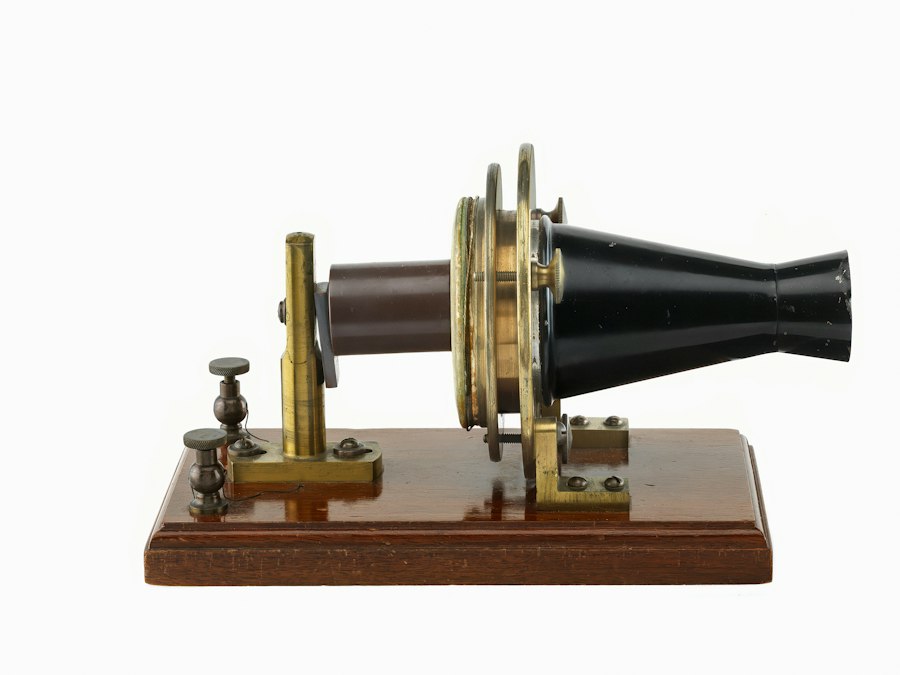
Faraday’s Law tells us how much EMF is induced, but it doesn’t tell us the direction of the induced current. That’s where Lenz’s Law comes in. Lenz’s Law is a direct consequence of the conservation of energy and provides the crucial directional information.
The Principle of Opposition
Lenz’s Law states that the direction of the induced current is always such that it opposes the change in magnetic flux that produced it. This might sound a bit counterintuitive at first, but it’s a fundamental principle that prevents perpetual motion machines.
How Opposition Works in Practice
Let’s revisit Faraday’s experiment with a magnet and a coil.
Example 1: Approaching North Pole
If you move the North pole of a magnet towards a coil, the magnetic flux through the coil increases in a certain direction. According to Lenz’s Law, the induced current in the coil will create its own magnetic field that opposes this increase. To oppose the incoming North pole, the coil will behave like a magnet with its own North pole facing the approaching magnet, thus repelling it.
Example 2: Receding North Pole
Conversely, if you pull the North pole of the magnet away from the coil, the magnetic flux through the coil decreases. The induced current will then create a magnetic field that opposes this decrease. To oppose the receding North pole, the coil will behave like a magnet with its own South pole facing the departing magnet, thus attracting it.
The Role of Energy Conservation
Lenz’s Law is not an independent law but a manifestation of the conservation of energy. If the induced current reinforced the change in flux, it would create more current, which would create more flux, leading to an ever-increasing amount of energy from nothing – a violation of fundamental physical laws. The opposing nature of the induced current ensures that work must be done to create the change in magnetic flux, thereby conserving energy.
The Negative Sign in Faraday’s Law
The negative sign in Faraday’s Law of Induction ($\mathcal{E} = -\frac{d\Phi_B}{dt}$) directly incorporates Lenz’s Law. It mathematically indicates that the induced EMF opposes the change in magnetic flux.
Electromagnetic induction is a fascinating phenomenon that plays a crucial role in many modern technologies, and Faraday’s law is at the heart of this concept. For those looking to delve deeper into the principles behind this law and its applications, a related article can provide valuable insights. You can explore more about it in this informative piece on Faraday’s law explained, which breaks down the fundamental aspects of electromagnetic induction and its significance in today’s world.
Applications of Electromagnetic Induction: Powering Our World
| Parameter | Description | Unit | Typical Value / Example |
|---|---|---|---|
| Magnetic Flux (Φ) | Measure of the magnetic field passing through a given area | Webers (Wb) | 0.01 Wb (example for a small coil) |
| Number of Turns (N) | Number of loops in the coil | Unitless | 100 turns |
| Induced EMF (E) | Electromotive force generated in the coil | Volts (V) | 0.5 V (example) |
| Rate of Change of Magnetic Flux (dΦ/dt) | How quickly the magnetic flux changes over time | Webers per second (Wb/s) | 0.005 Wb/s |
| Faraday’s Law Formula | Induced EMF equals negative rate of change of magnetic flux times number of turns | Equation | E = -N (dΦ/dt) |
| Lenz’s Law | Direction of induced current opposes the change in magnetic flux | Concept | Opposes flux change |
The principles of electromagnetic induction are not just academic curiosities; they are the bedrock of countless technologies that shape our modern existence. Without Faraday’s Law and the understanding of induction, our world would be a vastly different, and far less technologically advanced, place.
Generators: Creating Electricity from Motion
The most iconic application of electromagnetic induction is the electric generator. Generators convert mechanical energy into electrical energy. They typically consist of coils of wire rotating within a magnetic field, or magnets rotating near stationary coils.
How Generators Work
As the coils rotate, the magnetic flux passing through them continuously changes. According to Faraday’s Law, this changing flux induces an EMF, driving an electric current. The mechanical energy used to rotate the coils (e.g., from a turbine powered by steam, water, or wind) is transformed into electrical energy.
Types of Generators
- Alternating Current (AC) Generators: Most large-scale power generation uses AC generators, where the induced EMF and current periodically reverse direction as the coils rotate.
- Direct Current (DC) Generators (Dynamos): While less common for large-scale power, DC generators use a commutator to rectify the induced AC current into a DC current.
Transformers: Stepping Up and Down Voltage
Transformers are essential components in power distribution systems. They use the principle of mutual induction to change the voltage of an alternating current without changing its frequency.
The Principle of Mutual Induction
A transformer consists of two coils, typically wound around a common iron core. An alternating current in the primary coil creates a changing magnetic flux in the iron core. This changing flux then passes through the secondary coil, inducing an EMF in it according to Faraday’s Law.
Voltage Transformation
The ratio of the voltages in the primary and secondary coils is directly proportional to the ratio of the number of turns in each coil. If the secondary coil has more turns than the primary, the voltage is stepped up (increasing voltage, decreasing current). If the secondary coil has fewer turns, the voltage is stepped up (decreasing voltage, increasing current). This allows for efficient transmission of electricity over long distances (high voltage, low current) and then stepping down the voltage to safe levels for home use.
Induction Cooktops: Heating with Magnetic Fields
You might have an induction cooktop in your kitchen. These innovative appliances use electromagnetic induction to heat cookware directly, offering efficient and precise temperature control.
How Induction Cooktops Work
An induction cooktop contains a coil of wire beneath the ceramic surface. When you turn it on, an alternating electric current flows through this coil, generating a rapidly changing magnetic field. When you place a ferromagnetic pot or pan (like cast iron or stainless steel) on the surface, this changing magnetic field induces eddy currents within the metal of the cookware. These eddy currents, due to the electrical resistance of the metal, generate heat, cooking your food.
Other Notable Applications
The reach of electromagnetic induction extends far beyond these examples:
- Electric Motors: While often thought of as the inverse of generators, electric motors also rely on the interplay of magnetic fields and currents, often involving induced currents.
- Wireless Charging: Your smartphone’s wireless charger utilizes induction. A coil in the charging pad generates a changing magnetic field, which induces a current in a corresponding coil within your phone to charge its battery.
- Electric Guitars: The pickups in an electric guitar use magnets and coils to convert the vibration of steel strings into an electrical signal.
- Metal Detectors: These devices use induction to detect the presence of metallic objects.
- Magnetic Levitation (Maglev) Trains: Some advanced trains use electromagnetic induction for levitation and propulsion, allowing for incredibly high speeds.
The Future of Induction: Innovations and Possibilities
As our understanding of physics deepens and our technological capabilities advance, the applications of electromagnetic induction continue to expand. Researchers are exploring new ways to harness this fundamental principle for even greater efficiency and innovation.
Enhanced Energy Generation and Storage
The quest for more efficient renewable energy sources is a constant driving force. Scientists are investigating new generator designs that maximize energy conversion and minimize losses. Furthermore, the development of advanced magnetic materials could lead to more effective methods for storing energy through magnetic fields.
Medical Applications
The non-invasive nature of magnetic fields opens up exciting possibilities in medicine. Magnetic resonance imaging (MRI) is a prime example, relying on the magnetic properties of atomic nuclei. Future applications might include targeted drug delivery using magnetic fields or novel diagnostic tools that leverage induction principles.
Advanced Transportation
Beyond maglev trains, induction could play a role in the future of electric vehicles. Inductive charging systems are becoming more sophisticated, potentially allowing for “charging on the go” as vehicles drive over inductive pads embedded in roads.
Smart Grids and Energy Management
As our energy infrastructure becomes “smarter,” induction will be crucial for managing and distributing electricity efficiently. Transformers with intelligent controls and advanced inductive sensing technologies will be vital for optimizing energy flow and preventing waste.
The Unseen Influence
Ultimately, understanding electromagnetic induction and Faraday’s Law is about appreciating the profound and often unseen forces that govern our universe. It’s about recognizing how a simple movement of a magnet can spark a flow of electricity, and how that fundamental discovery has paved the way for the technological marvels we rely on every day. So, the next time you plug in your device, flip a light switch, or even use your wireless charger, take a moment to reflect on the elegant dance of magnetism and electricity, orchestrated by the timeless principles of Faraday’s Law.

The Pan Is the Heater: How Induction Cooking Really Works
FAQs
What is electromagnetic induction?
Electromagnetic induction is the process of generating an electromotive force (emf) or voltage across a conductor when it is exposed to a changing magnetic field.
Who discovered electromagnetic induction?
Electromagnetic induction was discovered by Michael Faraday in the early 19th century. Faraday’s experiments led to the development of Faraday’s law of electromagnetic induction.
What is Faraday’s law of electromagnetic induction?
Faraday’s law of electromagnetic induction states that the induced electromotive force (emf) in a closed circuit is directly proportional to the rate of change of magnetic flux through the circuit.
How is Faraday’s law applied in everyday life?
Faraday’s law of electromagnetic induction is the principle behind the operation of generators, transformers, and many electrical devices. It is used in power generation, electric motors, and wireless charging technologies.
What are some practical applications of electromagnetic induction?
Some practical applications of electromagnetic induction include electric power generation, induction cooking, wireless charging, metal detectors, and magnetic levitation trains.