
The universe, vast and seemingly infinite, is not uniformly populated with matter. While galaxies and clusters of galaxies dominate our perception of the cosmos, a profound and often overlooked aspect of its structure is the existence of immense, nearly empty regions known as cosmic voids. These cosmic deserts, stretching for hundreds of millions of light-years, represent the antithesis of galactic structures, offering a unique window into the fundamental workings of cosmology. Understanding these voids is not merely an academic exercise; it is crucial for unraveling the universe’s evolution, its large-scale distribution of matter, and the very forces that shaped it.
The Genesis of Emptiness: How Voids Form
The formation of cosmic voids is inextricably linked to the standard cosmological model, known as the Lambda-CDM model. This model posits that the universe began with the Big Bang, a state of extreme density and temperature, and has been expanding ever since. The initial moments after the Big Bang were characterized by tiny quantum fluctuations, minute variations in density that were amplified by the rapid expansion of the universe. These fluctuations laid the groundwork for the large-scale structure we observe today.
Gravitational Collapse and Expansion’s Role
In regions where the initial density was slightly higher than average, gravity began to pull matter together. Over billions of years, these overdense regions grew, attracting more and more matter, eventually leading to the formation of galaxies, clusters, and superclusters. Conversely, in regions where the initial density was slightly lower than average, gravity’s pull was weaker. These underdense regions, instead of accumulating matter, were effectively “emptied out” as surrounding denser regions drew material away. The relentless expansion of the universe further exacerbated this process, stretching these underdense regions into the vast, isolated voids we observe today. It is a cosmic dance between gravity’s attractive force and the universe’s expansion, a delicate balance that sculpts the cosmic web, with its luminous filaments and its dark, expansive voids. The distribution of matter is therefore not random but exhibits a hierarchical structure, a cosmic tapestry woven from threads of galaxies and vast expanses of emptiness. The voids are not simply vacant spaces; they are the inevitable consequence of this gravitational evolution on a cosmic scale.
The Cosmic Web Analogy
Scientists often use the analogy of a cosmic web to describe the large-scale structure of the universe. This web consists of dense filaments, resembling the strands of a spider’s web, which are populated by galaxies and galaxy clusters. These filaments intersect at nodes, forming massive superclusters, the most gravitationally significant structures in the universe. The voids, in this analogy, are the large, irregularly shaped empty spaces found between these filaments. They are the inverse of the filaments, regions where matter has been actively excluded. This visual representation is incredibly helpful in comprehending the interconnectedness of cosmic structures and the fundamental role voids play in defining this architecture. The voids are not random holes; they are integral components of the cosmic web, defining its boundaries and its overall topology.
Cosmic voids are fascinating regions of space that contain very few galaxies, making them crucial for understanding the large-scale structure of the universe. For a deeper dive into this topic, you can explore the article on cosmic voids explained in detail at Freaky Science. This resource provides insights into the formation, characteristics, and significance of these vast empty spaces in the cosmos, shedding light on their role in the evolution of the universe.
Characterizing the Void: Size, Shape, and Contents
Cosmic voids are not uniform in their characteristics. Their sizes can vary dramatically, and while they are largely devoid of matter, they are not entirely empty. Their precise nature provides crucial clues about the universe’s expansion history and the nature of dark energy.
The Spectrum of Void Sizes
The smallest voids are relatively modest, perhaps a few tens of millions of light-years across. However, the largest known voids, such as the Giant Void or the Boötes Void, can span hundreds of millions of light-years. These colossal empty spaces are among the largest known structures in the observable universe. The Boötes Void, for instance, is estimated to be roughly 250 million to 330 million light-years in diameter. Its discovery in the early 1980s was a pivotal moment in cosmology, challenging prevailing notions of a more uniform distribution of matter. The sheer scale of these voids underscores the fact that the universe is far from homogeneous on the largest scales. This heterogeneity is a key aspect that cosmological models must account for. The ongoing mapping of these voids continues to refine our understanding of their size distribution and their implications for the homogeneity scale of the universe.
The Sparse Inhabitants of the Void
While the term “void” implies absolute emptiness, these regions are not entirely devoid of matter. They contain a significantly lower density of galaxies and gas compared to the cosmic web. However, they are not barren deserts. Traces of matter can be found, including:
- Isolated Galaxies: Occasionally, a solitary galaxy may reside within a void, having been formed independently or ejected from a nearby filament. These isolated galaxies are often less evolved than those found in dense environments, providing insights into galaxy formation in low-density conditions.
- Faint Dwarf Galaxies: Smaller, less luminous dwarf galaxies are more likely to be found within voids than their larger counterparts. These faint structures are harder to detect and are crucial for understanding the complete population of galaxies.
- Intergalactic Gas: Even in the emptiest regions, there is a tenuous intergalactic medium (IGM) composed primarily of hydrogen and helium gas. This gas is extremely diffuse and difficult to detect directly, but its presence is inferred through various observational techniques.
- Dark Matter: The most significant component of the matter within voids is believed to be dark matter. While invisible to us, dark matter’s gravitational influence is pervasive, and its distribution within voids, though sparse, is still shaped by the initial density fluctuations. The relative emptiness of baryonic matter within voids compared to dark matter is a significant constraint on cosmological models.
The Influence of Dark Energy on Void Expansion
The expansion of cosmic voids is not solely dictated by the initial conditions. The mysterious force known as dark energy, which is thought to be responsible for the accelerating expansion of the universe, plays a crucial role. As the universe expands, dark energy’s influence becomes more pronounced, driving galaxies apart at an ever-increasing rate. This acceleration actively works against gravity, causing the voids to grow larger and more pronounced over time. Studying the rate at which voids expand provides a direct probe of dark energy’s properties, including its density and equation of state. Deviations in void expansion from theoretical predictions could indicate new physics beyond the standard Lambda-CDM model.
Probing the Darkness: How We Detect and Study Cosmic Voids
Detecting and studying cosmic voids presents a significant challenge due to their very nature – their emptiness. Unlike bright galaxies or dense clusters, voids are defined by the absence of light and matter. Astronomers employ various sophisticated techniques and large-scale surveys to map these cosmic expanses.
Mapping the Cosmic Web Through Galaxy Surveys
The primary method for identifying cosmic voids involves conducting extensive galaxy surveys. These surveys meticulously map the positions and distances of millions of galaxies across vast swathes of the universe. By plotting the distribution of galaxies, astronomers can discern the intricate cosmic web: the dense filaments and clusters where galaxies are abundant, and the intervening regions where they are scarce. Algorithms are then used to identify these underdense regions, delineating the boundaries of the voids. Major galaxy surveys, such as the Sloan Digital Sky Survey (SDSS), the Dark Energy Survey (DES), and the upcoming Legacy Survey of Space and Time (LSST), are instrumental in building these three-dimensional maps of the universe, providing the raw data for void identification. The sheer number of galaxies observed allows for statistically significant identification of these large-scale structures.
Baryon Acoustic Oscillations as a Cosmic Ruler
Baryon acoustic oscillations (BAO) are another crucial tool in understanding cosmic voids and the overall structure of the universe. BAO are fossilized sound waves that propagated through the early universe. These waves left a characteristic imprint on the distribution of matter, creating a preferred separation scale between galaxies. This scale acts as a “cosmic ruler,” allowing astronomers to measure distances and infer the expansion history of the universe. By analyzing the patterns of BAO within and around voids, scientists can gain insights into the geometry and evolution of these underdense regions. The presence and characteristics of BAO within voids provide independent confirmation of their existence and help to constrain cosmological parameters.
Gravitational Lensing and the Indirect Detection of Dark Matter
While voids themselves are difficult to observe directly, their gravitational influence on light from background objects can be measured. This phenomenon, known as gravitational lensing, occurs when the gravity of massive objects bends the path of light. In the case of voids, the relative lack of mass means that the bending of light from distant galaxies passing through a void is less pronounced compared to regions with higher matter density. By studying the subtle distortions of background galaxy shapes caused by gravitational lensing, astronomers can infer the distribution of matter, including dark matter, within and around voids. This indirect method is vital for understanding the dark matter content of these seemingly empty spaces.
The Scientific Significance: Why Voids Matter
The study of cosmic voids is far from a mere cataloging exercise. These vast empty spaces hold profound implications for our understanding of fundamental physics, the evolution of the universe, and the nature of its dominant constituents.
Testing Cosmological Models and Dark Energy
Cosmic voids are powerful laboratories for testing the validity of our current cosmological models, particularly the Lambda-CDM model. The predicted distribution, size, and evolution of voids are sensitive to the parameters of this model, including the density of dark matter and dark energy, and the initial conditions of the universe. By comparing observational data of voids with theoretical predictions, scientists can refine these parameters or even identify discrepancies that might point towards new physics. The expansion rate of voids, as mentioned earlier, is a direct probe of dark energy. Precise measurements of this expansion can help us understand whether dark energy is a constant force or if its properties change over time. Any deviations from the expected behavior could revolutionize our understanding of the universe’s ultimate fate.
Understanding Galaxy Formation and Evolution in Isolation
The sparse environment within voids provides a unique setting for studying galaxy formation and evolution in relative isolation. Galaxies found in voids are less influenced by the gravitational pull and merger events that are common in dense cosmic filaments. Studying these isolated galaxies can reveal crucial information about the fundamental processes of galaxy formation, such as the role of dark matter halos, the infall of gas, and the impact of internal feedback mechanisms like supernovae. Comparing the properties of galaxies in voids to those in denser environments helps to paint a more complete picture of the diverse pathways of galaxy evolution across the cosmos. It allows astronomers to disentangle environmental effects from intrinsic galaxy properties.
Probing the Homogeneity of the Universe
A cornerstone of modern cosmology is the assumption of homogeneity and isotropy on sufficiently large scales – the cosmological principle. This principle states that the universe, when viewed on scales larger than a few hundred million light-years, should appear roughly the same everywhere and in all directions. The existence and properties of cosmic voids provide a critical test of this principle. If voids are found to be too large, too ordered, or too unevenly distributed in a way that contradicts the predictions of an isotropic and homogeneous universe, it could challenge our fundamental understanding of cosmology. The current observations of voids are largely consistent with the cosmological principle, but continued precision measurements are vital for confirming its validity.
Cosmic voids are fascinating regions of space that contain very few galaxies, and understanding them can provide insights into the large-scale structure of the universe. For a deeper exploration of this topic, you can check out an insightful article that delves into the formation and significance of these vast, empty spaces. Discover more about the mysteries of cosmic voids in this related article that sheds light on their role in cosmic evolution.
The Future of Void Exploration: New Tools and Discoveries
| Metric | Description | Typical Value | Unit |
|---|---|---|---|
| Size | Average diameter of cosmic voids | 30 – 150 | Megaparsecs (Mpc) |
| Density Contrast | Ratio of matter density inside voids compared to average cosmic density | 0.1 – 0.3 | Dimensionless |
| Volume Fraction | Percentage of the universe’s volume occupied by voids | 50 – 80 | Percent (%) |
| Expansion Rate | Relative expansion speed of voids compared to the Hubble flow | 5 – 20 | km/s/Mpc (additional expansion) |
| Typical Galaxy Count | Number of galaxies found inside a typical void | Few to none (0 – 10) | Count |
| Redshift Range | Observed redshift range where voids are studied | 0.0 – 1.0 | Redshift (z) |
The exploration of cosmic voids is an ongoing and evolving field of research. As observational capabilities improve and new theoretical tools are developed, our understanding of these enigmatic regions is poised to deepen significantly.
Next-Generation Telescopes and Surveys
The advent of next-generation telescopes and ambitious sky surveys promises to revolutionize our ability to study cosmic voids. Projects like the Vera C. Rubin Observatory’s Legacy Survey of Space and Time (LSST) will provide unprecedentedly deep and wide-field imaging, mapping billions of galaxies with exquisite precision. This will enable the construction of the most detailed 3D maps of the universe to date, revealing previously undiscovered voids and allowing for more precise measurements of their properties. Furthermore, radio telescopes and X-ray observatories will continue to probe the tenuous intergalactic gas within voids, providing complementary data on their composition and distribution. The combination of multi-wavelength observations will offer a more comprehensive view of these vast cosmic expanses.
Advanced Simulation Techniques and Machine Learning
Theoretical cosmology is also advancing rapidly, with increasingly sophisticated simulations being developed to model the formation and evolution of cosmic structures, including voids. These simulations can generate synthetic universes that closely mimic the observed cosmos, allowing scientists to test different cosmological parameters and theories. Machine learning and artificial intelligence are also playing an increasingly vital role in analyzing the massive datasets generated by galaxy surveys. AI algorithms can efficiently identify and classify voids, extract subtle patterns, and even predict the properties of these regions with remarkable accuracy, accelerating the pace of discovery. These computational tools are essential for extracting meaningful scientific insights from the deluge of observational data.
Unveiling the Universe’s Deepest Mysteries
The continued study of cosmic voids holds the potential to unlock some of the universe’s deepest mysteries. By precisely measuring the expansion of voids, we may gain a clearer understanding of the nature of dark energy and its role in the universe’s ultimate fate. The detailed mapping of voids and their sparse inhabitants could refine our models of galaxy formation and evolution, shedding light on the processes that govern the birth and development of galaxies across cosmic time. Furthermore, by scrutinizing the large-scale structure revealed by voids, we may find subtle clues that point towards physics beyond our current Standard Model of cosmology, perhaps even hinting at the existence of other dimensions or alternative gravitational theories. The dark, empty spaces between the luminous cosmic structures are not voids of knowledge, but rather fertile grounds for profound cosmological discovery.
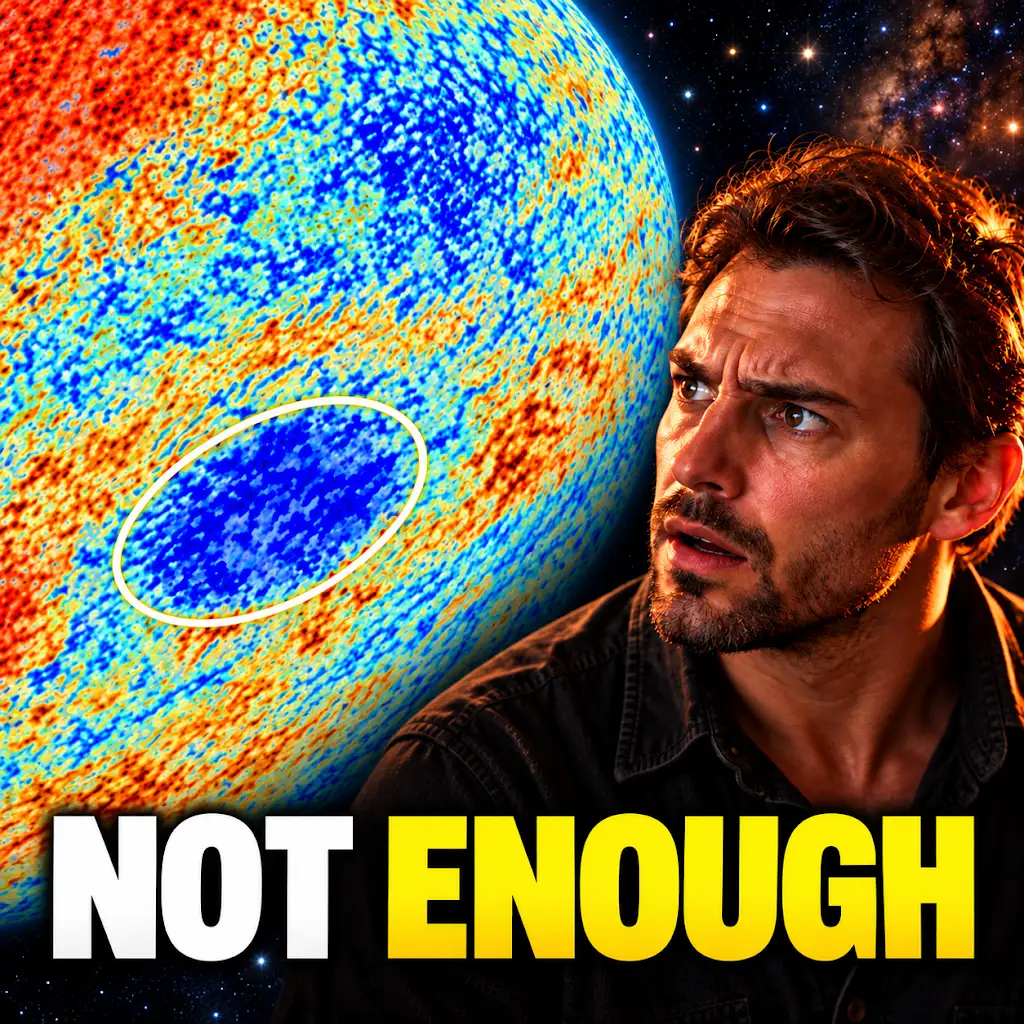
The Universe’s Cold Spot Has an Explanation. It’s Not Enough.
FAQs
What are cosmic voids?
Cosmic voids are vast, empty regions of space that contain very few or no galaxies. They are the opposite of galaxy clusters and superclusters.
How are cosmic voids formed?
Cosmic voids are believed to have formed as a result of the expansion of the universe. As the universe expands, matter is pulled apart, creating these empty regions.
What is the significance of cosmic voids in cosmology?
Studying cosmic voids can provide valuable insights into the large-scale structure of the universe, the distribution of matter, and the nature of dark energy. They also help scientists understand the evolution of the cosmos.
How are cosmic voids detected and studied?
Cosmic voids are detected through galaxy surveys and observations of the distribution of matter in the universe. Scientists use various techniques, such as measuring redshifts and analyzing the cosmic microwave background radiation, to study these voids.
Are cosmic voids completely empty?
While cosmic voids contain very few galaxies, they are not completely empty. They still contain some matter, including dark matter and gas, albeit in much lower densities compared to the surrounding regions.