
You hold it in your hand every day, a portal to a world of communication, information, and entertainment. But have you ever stopped to wonder how your cellular phone actually works? It’s not magic, though it can sometimes feel like it. It’s a sophisticated dance of radio waves, antennas, and complex networks, all orchestrated to connect you to anyone, anywhere. Understanding cellular phone signal technology demystifies this everyday miracle and gives you a deeper appreciation for the device that has become an extension of yourself.
At its core, your cellular phone is a sophisticated radio transmitter and receiver. It communicates by sending and receiving invisible radio waves, much like a walkie-talkie or a traditional radio station. However, the scale and complexity are vastly different.
What are Radio Waves?
Radio waves are a type of electromagnetic radiation, a spectrum of energy that travels at the speed of light. They are characterized by their frequency, which is the number of wave cycles that pass a fixed point in one second. Frequency is measured in Hertz (Hz). Higher frequencies mean more cycles per second, and they have shorter wavelengths.
Why Frequencies Matter for Your Phone
The cellular network operates on specific radio frequencies allocated by governments and regulatory bodies. These frequencies are like highways for your phone’s data and voice signals. Different frequencies have different properties. Lower frequencies, for example, can travel further and penetrate obstacles like buildings more effectively, but they carry less data. Higher frequencies can carry more data but have a shorter range and are more easily blocked. Your phone seamlessly switches between these frequencies to maintain the best possible connection.
The Electromagnetic Spectrum: A Limited Resource
The entire electromagnetic spectrum is a finite resource, and the frequencies used for cellular communication are highly regulated to prevent interference. This is why mobile operators need licenses to use specific frequency bands. Think of it like having designated lanes on a highway; if everyone drove wherever they wanted, it would be chaos.
Analogy: The Radio Station
Imagine your phone is a tiny, highly specialized radio. When you make a call or send data, it’s like tuning into a specific radio station that’s broadcasting your signal to the nearest cell tower. The cell tower then acts as a relay, picking up your signal and sending it to its destination.
Understanding how cellular phone signals work is essential for grasping the technology that connects us every day. For a more in-depth exploration of this topic, you can read a related article that delves into the science behind cellular communication and the various factors that affect signal strength. To learn more, visit Freaky Science for insights and explanations that will enhance your knowledge of cellular technology.
The Cellular Network: A Web of Towers and Base Stations
Your phone doesn’t directly connect to every other phone. Instead, it connects to a vast network of interconnected cell towers and base stations, forming the “cellular” part of cellular phone. This network is designed to be incredibly robust and efficient, allowing for a seamless transition as you move.
How Cell Towers Work
Each cell tower is a base transceiver station (BTS). It contains antennas that transmit and receive radio signals. When you’re in range of a cell tower, your phone connects to it. The strength of your signal is directly related to your distance from the nearest tower and the presence of any obstructions.
The Concept of “Cells”
The “cellular” in cellular phone refers to the division of geographic areas into smaller regions called “cells.” Each cell is served by a base station. As you move from one cell to another, your phone automatically “hands off” its connection from one tower to the next without interruption. This handover is crucial for maintaining a continuous call or data session.
Network Coverage and Dead Zones
The density of cell towers in an area determines its coverage. Densely populated urban areas typically have more towers, leading to better signal strength. Rural areas may have fewer towers, resulting in weaker signals or “dead zones” where you might lose service. Network operators constantly strive to expand their coverage by building more towers.
Different Generations of Cellular Technology (1G, 2G, 3G, 4G, 5G)
The cellular network has evolved dramatically over the years, with each generation offering significant improvements in speed, capacity, and functionality.
1G: The Dawn of Mobile Voice
The first generation of cellular technology, launched in the 1980s, was analog and primarily used for voice calls. It was bulky, expensive, and offered limited functionality.
2G: Digital Voice and Text
The introduction of 2G in the 1990s brought digital voice transmission, which was more secure and clearer. It also enabled the transmission of text messages (SMS) and limited data services like MMS. GSM and CDMA are two major 2G standards.
3G: The Mobile Internet Era
3G, emerging in the early 2000s, was a game-changer, significantly increasing data speeds. This paved the way for mobile internet browsing, email, and basic multimedia streaming. UMTS and CDMA2000 are prominent 3G technologies.
4G (LTE): High-Speed Broadband
4G, and particularly its most common iteration LTE (Long-Term Evolution), brought true mobile broadband speeds, comparable to wired connections. This enabled high-definition video streaming, faster downloads, and the proliferation of mobile apps that rely on consistent internet access.
5G: The Future of Connectivity
The latest generation, 5G, promises even faster speeds, lower latency (the delay between sending and receiving data), and the ability to connect a vastly larger number of devices simultaneously. This is crucial for the expansion of the Internet of Things (IoT), autonomous vehicles, and advanced virtual and augmented reality applications.
The Role of Antennas: The Invisible Arms of Your Phone and Towers
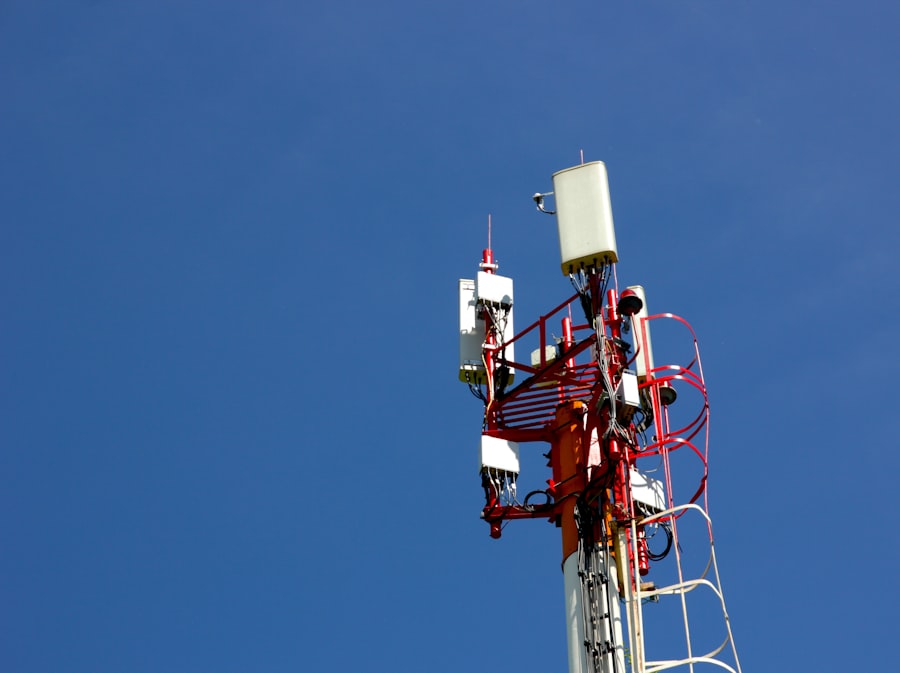
Antennas are the unsung heroes of cellular communication. They are the physical components that convert electrical signals into radio waves for transmission and radio waves back into electrical signals for reception. Both your phone and the cell towers are equipped with sophisticated antennas.
How Antennas Work
An antenna is essentially a conductor designed to efficiently radiate or receive electromagnetic waves. The size and shape of an antenna are related to the frequency of the radio waves it’s designed to transmit or receive. For example, shorter wavelengths require shorter antennas.
Inside Your Phone: Tiny but Mighty
Your smartphone contains multiple small antennas, each optimized for different frequencies and communication technologies (e.g., cellular, Wi-Fi, Bluetooth, GPS). These antennas are strategically placed within the phone’s chassis to maximize signal reception and transmission.
Cell Tower Antennas: Powerful and Directional
Cell towers have much larger and more powerful antennas. These antennas are often directional, meaning they are designed to focus the radio signal in specific directions to serve particular cells more effectively. This allows for better coverage and capacity within each cell.
MIMO: Boosting Performance with Multiple Antennas
MIMO (Multiple-Input Multiple-Output) is a technology that uses multiple antennas at both the transmitter and receiver. This allows for the transmission of multiple data streams simultaneously over the same radio channel, significantly increasing data speeds and improving signal reliability. You’ll find MIMO implemented in modern cell towers and many smartphones.
Antenna Diversity: Fighting Signal Fading
Signal fading occurs when radio waves bounce off surfaces and interfere with each other, weakening the signal. Antenna diversity, using multiple antennas at slightly different locations, helps mitigate this by providing alternative paths for the signal. If one antenna’s signal is weak due to fading, another might be strong.
The Magic of Modulation: Encoding Information onto Radio Waves
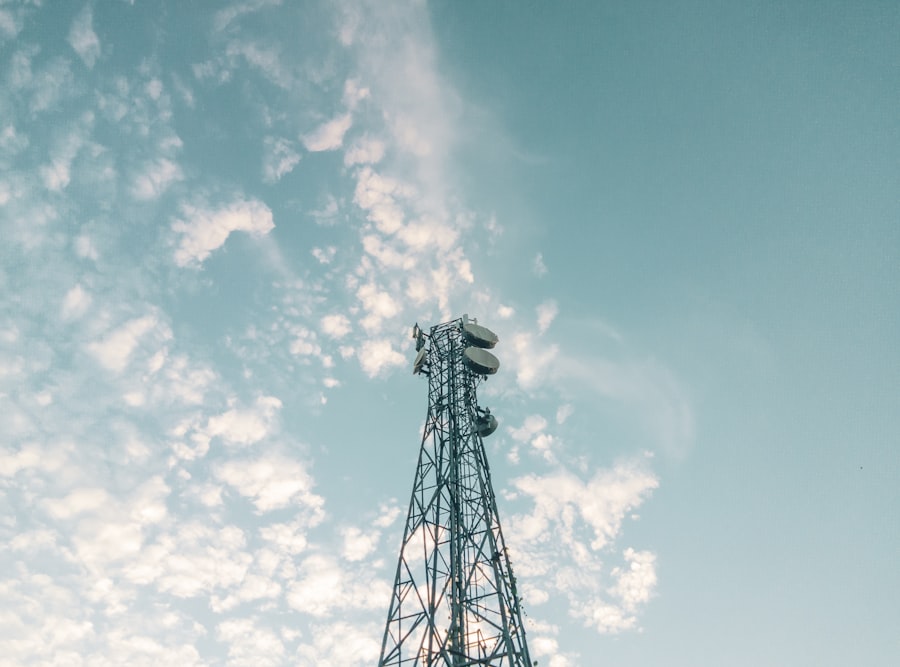
Simply sending out raw radio waves wouldn’t be enough to transmit your voice or data. The information needs to be encoded onto these waves in a process called modulation.
What is Modulation?
Modulation is the process of varying one or more properties of a carrier radio wave (like its amplitude, frequency, or phase) with another signal that contains the information to be transmitted. The carrier wave is a simple, high-frequency wave, and the information signal is your voice or data.
Amplitude Modulation (AM) and Frequency Modulation (FM) – Analog Concepts
You might be familiar with AM and FM radio. AM varies the amplitude of the carrier wave, while FM varies its frequency. While these are analog modulation techniques, they illustrate the basic concept of embedding information.
Digital Modulation Techniques: QAM and PSK
Modern cellular systems use sophisticated digital modulation techniques. Key among these are:
Quadrature Amplitude Modulation (QAM)
QAM combines amplitude and phase modulation to encode a large amount of data onto the carrier wave. Higher-order QAM schemes (e.g., 256-QAM) can transmit more bits per symbol, leading to faster data speeds.
Phase-Shift Keying (PSK)
PSK manipulates the phase of the carrier wave to represent different data bits. Different variations like Binary PSK (BPSK) and Quadrature PSK (QPSK) are used.
Orthogonal Frequency-Division Multiplexing (OFDM)
OFDM is a crucial technology in 4G and 5G. It divides the available bandwidth into many closely spaced, orthogonal sub-carriers. This makes the system more robust against interference and multipath fading, and it allows for efficient data transmission.
The Data Flow: From Your Input to Radio Waves
When you speak into your phone, your voice is converted into digital data. This data is then modulated onto radio waves by your phone’s transmitter. The cell tower receives these radio waves, demodulates them to extract the digital data, and then routes it through the cellular network to its destination. The process is reversed for incoming signals.
Understanding how cellular phone signals work can be quite fascinating, as it involves a complex interplay of technology and physics. For those interested in delving deeper into this topic, you might find a related article on the science behind communication technologies enlightening. It explores various aspects of signal transmission and reception, shedding light on how our devices connect us seamlessly. You can read more about it in this informative piece here.
Network Infrastructure and Spectrum Management: The Backbone of Connectivity
| Aspect | Description |
|---|---|
| Frequency | Cellular signals operate within specific frequency bands, such as 700 MHz, 850 MHz, 1900 MHz, and 2100 MHz. |
| Modulation | Signals are modulated using techniques like amplitude modulation (AM) or frequency modulation (FM) to carry information. |
| Propagation | Signals propagate through the air via electromagnetic waves, with their strength decreasing over distance. |
| Cell Towers | Cellular signals are transmitted and received by cell towers, which are strategically placed to provide coverage. |
| Handover | When a mobile device moves from one cell to another, the signal is handed over seamlessly to maintain connectivity. |
Beyond your phone and the cell towers, a massive and complex network infrastructure underpins cellular communication. This includes switching centers, data centers, and sophisticated systems for managing the precious resource of radio spectrum.
The Core Network: The Brains of the Operation
The core network is the central hub that connects all the base stations and manages call routing, data traffic, and access to other networks (like the internet and landline phones). It’s the intelligence that ensures your call or data packet gets to its intended recipient, no matter where they are.
Switching Centers and Routers
These are the traffic controllers of the cellular network. They direct calls and data to the correct cell towers and to their ultimate destinations. Modern networks use advanced packet-switching technology, which breaks data into small packets and sends them independently through the network, reassembling them at the destination.
Spectrum Management: A Precious and Contested Resource
Radio spectrum is a finite resource, and its allocation and management are critical for the functioning of cellular networks. Regulatory bodies, like the FCC in the United States, auction licenses for specific frequency bands to mobile operators.
Licensed vs. Unlicensed Spectrum
Licensed spectrum offers exclusive rights to use specific frequencies, ensuring minimal interference. Unlicensed spectrum, like that used for Wi-Fi, is open for anyone to use, but it can be more prone to interference.
Frequency Reuse: Maximizing Efficiency
To overcome the scarcity of spectrum, cellular networks employ frequency reuse. This means the same frequencies can be used in different geographic areas (cells) that are sufficiently far apart to avoid interference. This is a fundamental principle that allows the network to serve a vast number of users simultaneously.
Roaming: Connecting When You’re Away
When you travel outside your home network’s coverage area, your phone can “roam” by connecting to another operator’s network. This is made possible by agreements between mobile operators to allow their customers to use each other’s infrastructure.
The Future of Connectivity: Beyond the Smartphone
Understanding cellular signal technology is not just about how your current phone works; it’s about understanding the foundation for future innovations. The ongoing evolution of cellular networks, particularly with 5G and beyond, will enable a world where more devices are connected, and where the lines between the physical and digital worlds blur further. From smart cities and connected homes to advanced telemedicine and immersive virtual experiences, the principles of radio waves, network infrastructure, and signal management will remain at the heart of it all. So, the next time you effortlessly send a message or stream a video, take a moment to appreciate the incredible technology that makes it all possible, the invisible symphony of signals that keeps you connected.
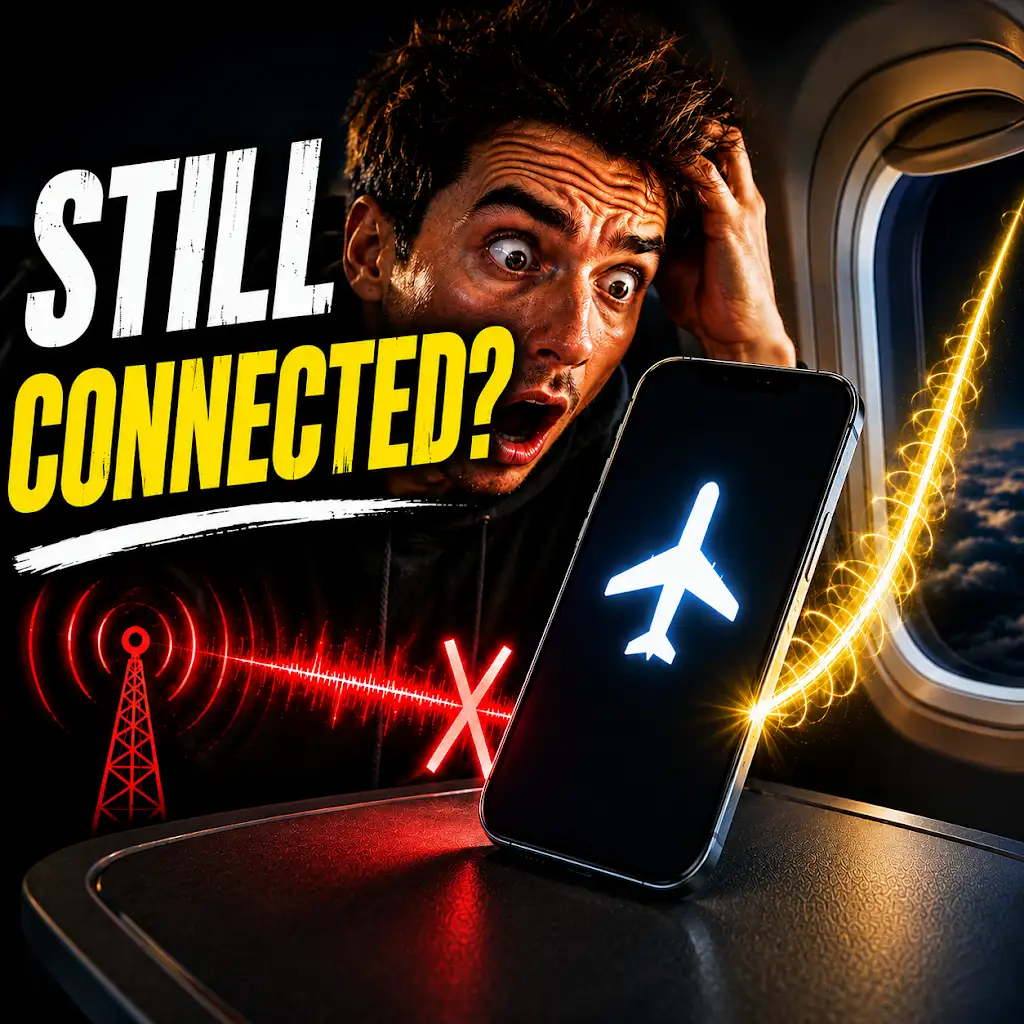
Your Phone Can Still Know Where You Are in Airplane Mode
FAQs
1. What is a cellular phone signal?
A cellular phone signal is a radio wave that is transmitted and received by a cellular phone to establish communication with a cellular network. These signals allow users to make calls, send text messages, and access the internet on their mobile devices.
2. How do cellular phone signals work?
Cellular phone signals work by using a network of cell towers to transmit and receive radio waves. When a user makes a call or sends a message, their phone sends a signal to the nearest cell tower, which then relays the signal to the recipient’s phone through the cellular network.
3. What are the different types of cellular phone signals?
There are two main types of cellular phone signals: analog and digital. Analog signals were used in early cellular networks, while modern networks use digital signals, which offer better sound quality and more efficient use of the radio spectrum.
4. How far can cellular phone signals travel?
The range of a cellular phone signal depends on various factors, including the power of the transmitting device, the frequency of the signal, and the presence of obstacles such as buildings or terrain. In general, cellular phone signals can travel several miles from a cell tower.
5. Are cellular phone signals safe?
Cellular phone signals emit low levels of radiofrequency energy, which is considered safe for human exposure by regulatory agencies such as the Federal Communications Commission (FCC) and the World Health Organization (WHO). However, some studies have suggested a potential link between long-term cell phone use and certain health risks, so it is recommended to use hands-free devices and limit exposure when possible.