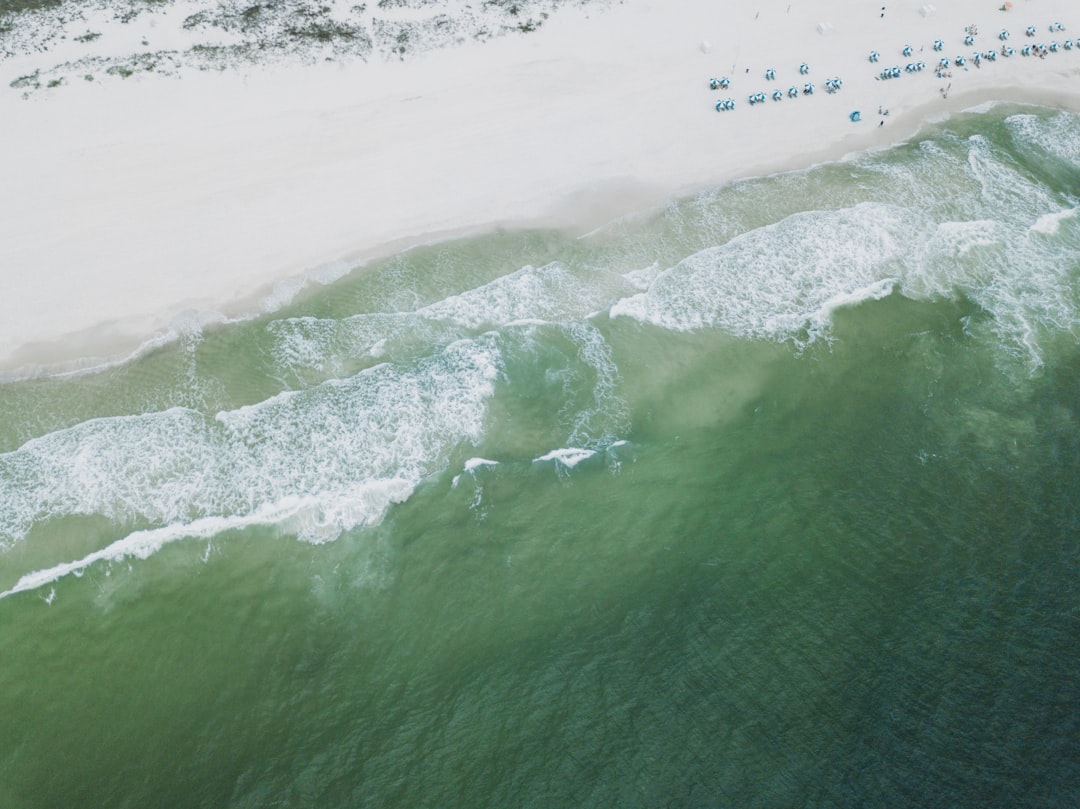
The Atlantic Ocean, a vast and dynamic body of water, is not a monolithic entity but a layered system, much like a well-aged cake with distinct strata. Understanding these layers, a phenomenon known as ocean stratification, is crucial for comprehending a multitude of oceanic processes, from the circulation of heat and nutrients to the distribution of marine life and the very climate of our planet. This article delves into the intricacies of Atlantic Ocean stratification, exploring its causes, consequences, and the ongoing scientific efforts to unravel its complexities.
At its core, ocean stratification is a consequence of differences in water density. Density, in simple terms, is how much “stuff” is packed into a given volume. In the ocean, the primary drivers of density variation are temperature and salinity.
Temperature’s Thermo-Climatic Embrace
The most significant factor influencing ocean density is temperature. Warmer water is less dense than colder water, meaning it floats on top. Imagine a hot air balloon; the heated air inside is less dense than the surrounding cooler air, allowing it to rise. Similarly, surface waters of the Atlantic, warmed by solar radiation, are less dense and tend to stay at the surface. This creates a thermal barrier, a thermal lid, that resists mixing with the colder, denser water below.
Salinity’s Salty Influence
Salinity, the amount of dissolved salts in seawater, also plays a vital role in density. Saltier water is denser than less salty water. This is why, when you try to dissolve a lot of salt in water, the resulting brine sinks. Processes like evaporation, which removes fresh water and leaves salts behind, increase surface salinity and thus density. Conversely, precipitation and the influx of freshwater from rivers or melting ice decrease surface salinity and density.
The Interplay of Temperature and Salinity: The Equation of State
The relationship between temperature, salinity, and density is not linear but is described by a complex “equation of state” for seawater. While temperature exerts a stronger influence on density over a broader range, salinity becomes particularly critical in certain regions, such as areas with high evaporation rates or near significant freshwater inputs. Scientists use sophisticated models and observational data to precisely calculate density based on these two key variables.
The stratification of the Atlantic Ocean plays a crucial role in regulating climate patterns and marine ecosystems. A related article that delves deeper into the implications of ocean stratification can be found at this link: Freaky Science. This article explores how changes in temperature and salinity can affect ocean currents and, consequently, global weather systems. Understanding these dynamics is essential for predicting future climate scenarios and managing marine resources effectively.
Forms of Atlantic Stratification: A Layered Landscape
The Atlantic Ocean exhibits stratification across various scales, from the uppermost few meters to the abyssal depths. These distinct layers, each with its own characteristics, are not static but are constantly shaped by dynamic oceanic processes.
The Mixed Layer: The Ocean’s Turbulent Surface
The uppermost layer of the ocean, typically ranging from a few meters to a couple of hundred meters deep, is known as the mixed layer. This layer is characterized by active mixing driven by winds, waves, and tidal currents. Think of a kitchen blender, vigorously churning its contents. The wind acts as the blender’s blades, stirring the surface waters and incorporating heat, gasses (like oxygen and carbon dioxide), and airborne particles. This constant churning homogenizes the temperature and salinity within the mixed layer, making it a relatively uniform environment.
The Thermocline: The Transition Zone
Beneath the mixed layer lies the thermocline, a region where the temperature decreases rapidly with depth. This is a sharp transition zone, akin to a steep mountain slope, where the warm surface waters meet the cold deep waters. The thermocline acts as a significant barrier to vertical mixing, preventing the freely exchanged nutrients and oxygen from reaching the deeper ocean and conversely limiting the upward movement of deep water. This strong thermal gradient is a hallmark of stratified oceans.
The Halocline: Salinity’s Stratified Slope
Similar to the thermocline, the halocline is a zone where salinity changes rapidly with depth. In certain parts of the Atlantic, particularly where large rivers discharge freshwater or where there are significant gradients in evaporation and precipitation, a halocline can be a dominant feature, contributing substantially to stratification. This is like a salty gradient in a layered drink, where the denser, saltier layers settle below the less dense, fresher ones.
The Pycnocline: The Combined Density Gradient
The thermocline and halocline often combine to form the pycnocline, a layer of rapid density increase with depth. This is the ultimate stratification barrier, effectively dividing the ocean into a less dense upper ocean and a denser lower ocean. The strength of the pycnocline dictates the ease of vertical exchange. A strong pycnocline is like a thick piece of cardboard separating two rooms; it makes it very difficult for things to pass between them.
The Deep Ocean: A Realm of Cold and Stability
Below the pycnocline lies the deep ocean, a vast expanse characterized by consistently cold temperatures and high pressure. This region exhibits much weaker thermal and salinity gradients compared to the upper ocean, but it is still stratified, albeit in a more subtle way. Its stratification is primarily driven by the origin of its waters, which are often formed in polar regions where cold, dense water sinks and spreads.
Dynamics of Atlantic Stratification: The Forces at Play
The stratification of the Atlantic Ocean is not a static condition but a dynamic equilibrium influenced by a constellation of physical, chemical, and biological forces.
Surface Forcing: The Wind and Sun’s Influence
The primary forces driving stratification originate at the ocean’s surface. Solar heating warms the top layers, making them less dense. Wind, as previously mentioned, is a powerful mixer, but it primarily operates within the mixed layer. While winds can deepen the mixed layer, they also prevent deep mixing by creating a stable stratification beneath the surface. This is a delicate dance between mixing and stability.
Thermohaline Circulation: The Ocean’s Conveyor Belt
Perhaps the most significant large-scale process linked to Atlantic stratification is the thermohaline circulation, often called the ocean’s “great conveyor belt.” This global oceanic circulation system is driven by differences in density, which are themselves a result of variations in temperature and salinity. In the North Atlantic, surface waters become cold and salty (due to evaporation and sea ice formation), making them very dense. This dense water sinks, initiating a deep ocean current that flows southward. This sinking process, known as deep water formation, is a direct consequence of enhanced stratification in polar regions. The replenishment of the deep ocean with oxygenated surface waters is critically dependent on this process.
Seasonal Variations: The Rhythmic Pulse of Stratification
Stratification in the Atlantic also exhibits distinct seasonal variations. During summer months, increased solar radiation leads to stronger surface heating and a shallower, more distinct thermocline. In winter, surface cooling can weaken or even break down this stratification in higher latitudes. Ice formation in polar regions during winter significantly increases local salinity and density, driving deep water formation. So, the ocean’s stratification breathes with the rhythm of the seasons.
Eddies and Overturning Events: Moments of Destabilization
While stratification generally resists mixing, certain powerful oceanic phenomena can temporarily disrupt it. Mesoscale eddies, swirling vortexes of water, can effectively churn and mix different water masses, momentarily blurring the lines of stratification. Major overturning events, though rare, can lead to significant vertical mixing across large areas, profoundly altering the stratified structure. These are like the occasional tremors that shake the layered cake.
Impacts of Atlantic Stratification: A Cascade of Consequences
The layered structure of the Atlantic Ocean has far-reaching implications for marine ecosystems, climate regulation, and human activities.
Nutrient Distribution: The Scarcity Below, Abundance Above
Stratification acts as a barrier to the upward transport of essential nutrients from the deep ocean to the sunlit surface waters. As a result, the mixed layer, where phytoplankton thrive, can become nutrient-depleted, much like a garden that has exhausted its soil. Phytoplankton, the base of the marine food web, rely on these nutrients for growth. When nutrients are scarce, primary productivity declines, impacting everything up the food chain, from zooplankton to fish and marine mammals.
Oxygen Levels: The Breath of the Deep
The thermocline and pycnocline restrict the downward transport of dissolved oxygen from the surface to the deep ocean. This can lead to oxygen-depleted zones (hypoxia) in the intermediate and deep waters, creating challenging conditions for many deep-sea organisms. Conversely, well-oxygenated surface waters can be trapped in the mixed layer, making them readily available for marine life in that zone.
Marine Life: Adaptations to a Layered World
Marine organisms have evolved a remarkable array of adaptations to thrive in the stratified Atlantic. Some species are specifically adapted to life in the nutrient-rich, well-oxygenated mixed layer. Others have developed mechanisms to exploit deeper, less crowded environments or to migrate vertically to access different resources. The distribution of many commercially important fish species is directly influenced by the concentration of their prey, which in turn is dictated by nutrient availability and stratification patterns.
Climate Regulation: The Ocean’s Thermostat
The Atlantic Ocean plays a critical role in regulating global climate, and stratification is central to this function. The thermohaline circulation, driven by density differences, transports heat from the tropics towards the poles, influencing weather patterns and moderating temperatures. Stratification affects the rate at which the ocean absorbs carbon dioxide from the atmosphere. The biological pump, where carbon is sequestered in the deep ocean through the sinking of organic matter, is also influenced by stratification. A more stratified ocean can limit the efficiency of these processes, potentially impacting the ocean’s capacity to absorb atmospheric CO2.
The stratification of the Atlantic Ocean has significant implications for marine ecosystems and climate patterns, as discussed in a related article that explores the intricate dynamics of ocean layers and their effects on global weather systems. Understanding these stratification effects is crucial for predicting changes in marine biodiversity and climate resilience. For more insights on this topic, you can read the article on Freaky Science, which delves deeper into the science behind ocean stratification and its broader environmental impacts.
Investigating Atlantic Stratification: The Scientist’s Toolkit
| Metric | Value | Unit | Description |
|---|---|---|---|
| Thermocline Depth | 50-200 | meters | Depth range where temperature gradient is strongest, indicating stratification layer |
| Surface Temperature Increase | 0.8 | °C (last 50 years) | Increase in surface water temperature contributing to stronger stratification |
| Mixed Layer Depth | 30-70 | meters | Depth of the upper ocean layer mixed by wind and waves, affected by stratification |
| Oxygen Concentration (Surface) | 6-8 | mg/L | Oxygen levels in surface waters, influenced by stratification and biological activity |
| Oxygen Minimum Zone Depth | 200-1000 | meters | Depth range where oxygen concentration is lowest due to stratification limiting mixing |
| Nutrient Concentration (Nitrate) | 0.1-1.5 | µmol/L (surface) | Surface nitrate levels reduced by stratification limiting nutrient upwelling |
| Primary Productivity | 100-300 | mg C/m²/day | Rate of photosynthesis in surface waters, affected by nutrient availability and stratification |
| Salinity Gradient | 0.5-1.5 | PSU (Practical Salinity Units) | Difference in salinity between surface and deeper layers contributing to stratification |
Unraveling the complexities of Atlantic Ocean stratification is a monumental task requiring a sophisticated array of scientific tools and techniques.
Oceanographic Surveys: Mapping the Layers
Ships equipped with specialized instruments undertake extensive oceanographic surveys. These surveys involve deploying Conductivity, Temperature, and Depth (CTD) probes that measure these critical parameters at various depths, creating profiles of the ocean’s physical structure. Acoustic Doppler Current Profilers (ADCPs) measure water currents, providing insights into mixing processes.
Argo Floats: The Autonomous Emissaries
Perhaps the most revolutionary advancement in ocean observation has been the development of the Argo program. These autonomous profiling floats are deployed worldwide and can dive to depths of up to 2,000 meters, measuring temperature and salinity as they drift with the currents. They then ascend to the surface, transmitting their data back to shore via satellite. The vast network of Argo floats provides an unprecedented, real-time glimpse into the ocean’s stratified structure. They are the persistent eyes and ears of the ocean.
Remote Sensing: A Bird’s-Eye View
Satellites equipped with sensors can provide valuable information about sea surface temperature, salinity, and even chlorophyll concentrations, which are indicators of phytoplankton productivity. While satellites primarily observe the ocean’s surface, their data can be used to infer deeper processes and to guide in-situ measurements.
Numerical Modeling: Simulating the Ocean’s Behavior
Sophisticated computer models are essential for understanding and predicting the behavior of the stratified Atlantic. These models incorporate physical laws and observational data to simulate ocean currents, heat and salt transport, and the evolution of stratification over time. They allow scientists to test hypotheses and explore scenarios that are impossible to replicate in the real world. These models are like digital aquariums, allowing us to experiment without getting wet.
Understanding Atlantic Ocean stratification is not merely an academic pursuit; it is fundamental to our ability to manage marine resources, predict climate change impacts, and appreciate the intricate interconnectedness of our planet’s systems. As scientific inquiry continues, our knowledge of these layered depths will undoubtedly deepen, revealing further insights into the vital role the Atlantic plays in the grand theatre of Earth’s environment.
FAQs
What is ocean stratification in the Atlantic Ocean?
Ocean stratification refers to the layering of water in the Atlantic Ocean based on differences in temperature, salinity, and density. Warmer, less dense water tends to stay near the surface, while colder, saltier, and denser water sinks to deeper layers, creating distinct vertical layers.
How does stratification affect marine life in the Atlantic Ocean?
Stratification can impact nutrient mixing and oxygen levels in the water. Strong stratification often limits the upward movement of nutrients from deeper waters to the surface, which can reduce phytoplankton growth and affect the entire marine food web.
What causes changes in stratification in the Atlantic Ocean?
Changes in stratification are primarily caused by variations in surface temperature, freshwater input from rivers and melting ice, and changes in salinity. Climate change and seasonal cycles also play significant roles in altering stratification patterns.
How does Atlantic Ocean stratification influence climate?
Stratification affects ocean circulation and heat distribution, which in turn influence weather and climate patterns. For example, stronger stratification can weaken the Atlantic Meridional Overturning Circulation (AMOC), potentially impacting temperature and precipitation in surrounding regions.
Can human activities impact stratification in the Atlantic Ocean?
Yes, human activities such as greenhouse gas emissions contribute to global warming, which increases surface ocean temperatures and freshwater input from melting ice. These changes can enhance stratification, affecting ocean circulation, marine ecosystems, and climate feedback mechanisms.