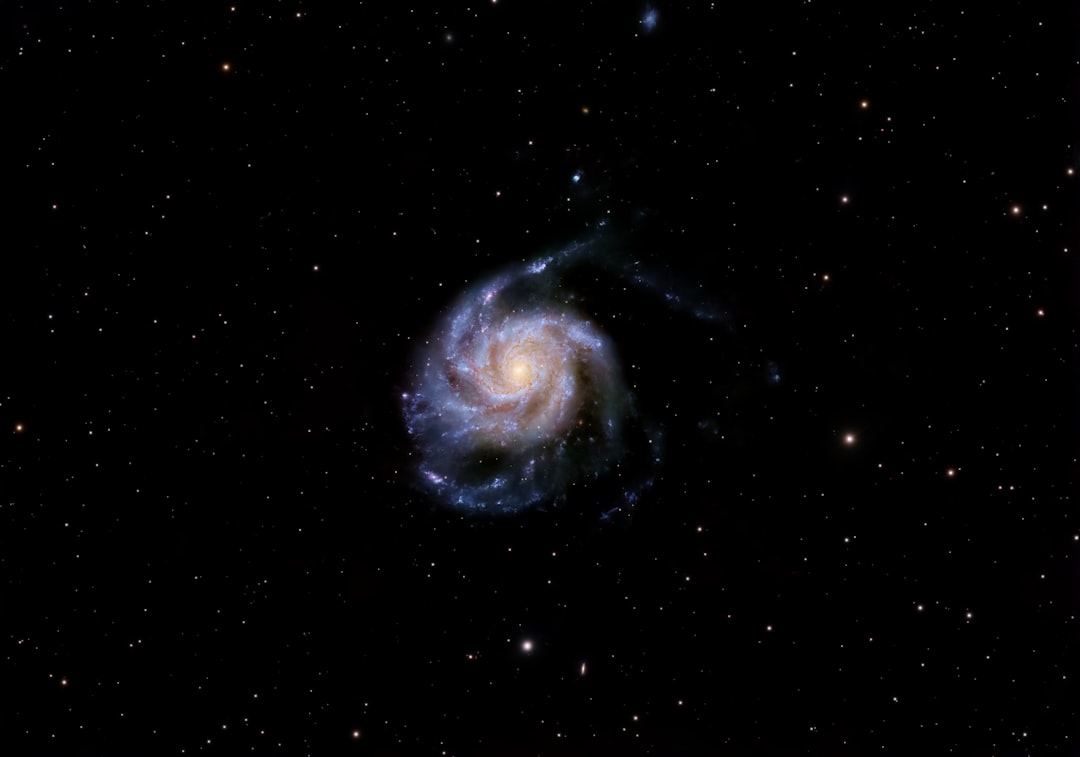
Vera Rubin’s systematic observations of spiral galaxies led to a profound shift in our understanding of the universe. Her meticulous work, often conducted with limited resources and facing considerable skepticism, revealed a discrepancy between the visible matter in galaxies and the gravitational forces at play. This discrepancy, rooted in the unexpected rotation patterns of stars and gas within these celestial structures, ultimately pointed towards the existence of dark matter, a substance that constitutes a significant portion of the universe’s mass but remains invisible to direct observation. Rubin’s legacy lies not only in this pivotal discovery but also in her perseverance and her quiet dedication to scientific inquiry.
Early Astronomical Models of Galactic Structure
Prior to Vera Rubin’s investigations, astronomical models of galaxies were largely based on the visible, luminous matter – stars, gas, and dust. These models, grounded in Newtonian physics, predicted that the orbital speeds of celestial objects within a galaxy should decrease with increasing distance from the galactic center. This expectation stemmed from the simple observation that as one moved further away from the primary source of gravitational pull (the concentrated mass at the core), the gravitational force ought to diminish, leading to slower orbits. Astronomers assumed that galaxies were primarily composed of the matter they could see.
The Implicit Assumption of Visible Dominance
The prevailing assumption was that the gravitational influence of a galaxy was directly proportional to the amount of light it emitted. If a galaxy appeared to have most of its mass concentrated towards its center, then stars and gas clouds at its periphery should be orbiting much more slowly than those closer in. This was analogous to the solar system, where planets further from the Sun orbit at slower speeds. This intuitive understanding formed the bedrock of galactic dynamics for decades, shaping theoretical frameworks and observational strategies.
Expected Velocity Curves: A Declining Trend
Based on these assumptions, astronomers anticipated observing ‘rotation curves’ for spiral galaxies that would reflect this inverse relationship between distance and velocity. A rotation curve is a graph that plots the orbital speed of gas and stars around the galactic center against their radial distance. The expectation was for these curves to rise sharply near the center, where the density of visible matter is highest, and then to fall off significantly as the distance increased. This would be a clear indicator that the gravitational pull was indeed weakening with distance, as predicted by the distribution of visible mass.
Vera Rubin’s groundbreaking work on the rotation of spiral galaxies has significantly advanced our understanding of dark matter and the dynamics of the universe. Her observations revealed that the outer regions of galaxies rotate at unexpectedly high speeds, suggesting the presence of unseen mass. For those interested in exploring more about the implications of her research and the mysteries of the cosmos, a related article can be found at Freaky Science, which delves into the fascinating world of astrophysics and the ongoing quest to understand the universe’s structure.
Vera Rubin’s Observational Approach
The Spectrograph and Doppler Shift: Tools of Measurement
Vera Rubin, in collaboration with her colleague Kent Ford, employed a crucial astronomical tool: the spectrograph. This instrument, when attached to a telescope, analyzes the light emitted or absorbed by celestial objects. A key phenomenon it measures is the Doppler shift, which is the change in frequency of a wave (in this case, light) due to the relative motion of the observer and the source. For astronomical objects like galaxies, the Doppler shift in spectral lines acts as a cosmic speedometer. If an object is moving towards an observer, its light is blueshifted; if it is moving away, its light is redshifted. By measuring these shifts in the light from stars and gas clouds within different parts of a galaxy, Rubin and Ford could precisely determine their velocities.
Focusing on Spiral Galaxies: A Rich Source of Data
Rubin’s choice to focus on spiral galaxies was deliberate. These galaxies, with their characteristic disk-like structures and prominent spiral arms, are rich in gas and dust, meaning there are abundant sources of light to analyze. The presence of these extended structures allowed them to observe the motion of material at varying distances from the galactic center, providing the necessary data to construct detailed rotation curves. Their work specifically targeted galaxies that were relatively close to Earth, making the spectral analysis more feasible and the measurements more reliable.
Meticulous Data Collection and Analysis
The process involved countless hours at observatories, pointing telescopes at distant galaxies and meticulously recording the spectral data. Rubin and Ford were known for their rigorous approach to data collection and analysis. They accounted for potential sources of error, performed multiple observations of the same objects, and ensured the calibration of their instruments was precise. This dedication to accuracy was paramount, as their findings would challenge established scientific paradigms. The sheer volume of data they processed and the detailed nature of their analysis underscored their commitment to uncovering the truth, however unexpected it might be.
The Unexpected Rotation Curves
The Andromeda Galaxy: An Early Anomaly
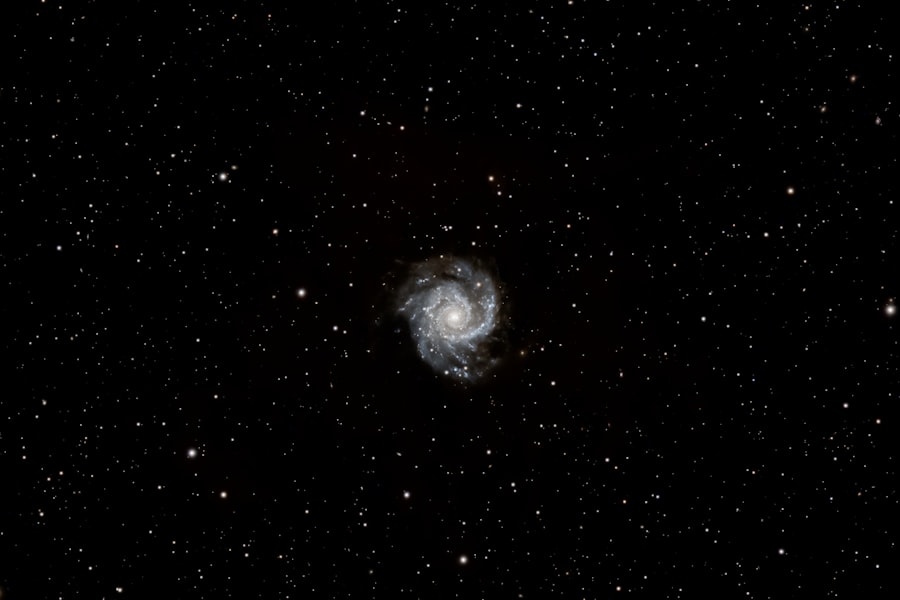
One of the early galaxies that Rubin and Ford studied was the Andromeda Galaxy (M31), a prominent spiral galaxy visible to the naked eye. Their observations of the hydrogen gas within Andromeda’s outer regions revealed a startling pattern. Instead of the expected decrease in orbital velocity with increasing distance from the galactic center, the speeds of the stars and gas remained remarkably constant, or even showed a slight increase. This was a significant deviation from the predictions derived from the galaxy’s visible mass distribution.
Flat Rotation Curves: A Persistent Discovery
The anomaly was not confined to Andromeda. As Rubin and Ford extended their observations to other spiral galaxies, they consistently found similar results: ‘flat’ rotation curves. This meant that the orbital speeds of objects in the outer regions of galaxies were not diminishing as they should if only visible matter were responsible for the gravitational pull. The stars and gas in the outer halos of these galaxies were moving much faster than anticipated. This persistent pattern across numerous galaxies was a strong indicator that something fundamental was being overlooked in the prevailing models of galactic dynamics.
The Discrepancy: Visible Matter vs. Gravitational Influence
The implications of these flat rotation curves were profound. They indicated a substantial mismatch between the amount of visible matter in a galaxy and the gravitational force required to keep its outer regions rotating at such high speeds. If the gravitational pull were solely due to the visible stars and gas, the outer stars would be flung out into intergalactic space. The fact that they remained bound suggested the presence of a significant, unseen source of gravity. This invisible gravitational influence was the key to understanding the flat rotation curves.
The Hypothesis of Dark Matter
The Invisible Influence: A Necessity for Explanation
The most compelling explanation for the consistently flat rotation curves was the existence of an unseen form of matter that permeated the outer regions of galaxies and extended far beyond the visible luminous disk. This hypothetical substance, later termed ‘dark matter,’ would possess mass and therefore exert gravitational influence, but it would not interact with electromagnetic radiation, making it invisible to telescopes. Its gravitational pull would provide the necessary force to maintain the high orbital speeds observed in the outer parts of galaxies.
Dark Matter Halos: A Proposed Structure
Theoretical models developed to account for this observational anomaly proposed that galaxies are embedded within much larger, spherical ‘halos’ of dark matter. These halos are thought to be considerably more massive than the visible galactic disk and to extend far out into intergalactic space. The distribution of this unseen mass, spread out and extending further than the visible stars, would naturally lead to the observed flat rotation curves. As one moves further out from the galactic center, the accumulating mass of the dark matter halo would continue to exert gravitational pull, keeping orbital speeds high.
Reconciling Observation with Theory
The dark matter hypothesis provided a crucial bridge between Vera Rubin’s groundbreaking observations and the established laws of physics. While the existence of dark matter was initially a theoretical construct necessitated by the data, it offered a rational explanation for the otherwise inexplicable phenomenon of rapidly rotating galactic outskirts. This hypothesis forced astronomers to reconsider the composition of galaxies and the universe as a whole, suggesting that the luminous matter observed constitutes only a small fraction of the total mass.
Vera Rubin’s groundbreaking work on the rotation of spiral galaxies has significantly advanced our understanding of dark matter and the dynamics of the universe. Her observations revealed that the outer regions of these galaxies rotate at unexpectedly high speeds, leading to the conclusion that there must be unseen mass influencing their motion. For those interested in exploring more about the implications of her research, a related article can be found here, which delves into the mysteries of dark matter and its role in shaping the cosmos. Rubin’s contributions continue to inspire astronomers and physicists as they seek to unravel the complexities of our universe.
The Legacy and Ongoing Inquiry
| Galaxy | Rotation Speed (km/s) | Distance from Center (kpc) |
|---|---|---|
| Milky Way | 220 | 8.33 |
| Andromeda | 250 | 10.5 |
| Messier 101 | 270 | 12.4 |
A Paradigm Shift in Cosmology
Vera Rubin’s work on spiral galaxy rotation curves fundamentally altered the landscape of cosmology. It provided some of the earliest and most compelling observational evidence for the existence of dark matter, a concept that has since become a cornerstone of modern cosmological models. Her findings were not immediately universally accepted, and she faced a degree of skepticism, a common experience for scientists presenting revolutionary ideas. However, the sheer weight of evidence from her systematic and extensive observations eventually swayed the scientific community.
The Enduring Mystery of Dark Matter
Despite the strong evidence for its existence, the precise nature of dark matter remains one of the most significant unsolved mysteries in physics and astronomy. Scientists continue to conduct experiments and observations in attempts to directly detect dark matter particles or to infer their properties. Various candidates, such as Weakly Interacting Massive Particles (WIMPs) or axions, are being explored, but a definitive identification has yet to be made. The quest to understand dark matter continues to drive a vast amount of research.
Vera Rubin’s Enduring Impact
Vera Rubin’s contributions extended beyond her scientific discoveries. She was also a staunch advocate for women in science, often recounting her own experiences and encouraging younger generations of female scientists. Her quiet determination, meticulous research, and unwavering pursuit of scientific truth serve as an inspiration. The universe, as we understand it today, is undeniably shaped by her groundbreaking work, a testament to the power of persistent observation and the willingness to challenge established notions when the evidence demands it. Her legacy is etched in the very fabric of our understanding of the cosmos.
FAQs
1. Who was Vera Rubin and what was her contribution to the study of spiral galaxies?
Vera Rubin was an American astronomer who is best known for her pioneering work on the rotation of spiral galaxies. Her observations of the rotational speeds of galaxies led to the discovery of dark matter.
2. What did Vera Rubin’s research reveal about the rotation of spiral galaxies?
Vera Rubin’s research revealed that the outer regions of spiral galaxies rotate at nearly the same speed as the inner regions, contrary to what was expected based on the visible mass of the galaxies. This discrepancy led to the proposal of the existence of dark matter.
3. What is dark matter and how does it relate to Vera Rubin’s work?
Dark matter is a hypothetical form of matter that is thought to make up a large portion of the total mass in the universe. Vera Rubin’s work on the rotation of spiral galaxies provided some of the earliest evidence for the existence of dark matter, as the observed rotational speeds could not be explained by the visible mass alone.
4. How did Vera Rubin’s work impact our understanding of the universe?
Vera Rubin’s work fundamentally changed our understanding of the universe by providing evidence for the existence of dark matter, a mysterious and as-yet-undetected form of matter that has significant implications for our understanding of cosmology and the structure of the universe.
5. What is the significance of Vera Rubin’s contributions to astronomy and science?
Vera Rubin’s contributions to astronomy and science are significant because they not only revolutionized our understanding of the structure and dynamics of galaxies, but also opened up new avenues of research into the nature of dark matter and its role in the universe. Her work continues to inspire and influence astronomers and physicists to this day.