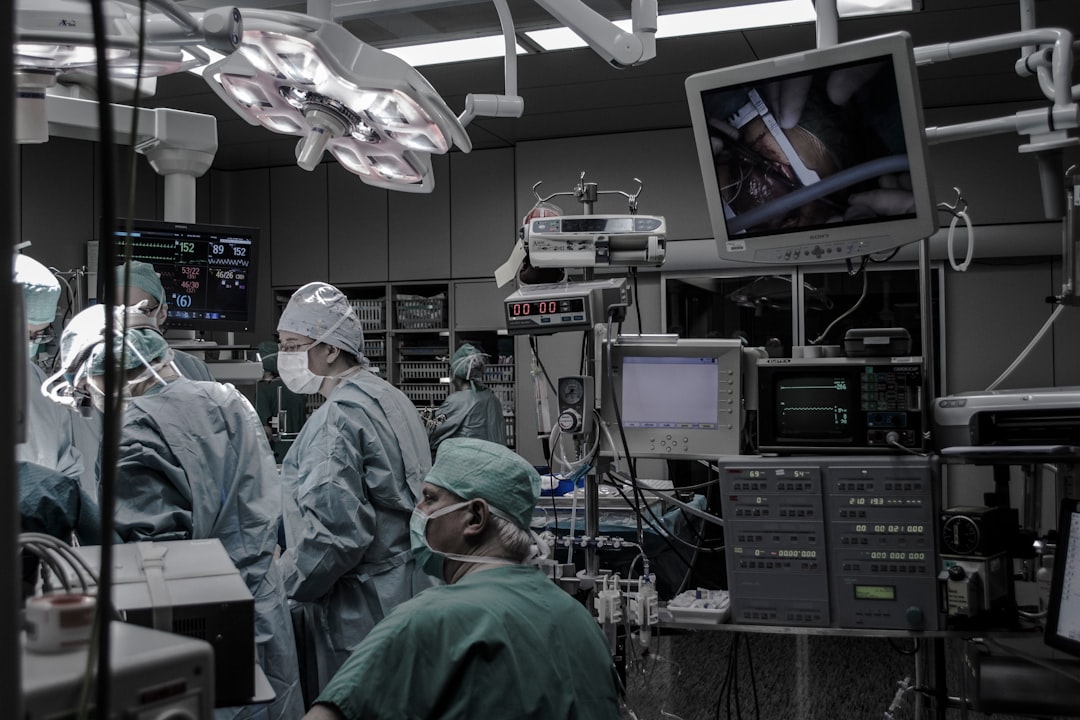
You’re lying on an operating table, the fluorescent lights of the surgical suite sterile and unforgiving. A mask is being placed over your face, a gentle, almost comforting pressure. You’re told to breathe deeply. And then, nothing. You wake up hours later, groggy, sore, and with a fuzzy memory of the procedure, but no recollection of the moments in between. It’s a modern miracle, this ability to slip into unconsciousness and emerge unharmed, but it also sparks a profound, unsettling question: what exactly happens to your brain during anesthesia? Does it simply shut down, a silent switch flipped until the surgeon is done?
The idea that your brain completely shuts down during anesthesia is a common misconception. It’s a comforting, if simplistic, explanation for your temporary absence. However, the reality is far more complex and fascinating. Rather than a complete shutdown, anesthesia orchestrates a sophisticated manipulation of neural activity, dampening certain functions while leaving others remarkably intact. Think of it less as a power outage and more as a finely tuned dimmer switch, gradually turning down the intensity of consciousness.
The Spectrum of Anesthesia: More Than Just “Knocked Out”
It’s crucial to understand that “anesthesia” isn’t a single entity. You’ve likely encountered different types, each with its own mechanism and effect. Recognizing this spectrum is the first step in unraveling the mystery.
General Anesthesia: The Deep Sleep
When you undergo major surgery, you’re typically given general anesthesia. This is the kind that induces a profound state of unconsciousness, amnesia, and loss of sensation. It’s the most dramatic intervention, and therefore, the one that most fuels the “brain shut down” narrative.
Inducing the Dreamless State: The Art and Science
The anesthesiologist plays a vital role, not just administering drugs, but carefully monitoring your vital signs and adjusting the anesthetic to maintain the optimal level. They use a combination of intravenous medications and inhaled gases, often working in synergy to achieve the desired effect. The goal isn’t to extinguish brain activity, but to silence the circuits responsible for awareness, memory, and pain perception.
- Intravenous Agents: These drugs, often administered through an IV line, can act very quickly. Propofol, for instance, is a commonly used agent that works by enhancing the effects of GABA, a neurotransmitter that inhibits brain activity. This dampening effect leads to sedation and unconsciousness.
- Inhaled Agents: Gases like sevoflurane and isoflurane are also potent anesthetic agents. They are inhaled and absorbed into the bloodstream, traveling to the brain where they exert their effects. Like their intravenous counterparts, they primarily target inhibitory neurotransmitter systems.
Regional Anesthesia: Targeting Specific Areas
Sometimes, you might receive regional anesthesia. This approach targets a specific region of your body, blocking nerve signals from that area to your brain. You might be awake and aware, or lightly sedated.
The Numbness of Precision: Examples of Regional Anesthesia
Think of dental procedures where your mouth is numbed, or childbirth where an epidural blocks pain signals from your lower body. This demonstrates that your brain, in many cases, is still very much active.
- Spinal and Epidural Anesthesia: These are common during childbirth and lower body surgeries. They involve injecting local anesthetics into the fluid surrounding the spinal cord, blocking nerve signals from reaching the brain.
- Nerve Blocks: For limb surgeries or chronic pain management, a nerve block can be performed to numb a specific nerve or group of nerves.
Sedation: The Conscious Cloud
Finally, there’s conscious sedation, often used for less invasive procedures like endoscopies or colonoscopies. You’ll feel relaxed and drowsy, and your memory of the procedure will be hazy, but you’re not truly unconscious.
The Gentle Nudge Towards Relaxation
Sedatives like midazolam work by increasing the activity of GABA, similar to some general anesthetics, but at lower doses and with less profound effects on consciousness. You might respond to verbal commands, but you won’t remember doing so.
An interesting article that explores the complexities of brain activity during anesthesia can be found on Freaky Science. It delves into the question of whether the brain truly shuts down or enters a different state of consciousness while under anesthesia. This topic is crucial for understanding the safety and efficacy of anesthetic practices in medicine. For more insights, you can read the article here: Freaky Science.
Decoding the Brain’s Activity Under Anesthesia: A Symphony of Silencing
While your brain isn’t simply “off,” the neural processes that underpin consciousness are indeed profoundly altered. Scientists have employed sophisticated techniques to observe what happens in the brain during anesthesia, revealing a complex interplay of inhibition and altered communication.
The Role of Neurotransmitters: The Brain’s Chemical Messengers
Neurotransmitters are the chemical messengers that allow neurons in your brain to communicate with each other. Anesthetics primarily work by interfering with the delicate balance of these messengers, particularly those that promote excitation and those that promote inhibition.
GABA: The Brain’s Brake Pedal
Gamma-aminobutyric acid (GABA) is the primary inhibitory neurotransmitter in the brain. It acts like a brake, slowing down neural activity. Many anesthetics, particularly intravenous agents like propofol and inhaled agents, significantly enhance the effects of GABA. This increased inhibition leads to a decrease in overall brain activity, contributing to sedation and unconsciousness.
- Enhancing GABA Receptors: Anesthetic drugs bind to GABA receptors on neurons, making them more sensitive to GABA. This means that even the naturally occurring GABA in your brain has a stronger inhibitory effect.
- Opening Chloride Channels: When GABA binds to its receptor, it opens chloride channels in the neuron’s membrane. The influx of negatively charged chloride ions hyperpolarizes the neuron, making it less likely to fire an electrical signal. Anesthetics potentiate this process.
Glutamate: The Brain’s Accelerator
Glutamate, on the other hand, is the primary excitatory neurotransmitter in the brain. It acts like an accelerator, increasing neural activity. Anesthetics tend to suppress glutamate activity.
- Blocking NMDA Receptors: Many anesthetics inhibit the activity of NMDA (N-methyl-D-aspartate) receptors, a type of glutamate receptor crucial for learning and memory. By blocking these receptors, anesthetics prevent the transmission of excitatory signals.
- Reducing Glutamate Release: Some anesthetics also reduce the release of glutamate from presynaptic neurons.
The Disruption of Neural Networks: Disconnecting the Threads of Thought
Consciousness isn’t localized to a single brain region; it emerges from the complex and dynamic interactions between vast networks of neurons across the brain. Anesthesia disrupts these communication pathways, effectively disconnecting the threads that weave together our conscious experience.
The Thalamus: The Brain’s Relay Station
The thalamus plays a critical role in relaying sensory information to the cerebral cortex, the outer layer of the brain responsible for higher-level cognitive functions. Anesthesia significantly disrupts the thalamus’s ability to process and transmit this information.
- Altered Thalamocortical Oscillations: The synchronized firing of neurons, known as oscillations, is crucial for information processing. Anesthetics disrupt the normal oscillatory patterns between the thalamus and the cortex, leading to a breakdown in communication.
- Reduced Sensory Input to the Cortex: With the thalamus’s relay function impaired, less sensory information reaches the cortex, contributing to the loss of awareness and sensation.
The Cortex: The Seat of Consciousness
The cerebral cortex is where our thoughts, perceptions, and awareness reside. Anesthesia profoundly affects its activity, leading to a loss of integrated brain function.
- Decreased Connectivity: Anesthetics reduce the functional connectivity between different cortical areas. This means that regions of the cortex that normally work together seamlessly become less coordinated in their activity.
- Loss of Global Brain Activity: Instead of localized activity, the brain under anesthesia often exhibits a more diffuse and less organized pattern of activity, indicative of a loss of integrated processing.
Beyond Unconsciousness: The Mysteries of Memory and Awareness

One of the most disconcerting aspects of anesthesia is the complete lack of recall for the surgical period. While general anesthesia induces amnesia, the mechanisms behind this phenomenon are still being actively researched.
The Forgetting Pill: Why Don’t You Remember?
The amnesic effect of anesthesia is crucial for patient comfort and to prevent traumatic memories of surgery. However, it raises questions about how memories are formed and retrieved, and how anesthesia interferes with these processes.
The Hippocampus: The Memory Hub
The hippocampus, a brain structure critical for forming new memories, is significantly affected by anesthetic agents.
- Disruption of Synaptic Plasticity: Memory formation relies on the strengthening and weakening of connections between neurons, a process called synaptic plasticity. Anesthetics can impair these mechanisms, making it difficult for new memories to be encoded.
- Reduced Theta Oscillations: The hippocampus exhibits characteristic theta oscillations during memory formation. Anesthetics can disrupt these oscillations, hindering memory encoding.
The “Awareness Under Anesthesia” Phenomenon: A Rare and Troubling Glitch
While rare, some individuals report experiencing awareness during general anesthesia. This phenomenon, known as anesthesia awareness, is a deeply disturbing possibility.
Understanding the Risk Factors and Safeguards
Anesthesia awareness is incredibly uncommon, occurring in an estimated 0.1-0.2% of general anesthetics. However, understanding its causes and the measures taken to prevent it is important.
- High-Dose Anesthesia: In cases of prolonged or complex surgeries, higher doses of anesthetic may be required, increasing the risk of insufficient anesthesia.
- Neuromuscular Blocking Agents: These drugs are often used during surgery to relax muscles. If the anesthetic level is too low, a patient might be paralyzed but still conscious, unable to move or signal their distress. This is a primary concern for anesthesiologists.
- Monitoring Brain Activity: Advanced monitoring techniques, such as electroencephalography (EEG), can provide real-time data on brain activity, helping anesthesiologists detect any signs of insufficient anesthesia.
The Brain’s Resilience: Waking Up and Reconnecting

The remarkable aspect of anesthesia is not just its ability to render you unconscious, but also the brain’s capacity to recover and resume its normal functions afterward.
The Gradual Return: Re-establishing Neural Connections
Waking up from anesthesia is not an instantaneous flick of a switch. It’s a gradual process as the anesthetic agents are metabolized and eliminated from your body, allowing neural pathways to re-establish their communication.
The Lingering Effects: From Grogginess to Full Recovery
You might experience grogginess, confusion, and some cognitive deficits immediately after waking. These are temporary and indicative of your brain recalibrating.
- Metabolism and Excretion: The body’s liver and kidneys work to break down and eliminate the anesthetic drugs. As the concentration of these drugs in the bloodstream decreases, their effects on the brain diminish.
- Re-establishment of Neurotransmitter Balance: The delicate balance of neurotransmitters is gradually restored, allowing neurons to communicate more effectively.
Neuroplasticity: The Brain’s Ability to Adapt
The brain’s remarkable ability to adapt and reorganize itself, known as neuroplasticity, plays a crucial role in your recovery from anesthesia.
Rewiring for Functionality
Even after being intentionally suppressed, your brain can rewire itself to regain its full functionality.
- Strengthening Neural Pathways: As you re-engage in cognitive tasks, the neural pathways used for those functions are strengthened, facilitating recovery.
- Compensatory Mechanisms: In some cases, the brain may develop new pathways to compensate for any lingering effects of the anesthesia, further aiding in recovery.
Understanding the effects of anesthesia on the brain has been a topic of interest for many researchers and medical professionals. A fascinating article explores whether your brain truly shuts down under anesthesia, shedding light on the complex interactions that occur during surgical procedures. For more insights on this subject, you can read the article here. This research not only enhances our knowledge of anesthesia but also raises important questions about consciousness and perception during surgery.
The Future of Anesthesia: Precision, Personalization, and Understanding
| Study | Findings |
|---|---|
| University of Michigan | Brain activity continues under anesthesia, but in a different way |
| Harvard Medical School | Some parts of the brain may shut down while others remain active |
| Johns Hopkins University | Brain may not completely shut down, but experiences reduced activity |
The ongoing research into the mechanisms of anesthesia promises a future where this essential medical intervention becomes even safer, more precise, and tailored to individual needs.
Towards Personalized Anesthesia: Tailoring the Experience
The “one size fits all” approach to anesthesia is gradually being replaced by more personalized strategies.
Individualized Drug Combinations and Dosages
Understanding your unique genetic makeup and physiological responses can help tailor anesthetic regimens for optimal outcomes.
- Pharmacogenomics: This field studies how genes affect your response to drugs. By analyzing your genes, doctors may be able to predict how you’ll respond to specific anesthetic agents, allowing for more precise dosing.
- Real-time Monitoring and Feedback: Advanced brain monitoring technologies will allow anesthesiologists to continuously assess your level of consciousness and adjust anesthetic delivery in real-time, ensuring you are safely and effectively anesthetized without being over- or under-dosed.
Unraveling the Deeper Mysteries: Consciousness and Beyond
The study of anesthesia continues to push the boundaries of our understanding of consciousness itself.
The Interplay of Awareness and Unconsciousness
By observing how anesthesia manipulates brain activity, scientists are gaining invaluable insights into the fundamental nature of what it means to be aware.
- Mapping the Neural Correlates of Consciousness: Anesthesia research is crucial in identifying the specific brain activities and networks that are essential for conscious experience.
- Exploring the Boundaries of the Mind: The ability to reversibly induce unconsciousness provides a unique window into the brain’s capacity for both profound sleep and the vibrant tapestry of waking thought.
So, the next time you find yourself slipping into the oblivion of anesthesia, remember that your brain isn’t simply shutting down. It’s undergoing a complex and finely controlled process, a testament to the ingenuity of modern medicine and the enduring mystery of the human mind. You are not merely switched off; you are temporarily and carefully guided into a different state of being, awaiting your safe return to the world of wakefulness.

You’re Not Asleep Under Anesthesia. So Where Do You Go?
FAQs
What happens to the brain under anesthesia?
Under anesthesia, the brain experiences a reversible loss of consciousness. The specific effects depend on the type of anesthesia used, but generally, the brain’s activity is altered to prevent the perception of pain and memory formation during surgery.
Does the brain shut down completely under anesthesia?
No, the brain does not shut down completely under anesthesia. Instead, it enters a state of reduced activity and responsiveness. Different types of anesthesia can affect the brain in different ways, but it does not completely shut down.
Can the brain be damaged by anesthesia?
While anesthesia is generally safe, there is a small risk of potential side effects, including cognitive dysfunction and memory problems, particularly in older adults. However, the risk of brain damage from anesthesia is very low.
How does anesthesia affect memory and consciousness?
Anesthesia affects memory and consciousness by disrupting the brain’s ability to form new memories and perceive sensory input. This is why patients typically have no memory of the surgical procedure while under anesthesia.
What happens to the brain after coming out of anesthesia?
After coming out of anesthesia, the brain gradually returns to its normal state of consciousness. The effects of anesthesia wear off as the drugs are metabolized and eliminated from the body, allowing the brain to regain full function.