
The Enigmatic Chill: Introducing the MacKenzie Cold Spot
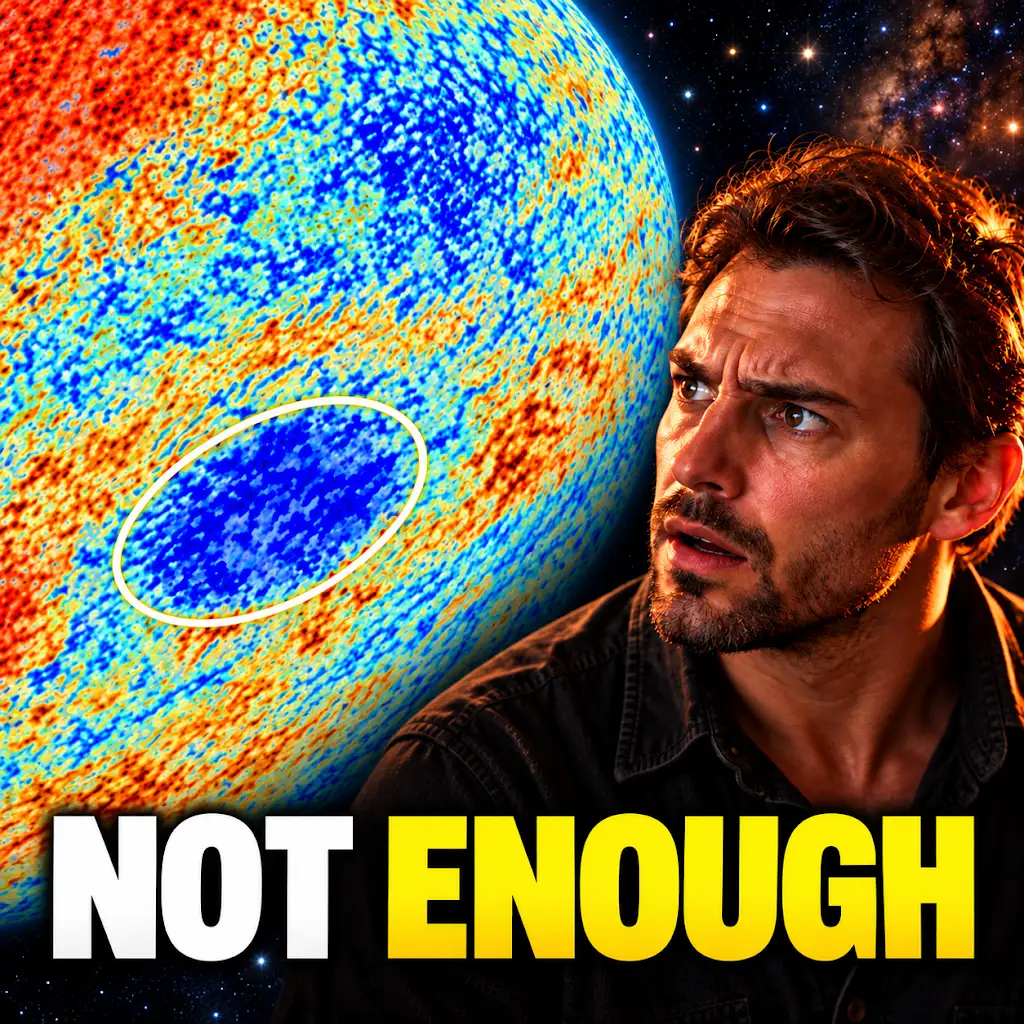
For decades, a curious anomaly has persisted in the astronomical community, a region of the cosmic microwave background (CMB) radiation that appears inexplicably cooler than its surroundings. Dubbed the “CMB Cold Spot,” this vast expanse, approximately 1.5 billion light-years across, has defied conventional cosmological explanations. While initial observations were met with intrigue and skepticism, a growing body of evidence has solidified its existence, prompting intensive scientific inquiry. This article delves into the ongoing efforts to understand the MacKenzie Cold Spot, examining the various hypotheses, observational strategies, and the implications of its potential origins. The journey to unravel this cosmic enigma is a testament to humanity’s persistent drive to comprehend the universe’s most perplexing phenomena, pushing the boundaries of our understanding of cosmology, physics, and the very fabric of spacetime. The Cold Spot, a silent testament to the universe’s subtle mysteries, beckons us to explore the frontiers of cosmic discovery. Its discovery has sparked a vibrant debate within the scientific community, prompting a re-evaluation of established cosmological models and the search for novel explanations. The sheer scale of the Cold Spot, spanning billions of light-years, makes it a feature of immense cosmic significance, far larger than any predicted under the standard Lambda-CDM model of cosmology. This discrepancy is what fuels the ongoing research and fascination surrounding this extraordinary cosmic void.
The CMB itself acts as a powerful snapshot of the early universe, a relic radiation imprinted with the conditions approximately 380,000 years after the Big Bang. Variations in its temperature, though minute, provide crucial insights into the distribution of matter and energy in the primordial cosmos, and how these fluctuations seeded the large-scale structures we observe today, such as galaxies and galaxy clusters. The standard model, which has been remarkably successful in explaining a vast array of cosmological observations, predicts a certain level of temperature variation in the CMB. However, the MacKenzie Cold Spot exhibits a deficit in temperature that is statistically unlikely to have arisen by chance within this framework. This statistical improbability is the crux of the scientific challenge. Researchers are grappling with whether this anomaly points to a flaw in our current understanding of cosmology, or if it represents an entirely new and unexpected physical phenomenon. The investigation into the Cold Spot is not merely an academic exercise; it has the potential to reshape our fundamental understanding of the universe’s evolution and composition. The pursuit of knowledge surrounding this cosmic chill is a testament to the scientific method’s power to question, observe, and ultimately, to comprehend the profound mysteries of the cosmos.
The macKenzie cold spot survey has garnered significant attention in the astrophysics community, particularly in relation to its implications for understanding cosmic microwave background radiation. For those interested in exploring this topic further, a related article that delves into the nuances of cold spots in the universe can be found at this link. This article provides insights into the methodologies used in such surveys and discusses their potential impact on our comprehension of dark matter and the early universe.
Observational Evidence and Detection
The initial detection of the MacKenzie Cold Spot was a serendipitous event, a byproduct of more extensive sky surveys. Early observations, primarily from the Wilkinson Microwave Anisotropy Probe (WMAP) and later the Planck satellite, revealed a region of significantly lower temperature in the CMB data. These instruments, designed to meticulously map the CMB across the entire sky, provided the first compelling evidence of this localized cooling. The Planck mission, with its unprecedented sensitivity and resolution, further refined the measurements, confirming the Cold Spot’s existence and characterizing its size and depth. Its spatial extent is impressive, covering several degrees on the celestial sphere, which translates to a physical diameter of billions of light-years in the observable universe. The temperature deficit, while small in absolute terms (on the order of a few tens of microkelvins), is statistically significant when compared to the expected temperature fluctuations in the CMB.
The Planck Satellite’s Contribution
The Planck satellite, launched in 2009, played a pivotal role in solidifying the scientific community’s understanding of the MacKenzie Cold Spot. Its advanced instrumentation allowed for highly precise measurements of the CMB’s temperature fluctuations across the sky. Planck’s data confirmed the presence of the Cold Spot with high statistical significance, providing detailed maps of its temperature profile and extent. The satellite’s ability to differentiate between foreground emissions from our own galaxy and the faint CMB signal was crucial in isolating the Cold Spot as a genuine cosmic feature. The meticulous calibration and sophisticated data analysis techniques employed by the Planck collaboration were instrumental in ensuring the robustness of these findings. Without Planck’s high-resolution observations, the Cold Spot might have remained a more speculative anomaly, overshadowed by uncertainties in the data. Its legacy in CMB research is thus cemented by its contributions to understanding phenomena like the MacKenzie Cold Spot, pushing the boundaries of observational cosmology.
Complementary Surveys and Verification
Beyond Planck, other observational projects have contributed to the verification and characterization of the MacKenzie Cold Spot. Ground-based telescopes and subsequent analyses of data from missions like WMAP have also provided supporting evidence. These independent observations, utilizing different instrumental sensitivities and observational strategies, serve as crucial checks on the validity of the Planck findings. Consistency across multiple independent datasets strengthens the confidence in the Cold Spot’s existence and its properties. Researchers have also employed statistical methods to assess the likelihood of such a cold region arising purely by chance within the standard cosmological model. The consensus emerging from these varied observational approaches is that the MacKenzie Cold Spot is a genuine and significant feature of the CMB. This triangulation of evidence is fundamental to scientific discovery, ensuring that observed phenomena are not merely artifacts of specific instruments or analytical techniques.
Theoretical Frameworks and Explanations

The existence of the MacKenzie Cold Spot has ignited a flurry of theoretical investigations, as scientists strive to reconcile this observation with our current understanding of the universe. The standard cosmological model, known as Lambda-CDM, which describes a universe dominated by dark energy and cold dark matter, generally predicts a more uniform distribution of CMB temperatures. The significant under-temperature of the Cold Spot suggests that either our understanding of the early universe’s physics is incomplete, or that exotic phenomena beyond the standard model are at play. Several hypotheses have been proposed to account for this cosmic chill, ranging from relatively mundane explanations to more speculative, yet intriguing, possibilities. The ongoing debate centers on which of these theories, if any, best explains the observed data while remaining consistent with other cosmological observations. The search for an explanation is a vital part of the scientific process, pushing the boundaries of theoretical physics.
The Supervoid Hypothesis
One of the most widely discussed explanations for the MacKenzie Cold Spot is the existence of a vast, underdense region of matter, often referred to as a “supervoid,” in the path of the CMB photons. The theory posits that as CMB photons from the early universe travel towards Earth, they pass through this region of lower-than-average matter density. According to the integrated Sachs-Wolfe (ISW) effect, photons traversing such a gravitational potential well will lose energy, resulting in a perceived cooling. The larger and deeper the supervoid, the more significant the temperature drop would be. While the existence of supervoids is consistent with large-scale structure formation within the standard cosmological model, the sheer size and emptiness required to explain the Cold Spot are at the outer limits of predicted void sizes. Scientists are actively searching for observational evidence of such a colossal void behind the Cold Spot. If confirmed, this would provide a compelling, albeit extreme, explanation for the anomaly. The search for this cosmic abyss continues, as its discovery would validate a significant cosmological feature.
Exotic Physics and Beyond the Standard Model
Beyond the supervoid hypothesis, a range of more speculative, yet scientifically grounded, explanations have been put forward. Some theories explore the possibility of topological defects in the early universe, such as cosmic strings, which could have influenced the CMB temperature. Another intriguing possibility involves the interaction of the CMB photons with hypothetical dark matter or dark energy structures that are not accounted for in the standard model. Some researchers have even entertained the notion of “parallel universes” or “brane collisions” as potential causes, suggesting that the Cold Spot might be a gravitational echo from interactions with other cosmic realms. While these explanations are more far-reaching, they highlight the profound implications the MacKenzie Cold Spot could have for our fundamental understanding of physics. If one of these exotic theories proves to be correct, it would necessitate a significant revision of our cosmological paradigms. The exploration of these out-of-the-box ideas showcases the scientific community’s commitment to finding a comprehensive explanation for the observed cosmic anomaly, even if it challenges established norms.
Statistical Flukes and Observational Biases
A more conservative explanation for the MacKenzie Cold Spot is that it might be a statistically improbable fluctuation within the standard cosmological model, or a result of observational biases that have not been fully accounted for. The universe is vast, and even within a statistically uniform distribution, rare events can occur. Scientists continuously refine their statistical analyses to determine the probability of such a large cold spot appearing by chance. Furthermore, potential systematic errors in CMB measurements, such as subtle instrumental effects or the imperfect removal of foreground emissions from our galaxy, are always under scrutiny. While the Planck satellite’s data is exceptionally robust, the possibility of residual biases cannot be entirely dismissed. Rigorous peer review and independent re-analysis of the data are crucial steps in ruling out or confirming such explanations. The scientific process relies on a continuous self-correction mechanism, and the Cold Spot is no exception to this rigorous examination.
Investigating the Cosmic Structure Behind the Cold Spot
The most promising avenue for resolving the mystery of the MacKenzie Cold Spot lies in directly investigating the cosmic structures that lie in the line of sight of this anomalously cold region. If the supervoid hypothesis holds true, then there should be a discernible deficit of galaxies and matter in that direction. Astronomers are employing various observational techniques to probe this specific region of space, seeking definitive evidence of an exceptionally large void or other unusual cosmic formations. This observational campaign is critical for distinguishing between mundane explanations and those that require new physics. The results of these investigations will be instrumental in guiding future theoretical developments and refining our cosmological models. The active pursuit of tangible evidence underscores the empirical nature of scientific inquiry, where theoretical constructs must be validated by real-world observations.
Galaxy Redshift Surveys
To identify and characterize potential supervoids, astronomers conduct extensive galaxy redshift surveys. These surveys involve measuring the redshift of millions of galaxies, which provides information about their distance and their motion. By mapping the distribution of galaxies in three dimensions, scientists can identify regions that are unusually devoid of matter. If a supervoid exists behind the MacKenzie Cold Spot, these surveys should reveal a significant lack of galaxies in that specific sector of the sky. Projects like the Sloan Digital Sky Survey (SDSS) and the Dark Energy Spectroscopic Instrument (DESI) are crucial for this endeavor, providing vast datasets of galaxy positions and properties. The intricate details revealed by these surveys offer a tangible glimpse into the large-scale structure of the universe, and their findings are pivotal in the quest to explain the Cold Spot.
Gravitational Lensing and Weak Lensing Studies
Another powerful tool for probing the distribution of matter is gravitational lensing. Massive objects, such as galaxies and galaxy clusters, warp the fabric of spacetime, causing light from background objects to bend around them. This phenomenon, known as gravitational lensing, can be used to map the distribution of mass, even in regions where there are no visible galaxies. Weak lensing, in particular, analyzes the subtle distortions of background galaxy shapes caused by intervening matter. By studying the weak lensing signal across the region of the MacKenzie Cold Spot, astronomers can infer the presence and extent of any large-scale structures, or voids, that might be responsible for the CMB anomaly. This technique provides a complementary method to galaxy surveys, offering a more direct measure of the gravitational influence of matter.
Searches for Baryon Acoustic Oscillations (BAO)
Baryon Acoustic Oscillations (BAO) are fossilized sound waves from the early universe that imprinted a characteristic scale on the distribution of matter. Measuring the BAO scale at different distances allows cosmologists to constrain the expansion history of the universe and probe the properties of dark energy. Researchers are analyzing BAO data in the direction of the MacKenzie Cold Spot to see if there are any anomalies in the matter distribution that deviate from expectations. A significant underdensity consistent with a supervoid would likely affect the observed BAO signal. This multi-faceted approach, combining different observational probes, is essential for building a comprehensive picture of the cosmic landscape behind the Cold Spot. The convergence of evidence from these diverse methods will ultimately determine the most plausible explanation.
The recent findings from the macKenzie cold spot survey have sparked interest in the broader implications of cosmic phenomena. For those looking to explore related topics, an insightful article on the subject can be found at Freaky Science, which delves into the mysteries of dark matter and its potential connections to cold spots in the universe. This connection highlights the ongoing quest to understand the fundamental nature of our cosmos and the forces that shape it.
Implications for Cosmology and Future Research
| Metric | Value | Unit | Description |
|---|---|---|---|
| Survey Area | 100 | square kilometers | Total area covered by the MacKenzie Cold Spot Survey |
| Temperature Range | -40 to -10 | °C | Observed temperature range within the cold spot region |
| Average Temperature | -25 | °C | Mean temperature recorded during the survey period |
| Survey Duration | 3 | months | Length of time over which data was collected |
| Number of Sampling Points | 50 | locations | Number of discrete points where measurements were taken |
| Average Wind Speed | 15 | km/h | Mean wind speed recorded during the survey |
| Snow Depth | 30 | cm | Average snow depth measured across the survey area |
The MacKenzie Cold Spot is more than just an intriguing anomaly; it represents a significant challenge and opportunity for cosmology. Its persistent presence in observational data compels scientists to scrutinize their most fundamental theories about the universe. The resolution of this enigma could lead to profound advancements in our understanding of cosmic evolution, the nature of dark matter and dark energy, and potentially, the very laws of physics themselves. The ongoing research into the Cold Spot is a prime example of how scientific inquiry progresses – through observation, hypothesis, and rigorous testing. The implications extend beyond theoretical cosmology, potentially influencing our understanding of the universe’s ultimate fate and its fundamental constituents. The pursuit of this cosmic chill is a journey into the unknown, with the potential to redefine our cosmic perspective.
Refining Cosmological Models
If the MacKenzie Cold Spot is indeed explained by a supervoid or other large-scale structure within the framework of the standard Lambda-CDM model, it would serve as a powerful confirmation of our current understanding of structure formation. However, the sheer scale of such a void would push the boundaries of existing predictions, potentially necessitating adjustments to parameters within the model. Conversely, if exotic physics is required to explain the anomaly, it would signal a paradigm shift in cosmology. Such discoveries would lead to the development of new theoretical frameworks that incorporate previously unknown phenomena, such as new fundamental forces, particles, or even dimensions. The Cold Spot thus acts as a critical testbed for our current cosmological models, guiding the direction of future theoretical development.
The Search for Other Anomalies
The success in identifying and characterizing the MacKenzie Cold Spot also fuels the search for other similar anomalies in the CMB or large-scale structure. Scientists are now more attuned to looking for statistically significant deviations from expected patterns. This heightened vigilance could lead to the discovery of other perplexing cosmic features, each potentially holding clues to novel physics. The universe is a complex and dynamic entity, and it is plausible that the MacKenzie Cold Spot is not a singular occurrence. The ongoing and future sky surveys, equipped with ever-increasing sensitivity and resolution, will undoubtedly continue to unveil the universe’s hidden secrets, potentially revealing more such cosmic enigmas. The interconnectedness of cosmic phenomena means that understanding one anomaly can shed light on others, forming a web of knowledge.
Technological Advancements and Future Observations
The investigation of the MacKenzie Cold Spot has driven advancements in observational technologies, including more sensitive detectors, improved data analysis techniques, and larger telescopes. Future missions and ground-based observatories will build upon these advancements, providing even more precise measurements of the CMB and the distribution of matter. The development of next-generation telescopes, such as the Square Kilometre Array (SKA) for radio astronomy and advanced optical observatories, will offer unprecedented capabilities for probing the universe’s large-scale structure. These technological leaps will be crucial for definitively resolving the mystery of the Cold Spot and for exploring the universe’s remaining unanswered questions. The quest for understanding the MacKenzie Cold Spot is thus intertwined with the relentless march of technological innovation.
Conclusion: A Persistent Cosmic Puzzle
The MacKenzie Cold Spot remains one of the most compelling and debated anomalies in modern cosmology. Its existence, confirmed by multiple independent observations, challenges the predictions of the standard cosmological model. The ongoing efforts to explain this enigmatic region of the CMB, from the supervoid hypothesis to more speculative theories involving new physics, highlight the dynamic and ever-evolving nature of scientific inquiry. Whether it represents a massive cosmic void, a testament to the vastness of spacetime, or a window into physics beyond our current understanding, the MacKenzie Cold Spot serves as a powerful reminder of the universe’s profound mysteries. The continued pursuit of its origins is not merely an academic exercise; it is a fundamental quest to unravel the deepest secrets of our cosmos, pushing the boundaries of human knowledge and inspiring future generations of scientists to look up at the night sky with wonder and determination. The journey to comprehend this cosmic chill is a testament to our insatiable curiosity and our enduring quest for cosmic truth. The data continues to be analyzed, the theories refined, and the universe slowly but surely yields its secrets, one cold spot at a time.
The Universe’s Cold Spot Has an Explanation. It’s Not Enough.
FAQs
What is the macKenzie cold spot survey?
The macKenzie cold spot survey is a research project that aims to identify and study areas in the Mackenzie River Basin in Canada that experience colder temperatures compared to surrounding regions.
How is the macKenzie cold spot survey conducted?
The macKenzie cold spot survey involves collecting temperature data from various locations within the Mackenzie River Basin using weather stations, satellite imagery, and other monitoring tools. Researchers analyze this data to pinpoint areas with consistently lower temperatures.
What is the significance of the macKenzie cold spot survey?
The macKenzie cold spot survey helps scientists better understand the factors contributing to cold spots within the Mackenzie River Basin, such as topography, wind patterns, and climate variability. This information can be valuable for predicting weather patterns and assessing the impact of climate change.
Who is involved in the macKenzie cold spot survey?
The macKenzie cold spot survey is typically conducted by a team of researchers, meteorologists, and environmental scientists who specialize in climate studies and weather monitoring. Government agencies, universities, and research institutions may collaborate on this project.
What are some potential applications of the macKenzie cold spot survey findings?
The findings of the macKenzie cold spot survey can be used to improve weather forecasting accuracy, assess the risk of frost damage to crops, and inform land use planning in the Mackenzie River Basin. Additionally, this research can contribute to our understanding of regional climate dynamics.