
The vast expanse of the universe, a canvas painted with the faint light of distant galaxies, holds within it enigmas that have captivated humanity for millennia. Among these cosmic puzzles, one anomaly has particularly intrigued cosmologists: the Cold Spot in the Cosmic Microwave Background (CMB). This region, a vast swathe of the sky exhibiting a statistically improbable temperature deficit compared to its surroundings, presents a compelling challenge to the prevailing cosmological model. While the Lambda Cold Dark Matter (ΛCDM) model has been remarkably successful in explaining a wide range of cosmological observations, the Cold Spot appears as a stubborn outlier, a whispered contradiction in the otherwise harmonious symphony of the universe. Unraveling its origin is not merely an academic exercise; it is a quest that could potentially redefine our understanding of cosmic evolution and the fundamental nature of reality itself.
The Pillars of the Standard Model
The ΛCDM model, often referred to as the “standard model” of cosmology, has been the bedrock upon which our current understanding of the universe is built. Its success stems from its ability to reconcile a multitude of disparate observations, from the distribution of galaxies to the expansion rate of the universe. At its core, the model posits that the universe is composed of three main components: dark energy (represented by Lambda, Λ), cold dark matter (CDM), and ordinary baryonic matter. Dark energy, a mysterious force driving the accelerated expansion of the universe, is thought to constitute approximately 68% of its total energy density. Cold dark matter, invisible and interacting only gravitationally, makes up about 27%, providing the gravitational scaffolding for structure formation. The familiar atomic matter that forms stars, planets, and us accounts for the remaining approximately 5%. This elegant framework, supported by data from the CMB, large-scale structure surveys, and supernovae, has painted a coherent picture of a universe that began with a Big Bang, underwent a period of rapid inflation, and has been expanding and evolving ever since. The CMB, the afterglow of this primordial event, is a crucial piece of evidence, its near-uniform temperature punctuated by tiny fluctuations that seeded the formation of all cosmic structures. The ΛCDM model accurately predicts the statistical properties of these fluctuations, the relative abundances of different elements, and the observed expansion history of the universe. However, the Cold Spot, with its anomalous size and depth, has emerged as a perplexing discord within this otherwise harmonious narrative.
The Cosmic Microwave Background: A Snapshot of the Early Universe
The Cosmic Microwave Background (CMB) is arguably one of the most significant discoveries in modern cosmology. It is the relic radiation from the era when the universe was about 380,000 years old, a time when it had cooled enough for electrons and protons to combine and form neutral atoms. Before this epoch, the universe was a hot, dense plasma, opaque to light. As the universe expanded and cooled, photons were able to travel freely, creating the CMB we observe today. This radiation is remarkably uniform in temperature, approximately 2.725 Kelvin, across the entire sky. However, it is not perfectly uniform; it exhibits minuscule temperature variations, on the order of parts per 100,000. These tiny fluctuations, imprinted on the CMB, are of paramount importance. They represent the initial density perturbations in the early universe, the seeds from which all cosmic structures, from galaxies to galaxy clusters, eventually grew. The precise pattern and amplitude of these fluctuations, as measured by missions like COBE, WMAP, and Planck, provide a wealth of information about the universe’s composition, geometry, and evolution, serving as a cornerstone for validating and refining cosmological models. The ΛCDM model excels at predicting the statistical distribution of these fluctuations, their power spectrum, and their correlation across different scales.
The Emergence of the Cold Spot Anomaly
The Planck satellite, a joint European Space Agency and NASA mission, provided unprecedentedly detailed maps of the CMB. It was during the analysis of Planck data that the Cold Spot truly came into sharp focus. While previous missions had hinted at a region of slightly lower temperature, Planck’s superior resolution and sensitivity revealed a vast, circular area spanning several degrees across the sky, significantly colder than its surroundings. Quantified, the temperature deficit in the Cold Spot is approximately 100 microkelvin below the average CMB temperature. This might seem minuscule, but in the context of the CMB’s near-uniformity, it is a substantial deviation. The statistical significance of this cold region is a crucial aspect of the anomaly. Cosmologists assess the likelihood of such a cold spot arising purely by chance within the framework of the ΛCDM model and its predicted CMB fluctuations. Current analyses suggest that a fluctuation of this magnitude and size would be exceedingly rare, occurring perhaps once in hundreds or even thousands of observable universes. This statistical improbability is what elevates the Cold Spot from a mere curiosity to a potential challenge to the standard cosmological model.
The Lambda Cold Dark Matter (ΛCDM) model has been a cornerstone of modern cosmology, but recent observations of the Cold Spot in the Cosmic Microwave Background (CMB) have raised intriguing questions about its implications for our understanding of the universe. For a deeper exploration of this phenomenon and its potential connections to cosmic inflation and large-scale structure, you can read a related article on this topic at Freaky Science.
Theoretical Explanations and Their Challenges
The existence of the Cold Spot has spurred a flurry of theoretical investigations, with cosmologists proposing various explanations, each with its own set of implications and challenges. These proposed solutions range from subtle variations within the ΛCDM framework to more radical departures that could fundamentally alter our understanding of the universe. The quest to explain the Cold Spot is a testament to the scientific process, where anomalies drive innovation and push the boundaries of our knowledge.
The Supervoid Hypothesis
One of the most compelling and actively researched explanations for the Cold Spot is the “supervoid” hypothesis. This theory posits that the cold temperature observed in the CMB within this region is not due to a primordial anomaly but rather to the gravitational influence of a vast, underdense region of matter in the foreground, known as a supervoid. According to general relativity, light passing through a region of lower gravitational potential, such as a void, will lose energy as it climbs out of the gravitational well. This phenomenon, known as the Integrated Sachs-Wolfe (ISW) effect, causes the CMB photons to be slightly redshifted, appearing cooler to us on Earth. If a sufficiently large and deep void exists between us and the region of the CMB that originated the Cold Spot, it could indeed produce the observed temperature deficit.
The Gravitational Lensing Effect
The gravitational lensing effect, a direct consequence of Einstein’s theory of general relativity, plays a crucial role in the supervoid hypothesis. Massive objects, like galaxy clusters and superclusters, warp the fabric of spacetime around them. This warping can bend the path of light passing nearby, similar to how a glass lens bends light. In the context of the CMB, the gravitational pull of foreground structures can subtly alter the trajectories of CMB photons. If a supervoid is present, it represents a region of less mass and therefore less gravitational influence. As CMB photons travel through this region, they experience a slight gravitational potential difference.
Evidence and Counter-Arguments
The supervoid hypothesis is attractive because it proposes an explanation that is consistent with the known laws of physics and the ΛCDM model, provided such a void exists. Extensive searches have been conducted to find a suitable void in the direction of the Cold Spot. Indeed, a large void, dubbed the “Saul-Perlmutter Void” or simply the “Boötes Void” in some contexts, has been identified in that general direction, although its exact properties and alignment with the Cold Spot are still subjects of ongoing debate and refined observations. Some studies have found that the extent and depth of known voids might not be sufficient to fully account for the observed temperature deficit of the Cold Spot. Moreover, the shape and distribution of other CMB fluctuations around the Cold Spot also need to be consistent with this explanation, and some analyses have suggested potential discrepancies. Therefore, while the supervoid hypothesis remains a strong contender, it requires further meticulous investigation and potentially the discovery of even larger or more opportune voids.
Exotic Physics Scenarios
Beyond the supervoid explanation, the Cold Spot has also ignited interest in more speculative, yet scientifically intriguing, possibilities that venture beyond the standard ΛCDM paradigm. These scenarios, while often more challenging to verify observationally, offer alternative pathways to understanding this cosmic enigma and could have profound implications for fundamental physics.
Cosmic Topological Defects
One such exotic scenario involves the presence of “cosmic topological defects.” These are hypothetical, one-dimensional or two-dimensional structures that are predicted to have formed during phase transitions in the very early universe, similar to how cracks form when water freezes. Examples include cosmic strings (one-dimensional defects) or domain walls (two-dimensional defects). If the Cold Spot were a result of the gravitational influence of a long, massive cosmic string passing through our line of sight, it could potentially create a similar temperature deficit through the gravitational lensing effect. The passage of a cosmic string would bend spacetime in a way that could cause a Doppler shift in the CMB photons, leading to a cold spot.
A Collision with Another Universe?
Perhaps the most mind-bending proposition is the “multiverse collision” hypothesis. This idea suggests that the Cold Spot could be the imprint of a collision between our universe and another, parallel universe in the early stages of cosmic evolution. According to some theories of eternal inflation, our universe might not be the only one; instead, it could be one bubble in a vast, inflating multiverse. If two such bubble universes were to collide, the interaction could create a localized region of lower temperature in the CMB, which we observe as the Cold Spot. This hypothesis, while highly speculative, offers a dramatic explanation for the anomaly. However, it presents significant challenges in terms of direct observational verification, relying heavily on theoretical predictions and indirect evidence.
The Lambda Cold Dark Matter (ΛCDM) model has been a cornerstone of modern cosmology, yet it faces intriguing challenges, such as the mysterious Cold Spot in the Cosmic Microwave Background radiation. This anomaly has sparked numerous studies and debates among scientists regarding its implications for our understanding of the universe. For a deeper exploration of this topic, you can read more in this related article on the Freaky Science website, which discusses various theories and observations surrounding the Cold Spot phenomenon.
The Standard Model’s Resilience
Despite the compelling nature of these alternative explanations, it is crucial to acknowledge the remarkable success and robustness of the ΛCDM model. The scientific community is inherently conservative when it comes to revising well-established theories. Before discarding or significantly altering the ΛCDM model, every effort is made to find explanations within its existing framework. The statistical significance of the Cold Spot, while notable, is still a matter of ongoing debate and refinement in observational data and analytical techniques. It is possible that with more precise measurements and improved statistical methods, the observed cold spot could be found to be a less statistically significant fluctuation than initially believed, fitting comfortably within the expected variations of the ΛCDM model. Furthermore, subtle modifications or extensions to the ΛCDM model, without a complete overhaul, might also accommodate the Cold Spot.
Observational Strategies and Future Prospects
The quest to definitively understand the origin of the Cold Spot is an ongoing endeavor, relying on a combination of sophisticated observational techniques and theoretical advancements. Future missions and refined analyses are poised to provide crucial data that will either solidify or challenge the existing hypotheses. The scientific community’s commitment to meticulous observation and data interpretation is paramount in unraveling this cosmic mystery.
Enhanced CMB Observations
The pursuit of a definitive answer to the Cold Spot enigma hinges on obtaining even more precise and comprehensive data from the CMB. While missions like Planck have provided invaluable insights, future observations aim to push the boundaries of sensitivity and resolution even further. Next-generation CMB experiments, equipped with advanced detectors and telescope designs, will be capable of mapping the CMB with unprecedented detail. This will allow scientists to better characterize the properties of the Cold Spot, including its exact size, shape, temperature profile, and polarization patterns. These finer details are critical for distinguishing between different theoretical explanations. For instance, the polarization of the CMB can provide clues about the nature of any foreground gravitational lensing effects.
Large-Scale Structure Surveys
Complementary to CMB observations, extensive surveys of large-scale structures in the universe play a vital role. These surveys map the distribution of galaxies and galaxy clusters across vast cosmic volumes, providing a detailed three-dimensional map of the universe’s structure. By meticulously cataloging the distribution of matter, cosmologists can identify and characterize potential supervoids or superclusters that might lie along the line of sight to the Cold Spot. Advanced galaxy redshift surveys, utilizing powerful telescopes and spectrographs, are essential for accurately determining the distances to these structures, thereby allowing for a precise assessment of their gravitational influence on the CMB. The synergy between CMB data and large-scale structure surveys is crucial for testing explanations like the supervoid hypothesis.
Theoretical Refinement and Simulation
The theoretical landscape surrounding the Cold Spot is also continuously evolving. Cosmologists are engaged in refining existing models and developing new theoretical frameworks to explain the anomaly. This involves sophisticated computer simulations that can model the formation and evolution of cosmic structures, including voids, and their impact on the CMB. These simulations allow researchers to test the predictions of various hypotheses against observational data. Furthermore, theoretical work is crucial for exploring the implications of more exotic scenarios, such as the existence of cosmic topological defects or the possibility of multiverse interactions. By developing testable predictions for these speculative theories, scientists can guide future observational efforts and potentially find evidence that supports or refutes them.
The Broader Implications for Cosmology
The resolution of the Cold Spot mystery, regardless of its ultimate explanation, will undoubtedly have significant implications for our understanding of the universe. It could either confirm the continued validity of the ΛCDM model with minor adjustments, or it could necessitate a fundamental reevaluation of our cosmological paradigm, opening new avenues for scientific inquiry. The pursuit of this anomaly underscores the dynamic and ever-evolving nature of scientific discovery, where challenges to established theories often pave the way for revolutionary insights.
A Test for the Standard Model
The Cold Spot serves as a critical test for the robustness of the ΛCDM model. If a plausible explanation is found within the standard framework, it would further solidify its position as the leading cosmological model. This could involve the confirmation of a previously unknown supervoid or a more nuanced understanding of the statistical fluctuations within the CMB. However, if all attempts to explain the Cold Spot within ΛCDM fail, and compelling evidence emerges for a more exotic origin, it would signal a paradigm shift in cosmology. Such a scenario would compel scientists to reconsider fundamental aspects of cosmic evolution, potentially leading to the development of entirely new theoretical frameworks that incorporate phenomena not currently accounted for.
Expanding the Cosmic Frontier
The investigation into the Cold Spot is not just about a single anomaly; it represents a broader effort to probe the limits of our current cosmological understanding. Whether the explanation lies in a subtle feature of our universe or a more profound cosmic phenomenon, the pursuit itself pushes the boundaries of observational capabilities and theoretical modeling. The insights gained from this endeavor have the potential to illuminate our understanding of the early universe, the nature of dark energy and dark matter, and perhaps even the very fabric of spacetime. The Cold Spot, in its enigmatic presence, invites humanity to continue its unwavering quest to comprehend the cosmos, a journey that promises to unveil deeper truths about our place within the grand tapestry of existence.
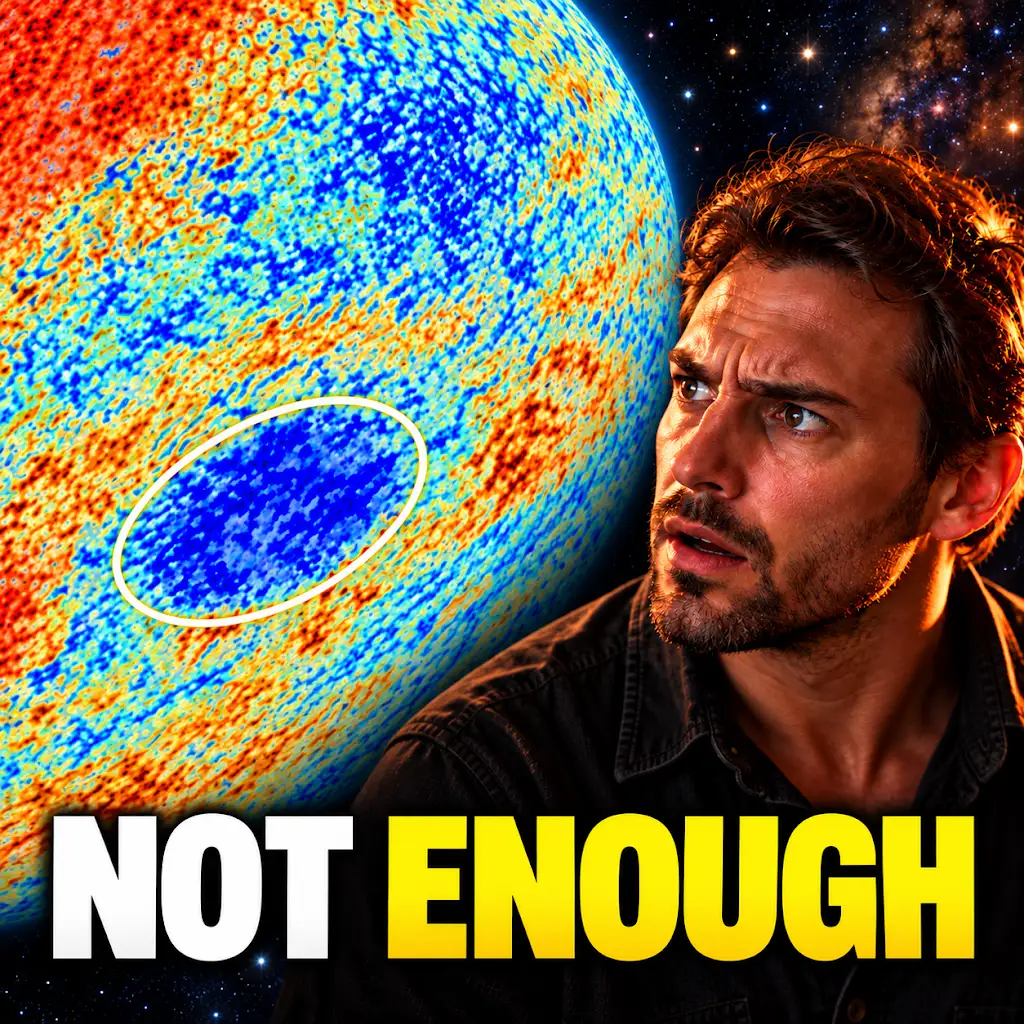
The Universe’s Cold Spot Has an Explanation. It’s Not Enough.
FAQs
What is the Lambda CDM Cold Spot?
The Lambda CDM Cold Spot is a region of the cosmic microwave background radiation that appears colder than its surroundings, located in the southern galactic hemisphere.
What causes the Lambda CDM Cold Spot?
The Lambda CDM Cold Spot is believed to be caused by a large void in the universe, known as the Eridanus Supervoid, which allows for less cosmic microwave background radiation to pass through, resulting in a colder spot.
How was the Lambda CDM Cold Spot discovered?
The Lambda CDM Cold Spot was discovered by analyzing data from the Wilkinson Microwave Anisotropy Probe (WMAP), a NASA spacecraft that mapped the cosmic microwave background radiation in the early universe.
What implications does the Lambda CDM Cold Spot have for cosmology?
The existence of the Lambda CDM Cold Spot challenges our current understanding of the distribution of matter in the universe and may provide insights into the nature of dark energy and dark matter.
Is the Lambda CDM Cold Spot a unique phenomenon?
While the Lambda CDM Cold Spot is one of the largest and coldest anomalies in the cosmic microwave background radiation, similar cold spots have been observed in other regions of the universe, suggesting that large cosmic voids may play a significant role in shaping the universe’s structure.