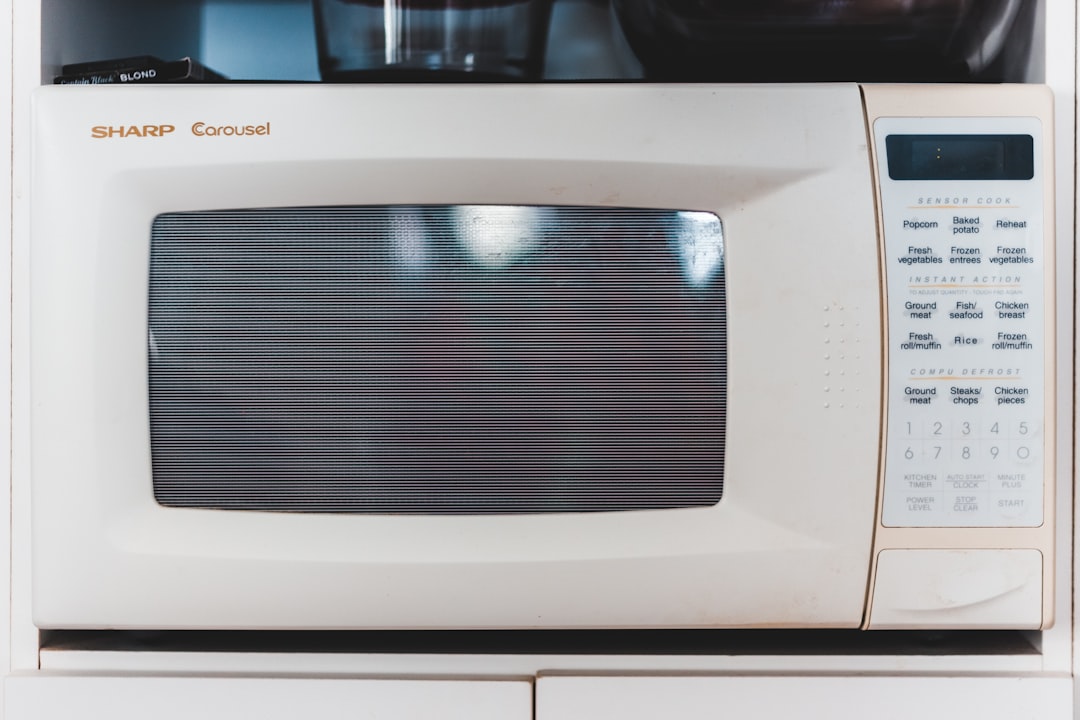
You might think of your microwave oven as a magical box, a silent accomplice to your late-night cravings and hurried lunches. You toss in leftovers, press a few buttons, and voilà – steaming food. But beneath that unassuming exterior lies a fascinating world of physics, a complex interplay of invisible forces that transform cold into hot. It’s time to peer behind the curtain and uncover the invisible physics of your microwave oven.
At the core of your microwave’s operation is the magnetron, a marvel of engineering that generates the very waves that cook your food. This isn’t just any kind of wave; these are electromagnetic waves, specifically in the microwave frequency range. Understanding how these waves are produced and what they do is the first step to demystifying the appliance.
How the Magnetron Works: From Electrons to Waves
Imagine a vacuum tube, but one filled with a powerful magnetic field and a carefully designed anode. Inside this tube, electrons are emitted from a heated filament. The magnetic field forces these electrons to travel in a circular path. As they do, they pass by resonant cavities, essentially small metal chambers. This movement of charged particles, interacting with the cavities, creates high-frequency electromagnetic oscillations – microwaves. Think of it like a tiny, controlled lightning storm happening within the tube, producing waves that are then channeled out to do their work. The precise design of the anode and cavities dictates the frequency of these microwaves, typically around 2.45 gigahertz, a frequency chosen for its effectiveness in heating food. This frequency is crucial because it resonates with the water molecules present in most foodstuffs, making it an efficient energy transfer mechanism.
The Role of the Waveguide: Directing the Energy
Once generated, these powerful microwaves need a way to reach your food. This is where the waveguide comes in. It’s essentially a hollow metal tube, usually rectangular, that acts as a conduit for the microwave energy. The dimensions of the waveguide are precisely calculated to allow the microwaves to propagate efficiently without significant loss of energy. It guides the waves from the magnetron to the cooking cavity, ensuring that the energy is directed where it needs to go. Without the waveguide, the microwaves would dissipate, and your food would remain stubbornly cold. It’s a vital piece of the puzzle, a highway for the invisible energy.
The Frequency Factor: Why 2.45 GHz?
You might wonder why this specific frequency, 2.45 GHz, is so ubiquitous in microwave ovens. The answer lies in its ability to interact effectively with water molecules. Water, a fundamental component of most foods, has a dipole moment, meaning its positive and negative charges are separated. When exposed to the oscillating electromagnetic field of microwaves, these water molecules try to align themselves with the field. As the field rapidly switches direction, the water molecules vibrate and rotate back and forth at an astonishing rate. This frenetic molecular motion generates friction, and it’s this friction that produces heat. If the frequency were too low, the molecules wouldn’t have enough time to respond to the oscillating field. If it were too high, the energy might be reflected or absorbed by other components, or not penetrate the food effectively. 2.45 GHz strikes a perfect balance.
Microwave ovens are fascinating devices that utilize invisible physics to heat our food efficiently. For a deeper understanding of the science behind microwave technology, you can explore the article on Freaky Science, which delves into the principles of electromagnetic waves and their interaction with water molecules in food. This insightful piece sheds light on how microwaves work and the underlying physics that makes them so effective. To read more, visit Freaky Science.
The Cooking Cavity: Where the Magic Happens
The metal box you see is more than just a container. The cooking cavity is designed to contain and distribute the microwave energy effectively, ensuring your food gets cooked evenly. It’s a carefully constructed environment that works in tandem with the microwaves to achieve the desired culinary outcome.
The Metal Enclosure: Reflecting the Waves
The interior walls of your microwave oven are made of metal. This is not accidental. Metal is an excellent conductor of electricity and, importantly, it reflects microwaves. This reflection is crucial for trapping the microwave energy within the cavity and directing it back towards the food. Imagine a mirrored room; the light bounces around, illuminating everything. Similarly, the microwaves bounce off the metal walls, creating a complex pattern of energy within the cavity. This bouncing ensures that the food is bombarded with microwaves from multiple directions, aiding in more uniform heating. If the cavity were made of a material that absorbed microwaves, the energy would be lost before it could heat your food.
The Turntable: Ensuring Even Heating
Even with the reflective walls, hot spots and cold spots can still develop. This is where the turntable plays its essential role. As your food rotates, it moves through different areas of the microwave field within the cavity. This continuous motion ensures that all parts of the food are exposed to the microwave energy for roughly the same amount of time, leading to more even cooking. Without the turntable, you might find yourself with scorching hot edges and a frigid center, a culinary disaster averted by this simple rotating plate. Some high-end microwaves also employ stirrers, often located in the ceiling of the cavity, which are rotating fan-like blades designed to further scatter the microwaves and reduce hot spots.
The Stirrer (Optional): Further Scattering the Waves
In some microwave ovens, you might notice a rotating element, often on the ceiling of the cooking cavity, that looks like a small fan. This is a microwave stirrer. Its purpose is to further disrupt and scatter the microwave energy. Even with a turntable, the microwave field inside the cavity can create a standing wave pattern, leading to predictable hot and cold spots. The stirrer, by moving the microwave energy around, helps to break up these standing waves and create a more uniform distribution of energy, leading to even more consistent cooking results. It’s an additional layer of engineering working to combat uneven heating.
The Physics of Heating: It’s All About Vibrations
The core principle behind microwave cooking is the interaction between the electromagnetic waves and the molecules within your food. It’s a rapid, energetic dance that transforms cold ingredients into a piping hot meal.
Dielectric Heating: The Science of Molecular Agitation
The primary mechanism by which microwaves heat food is called dielectric heating. As mentioned earlier, water molecules, with their inherent polarity, are the main targets. When subjected to the oscillating electric field of the microwaves, these polar molecules attempt to align themselves with the field. Because the field is changing direction billions of times per second, the water molecules are forced to rotate and vibrate incessantly. This molecular motion generates kinetic energy, which manifests as heat. It’s not the microwaves themselves that are hot, but the energy they impart to the molecules, causing them to jostle and rub against each other. This friction is the source of the heat that cooks your food. Other polar molecules and ions within the food also contribute to this heating process, but water is the dominant factor.
Penetration Depth: How Far the Waves Go
Microwaves don’t penetrate infinitely deep into food. The depth to which they can effectively heat varies depending on the food’s composition and density. Generally, microwaves penetrate about 2-3 centimeters (about 1 inch) into most foods. The outer layers are heated directly by the microwaves, and then heat is transferred to the inner layers through conduction. This is why thicker or denser foods might require longer cooking times or require being cut into smaller pieces to ensure they are cooked through. Understanding this penetration depth helps explain why certain foods might cook unevenly. Fatty and sugary foods tend to absorb microwave energy more readily than foods with high water content, leading to faster heating in those areas.
The Role of Fat and Sugar: Alternative Heating Pathways
While water is the primary molecule heated by microwaves, fats and sugars also play a role. Fats, being non-polar, are not directly heated by the oscillating electric field in the same way as water. However, they can absorb microwave energy and become very hot, contributing to the overall cooking process. Sugars, on the other hand, can exhibit some polarity and will also absorb microwave energy, leading to their caramelization and browning. This is why sugary foods can sometimes appear to cook faster or brown more intensely in a microwave. The complex interplay of these different components influences how quickly and evenly your food heats up.
Safety Features: Keeping the Invisible Contained
While the invisible physics of microwave ovens are responsible for their convenience, safety is paramount. Your microwave is equipped with several features designed to ensure that these powerful waves stay where they belong.
The Door Seal: A Critical Barrier
The most obvious safety feature is the door itself and its intricate sealing mechanism. The metal mesh embedded in the glass of the door acts as a Faraday cage, reflecting microwaves back into the cooking cavity. The seal around the door is also critical. It’s designed to prevent any microwaves from escaping. Microscopic gaps in a faulty seal can allow small amounts of microwave radiation to leak out, but this leakage is typically well below harmful levels. Regular inspection of the door and its seal is important for maintaining the safety of your appliance. You’ll notice that when the door is ajar, even slightly, the microwave will automatically shut off, preventing any unintended exposure.
Interlock Switches: Preventing Operation When Open
To further enhance safety, microwave ovens are equipped with a series of interlock switches. These are mechanical or electronic switches that are activated when the door is closed. If the door is not fully closed, these switches prevent the magnetron from powering up, thus stopping the generation of microwaves. This is why you’ll never hear your microwave humming away with the door slightly ajar. It’s a fail-safe mechanism designed to protect you from any potential exposure. There are usually multiple interlock switches to ensure redundancy and maximum safety.
Microwave Leakage Standards: Ensuring Your Protection
Governments and regulatory bodies have established strict standards for microwave leakage from appliances. These standards ensure that any potential leakage is far below levels that could be harmful to human health. Microwave ovens are designed and tested to meet these stringent requirements before they can be sold. The metal mesh in the door, the precise fit of the door seal, and the interlock switches all work together to guarantee that the energy generated within the cooking cavity remains contained. This rigorous testing and adherence to standards provide peace of mind regarding the safe operation of your microwave.
Understanding the invisible physics at play inside a microwave oven can be quite fascinating, as it reveals the intricate interactions between electromagnetic waves and food molecules. For a deeper dive into this topic, you might find the article on Freaky Science particularly enlightening, as it explores how microwaves heat food and the science behind it in a way that is both engaging and informative.
Beyond Heating: Other Applications of Microwaves
| Aspect | Details |
|---|---|
| Microwave Frequency | 2.45 GHz |
| Microwave Radiation | Non-ionizing radiation |
| Microwave Interactions | Excites water molecules, causing friction and heat |
| Microwave Safety | Sealed metal containers can cause sparks and fire |
| Microwave Shielding | Metal mesh in the door prevents radiation leakage |
While you likely use your microwave oven primarily for cooking and reheating, the principles of microwave technology extend far beyond your kitchen. Understanding these broader applications can further illuminate the power and versatility of this invisible force.
Industrial Heating and Drying: Efficiency in Action
Microwave technology isn’t confined to domestic kitchens. In industrial settings, microwaves are used for a variety of heating and drying applications. They can be employed to rapidly cure resins, dry lumber, pasteurize food products, and even sinter ceramics. The ability of microwaves to heat materials quickly and efficiently, often with less energy consumption than conventional methods, makes them an attractive option for these industrial processes. For instance, in the food industry, microwave drying can preserve nutrients and flavor better than heat-drying methods.
Telecommunications: Invisible Signals in the Air
The same electromagnetic waves used for cooking are fundamental to modern telecommunications. Microwave frequencies are used for everything from satellite communication and Wi-Fi signals to cellular networks and radar systems. These waves can travel long distances and carry vast amounts of information. The design of antennas and the understanding of wave propagation are critical in these applications, allowing us to communicate wirelessly across the globe. Your smartphone, your Wi-Fi router, and the satellite dishes you see are all harnessing the power of microwave technology.
Scientific Research: Probing the Universe and the Microscopic
In scientific research, microwaves are indispensable tools. Astronomers use microwave telescopes to study the cosmic microwave background radiation, a remnant of the Big Bang, providing crucial insights into the early universe. In chemistry and physics labs, microwave spectroscopy is used to study the molecular structure and dynamics of various substances. The ability of microwaves to interact with matter at a molecular level makes them invaluable for probing the fundamental properties of the universe, from the largest galaxies to the smallest molecules.
By understanding the invisible physics that govern your microwave oven, you can move beyond seeing it as a simple appliance and appreciate it as a sophisticated piece of technology. It’s a testament to human ingenuity, harnessing the power of invisible forces to make our lives more convenient and our food more enjoyable. So, the next time you press that start button, remember the fascinating science at play, the unseen dance of molecules and electromagnetic waves that brings warmth to your plate.

A Fork and a Spoon React Differently in a Microwave. Why?
FAQs
What is the invisible physics inside a microwave oven?
The invisible physics inside a microwave oven refers to the electromagnetic radiation in the form of microwaves that are used to heat and cook food. These microwaves cause the water molecules in the food to vibrate, generating heat and cooking the food.
How do microwaves work to heat food?
Microwaves work by emitting electromagnetic radiation at a frequency of around 2.45 gigahertz. These microwaves penetrate the food and cause the water molecules to vibrate, generating heat through friction. This heat cooks the food from the inside out.
What safety precautions should be taken when using a microwave oven?
When using a microwave oven, it is important to follow safety precautions such as using microwave-safe containers, avoiding metal objects, and ensuring that the food is heated evenly. It is also important to follow the manufacturer’s instructions and never operate the microwave oven with the door open.
Can microwave ovens cause harm to humans?
When used according to the manufacturer’s instructions, microwave ovens are safe for heating and cooking food. However, it is important to avoid direct exposure to the microwaves and to follow safety guidelines to prevent burns or other injuries.
What are some common misconceptions about microwave ovens?
One common misconception about microwave ovens is that they can cause cancer or other health issues. However, there is no scientific evidence to support this claim. Another misconception is that microwaves can change the chemical composition of food, but in reality, microwaves heat food in the same way as conventional ovens.