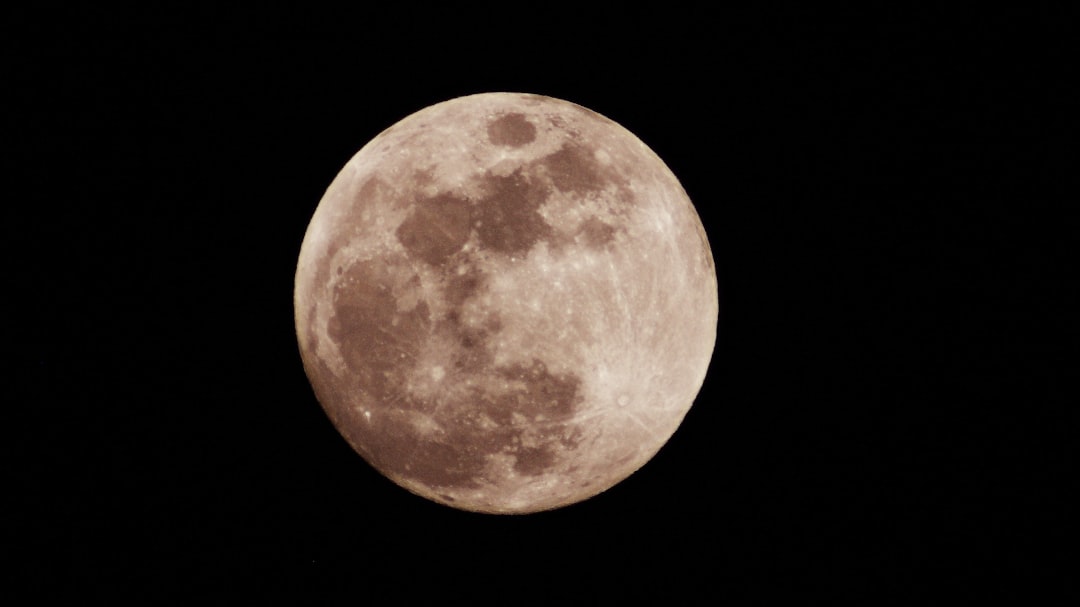
The legacy of the Apollo missions extends far beyond the iconic images of footprints on lunar soil. While the technological achievements were undeniable, the scientific endeavors of the Moon landings laid the groundwork for a frontier of knowledge that continues to be explored and understood. This article delves into the scientific investigations undertaken during the Apollo program, focusing on how these missions, with their inherent complexities and limitations, yielded data that pushed the boundaries of our understanding in several key areas of science.
The Apollo missions were, fundamentally, geological expeditions. The astronauts were trained to collect samples, observe surface features, and document the lunar environment with an unprecedented level of detail. This direct interaction with the Moon allowed for investigations that were impossible through telescopic observation alone.
The Value of Lunar Samples
The collection of over 382 kilograms of lunar rocks, core samples, and soil returned by the Apollo missions was and remains the cornerstone of lunar scientific understanding. Prior to Apollo, lunar composition was largely inferred from meteorite analysis and spectral data, leading to imprecise models. The returned samples provided concrete, tangible evidence that allowed for direct chemical, isotopic, mineralogical, and petrological analyses.
Chemical and Isotopic Analysis
These analyses revealed the Moon to be depleted in volatile elements compared to Earth, supporting theories of its formation through a giant impact event. The isotopic ratios of elements like oxygen provided crucial clues about the Moon’s origin and its relationship to Earth. By comparing these ratios, scientists could begin to confirm or refute various hypotheses about how the Moon came to be. The precise dating of these samples through radiometric techniques also allowed for the construction of a timeline of lunar geological activity.
Mineralogy and Petrology
Detailed examination of the mineralogy and petrology of the lunar samples unveiled a world shaped by different geological processes than Earth. The prevalence of minerals like plagioclase feldspar in the highlands (forming the bright, rugged areas) and pyroxenes and ilmenite in the mare basalts (the dark, smoother regions) painted a picture of a volcanic past. The absence of hydrous minerals in most samples indicated a very dry environment, starkly contrasting with Earth.
In-Situ Scientific Experiments
Beyond sample collection, the Apollo missions deployed a suite of scientific instruments directly onto the lunar surface. These experiments provided continuous data streams over extended periods, offering insights into physical processes occurring on the Moon.
Seismometry and Lunar Structure
The deployment of seismometers by Apollo 11, 12, 14, 15, and 16 created the first seismic network on another celestial body. These instruments, though facing significant challenges due to power limitations and data transmission, provided invaluable data on “moonquakes.” These seismic events, often caused by tidal stresses from Earth or meteorite impacts, allowed scientists to infer the internal structure of the Moon, revealing a crust, mantle, and possibly a small core. The detection of different types of seismic waves provided clues about the density and composition of these layers, offering a glimpse into the Moon’s deep interior.
Heat Flow Measurements
Instruments designed to measure the heat flow from the Moon’s interior were deployed by Apollo 15 and 17. While the data was less comprehensive than desired due to technical difficulties and the limited duration of some of these deployments, it provided initial measurements of the Moon’s thermal state. This data contributed to models of the Moon’s thermal evolution and its internal processes, helping scientists understand if the Moon was once geologically active and whether it retained any internal heat.
Recent discussions in frontier science have brought attention to the ongoing investigations surrounding the moon landing, particularly in relation to the evidence and theories that challenge the traditional narrative. For those interested in exploring this topic further, a related article can be found at Freaky Science, which delves into various aspects of lunar exploration and the scientific inquiries that continue to emerge from this historic event.
Probing the Lunar Environment: Atmosphere, Magnetism, and Radiation
The Apollo missions also provided an unprecedented opportunity to study the immediate environment surrounding the Moon, particularly its tenuous atmosphere, its magnetic field, and the pervasive radiation.
Characterizing the Lunar Atmosphere (Exosphere)
Despite the common perception of the Moon as airless, the Apollo missions confirmed the existence of a very thin atmosphere, often referred to as an exosphere. Instruments on board the command modules and deployed on the surface detected the presence of gases like helium, neon, and argon, originating from solar wind sputtering and outgassing.
Solar Wind Interactions
The interactions between the solar wind and the lunar surface were a key area of investigation. By analyzing the composition of the lunar exosphere and studying the implanted solar wind ions in lunar soil samples, scientists gained a better understanding of how the solar wind impacts planetary bodies without significant magnetic fields. This provided insights into space weathering processes and how surfaces evolve under constant bombardment from charged particles.
Investigating the Lunar Magnetic Field
The Moon’s magnetic field is significantly weaker than Earth’s, a fact that had implications for understanding planetary magnetism in general. Apollo astronauts collected samples of lunar rocks that exhibited remnant magnetism.
Paleomagnetism and Lunar Dynamo Theories
The study of these remanent magnetic fields in lunar rocks provided crucial evidence for a past lunar dynamo – a mechanism that generates a global magnetic field. The intensity and distribution of this magnetism helped scientists constrain the timing and duration of this presumed internal dynamo activity. This, in turn, contributed to broader discussions about the formation and evolution of magnetic fields in terrestrial planets. Understanding why the lunar dynamo ceased while Earth’s persists remains a significant question.
Quantifying Lunar Radiation Environment
The Moon, lacking a substantial atmosphere and magnetic field, is directly exposed to cosmic rays and solar energetic particles. The Apollo missions provided valuable data on the composition and intensity of this radiation.
Implications for Future Exploration
The radiation measurements taken by Apollo astronauts and instruments were vital for understanding the risks associated with human exploration beyond Earth’s magnetosphere. This data informed the design of future spacecraft, habitats, and astronaut safety protocols, laying the groundwork for prolonged human presence on the Moon and beyond. Assessing the long-term effects of this radiation on biological systems became a critical area of study.
The Genesis of Lunar Science and its Global Impact
The scientific investigations conducted during the Apollo era were not isolated endeavors. They were part of a broader scientific renaissance that redefined planetary science and fostered international collaboration.
The Birth of Planetary Science as a Discipline
Prior to Apollo, planetary science was largely an observational and theoretical field. The ability to directly sample and experiment on another celestial body transformed it into an empirical science.
Interdisciplinary Approach
The lunar science community rapidly grew, attracting geologists, physicists, chemists, and astrophysicists. This interdisciplinary approach was essential for interpreting the complex data returned from the Moon, highlighting the interconnectedness of different scientific fields when studying extraterrestrial objects. The success of Apollo fostered a similar drive for in-situ exploration of other solar system bodies.
Establishing Scientific Methodologies for Extraterrestrial Study
The protocols developed for lunar sample handling, analysis, and data dissemination set new standards for future extraterrestrial sample return missions. These methodologies ensured the integrity of the samples and the reproducibility of results, crucial for building a robust scientific understanding.
Recent advancements in frontier science have sparked renewed interest in the investigation of the moon landing, particularly regarding the evidence and theories surrounding it. A fascinating article that delves into these topics can be found at Freaky Science, where researchers explore various perspectives and findings that challenge conventional narratives. This exploration not only enhances our understanding of space exploration but also encourages critical thinking about historical events.
International Collaboration and Knowledge Dissemination
| Investigation Area | Metrics |
|---|---|
| Surface Composition | Rock samples collected |
| Gravity | Measurements taken |
| Atmosphere | Analysis of lunar atmosphere |
| Temperature | Recorded temperature variations |
While the Apollo program was a US-led initiative, its scientific findings had a global impact. Scientific data from the missions was shared internationally, fostering collaboration and accelerating our understanding of the Moon.
Sharing of Lunar Samples
The distribution of lunar samples to research institutions worldwide was a critical aspect of the Apollo legacy. This allowed a broader scientific community to contribute to the analysis and interpretation of the lunar material, leading to a wealth of diverse research and discoveries.
Influence on Subsequent Missions
The scientific questions raised and the methodologies pioneered by Apollo directly influenced the design and objectives of subsequent lunar and planetary exploration missions by various space agencies. The identification of areas of scientific interest, such as the composition of the lunar poles or the presence of subsurface ice, was a direct consequence of Apollo’s foundational work.
Unresolved Questions and Future Directions
Despite the immense scientific return from the Apollo missions, many questions about the Moon remain, pointing towards the need for continued exploration.
The Moon’s Early History and Evolution
While sample analysis has provided significant insights, the precise details of the Moon’s earliest formation and its subsequent geological evolution, particularly the timing and extent of early volcanism, are still debated.
Origin of Specific Lunar Features
The origin and evolution of specific geological features, such as the enigmatic “lunar swirls” or features within permanently shadowed regions, are areas that warrant further investigation.
Water Ice and Volatiles at the Poles
The potential presence of water ice and other volatiles in the permanently shadowed regions near the lunar poles is a key area of interest for future missions, offering insights into the delivery of volatiles to the inner solar system and potential resources for future exploration.
The Lunar Interior and Core
A more detailed understanding of the Moon’s interior structure, including the composition and state of its core, is crucial for refining models of planetary formation and evolution.
The Enduring Scientific Legacy of Apollo
The Apollo missions represent a pivotal moment in the history of science. They transcended the realm of engineering and technological prowess to become a profound scientific undertaking that expanded our cosmic horizons. The data collected, the samples returned, and the methodologies established continue to inform and inspire scientific inquiry today. While the initial euphoria of landing humans on the Moon has long subsided, the scientific investigations launched from those historic footprints are still yielding profound insights, solidifying the Apollo program’s enduring legacy as a frontier of scientific discovery. The continued analysis of Apollo data, coupled with the planning for future lunar missions, ensures that the scientific exploration initiated by these early voyages will persist, progressively unraveling the mysteries of our closest celestial neighbor. The investments made in scientific infrastructure, training, and the rigorous pursuit of knowledge during the Apollo era have proven to be a testament to the power of directed scientific exploration. The lessons learned from analyzing rudimentary seismic data or tracing the faint magnetic signatures within lunar rocks continue to resonate in cutting-edge research today, demonstrating that the frontier science uncovered on the Moon is far from exhausted.
FAQs
What is the purpose of the frontier science moon landing investigation?
The purpose of the frontier science moon landing investigation is to explore and analyze the scientific data and evidence related to the moon landing missions, with the goal of uncovering new insights and knowledge about this historic event.
What are some of the key areas of focus in the frontier science moon landing investigation?
Some key areas of focus in the frontier science moon landing investigation include analyzing the lunar surface samples, studying the technology and equipment used during the missions, and examining the photographs and videos taken during the moon landings.
What are some potential outcomes of the frontier science moon landing investigation?
Potential outcomes of the frontier science moon landing investigation could include the discovery of new information about the moon landing missions, advancements in our understanding of lunar science and exploration, and the debunking of any conspiracy theories surrounding the moon landings.
Who is involved in the frontier science moon landing investigation?
The frontier science moon landing investigation involves scientists, researchers, and experts from various fields such as astronomy, geology, physics, and engineering. Organizations such as NASA and other space agencies may also be involved in this investigation.
How does the frontier science moon landing investigation contribute to our understanding of space exploration?
The frontier science moon landing investigation contributes to our understanding of space exploration by providing new insights and knowledge about the moon landing missions, which in turn can inform future lunar exploration efforts and advancements in space technology.