
Crustal magnetization refers to the magnetic properties of the Earth’s crust, which are primarily determined by the minerals contained within it. This phenomenon results from the alignment of magnetic minerals, such as magnetite, in rocks.
Studying crustal magnetization is essential for understanding geological processes including plate tectonics, volcanic activity, and the history of the Earth’s magnetic field. By analyzing the magnetic signatures in rocks, geologists can determine past movements of tectonic plates and identify environmental conditions that existed during different geological periods. The importance of crustal magnetization extends beyond academic research and plays a significant role in reconstructing the geological history of Earth.
Because the Earth’s magnetic field has reversed many times over millions of years, the magnetic orientation preserved in rocks acts as a historical record. This allows scientists to establish a timeline of geomagnetic reversals. This understanding helps scientists date geological formations and provides information about the processes that have shaped the Earth’s surface throughout its history.
The Earth’s Magnetic Field plays a crucial role in protecting our planet from solar radiation.
Key Takeaways
- Crustal magnetization records Earth’s magnetic field history, crucial for studying geological processes.
- Paleomagnetism helps date rocks by analyzing their magnetic properties, revealing past plate movements.
- Paleomagnetic dating is vital for reconstructing Earth’s tectonic and climatic history.
- While powerful, paleomagnetic dating has limitations and faces challenges like magnetic overprints and data interpretation.
- Advances in paleomagnetic techniques promise improved accuracy and deeper insights into Earth’s geological past.
Understanding Paleomagnetism
Paleomagnetism is the study of the magnetic properties of rocks and sediments, particularly how they record the Earth’s magnetic field at various points in geological history. When volcanic rocks cool and solidify, or when sediments are deposited, magnetic minerals within them align with the Earth’s magnetic field. This alignment is locked in as the material hardens, creating a permanent record of the magnetic orientation at that time.
By analyzing these records, scientists can infer past latitudes and movements of tectonic plates, providing a window into the dynamic processes that have shaped the Earth. The principles of paleomagnetism hinge on several key concepts, including magnetic declination and inclination. Magnetic declination refers to the angle between magnetic north and true north, while inclination indicates the angle at which magnetic field lines penetrate the Earth’s surface.
By measuring these angles in rock samples from different locations and ages, researchers can reconstruct historical positions of continents and oceans, revealing how they have drifted over millions of years. This information is invaluable for understanding continental drift and plate tectonics.
The Role of Crustal Magnetization in Earth’s History
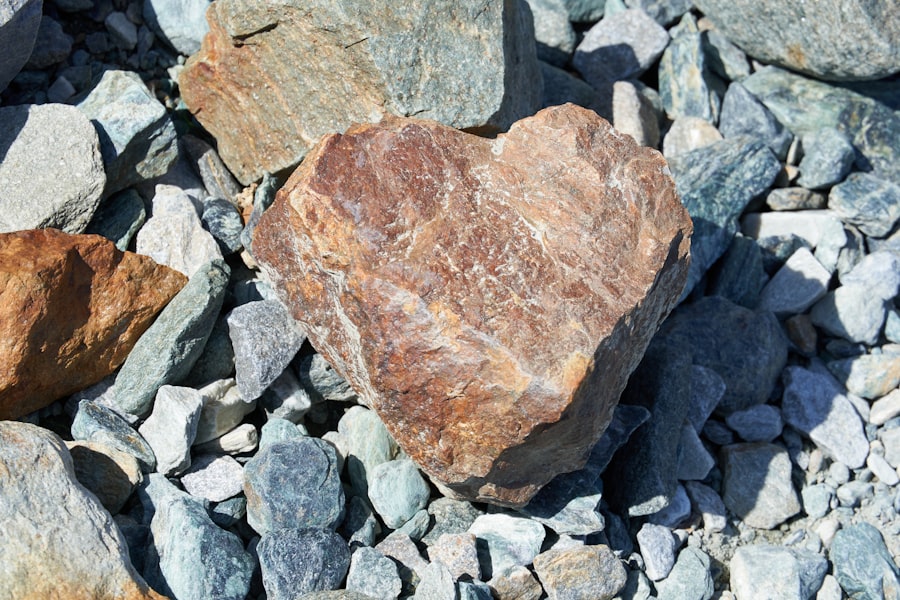
Crustal magnetization plays a pivotal role in deciphering Earth’s geological history. The magnetic signatures preserved in rocks provide critical evidence for understanding tectonic movements and continental configurations throughout time. For instance, studies of ancient oceanic crust have revealed patterns of seafloor spreading that align with periods of geomagnetic reversals.
These findings not only confirm theories of plate tectonics but also illustrate how the Earth’s magnetic field has influenced geological processes. Moreover, crustal magnetization aids in reconstructing past climates and environments. By examining sedimentary rocks that contain magnetic minerals, scientists can infer changes in sedimentation patterns and climatic conditions over time.
This information is essential for understanding how Earth’s climate has evolved and how it has been influenced by geological events such as volcanic eruptions or glaciation periods. Thus, crustal magnetization serves as a key tool for piecing together the complex puzzle of Earth’s history.
Methods of Paleomagnetic Dating
Paleomagnetic dating involves several methods to determine the age of rocks based on their magnetic properties. One common technique is known as “magnetostratigraphy,” which correlates rock layers with known geomagnetic polarity timescales. By identifying the magnetic orientation of rock samples and comparing them to established records of geomagnetic reversals, geologists can date sedimentary sequences and volcanic deposits with greater accuracy.
Another method employed in paleomagnetic dating is “rock magnetism,” which involves measuring the magnetic susceptibility and remanent magnetization of rock samples. This approach allows scientists to assess how well a rock has preserved its magnetic record and to identify any alterations that may have occurred since its formation. By combining these techniques with radiometric dating methods, researchers can create a more comprehensive timeline of geological events, enhancing their understanding of Earth’s history.
Applications of Paleomagnetic Dating
| Metric | Description | Typical Values | Units | Relevance to Crustal Magnetization |
|---|---|---|---|---|
| Magnetic Intensity | Strength of the remanent magnetization in crustal rocks | 10 – 100 | Amperes per meter (A/m) | Indicates the degree of magnetization retained by rocks |
| Magnetic Inclination | Angle between the magnetic vector and the horizontal plane | -90 to +90 | Degrees | Used to determine paleolatitude of rock formation |
| Magnetic Declination | Angle between geographic north and magnetic north | 0 to 360 | Degrees | Helps in reconstructing past geomagnetic field directions |
| Remanent Magnetization Age | Age determined from paleomagnetic data | 0.1 to 2000 | Million years (Ma) | Used for dating geological formations and tectonic events |
| Coercivity | Resistance of magnetic minerals to demagnetization | 10 – 1000 | Millitesla (mT) | Indicates stability of magnetic signal over geological time |
| Magnetic Susceptibility | Degree to which a rock can be magnetized | 10^-5 to 10^-2 | SI units (dimensionless) | Used to identify magnetic mineral content and alteration |
The applications of paleomagnetic dating are vast and varied, extending across multiple fields within geology and beyond. One significant application is in the study of plate tectonics, where paleomagnetic data helps reconstruct past continental positions and movements. By analyzing the magnetic signatures in oceanic crust, scientists can trace the history of seafloor spreading and continental drift, providing insights into how current landmasses were formed.
Additionally, paleomagnetic dating is instrumental in understanding volcanic activity and its relationship with tectonic processes. By dating volcanic rocks using their magnetic properties, researchers can establish timelines for eruptions and correlate them with tectonic events such as subduction or rifting. This information is crucial for assessing volcanic hazards and understanding how volcanic activity has influenced climate change throughout history.
Advantages and Limitations of Paleomagnetic Dating

Paleomagnetic dating offers several advantages that make it a valuable tool for geologists. One significant benefit is its ability to provide relative ages for rock formations without relying solely on radiometric dating methods, which can be limited by factors such as sample availability or contamination. Paleomagnetism can also be applied to a wide range of rock types, including igneous, sedimentary, and metamorphic rocks, making it a versatile technique for dating geological events.
However, paleomagnetic dating is not without its limitations. One major challenge is that not all rocks retain their original magnetic signatures due to processes such as alteration or metamorphism. Additionally, the accuracy of paleomagnetic dating can be affected by local anomalies in the Earth’s magnetic field or by variations in rock composition.
These factors necessitate careful sampling and analysis to ensure reliable results.
Case Studies: Using Paleomagnetic Dating to Uncover Earth’s History
Numerous case studies illustrate the effectiveness of paleomagnetic dating in uncovering Earth’s history. One notable example is the study of the Atlantic Ocean’s floor, where researchers have used paleomagnetic data to map out patterns of seafloor spreading over millions of years. By analyzing rock samples from various locations along mid-ocean ridges, scientists have been able to reconstruct the history of continental drift and confirm theories regarding plate tectonics.
Another significant case study involves volcanic activity in regions such as Iceland, where paleomagnetic dating has provided insights into eruption timelines and their relationship with tectonic movements. By examining lava flows and tephra deposits, researchers have established correlations between volcanic eruptions and shifts in tectonic plates, enhancing understanding of how these processes interact over time.
The Significance of Crustal Magnetization in Geology
The significance of crustal magnetization extends far beyond its role in paleomagnetism; it serves as a fundamental aspect of geological research that informs various disciplines within Earth sciences. Crustal magnetization provides insights into mineral formation processes, helping geologists understand how different minerals crystallize under varying conditions. This knowledge is essential for resource exploration, particularly in identifying deposits of economically valuable minerals such as iron ore or copper.
Furthermore, crustal magnetization contributes to our understanding of geodynamic processes such as mantle convection and lithospheric deformation. By studying how magnetic properties change across different geological settings, scientists can gain insights into the forces driving plate tectonics and other large-scale geological phenomena. Thus, crustal magnetization is integral to advancing knowledge across multiple facets of geology.
The Future of Paleomagnetic Dating
As technology continues to advance, the future of paleomagnetic dating looks promising. Innovations in analytical techniques are enhancing the precision with which scientists can measure magnetic properties in rock samples. For instance, developments in superconducting quantum interference devices (SQUIDs) allow for highly sensitive measurements of remanent magnetization, enabling researchers to detect even subtle changes in magnetic orientation.
Moreover, interdisciplinary approaches that combine paleomagnetism with other scientific fields—such as climate science or geochemistry—are likely to yield new insights into Earth’s history. As researchers continue to refine their methods and expand their applications, paleomagnetic dating will undoubtedly play an increasingly important role in unraveling the complexities of our planet’s past.
Challenges and Controversies in Paleomagnetic Dating
Despite its many advantages, paleomagnetic dating faces several challenges and controversies that warrant attention within the scientific community. One significant issue is the debate surrounding the reliability of certain paleomagnetic records due to potential biases introduced by local geological conditions or human error during sampling. These concerns highlight the need for rigorous methodologies and cross-validation with other dating techniques to ensure accurate interpretations.
Additionally, controversies arise regarding interpretations of paleomagnetic data related to continental drift and plate tectonics. Discrepancies between paleomagnetic evidence and other geological data can lead to differing conclusions about past continental configurations or tectonic events. As researchers continue to explore these complexities, ongoing dialogue within the scientific community will be essential for refining theories and enhancing understanding.
The Impact of Crustal Magnetization Paleomagnetic Dating on our Understanding of Earth’s History
In conclusion, crustal magnetization and paleomagnetic dating are indispensable tools for unraveling Earth’s complex history. Through meticulous analysis of magnetic properties preserved in rocks, scientists can reconstruct past geological events, understand tectonic movements, and gain insights into climatic changes over millions of years.
As technology continues to evolve and interdisciplinary approaches gain traction, the future holds great promise for paleomagnetic research. While challenges remain regarding data interpretation and methodological rigor, ongoing advancements will undoubtedly enhance our understanding of Earth’s dynamic processes. Ultimately, crustal magnetization serves as a vital key to unlocking the mysteries of our planet’s past, shaping not only scientific inquiry but also informing our perspective on future geological developments.
Crustal magnetization paleomagnetic dating is a fascinating field that helps scientists understand the historical changes in Earth’s magnetic field and the geological processes that have shaped our planet. For a deeper dive into related topics, you can explore an insightful article on this subject at Freaky Science, which discusses various methods and applications of paleomagnetism in geological studies.
WATCH THIS! 💡 NASA KNEW: The Magnetic Field Secret They Didn’t Tell You
FAQs
What is crustal magnetization?
Crustal magnetization refers to the natural magnetic properties acquired by rocks in the Earth’s crust. These magnetic signatures are primarily caused by the alignment of magnetic minerals, such as magnetite, within the rock as it forms or undergoes thermal changes.
How does paleomagnetic dating work?
Paleomagnetic dating involves analyzing the magnetic orientation recorded in rocks to determine their age. As volcanic or sedimentary rocks form, magnetic minerals align with the Earth’s magnetic field at that time. By comparing these recorded magnetic directions with known changes in Earth’s magnetic field over geological time, scientists can estimate the age of the rock.
What is the significance of crustal magnetization in paleomagnetic dating?
Crustal magnetization provides the primary data for paleomagnetic dating. The magnetic record preserved in crustal rocks allows researchers to reconstruct past positions of the magnetic poles and the movement of tectonic plates, as well as to date geological events.
What types of rocks are commonly used in crustal magnetization studies?
Igneous rocks, especially volcanic rocks, are commonly used because they acquire a strong and stable magnetic signature when they cool. Sedimentary rocks can also be used, but their magnetic signals may be more complex due to post-depositional changes.
What are the limitations of paleomagnetic dating?
Limitations include potential alteration of magnetic minerals over time, remagnetization events, and the need for well-established reference curves of Earth’s magnetic field changes. Additionally, paleomagnetic dating often provides relative ages rather than precise absolute dates.
How does crustal magnetization help in understanding plate tectonics?
By studying the magnetic signatures in crustal rocks, scientists can track the historical movement of tectonic plates. The recorded magnetic directions indicate past latitudes and orientations, helping to reconstruct continental drift and plate interactions over millions of years.
Can crustal magnetization be used to date archaeological artifacts?
While crustal magnetization is primarily used for geological dating, archaeomagnetic dating—a related technique—can date fired archaeological materials by analyzing their magnetic properties. However, crustal magnetization itself is not typically applied directly to artifacts.
What equipment is used to measure crustal magnetization?
Specialized magnetometers, such as spinner magnetometers or superconducting quantum interference devices (SQUIDs), are used to measure the magnetic properties of rock samples in laboratory settings.
Is crustal magnetization uniform across the Earth’s crust?
No, crustal magnetization varies depending on rock type, age, thermal history, and geological processes. Different regions may exhibit distinct magnetic signatures reflecting their unique geological histories.
How does the Earth’s magnetic field influence crustal magnetization?
The Earth’s magnetic field direction and intensity at the time of rock formation determine the orientation and strength of the magnetic minerals’ alignment, which is then recorded as crustal magnetization. Changes in the Earth’s magnetic field over time are thus captured in the magnetic record of rocks.