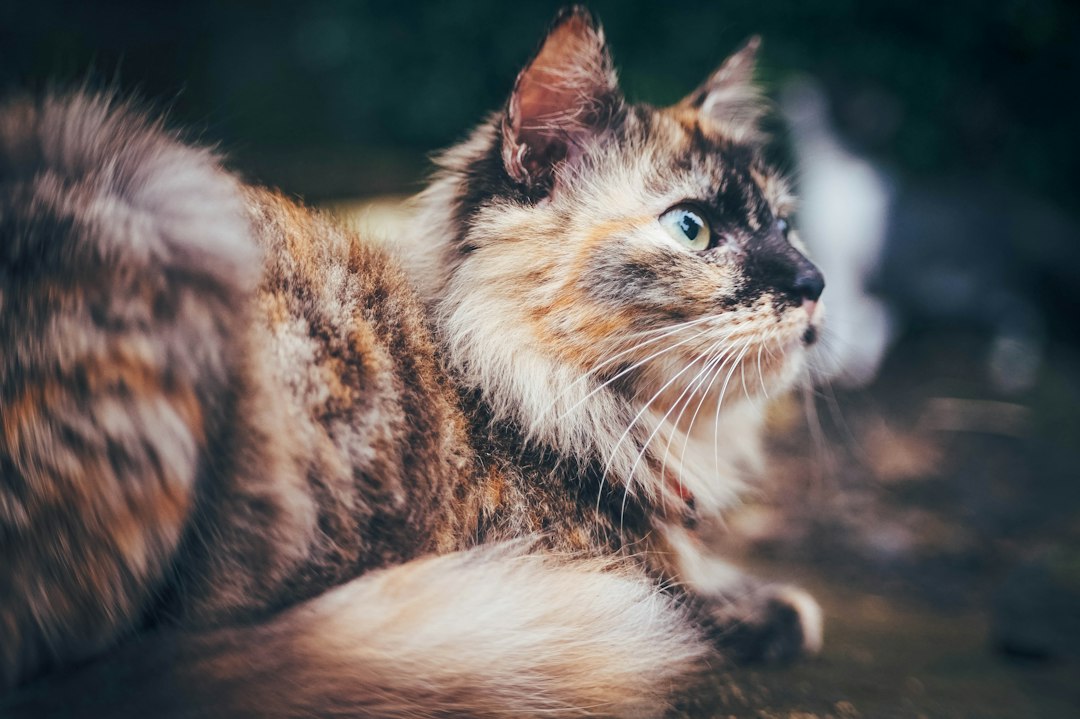
The vibrant tapestry of feline coat colors is a source of endless fascination for cat lovers. From the deepest blacks and purest whites to the fiery oranges and the subtle calico patterns, each hue and combination tells a unique story. However, beneath the aesthetic appeal of these diverse pelts lies a complex genetic landscape that, in some instances, can be linked to specific health considerations. Understanding these connections is not about diminishing the beauty of our feline companions but about empowering owners with knowledge to provide the best possible care. This exploration delves into the intricate world of cat coat genetics and the potential health implications that can arise from certain color expressions, offering insights into common predispositions and the importance of attentive veterinary care.
The Genetic Symphony of Feline Pigmentation
The intricate patterns and hues adorning a cat’s fur are the result of a sophisticated interplay of genes. These genes dictate the type, amount, and distribution of pigments within the hair shafts, creating the vast spectrum of colors and markings we observe. Understanding the fundamental genetic mechanisms is crucial to appreciating how certain colorations can become associated with particular health concerns. The primary pigments involved are melanin, which comes in two forms: eumelanin (black and brown) and phaeomelanin (red and yellow). Genes control the production of these pigments, their conversion, and their deposition in the fur.
The Role of the Agouti Gene
The agouti gene (A) plays a pivotal role in determining whether a cat’s fur will be solid or have tabby markings. Cats with the dominant “A” allele express the agouti gene, resulting in banded hairs where each strand contains alternating segments of eumelanin and phaeomelanin. This banding creates the characteristic tabby pattern. Conversely, cats with two copies of the recessive “a” allele (aa) do not express the agouti gene, leading to solid-colored fur where the pigment is evenly distributed along the hair shaft. The absence of the agouti gene in solid-colored cats can, in some instances, be a precursor to other genetic expressions that impact health.
The Extension Gene and Pigment Control
Another crucial gene is the Extension gene (E). This gene influences the production of eumelanin. The dominant “E” allele allows for the full expression of eumelanin, leading to black or brown colors. However, a recessive mutation in the Extension gene, known as the “e” allele, restricts the production of eumelanin, causing it to be replaced by phaeomelanin. This is how we get red and cream-colored cats. If a cat has the genotype ee, it will be red or cream, regardless of other pigment genes. This gene’s influence is significant because it can mask other color genes, making it appear as though a cat is a different color than its underlying genetics would suggest, a phenomenon known as epistasis.
The Dilution Gene and Pigment Intensity
The Dilution gene (D) modifies the intensity of the base pigment. The dominant “D” allele allows for full pigment expression. However, the recessive “d” allele causes a dilution of the pigment. Black becomes gray (blue), brown becomes lilac or chocolate, and red becomes cream or apricot. This gene acts by affecting the clumping of pigment granules within the hair shaft. When pigment granules clump together, they appear darker; when they are dispersed due to the action of the dilute gene, the color appears lighter. The diluted versions of colors, while aesthetically pleasing, can also be linked to certain health considerations, particularly in breeds where this dilution is prevalent.
Recent studies have suggested that a cat’s coat color may be linked to certain health risks, prompting pet owners to pay closer attention to their feline friends’ appearances. For a deeper understanding of this intriguing connection, you can explore a related article that delves into various factors influencing cat health and behavior. To read more about this topic, visit this article.
Orange and Tortoiseshell Cats: A Tale of Sex-Linked Inheritance
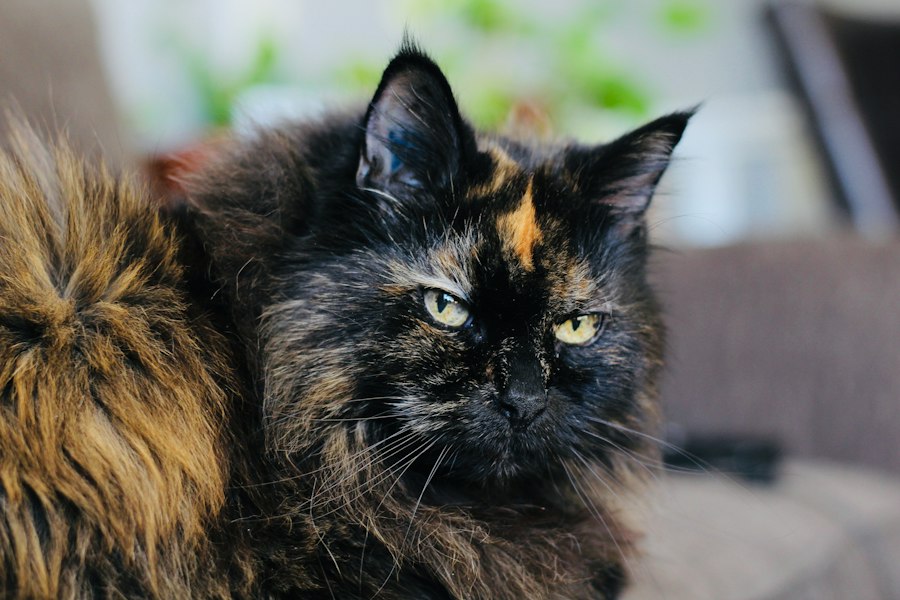
Perhaps one of the most well-known correlations between coat color and biology in cats is the connection between orange and tortoiseshell patterns and the feline sex chromosomes. This phenomenon is a direct result of how these colors are genetically determined, offering a clear example of how coat color can be a visible indicator of underlying genetic mechanisms that have broader implications.
The Orange Gene and X Chromosome Linkage
The gene responsible for orange coloration is located on the X chromosome. Female cats have two X chromosomes (XX), while male cats have one X and one Y chromosome (XY). To be orange, a cat must inherit at least one X chromosome carrying the orange allele (O). Since males only have one X chromosome, if they inherit the O allele, they will be orange. However, for a female to be orange, she must inherit the O allele on both of her X chromosomes (OO). If a female inherits one O allele and one non-orange allele (o), she will display a mosaic of colors.
The Mosaicism of Tortoiseshell and Calico Cats
This X-chromosome linkage explains why tortoiseshell (patches of red/orange and black/brown) and calico (patches of red/orange, black/brown, and white) cats are almost exclusively female. In a female cat that is heterozygous for the orange gene (Oo), one of her X chromosomes is randomly inactivated in each cell during embryonic development. This inactivation is a natural process that ensures females don’t have a double dose of X-linked genes. If the X chromosome carrying the O allele is active in a particular cell, that cell will produce orange pigment. If the X chromosome carrying the o allele is active, it will produce non-orange pigment (e.g., black or brown). This random inactivation leads to the patchwork of colors seen in tortoiseshell and calico cats.
White Spotting Gene Interactions
While the sex-linked orange gene is the primary driver of tortoiseshell and calico patterns, the presence of white spotting also plays a significant role. The gene responsible for white spotting is independent of the sex chromosomes and dictates where white fur will appear. When combined with the tortoiseshell or calico coloration, the white spotting gene creates the distinct patches of color on a white background that characterize calico cats. The degree of white spotting can vary greatly, from a few white paws to a predominantly white cat with patches of color.
White Coat Color and Associated Health Risks

While a pristine white coat is often admired for its elegance, it is not merely a pigment choice. White coloration in cats, particularly when it is extensive, can be linked to specific health concerns, primarily related to hearing and vision. Understanding these predispositions allows for proactive management and early detection of potential issues.
The Dominant White Gene and Deafness
The gene responsible for dominant white coloration (W) masks all other color genes. If a cat inherits even one copy of the dominant white allele, it will be white. This gene is known to be epistatic, meaning it overrides the expression of other genes. A significant concern associated with the dominant white gene is a strong correlation with congenital deafness. This deafness is believed to be linked to the same genetic pathway that leads to white fur. The absence of pigment in the inner ear, specifically the cochlea, is thought to disrupt normal auditory function.
Piebaldism and White Spotting Variations
Beyond the dominant white gene, other genes also contribute to white fur. The piebald gene, which is responsible for white spotting, can lead to varying degrees of white in a cat’s coat. While extensive white spotting, especially when coupled with the dominant white gene, is more strongly linked to deafness, even cats with smaller patches of white might occasionally have hearing impairments. The development of the inner ear structures is closely tied to melanocyte migration and differentiation, and disruptions in this process can affect both pigment production and auditory function.
Ocular Health and White Fur
In addition to deafness, white cats, particularly those with blue eyes, have a higher predisposition to certain ocular health problems. The absence of pigment in the iris can make the eye more susceptible to damage from UV radiation. Furthermore, some studies suggest a correlation between white fur and a higher incidence of strabismus (crossed eyes) and nystagmus (involuntary eye movements). While not all white cats will experience these issues, owners of white felines should be particularly vigilant about their cat’s vision and schedule regular veterinary check-ups to monitor for any abnormalities.
Blue-Eyed and White-Furred Cats: A Combined Risk
The combination of white fur and blue eyes in cats amplifies certain health risks, particularly concerning vision and hearing. This synergy of traits, while visually striking, highlights the interconnectedness of genetic expressions and their potential impact on a feline’s well-being.
The Link Between Blue Eyes and Deafness
The gene for blue eyes in cats is often linked to genes that cause white fur. In cats with white fur, blue eyes can be caused by the absence of pigment in the iris due to the dominant white gene or the piebald gene. Crucially, this lack of pigment in the iris is also associated with a lack of pigment in the inner ear. As mentioned previously, the absence of melanocytes in the cochlea is a primary cause of congenital deafness in white cats. Therefore, white cats with blue eyes have a significantly higher chance of being deaf. It is important to note that not all blue-eyed cats are deaf, and not all white cats are deaf, but the presence of both traits together increases the likelihood.
Ocular Pigmentation and Light Sensitivity
The lack of pigment in the iris of blue-eyed cats means that the eye is less protected from the harmful effects of ultraviolet (UV) light. This can lead to increased light sensitivity and a greater risk of developing conditions like uveitis (inflammation of the uvea) and, in extreme cases, certain types of ocular tumors. Owners of blue-eyed white cats should be mindful of prolonged exposure to bright sunlight and consider providing shaded areas and potentially UV-filtering eyewear for their cats if advised by a veterinarian.
Breeding Considerations for White and Blue-Eyed Cats
Responsible breeders often screen their cats for deafness, especially when breeding white cats or those with dominant white genes. Genetic testing is becoming increasingly available to identify carriers of genes associated with deafness. While some owners may choose to embrace the unique characteristics of a deaf or visually impaired cat, it is crucial for potential adopters to understand the specific needs of such animals, including ensuring a safe environment and using alternative communication methods.
Recent studies have suggested that a cat’s coat color may be linked to certain health risks, prompting pet owners to pay closer attention to their feline companions. For those interested in exploring this topic further, an insightful article on the relationship between genetics and health in pets can be found at Freaky Science. This resource delves into how various traits, including coat color, can influence a cat’s overall well-being and predisposition to certain conditions. Understanding these connections can help owners make informed decisions about their pets’ health care.
Understanding and Managing Health Risks in Pigmentation Variants
| Coat Color | Associated Health Risks | Scientific Evidence | Notes |
|---|---|---|---|
| White | Deafness (especially in blue-eyed white cats) | Strong evidence; linked to genetic factors affecting inner ear development | Common in white cats with blue eyes; not all white cats are affected |
| Orange (Ginger) | Higher risk of certain cancers (e.g., squamous cell carcinoma) | Moderate evidence; some studies suggest increased risk due to pigmentation genes | More common in male cats due to X-linked gene |
| Calico/Tortoiseshell | Increased likelihood of being sterile males (XXY syndrome) | Strong genetic basis; rare male calicos usually sterile | Mostly female cats; male calicos are genetic anomalies |
| Black | No specific health risks linked to coat color | Limited evidence; generally considered healthy | May have better protection against UV damage |
| Seal Point (Siamese) | Possible increased risk of cross-eye and respiratory issues | Some evidence; linked to breed rather than color alone | Color points linked to temperature-sensitive enzyme |
Recognizing the potential health implications associated with certain coat colors is not about creating alarm but about fostering informed pet ownership. Proactive veterinary care, environmental awareness, and attentive observation are key to ensuring a long and healthy life for all feline companions, regardless of their fur’s hue.
The Importance of Veterinary Check-ups
Regular veterinary check-ups are paramount for all cats, but they are particularly important for those with coat colorations linked to known health risks. Veterinarians can perform auditory and visual assessments, identify early signs of potential problems, and recommend appropriate management strategies. Early detection of conditions like deafness or ocular issues can significantly improve a cat’s quality of life.
Environmental Modifications for Special Needs Cats
For cats with hearing impairments, environmental modifications can make a significant difference. This includes ensuring they cannot access dangerous areas (like roads), using visual cues for training and communication, and being mindful of their surroundings to prevent startling them. For cats with vision issues, maintaining a consistent environment, avoiding clutter, and using scent markers can help them navigate their home safely.
Genetic Testing and Responsible Breeding
For those involved in cat breeding, understanding the genetic basis of coat colors and their associated health risks is crucial. Genetic testing can help identify carriers of genes that predispose cats to certain conditions, allowing breeders to make informed decisions about breeding pairs. Responsible breeding practices aim to minimize the incidence of inherited health problems, ensuring the well-being of future generations of cats. While some may argue for preserving certain color patterns, the health and welfare of the animal should always be the primary consideration. Ultimately, appreciating the diversity of feline coat colors also means acknowledging the genetic intricacies that can shape their health, empowering owners to provide the best possible care for their beloved companions.

Which Cat Color Lives Longest? The Research Has a Twist
FAQs
What is the significance of a cat’s coat color in relation to their health?
The color of a cat’s coat can sometimes be an indicator of potential health risks or genetic predispositions.
Are certain coat colors more prone to specific health issues?
Yes, certain coat colors in cats have been linked to an increased risk of certain health conditions, such as deafness, skin cancer, and heart disease.
How can a cat’s coat color reveal hidden health risks?
Researchers have found correlations between specific coat colors and genetic mutations that can lead to health issues, making it possible to identify potential risks based on a cat’s color.
Can coat color affect a cat’s behavior or temperament?
While coat color is not a direct determinant of a cat’s behavior or temperament, certain genetic factors associated with coat color may influence personality traits or health conditions.
Should cat owners be concerned about their cat’s coat color in relation to health risks?
It is important for cat owners to be aware of the potential health risks associated with certain coat colors, but it is always best to consult with a veterinarian for a comprehensive assessment of their cat’s health.