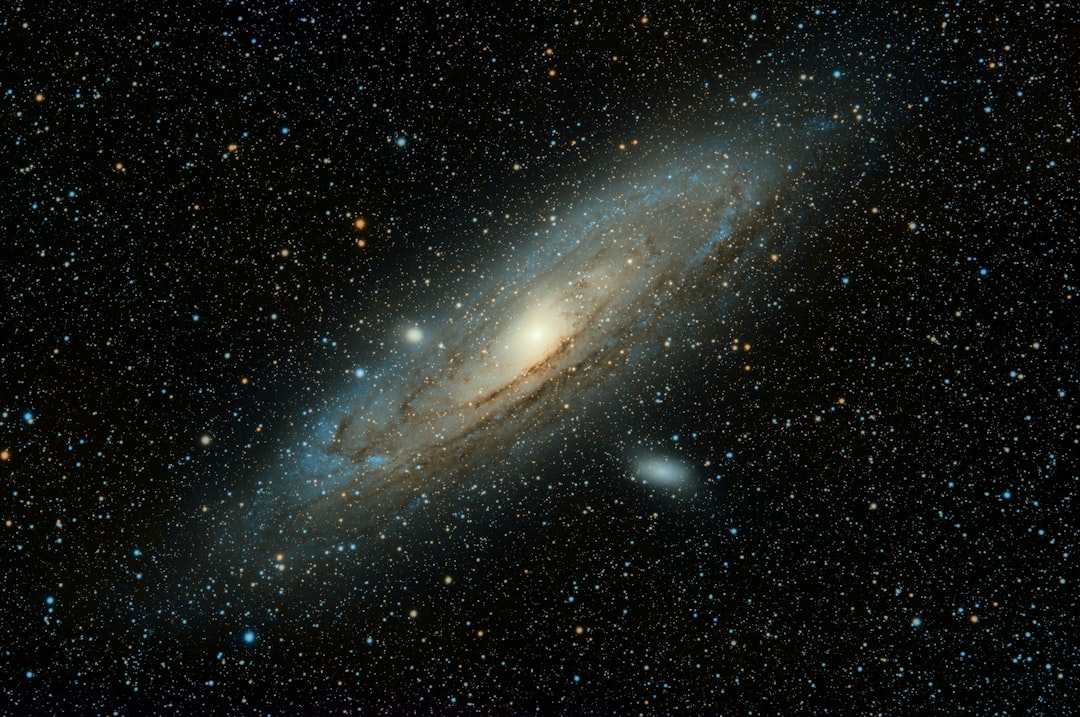
The cosmos, in its unfathomable vastness, harbors phenomena that defy human comprehension and challenge our very understanding of reality. From celestial bodies painted with colors not found on Earth to regions where the laws of physics seem to bend and twist, the universe is a canvas of the bizarre. Scientists, armed with ever-more-powerful telescopes and sophisticated instruments, continue to peel back the layers of this cosmic mystery, revealing places that are not just unusual, but downright unbelievable. These are the weirdest corners of the universe, where the ordinary ceases to exist and the extraordinary reigns supreme.
The Whispering Void: Echoes of the Big Bang and Beyond
The universe, as we know it, began with an event of unimaginable energy – the Big Bang. While the initial moments are shrouded in mystery, the lingering imprints of this cosmic genesis are still detectable, manifesting in some of the most peculiar regions of space. These areas, often referred to as voids, are not truly empty but are characterized by an extreme scarcity of matter, where galaxies and stars are few and far between, creating vast, silent expanses.
Cosmic Web and the Great Walls
The distribution of matter in the universe is not uniform. Instead, it forms a colossal, intricate structure known as the cosmic web. This web consists of filaments of galaxies and dark matter, which converge at dense knots, and vast, largely empty regions called voids. Some of these voids are so immense that they dwarf galaxies and galaxy clusters. The Boötes Void, for instance, is a colossal spherical region approximately 330 million light-years in diameter, containing remarkably few galaxies. Its sheer emptiness is a testament to the uneven distribution of matter after the Big Bang. Alongside these voids are the “Great Walls,” colossal structures of galaxies stretching for hundreds of millions of light-years. The Sloan Great Wall, one of the largest known structures in the universe, is a staggering 1.37 billion light-years long, a cosmic barricade against the surrounding emptiness. The formation and persistence of these structures, the immense voids and the colossal walls, are a constant source of wonder and research, hinting at the intricate interplay of gravity and the initial conditions of the universe.
The Cold Spot: A Cosmic Anomaly
Perhaps one of the most perplexing features within these cosmic voids is the Cosmic Microwave Background (CMB) Cold Spot. This region, detected by the WMAP and Planck satellites, is a patch of the sky where the CMB radiation is significantly colder than the surrounding areas. The CMB is the afterglow of the Big Bang, a uniform faint radiation permeating the entire universe. A cold spot suggests a deficit in energy density, which, according to our current understanding of cosmology, should not exist on such a large scale. Several theories attempt to explain this anomaly. One prominent hypothesis suggests that the Cold Spot is a result of a supervoid, a region of space with an unusually low density of matter. As light from the CMB travels through this void, it loses energy due to gravitational blueshift, appearing colder to us. Another, more speculative, theory proposes that it could be evidence of a “shadow universe” or a collision with another universe that predated our own. Regardless of its true origin, the CMB Cold Spot remains a tantalizing enigma, a stark reminder of how much we still have to learn about the early universe and its fundamental properties.
If you’re fascinated by the weirdest places in the universe, you might want to check out a related article that delves deeper into some of the most bizarre and intriguing locations beyond our planet. This article explores phenomena such as the coldest and hottest spots in the cosmos, as well as areas with strange gravitational effects. To learn more about these extraordinary places, visit this article for an engaging read that will expand your understanding of the universe’s oddities.
The Fiery Depths: Worlds of Extreme Heat and Light
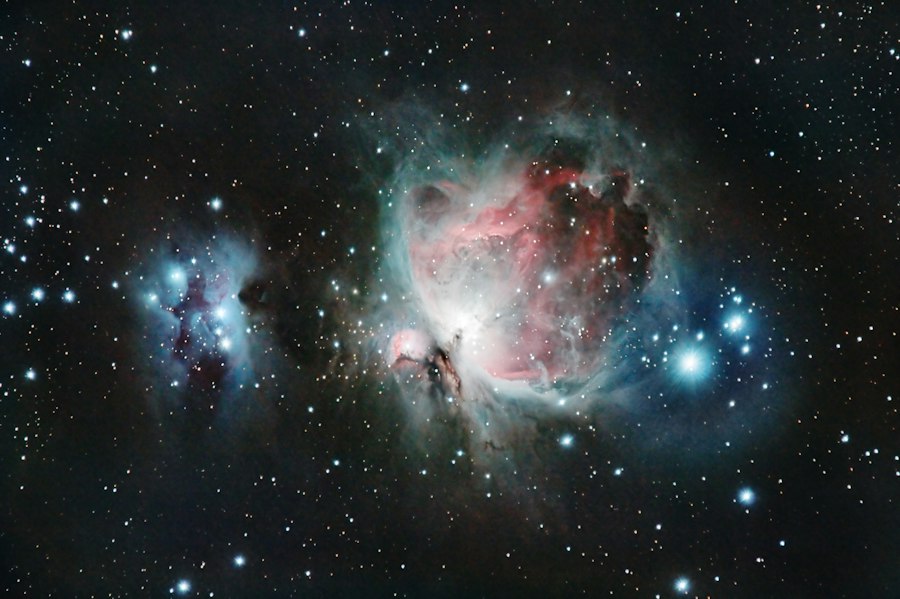
While vast voids represent the absence of matter, other regions of the universe are characterized by an overwhelming presence of energy, particularly heat and light. These are the realms of intense stellar activity, supernovas, and the incandescent hearts of galaxies, where temperatures soar to unimaginable levels and the very fabric of space seems to warp under the strain.
Neutron Stars: Stellar Remnants of Incredible Density
When a massive star exhausts its nuclear fuel, it collapses under its own gravity, leading to a spectacular supernova explosion. The remnant of this stellar death can be a neutron star, an object so dense that a teaspoonful of its material would weigh billions of tons. Neutron stars are composed almost entirely of neutrons, packed together in a state of matter that is not found anywhere else in the universe. They are incredibly hot, with surface temperatures reaching millions of degrees Celsius, and they often spin at astonishing speeds, sometimes hundreds of times per second. Some neutron stars emit beams of radiation, which, as they sweep across Earth, are observed as pulsars. These celestial lighthouses, with their precise and rapid pulses, are among the most accurate natural clocks known, yet their extreme conditions and compact nature make them exceptionally alien worlds.
Magnetars: Cosmic Powerhouses of Magnetic Fields
Among the most extreme examples of neutron stars are magnetars. These celestial objects possess magnetic fields so powerful that they are billions of times stronger than the magnetic field of Earth. To put this into perspective, a magnetar’s magnetic field is strong enough to strip the magnetic coating off all the credit cards on Earth from a distance of several thousand kilometers. These immense magnetic fields can cause spectacular outbursts of high-energy radiation, including X-rays and gamma rays, known as starquakes. These energetic events can release more energy in a fraction of a second than the Sun does in a year. The extreme environment of a magnetar, with its crushing density and gargantuan magnetic forces, pushes the boundaries of our understanding of physics and matter itself. Their very existence suggests that the universe can create conditions far more intense than anything we can replicate or even fully imagine.
The Ethereal Grasp: Worlds of Extreme Cold and Darkness
As we journey across the cosmos, we encounter regions that stand in stark contrast to the fiery infernos, places where the cold is absolute and the darkness is profound. These are the frigid reaches of space, where temperatures plummet to near absolute zero, and the very absence of light creates an unsettling stillness.
Rogue Planets: Wanderers in the Galactic Expanse
Not all planets orbit stars. Scientists have discovered a growing number of “rogue planets” or “interstellar planets” that drift through the vast emptiness of interstellar space, unbound to any star system. These solitary wanderers are born from the same processes as planets within solar systems, but are either ejected from their parent systems due to gravitational disturbances or perhaps even form in isolation. Without the warmth of a star, their surfaces are likely frozen solid, shrouded in perpetual darkness. Their discovery challenges our traditional view of planetary systems and suggests that the universe may be populated by billions, if not trillions, of these nomadic worlds. Studying rogue planets is incredibly difficult due to their faintness and lack of a central light source, but their presence hints at a far more dynamic and less ordered distribution of planetary bodies than previously thought.
Brown Dwarfs: The Failed Stars
Brown dwarfs are celestial objects that bridge the gap between planets and stars. They are more massive than planets but not massive enough to sustain the nuclear fusion of hydrogen in their cores, which is the defining characteristic of a star. Instead, they generate some energy through the fusion of deuterium, a heavier isotope of hydrogen. This process is far less efficient and generates much less heat than stellar fusion, meaning brown dwarfs are cooler than stars and emit most of their energy in the infrared spectrum. They are often referred to as “failed stars.” Their surfaces can be incredibly cold, with temperatures comparable to a warm summer day on Earth, or even colder. The discovery of brown dwarfs has helped astronomers refine their understanding of star formation and the diversity of celestial objects that populate our galaxy. They exist in a unique evolutionary state, constantly cooling and fading over time, making them fascinating subjects of study for understanding the processes that govern the birth and life of celestial bodies.
The Gravitational Abyss: Regions of Extreme Warping and Distortion
The universe is governed by gravity, a force that shapes the cosmos on every scale. In certain regions, however, the gravitational influence is so immense that it fundamentally alters the fabric of spacetime, creating phenomena that defy our everyday experience and push the limits of theoretical physics.
Black Holes: The Ultimate Gravitational Prisons
Black holes are perhaps the most enigmatic and awe-inspiring objects in the universe. They are regions of spacetime where gravity is so strong that nothing, not even light, can escape. This phenomenon occurs when a massive star collapses under its own gravity, compressing an enormous amount of mass into an infinitesimally small point called a singularity. Surrounding the singularity is an event horizon, a boundary beyond which escape is impossible. Anything that crosses the event horizon is irrevocably pulled towards the singularity. Stellar-mass black holes are formed from the collapse of individual stars, while supermassive black holes, millions or even billions of times the mass of our Sun, are found at the centers of most galaxies, including our own Milky Way. The presence of black holes, especially their supermassive counterparts, influences the dynamics of entire galaxies, and their study continues to be a frontier of astrophysics, challenging our understanding of gravity, spacetime, and the very nature of reality.
Neutron Star Mergers: Cosmic Cataclysms and Gravitational Waves
When two neutron stars, those incredibly dense stellar remnants, orbit each other and spiral inwards, they can eventually merge. These cosmic cataclysms are among the most energetic events in the universe, releasing vast amounts of energy in the form of gravitational waves and electromagnetic radiation. The detection of gravitational waves from the merger of two neutron stars by the LIGO and Virgo observatories in 2017 marked a revolutionary moment in astronomy, allowing scientists to directly observe the ripples in spacetime caused by these incredible events. These mergers are also believed to be the primary sites for the creation of heavy elements, such as gold and platinum. The violent dance and ultimate collision of these ultra-dense objects warp spacetime to an extreme degree, generating powerful gravitational waves that carry information about the extreme physics at play and the very structure of the universe.
The universe is full of strange and fascinating locations that challenge our understanding of reality. For those intrigued by the oddities of space, a great read is available in an article that explores some of the weirdest places in the universe. You can find it here: weirdest places in the universe. From bizarre celestial formations to mysterious cosmic phenomena, this article delves into the mysteries that lie beyond our planet, sparking curiosity about what else might be out there waiting to be discovered.
The Quantum Realm’s Embrace: Where Physics Gets Strange
| Place | Location | Weirdness Factor | Notable Features | Distance from Earth |
|---|---|---|---|---|
| Neutron Star | Various | 10/10 | Extremely dense, strong magnetic fields, spins rapidly | Up to thousands of light years |
| Black Hole | Various | 10/10 | Event horizon, singularity, warps spacetime | Up to billions of light years |
| Rogue Planet | Interstellar space | 8/10 | Not orbiting any star, drifting through space | Varies |
| Quasar | Distant galaxies | 9/10 | Extremely luminous, powered by supermassive black holes | Billions of light years |
| Dark Matter Halo | Galaxies | 9/10 | Invisible mass, affects galaxy rotation | Varies |
| Magnetar | Various | 10/10 | Strongest magnetic fields known, emits X-rays and gamma rays | Thousands of light years |
| Cosmic Void | Between galaxy clusters | 7/10 | Large empty spaces with very few galaxies | Millions of light years across |
As we delve deeper into the universe’s most unusual places, we find phenomena that hint at the intersection of the cosmic and the quantum. Here, the seemingly predictable laws of classical physics begin to break down, replaced by the probabilistic and often counterintuitive rules of quantum mechanics, leading to some of the most mind-bending concepts in cosmology.
Quasars: Lighthouses of the Early Universe
Quasars, short for quasi-stellar radio sources, are the intensely luminous and distant nuclei of active galaxies. They are powered by supermassive black holes at their centers, which are actively accreting vast amounts of matter. As matter spirals into the black hole, it forms an accretion disk, heating up to incredibly high temperatures and emitting enormous amounts of radiation across the electromagnetic spectrum, from radio waves to gamma rays. Quasars are so bright that they can outshine their entire host galaxies. Because they are so distant, the light we see from them left billions of years ago, making them invaluable probes of the early universe, allowing astronomers to study the conditions and evolution of galaxies when the cosmos was much younger. Their extreme luminosity and distance place them at the far reaches of our observable universe, representing some of the most energetic and distant phenomena we can detect.
The Fabric of Spacetime: Hints of Quantum Gravity
While not a specific “place” in the traditional sense, the very fabric of spacetime itself, when subjected to extreme conditions like those found near black holes or during the Big Bang, may exhibit quantum properties. Theories of quantum gravity, such as string theory and loop quantum gravity, attempt to unify quantum mechanics and general relativity, suggesting that at the smallest scales, spacetime might be granular or exhibit bizarre quantum fluctuations. While direct observational evidence for these quantum effects in spacetime is elusive, the theoretical frameworks suggest that the most extreme environments in the universe might be where the macroscopic world of gravity truly interfaces with the microscopic world of quantum mechanics. This frontier of physics, where gravity behaves in ways we can only hypothesize, represents perhaps the most profound and perplexing aspect of the universe’s strangeness, hinting at a reality far more complex and interconnected than our current understanding allows. The universe, in its endless expanse, continues to surprise and confound, with each new discovery pushing the boundaries of our knowledge and inspiring a deeper sense of wonder at the sheer, unbelievable diversity of the cosmos.
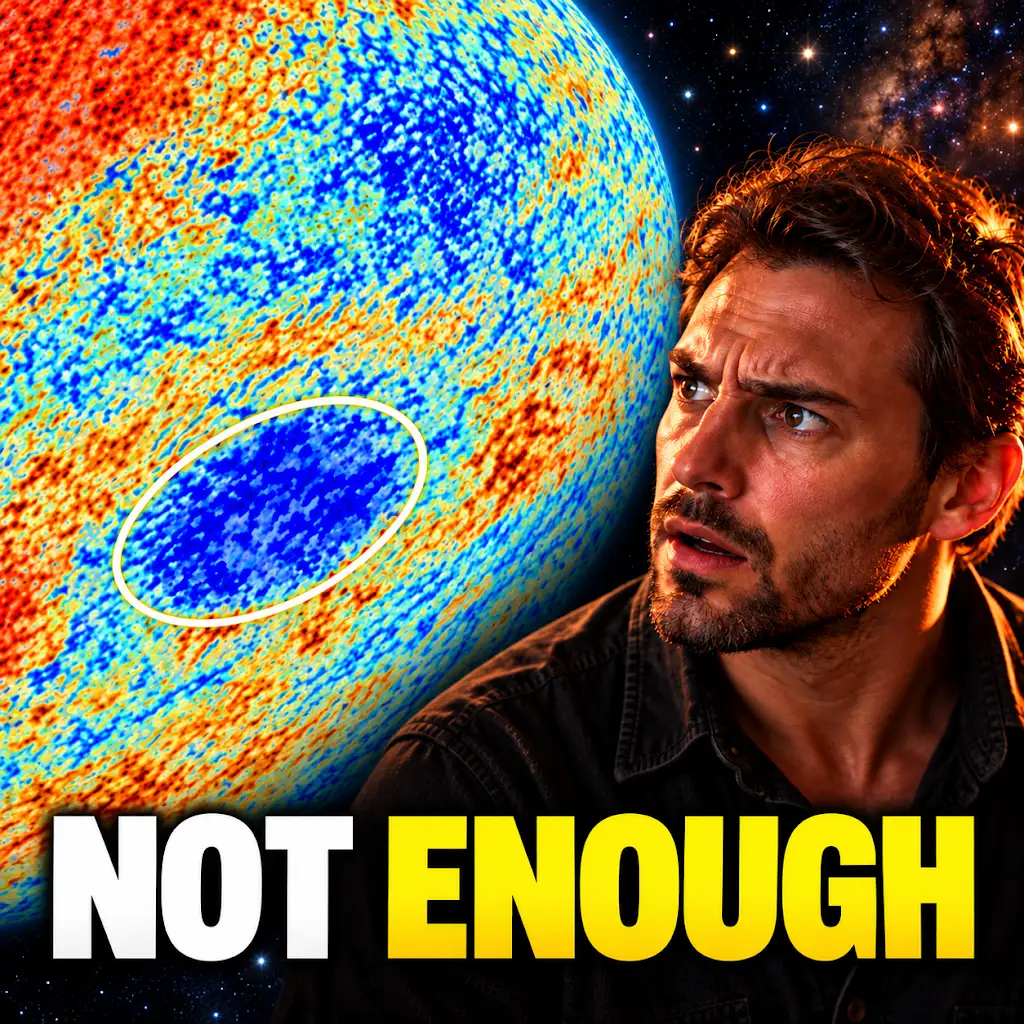
The Universe’s Cold Spot Has an Explanation. It’s Not Enough.
FAQs
What are some of the weirdest places in the universe?
Some of the weirdest places in the universe include black holes, neutron stars, quasars, and exoplanets with extreme conditions.
What makes black holes one of the weirdest places in the universe?
Black holes are considered one of the weirdest places in the universe because they have such strong gravitational forces that not even light can escape from them, leading to a region of spacetime where the laws of physics as we know them break down.
Why are neutron stars considered weird in the universe?
Neutron stars are incredibly dense remnants of massive stars that have undergone supernova explosions. They are so dense that a sugar-cube-sized amount of neutron star material would weigh billions of tons on Earth, making them one of the weirdest objects in the universe.
What are quasars and why are they considered weird places in the universe?
Quasars are extremely bright and distant objects powered by supermassive black holes at the centers of galaxies. They emit enormous amounts of energy and are some of the most luminous objects in the universe, making them weird and fascinating to astronomers.
How do exoplanets with extreme conditions qualify as some of the weirdest places in the universe?
Exoplanets with extreme conditions, such as hot Jupiters, diamond planets, or rogue planets, are considered some of the weirdest places in the universe due to their unique and extreme characteristics that challenge our understanding of planetary formation and evolution.