
The cosmos, a grand and often perilous theater, bombards Earth and its voyagers with a relentless barrage of radiation. From solar flares to galactic cosmic rays, these high-energy particles pose significant threats to human health and electronic systems, especially outside the protective embrace of Earth’s magnetosphere. Consequently, the development of robust and efficient radiation shielding has become a paramount concern for long-duration space missions and even for certain terrestrial applications. While passive shielding materials like lead and water offer some protection, their inherent mass makes them impractical for extensive coverage in spaceflight. This article delves into the burgeoning field of magnetic shielding, a promising alternative that utilizes electromagnetic fields to deflect charged particles, offering a potentially lighter and more adaptable solution to the radiation problem.
Space radiation, a complex cocktail of high-energy particles, originates from several distinct sources, each presenting its own unique challenge to radiation protection strategies. Understanding these sources and their characteristics is the foundational step in developing effective countermeasures.
Solar Particle Events (SPEs)
Solar Particle Events, or SPEs, are sporadic bursts of high-energy protons and heavier ions ejected from the Sun during solar flares and coronal mass ejections (CMEs). These events are highly unpredictable and can deliver a lethal dose of radiation in a relatively short period, often within hours to a few days. Astronauts on lunar missions or Mars missions, for instance, would be particularly vulnerable to SPEs, as the Moon and Mars lack a significant global magnetic field to offer protection.
Galactic Cosmic Rays (GCRs)
Galactic Cosmic Rays are high-energy particles, primarily protons and helium nuclei but also including heavier elements, that originate from outside our solar system, likely from supernova remnants. Unlike SPEs, GCRs are a constant and pervasive threat, permeating the entire solar system. Their high energy allows them to penetrate conventional shielding more effectively, and their chronic exposure poses long-term health risks, including increased cancer risk, neurological damage, and degenerative diseases.
South Atlantic Anomaly (SAA)
Closer to home, the South Atlantic Anomaly represents a region where Earth’s inner Van Allen radiation belt dips closer to the planet’s surface. Satellites and spacecraft passing through this region experience elevated levels of trapped protons and electrons. While not as energetic as GCRs or large SPEs, the SAA presents a regular radiation hazard for low Earth orbit missions, requiring specific operational considerations and, in some cases, additional shielding for sensitive instrumentation.
Recent advancements in magnetic shield radiation protection have been highlighted in a related article that discusses innovative materials and techniques used to enhance safety in environments with high electromagnetic fields. This article delves into the science behind magnetic shielding and its applications in various industries, providing valuable insights for researchers and engineers alike. For more information, you can read the full article here: Magnetic Shield Radiation Protection.
Current Shielding Strategies: Limitations and Challenges
Historically, radiation shielding has relied predominantly on passive methods, employing a bulk of material to absorb or attenuate incoming radiation. While effective to a degree, these methods face significant limitations, especially in the context of space exploration.
Passive Shielding Materials
Passive shielding materials work by presenting a physical barrier to radiation. Materials like aluminum, water, polyethylene, and even existing spacecraft structures are commonly used. The effectiveness of passive shielding depends on the atomic number and density of the material, with denser materials generally offering better attenuation for a given thickness. However, the required thickness to achieve adequate protection against high-energy cosmic rays is often prohibitive, leading to mass penalties that are economically and logistically unfeasible for deep-space missions.
The Mass Problem
The “mass problem” is perhaps the most significant constraint for passive shielding in space. Launching even a kilogram of payload into space is an incredibly expensive endeavor. To provide comprehensive protection against the full spectrum of space radiation, an astronomical amount of passive shielding would be required, adding tons to a spacecraft’s mass. This translates into higher launch costs, reduced scientific payload capacity, and increased fuel consumption, ultimately limiting mission duration and scope.
Secondary Radiation
A less obvious, but equally important, challenge with passive shielding is the generation of secondary radiation. When high-energy particles interact with shielding material, they can produce additional, sometimes more harmful, secondary particles through spallation and fragmentation reactions. While thicker shielding does eventually attenuate these secondary particles, the initial production of them can sometimes exacerbate the radiation dose to the interior of a spacecraft before sufficient attenuation is achieved. This complex interplay of primary and secondary radiation requires careful modeling and selection of shielding materials to optimize protection.
The Promise of Magnetic Shielding

Given the inherent limitations of passive shielding, researchers are increasingly turning their attention to active shielding concepts, with magnetic shielding emerging as a particularly promising avenue. Instead of absorbing radiation, magnetic shields aim to deflect charged particles, effectively creating a “force field” around the protected volume.
Principles of Magnetic Deflection
The fundamental principle behind magnetic shielding is the Lorentz force. Charged particles moving through a magnetic field experience a force perpendicular to both their velocity and the magnetic field direction. This force causes the particles to curve, rather than continuing in a straight line. By strategically designing a magnetic field around a spacecraft or habitable module, it is theoretically possible to steer harmful charged particles away from the protected interior, much like Earth’s magnetosphere deflects the solar wind.
Advantages over Passive Shielding
Magnetic shielding offers several compelling advantages over its passive counterparts. Firstly, it promises significantly reduced mass. Instead of carrying tons of inert material, a magnetic shield relies on a much lighter system of superconducting coils or plasma generators. Secondly, magnetic fields do not themselves produce secondary radiation, a significant improvement over passive shielding. Finally, a magnetic shield can be dynamically adjusted in strength and configuration to respond to varying radiation conditions, such as during an SPE, offering adaptability that passive shielding cannot match.
Architectures of Magnetic Shields
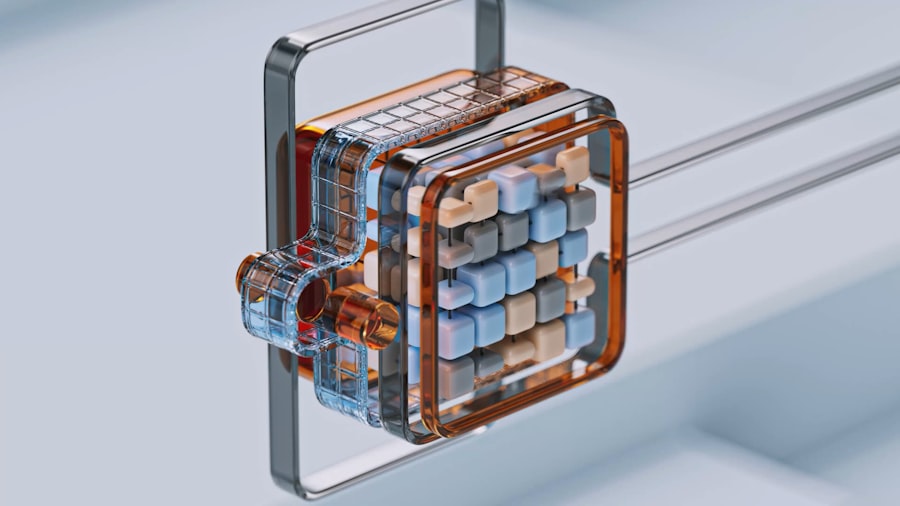
The theoretical framework for magnetic shielding is robust, but its practical implementation involves overcoming significant engineering challenges. Researchers are exploring various architectures, each with its own set of advantages and technological hurdles.
Superconducting Magnets
The most straightforward approach involves generating strong magnetic fields using superconducting electromagnets. Superconductors can conduct electricity with zero resistance at very low temperatures, allowing for the creation of powerful, persistent magnetic fields with minimal power consumption once established.
Challenges of Cryogenics
A major challenge with superconducting magnets is the need for cryogenic cooling. Maintaining the extremely low temperatures required for superconductivity (often below 20 Kelvin) in the harsh environment of space is complex and adds substantial mass and power requirements to the system. While advances in high-temperature superconductors (HTS) may alleviate some of these issues, HTS materials still require significant cooling and exhibit lower current densities than their low-temperature counterparts.
Field Strength Requirements
To effectively deflect high-energy galactic cosmic rays, an incredibly strong and extensive magnetic field would be required. The sheer scale and power needed for such a field around an entire spacecraft pose significant engineering challenges, requiring extremely large current loops or complex magnet configurations that might interfere with spacecraft operations or sensitive instrumentation.
Plasma-Based Shields
An alternative approach leverages the properties of plasma – an ionized gas – to create magnetic fields or directly interact with incoming radiation. Plasma-based shields offer greater flexibility in field configuration and potentially mitigate some of the cryogenic challenges associated with superconducting magnets.
Magnetospheric Shields
One concept involves creating a localized “mini-magnetosphere” around the spacecraft by injecting plasma into a relatively weak magnetic field. The interaction between the plasma and the magnetic field can effectively inflate a larger, protective magnetic bubble that deflects charged particles. This approach mimics, on a smaller scale, how Earth’s magnetosphere protects our planet.
Self-Generated Plasma Shields
Another intriguing concept involves systems where the plasma itself generates the required magnetic fields. This could involve complex magnetic nozzle configurations or even the use of highly energetic plasma streams to create a dynamic and adaptable shielding layer. The primary challenge here lies in maintaining the plasma stability and density over long durations in space.
Magnetic shields play a crucial role in protecting sensitive equipment and living organisms from harmful radiation, and understanding their effectiveness is essential for advancements in various fields. For those interested in exploring this topic further, a related article can be found on Freaky Science, which delves into the science behind magnetic shielding and its applications. You can read more about it by following this link. This resource provides valuable insights into how magnetic shields can mitigate radiation exposure and enhance safety in environments where radiation is a concern.
The Road Ahead: Overcoming Technological Hurdles
| Parameter | Value / Range | Unit | Description |
|---|---|---|---|
| Magnetic Field Strength | 0.1 – 1.5 | Tesla (T) | Typical magnetic field strength used in magnetic shielding for radiation protection |
| Shielding Effectiveness | 30 – 60 | dB | Reduction in magnetic field intensity due to shielding |
| Material Permeability (μ) | 2000 – 100000 | Relative Permeability | Magnetic permeability of common shielding materials like Mu-metal |
| Thickness of Shield | 0.5 – 5 | mm | Typical thickness range for magnetic shields used in radiation protection |
| Frequency Range | DC – 1 kHz | Hertz (Hz) | Frequency range over which magnetic shielding is effective |
| Radiation Type | Gamma, X-ray, Neutron | N/A | Types of radiation commonly considered in magnetic shield radiation protection |
| Shielding Material | Mu-metal, Permalloy, Soft Iron | N/A | Common materials used for magnetic shielding |
| Temperature Range | -40 to 150 | °C | Operating temperature range for magnetic shielding materials |
While the concept of magnetic shielding holds immense promise, its practical implementation is still in its nascent stages, fraught with significant technological hurdles that require concerted research and development efforts.
Power Requirements
Generating and sustaining the powerful magnetic fields necessary for effective radiation deflection demands substantial electrical power. For long-duration missions, the power systems must be highly efficient, reliable, and capable of generating kilowatt to megawatt levels of power from sources like radioisotope thermoelectric generators (RTGs) or advanced solar arrays. Optimizing power consumption without compromising shielding effectiveness is a critical area of research.
Mass and Volume Constraints
Even with significant mass reductions compared to passive shielding, a magnetic shielding system still needs to be integrated within the mass and volume constraints of a spacecraft. The coils, radiators for cryogenic cooling, power converters, and control systems all contribute to the overall mass and volume, requiring innovative designs and materials to minimize their footprint.
Interaction with Spacecraft Systems
The powerful magnetic fields generated by these shields could potentially interfere with sensitive spacecraft instrumentation, including navigation systems, scientific sensors, and even life support electronics. Careful electromagnetic compatibility (EMC) design and extensive testing are crucial to ensure that the shield does not inadvertently compromise the very systems it is designed to protect. Shielding configurations must be designed to minimize stray fields within the habitable volume.
Dynamic Control and Adaptability
An ideal magnetic shield would be dynamic, capable of adjusting its strength and configuration in response to varying radiation environments. During an SPE, for instance, the shield might need to intensify its field, while during quiescent periods, it could operate at a lower power setting. Developing sophisticated control algorithms and robust actuation mechanisms for such dynamic systems is a complex engineering challenge, requiring real-time radiation monitoring and predictive capabilities.
Human Factors and Long-Term Effects
While protecting against external radiation is paramount, researchers must also consider the potential long-term effects of exposure to intense internal magnetic fields on human physiology. While Earth’s magnetic field is relatively weak, the localized fields within a magnetic shield could be orders of magnitude stronger. Our understanding of how prolonged exposure to such fields affects brain function, cardiovascular systems, and other biological processes is limited, necessitating thorough research and cautious design to ensure mission safety and astronaut health.
In conclusion, the quest for an ultimate magnetic shield for radiation protection is a testament to humanity’s enduring ambition to explore the cosmos. While the challenges are formidable, the potential rewards – safer, longer, and more expansive space missions – are profound. The journey from conceptual designs to fully operational systems will require significant innovation and international collaboration, but the scientific and engineering foundations are being laid, paving the way for a future where humanity can venture further and more safely into the radiation-filled expanse of space.
FAQs
What is magnetic shielding in radiation protection?
Magnetic shielding in radiation protection refers to the use of materials or devices that block or reduce magnetic fields to protect sensitive equipment or living organisms from the harmful effects of magnetic radiation.
How does magnetic shielding work?
Magnetic shielding works by redirecting or absorbing magnetic field lines using materials with high magnetic permeability, such as mu-metal or soft iron, thereby reducing the magnetic field intensity in the protected area.
What materials are commonly used for magnetic shielding?
Common materials used for magnetic shielding include mu-metal, permalloy, soft iron, and certain alloys specifically designed to have high magnetic permeability and low coercivity to effectively shield against magnetic fields.
Is magnetic shielding effective against all types of radiation?
No, magnetic shielding is specifically effective against magnetic fields and low-frequency electromagnetic radiation. It does not protect against ionizing radiation such as gamma rays, X-rays, or neutron radiation, which require different shielding methods.
Where is magnetic shielding typically applied?
Magnetic shielding is commonly used in medical imaging devices like MRI machines, in scientific instruments sensitive to magnetic interference, in electronic devices, and in environments where magnetic fields could disrupt equipment or pose health risks.