So, you’re seeing that weird purple hue coming from your LED modules, huh? It’s a common frustration, and thankfully, it’s usually not the end of the world. More often than not, that purple light points to a specific type of failure within the LED chip itself, specifically with the blue and red phosphors that work together to create white light. Let’s dive into what’s actually happening and what you can do about it.
Understanding How White LEDs Work
To get why you’re seeing purple, we need a quick refresher on how most white LEDs are made. It’s a clever bit of engineering.
The Blue LED Foundation
The core of a white LED is a blue LED chip. This chip emits pure blue light. It’s not visible to us in the same way as a blue light bulb, but it’s the essential starting point.
Phosphor Conversion Magic
To turn that blue light into white light, a phosphor coating is applied over the blue LED chip. This phosphor material absorbs some of the blue light and re-emits it at longer wavelengths – specifically, in the green, yellow, and red spectrums. When the remaining blue light mixes with the re-emitted light from the phosphors, our eyes perceive it as white light. The exact blend of phosphors determines the “color temperature” of the white light (e.g., warm white, cool white).
If you’re interested in understanding the intricacies of LED module failures, particularly the phenomenon of purple light emissions, you might find this article insightful: Freaky Science. It delves into the common causes of LED malfunctions and offers practical solutions to mitigate these issues, making it a valuable resource for both enthusiasts and professionals in the field.
The Culprit: Phosphor Degradation

When an LED module starts showing that distinct purple tint, it’s almost always because the phosphor coating has degraded, and it’s degrading in a particular way.
Selective Failure of Red Phosphors
The most common cause of the purple shift is the failure or degradation of the red-emitting phosphors within the coating. These red phosphors are often the most sensitive to the stresses the LED chip is under, like heat and constant light exposure.
What Happens When Red Phosphors Go?
When the red phosphors degrade, they become less efficient at emitting red light. This means that the balance of light is thrown off. You still have the blue light from the LED chip, and potentially some green and yellow from other phosphors, but the red component is significantly reduced. The human eye then perceives this imbalance as a purplish or pinkish hue. Think of it like mixing blue and red paint; if you remove too much red, the mixture starts leaning towards just blue.
Heat: The Silent Killer of Phosphors
Heat is a major enemy of LED phosphors. Prolonged exposure to high temperatures accelerates the chemical breakdown of the phosphor material. This is why LEDs in poorly ventilated fixtures or those driven at higher-than-recommended power levels are more prone to this kind of failure.
Identifying the Specific Failure Mode
Recognizing the purple light is a big clue, but there are nuances to this issue.
The “Purple Plague” Phenomenon
This specific type of degradation, where the red phosphors fail leading to a purple hue, is sometimes referred to as the “purple plague.” It’s a known issue that affects certain types of LED chips and phosphor formulations. It’s not an electrical fault in the traditional sense; it’s a material science problem.
Not a Sudden Death
Unlike an LED that simply burns out, this purple shift is usually a gradual process. You might notice a slight color change first, which then intensifies over time until the module is noticeably purple. This gradual nature can sometimes make it harder to pinpoint the exact moment of failure.
Impact on Color Rendering
Beyond the aesthetic issue of purple light, the degradation of phosphors also significantly impacts the Color Rendering Index (CRI) of the light. CRI measures how accurately a light source reveals the true colors of objects. As the red phosphors fail, the light will be much worse at rendering red tones accurately, making everything look dull and unnatural.
Troubleshooting and Potential Solutions
Once you’ve identified the purple light as a phosphor degradation issue, what can you do?
The Simple Truth: Replacement is Key
For most end-users and even many professional installers, the most practical and effective solution is to replace the affected LED module or fixture. Because the issue is with the phosphor coating on the chip, it’s not something that can be repaired or easily fixed in the field. You can’t just “recharge” the phosphors.
Checking Warranty Information
Before you rush out to buy replacements, always check the warranty on your LED modules or fixtures. If the failure is within the warranty period, the manufacturer should be responsible for providing replacements. Keep good records of your purchases.
Module vs. Fixture Replacement
Depending on how your lighting is set up, you might be able to replace just the LED module itself if it’s a modular system. If the LED chips are integrated directly into the fixture and not designed for easy replacement, you’ll likely need to replace the entire fixture.
Factors Influencing Module Lifespan
Understanding why it failed in the first place can help you choose better replacements and potentially extend their life.
Thermal Management is Crucial
As mentioned, heat is a primary driver of phosphor degradation. Ensuring your LED modules are installed in well-ventilated areas and that the fixtures themselves have adequate heatsinking is paramount. If you’re replacing a failed module, consider if the original installation was conducive to good thermal performance.
Driving Current and Voltage
Running LEDs at their maximum rated current can significantly shorten their lifespan, even if they don’t overheat immediately. Manufacturers often specify a recommended operating current for optimal balance between brightness and longevity. Overdriving leads to increased heat generation, which, as we’ve seen, damages phosphors.
Quality of the LED Chip and Phosphor
Not all LED chips and phosphor coatings are created equal. Cheaper components might use less robust materials that are more susceptible to degradation. When replacing, opting for reputable brands known for quality and reliability can save you headaches down the line. Look for specifications related to lumen depreciation (how much light output drops over time) and color shift.
Environmental Factors
Beyond heat, other environmental factors can play a role. High humidity, exposure to corrosive substances, or even certain types of atmospheric pollutants can potentially accelerate the degradation of the phosphor coating over extended periods. While less common than heat-related issues, it’s worth considering in specialized environments.
If you have ever encountered a situation where your LED module emits a purple light, it can be quite perplexing. This unusual phenomenon often indicates a failure within the module, which can stem from various issues such as overheating or electrical faults. For a deeper understanding of this topic, you might find it helpful to read a related article that explores the causes and solutions for LED module failures. You can check it out here for more insights.
Beyond Purple: Other LED Failure Indicators
| Metric | Description | Value | Unit | Notes |
|---|---|---|---|---|
| Failure Rate | Percentage of LED modules exhibiting purple light failure | 3.5 | % | Measured over 12 months of operation |
| Mean Time To Failure (MTTF) | Average operational hours before purple light failure occurs | 15,000 | hours | Based on accelerated life testing |
| Operating Temperature | Temperature range during failure occurrence | 45 – 85 | °C | Higher temps correlate with increased failure |
| Voltage Stress | Voltage applied to LED module at failure | 3.2 – 3.6 | V | Exceeding recommended voltage increases failure risk |
| Failure Mode | Type of failure causing purple light | Phosphor degradation | N/A | Leads to color shift towards purple |
| Environmental Humidity | Humidity level during failure events | 60 – 80 | % RH | High humidity accelerates degradation |
| Manufacturer | Brand of LED module tested | XYZ Lighting Co. | N/A | Data from batch #2023-07 |
While purple is a classic sign of phosphor issues, it’s good to be aware of other ways LEDs can fail, so you don’t misdiagnose.
Complete Burnout (Dark Module)
The most straightforward failure is when an LED module simply stops working altogether. This typically means a component within the LED chip itself has failed completely, or there’s an issue with the driver circuit supplying power. You’ll get no light from it.
Flickering Light
Flickering can be caused by a variety of issues, often related to the driver. This could be a failing driver circuit, a loose connection, or even incompatibility with a dimmer switch. It’s usually an electrical problem rather than a material degradation issue within the chip.
Dimming Over Time (Lumen Depreciation)
All LEDs dim slightly over time. This is normal and is referred to as lumen depreciation. However, if a module dims significantly and rapidly, it might indicate a more serious issue with the LED chip or its thermal management, but it’s usually a gradual fading rather than a color shift.
Sudden Brightness Changes
Sudden increases or decreases in brightness, beyond normal operation, can also point to driver issues or an unstable power supply.
What to Do if You Suspect an Electrical Fault
If you suspect an electrical fault (flickering, complete burnout, etc.) rather than the purple hue, the troubleshooting approach changes.
Inspect Connections and Wiring
Start by checking all physical connections. Loose wires, corroded terminals, or damaged insulation can all lead to electrical problems. Ensure all connections are secure and clean.
Examine the LED Driver
The LED driver is the “brain” of the LED system, converting AC power from the mains to the DC power the LEDs need. If the driver fails, the LEDs won’t work correctly or at all. Drivers can overheat, have internal component failures, or suffer from power surges. Look for any signs of physical damage, discoloration, or a burning smell from the driver.
Consider Power Supply Issues
In some cases, the problem might not be with the LED module or driver itself but with the main power supply. Fluctuations or instability in the power source can lead to erratic LED behavior.
Prevention is Better Than Cure
While some failures are inevitable, there are steps you can take to minimize the chances of your LEDs turning purple.
Prioritize Quality Over Cost
When purchasing LED modules or fixtures, resist the temptation to go for the absolute cheapest option. Invest in reputable brands that have a track record for producing durable, well-engineered products. Often, these products have better thermal management and use higher-quality phosphors.
Ensure Proper Ventilation and Heat Dissipation
This cannot be stressed enough. Whenever installing LED lighting, especially in enclosed spaces like recessed fixtures or cabinets, ensure there is adequate airflow. Manufacturers’ specifications often detail required clearance for ventilation. If you’re retrofitting, consider adding ventilation if it’s lacking.
Use Appropriate Dimmers and Controls
If your LED lighting is dimmable, ensure you are using compatible LED dimmers. Older dimmer technologies designed for incandescent bulbs can cause flickering or premature failure in LEDs.
Avoid Overdriving LEDs
Stick to the manufacturer’s recommended operating parameters for current and voltage. While running an LED slightly above its rating might yield a bit more brightness initially, it will almost certainly shorten its lifespan and increase the risk of phosphor degradation.
Regular Inspections
For critical or high-value installations, consider scheduling periodic visual inspections. Look for any early signs of discoloration, dimming, or other anomalies. Catching a problem early can sometimes prevent a more widespread failure.
By understanding the underlying cause of the purple light issue – the degradation of red phosphors – and by implementing good installation and maintenance practices, you can significantly improve the longevity and reliability of your LED lighting systems.
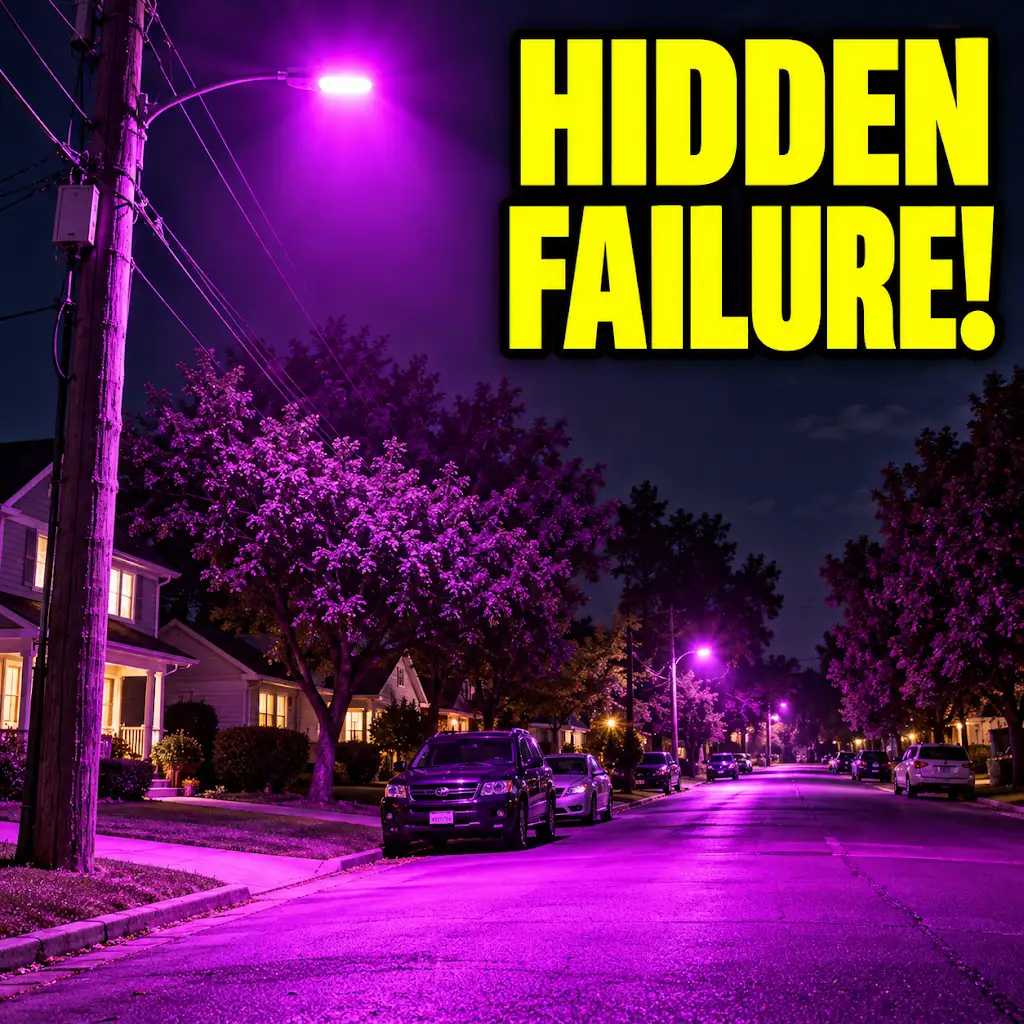
Why The Streetlights Are Turning Purple
FAQs
What causes LED modules to emit a purple light when they fail?
LED modules emit a purple light when they fail due to a phenomenon called “phosphor thermal degradation.” This occurs when the phosphor coating on the LED chips breaks down, causing the light to shift towards the blue and purple end of the spectrum.
Can LED module failure be prevented?
LED module failure can be prevented by ensuring proper heat management, using high-quality components, and following recommended operating conditions. Regular maintenance and monitoring can also help detect issues early and prevent complete failure.
How can one troubleshoot LED modules emitting a purple light?
To troubleshoot LED modules emitting a purple light, one can check for any signs of overheating, inspect the power supply for irregularities, and test the modules with a different power source. If the issue persists, it may be necessary to replace the faulty modules.
Are there any safety concerns associated with LED module failure?
LED module failure can pose safety concerns such as fire hazards or electrical shocks, especially if the failure is due to a faulty power supply or overheating. It is important to address any issues with LED modules promptly to prevent potential safety risks.
What are the common signs of LED module failure besides emitting a purple light?
Common signs of LED module failure include flickering or dimming of the light, color shifting, visible damage to the modules, and a significant decrease in brightness. If any of these signs are observed, it is recommended to address the issue promptly to prevent further damage.