
The Void in Space: Exploring the Unseen Emptiness
The Cosmic Canvas: Where Does Nothingness Begin?
The vast expanse of the universe, often perceived as a realm of dazzling stars, swirling nebulae, and distant galaxies, also harbors an equally profound and perhaps more enigmatic feature: the void. These immense stretches of seemingly empty space, punctuated by incredibly sparse distributions of matter, challenge our very definitions of “space” and “emptiness.” For centuries, humanity has gazed at the night sky, awestruck by its luminous inhabitants, but the true nature of the dark, silent stretches between them has remained a subject of intense scientific inquiry and philosophical contemplation. The void is not merely an absence of light or objects; it is a fundamental component of the cosmic structure, a canvas upon which the grand tapestry of the universe is woven. Understanding these cosmic deserts is crucial to unraveling the formation and evolution of galaxies, the distribution of matter on the largest scales, and even the very fabric of spacetime itself.
The concept of a void, in a terrestrial sense, implies a lack of substance, a vacuum. However, in the context of cosmology, “empty space” is a relative term. While a void may contain far fewer galaxies and stars than denser regions, it is not devoid of everything. It is filled with the pervasive cosmic microwave background radiation, dark matter, dark energy, and perhaps even exotic particles. These invisible constituents play a critical role in shaping the universe, and their presence within the voids is as significant as the matter that congregates in galactic clusters. The study of these voids, therefore, is not just about identifying gaps; it is about mapping the invisible architecture of the cosmos and understanding the forces that govern its expansion and structure.
Defining the Indefinable: What Constitutes a Cosmic Void?
The scientific definition of a cosmic void, or a supervoid, is a region of space that contains significantly fewer galaxies and galaxy clusters than the cosmic average. These are not small gaps between stars but colossal structures that can span hundreds of millions of light-years across. They are essentially vast cosmic deserts, the largest known structures in the universe. Their existence was first theorized and later confirmed through extensive sky surveys that mapped the distribution of galaxies. These surveys revealed a large-scale structure of the universe that resembles a cosmic web, with dense filaments and clusters of galaxies interconnected by vast, relatively empty voids. The voids are the spaces between these filaments, the seemingly hollow regions that occupy a substantial portion of the universe’s volume.
The formation of these voids is intricately linked to the early universe and the process of cosmic structure formation. In the primordial soup of the early universe, matter was not uniformly distributed. Tiny quantum fluctuations in density, amplified by inflation, led to regions that were slightly denser or less dense than average. Gravity then acted upon these variations. Denser regions attracted more matter, eventually collapsing to form galaxies and galaxy clusters. Conversely, less dense regions were effectively pushed apart as matter flowed towards the denser areas, creating the vast voids we observe today. The voids are therefore not empty by accident but are a natural consequence of the gravitational evolution of matter in an expanding universe.
The Unseen Inhabitants: What Fills the Void?
Despite their designation as “empty,” cosmic voids are not entirely devoid of content. The most fundamental “filler” is the ubiquitous cosmic microwave background (CMB) radiation, the afterglow of the Big Bang. This faint bath of microwaves permeates all of space, including the voids, carrying information about the universe’s infancy. Beyond radiation, the voids are populated by dark matter. While invisible to our telescopes, dark matter exerts gravitational influence and is believed to form the scaffolding upon which visible structures form. Current cosmological models suggest that dark matter is far more abundant than ordinary baryonic matter, and it is present within the voids, albeit in lower concentrations than in galactic filaments.
Furthermore, dark energy, the mysterious force driving the accelerated expansion of the universe, also plays a crucial role in maintaining and potentially expanding these voids. As the universe expands, dark energy’s influence becomes more pronounced, pushing matter apart and potentially causing existing voids to grow larger over time. While the density of galaxies and stars is extremely low in these regions, it is not zero. Some rogue stars, dwarf galaxies, or even small galaxy groups can be found drifting in the void, remnants of less fortunate gravitational interactions or simply isolated entities that never coalesced into larger structures. The study of these sparse objects within voids can provide valuable insights into the processes of galactic evolution and the dynamics of sparsely populated regions.
The concept of voids in space, often referred to as cosmic voids, is a fascinating topic that delves into the large-scale structure of the universe. These vast, empty regions between galaxy clusters can provide insights into the formation and evolution of cosmic structures. For a more in-depth exploration of this subject, you can read the related article on cosmic voids and their significance in understanding the universe’s architecture at Freaky Science.
Mapping the Darkness: The Observational Quest for Voids
The discovery and characterization of cosmic voids represent a triumph of modern observational cosmology. Without sophisticated telescopes, vast sky surveys, and powerful data analysis techniques, these colossal structures would have remained hidden in the darkness. The quest to map the universe’s large-scale structure, and thus to identify and delineate the voids, has been a long and arduous one, pushing the boundaries of our technological capabilities. These efforts have not only confirmed the existence of voids but have also provided crucial data for testing cosmological models and understanding the distribution of matter throughout the cosmos.
The challenges in mapping voids are significant. Since they are defined by the absence of luminous matter, their boundaries are not sharply defined by visible objects. Instead, astronomers infer the presence and extent of voids by mapping the distribution of galaxies and galaxy clusters. The regions with the lowest density of visible matter are then identified as voids. This requires mapping millions, even billions, of galaxies, determining their positions in three-dimensional space by measuring their distances through redshift. This process is akin to creating a three-dimensional map of a vast, intricate city, where the voids are the empty parks and plazas.
The Galactic Census: Redshift Surveys and Their Significance
Redshift surveys are the primary tools for mapping the large-scale structure of the universe and, by extension, for identifying cosmic voids. These surveys involve observing a large number of galaxies and measuring their spectroscopic redshifts. Redshift is the phenomenon where light from objects moving away from us is stretched to longer, redder wavelengths. The greater the redshift, the faster an object is moving away, and in an expanding universe, this generally correlates with distance. By obtaining redshifts for millions of galaxies, astronomers can reconstruct their positions in three-dimensional space, creating a cosmic map.
Prominent redshift surveys like the Sloan Digital Sky Survey (SDSS) and the Two-Degree Field Galaxy Redshift Survey (2dFGRS) have been instrumental in revealing the filamentary structure of the universe and the vast voids within it. These surveys have cataloged hundreds of thousands, and in the case of SDSS, millions of galaxies, providing an unprecedentedly detailed view of the cosmic web. The data from these surveys allow astronomers to identify overdense regions (clusters and filaments) and underdense regions (voids). The characteristic “bubble-like” or “sponge-like” appearance of the universe emerges clearly from these maps, with voids occupying the large, empty spaces between the interconnected filaments.
Beyond Visible Light: Probing the Void’s Invisible Contents
While redshift surveys focus on visible galaxies, understanding the true nature of voids requires probing their invisible constituents. The cosmic microwave background (CMB) offers a unique window into the early universe and can provide clues about the distribution of matter, including dark matter, in these regions. Subtle variations in the CMB temperature, known as anisotropies, are thought to be the seeds of the large-scale structure we see today. Studying these anisotropies in regions corresponding to voids can help us understand how these underdense areas evolved from the initial density fluctuations.
The distribution of dark matter within voids is a particularly active area of research. While direct detection of dark matter remains elusive, its gravitational effects can be inferred. Weak gravitational lensing, the subtle distortion of light from distant galaxies as it passes through the gravitational field of intervening matter, can be used to map the distribution of dark matter, even in the seemingly empty voids. By analyzing the subtle alignments of distant galaxy images, astronomers can infer the presence and distribution of dark matter. These studies are crucial for understanding the role of dark matter in the formation and evolution of cosmic structures, including the voids themselves.
The Role of Voids in Cosmic Evolution and Expansion
Cosmic voids are not merely passive empty spaces; they are active participants in the grand narrative of cosmic evolution. Their sheer volume and the influence of dark energy within them make them crucial to understanding the universe’s expansion and the formation of the structures we observe. The interplay between gravity, matter, and dark energy shapes these vast voids and dictates their influence on the surrounding cosmic web. Studying voids provides a unique perspective on these fundamental cosmic forces.
The dynamic nature of voids is a key aspect of their importance. As the universe expands, the dark energy concentrated within voids exerts a greater outward pressure, causing these regions to grow larger and become even emptier. This expansion can influence the surrounding filaments and clusters, effectively pushing them further apart. The voids can be seen as the pressure valves of the universe, accommodating the relentless expansion driven by dark energy. Their growth and evolution are intrinsically linked to the overall fate of the universe.
The concept of voids in space, which refers to vast, empty regions between galaxies, is a fascinating topic that has intrigued astronomers for years. Understanding these cosmic voids can provide insights into the structure of the universe and the distribution of dark matter. For a deeper exploration of this subject, you can read a related article that delves into the mysteries of the cosmos and the role of these voids in the grand scheme of the universe. Check out this insightful piece on Freaky Science to learn more about the intriguing phenomena that shape our universe.
Dark Energy’s Grip: Voids as Laboratories for Cosmic Expansion
Cosmic voids serve as natural laboratories for studying dark energy. The accelerated expansion of the universe is predominantly attributed to dark energy, and its effects are most pronounced in the vast, relatively matter-poor regions of voids. As these regions expand, the density of matter within them decreases, making the influence of dark energy more dominant compared to the gravitational pull of matter. By studying the rate of expansion within voids, astronomers can gain crucial insights into the nature and properties of dark energy.
Measurements of the expansion rate in different cosmic epochs and at various scales are vital. The Alcock-Paczynski test, for example, uses the apparent shape of an object (like a galaxy) as a function of its redshift to probe the expansion history of the universe. When applied to large-scale structures, including voids, this test can reveal deviations from expected expansion rates, providing clues about the behavior of dark energy. The consistency of observations with dark energy models is tested within these vast, relatively undisturbed regions.
The Cosmic Web’s Interplay: Voids and the Formation of Structure
The formation of cosmic structures, such as galaxies and galaxy clusters, is not an isolated process. It occurs within the context of the cosmic web, where filaments of matter channel gas and dark matter towards the densest nodes. Cosmic voids play a crucial role in this intricate dance. They are the “empty” regions that the filaments connect. The gravitational pull of matter within the filaments draws in surrounding material, effectively draining the voids. This process not only builds up the structures in the filaments but also contributes to the sparseness of the voids.
The boundaries between voids and filaments are dynamic interfaces where gravitational forces are constantly at play. Interactions between galaxies and gas clouds can occur at the edges of voids as they are drawn into denser regions. Studying these transitional zones can reveal the mechanisms by which matter is transported across the cosmic web and how small-scale structures merge to form larger ones. The voids, in essence, are the large-scale drains that feed the cosmic metropolises.
The Future of Void Exploration: Unveiling the Universe’s Secrets
The study of cosmic voids is far from complete. As our observational capabilities advance and our theoretical models become more sophisticated, we are poised to unlock even more secrets hidden within these vast expanses of seemingly empty space. Future generations of telescopes and dedicated surveys promise to provide unprecedented detail about the composition, evolution, and dynamics of voids, shedding light on some of the most profound mysteries of the universe.
The quest to understand the voids is not just about mapping emptiness; it’s about understanding the scaffolding of the universe, the forces that shape it, and its ultimate destiny. The insights gained from studying these cosmic deserts will undoubtedly lead to a deeper comprehension of our place in the cosmos and the fundamental laws that govern it. The void, once perceived as a mere absence, is increasingly revealing itself as a crucial player in the cosmic drama.
Next-Generation Telescopes and Surveys: A Deeper Gaze into the Darkness
The coming decades will witness the deployment of a new generation of powerful telescopes and ambitious sky surveys designed to map the universe with unprecedented precision and depth. Instruments like the Square Kilometre Array (SKA), the Vera C. Rubin Observatory (LSST), and the Euclid space telescope are specifically designed to probe the large-scale structure of the universe, including the characterization of voids. These facilities will collect vast amounts of data, enabling astronomers to create more detailed maps of cosmic voids, measure their properties with greater accuracy, and observe them across a wider range of cosmic epochs.
These advanced observatories will allow for the detection of fainter and more distant galaxies, the precise measurement of their redshifts, and the mapping of dark matter distribution through weak lensing with much higher fidelity. This will enable scientists to identify smaller voids, study their internal structures, and understand how they evolve over cosmic time. The sheer volume of data from these surveys will push the boundaries of computational astrophysics, requiring sophisticated algorithms and significant processing power to extract meaningful scientific information.
Theoretical Advancements: Refining Our Understanding of Void Dynamics
In parallel with observational advancements, theoretical cosmology is also undergoing continuous refinement in its understanding of voids. As we gather more data, theoretical models are being tested and improved to better explain the formation, evolution, and dynamics of these structures. Cosmological simulations, which model the gravitational evolution of matter in a universe governed by known physical laws, are becoming increasingly sophisticated, allowing for more realistic representations of the cosmic web and its voids.
These simulations are crucial for predicting the properties of voids, such as their sizes, shapes, and the distribution of matter within them. By comparing the results of these simulations with observational data, scientists can refine our understanding of fundamental cosmological parameters, including the density of dark matter and dark energy, and the initial conditions of the universe. The ongoing dialogue between observation and theory is essential for unraveling the complex story of the voids and their role in the grand cosmic narrative. The void, in its profound emptiness, holds some of the universe’s most important secrets, waiting to be discovered.
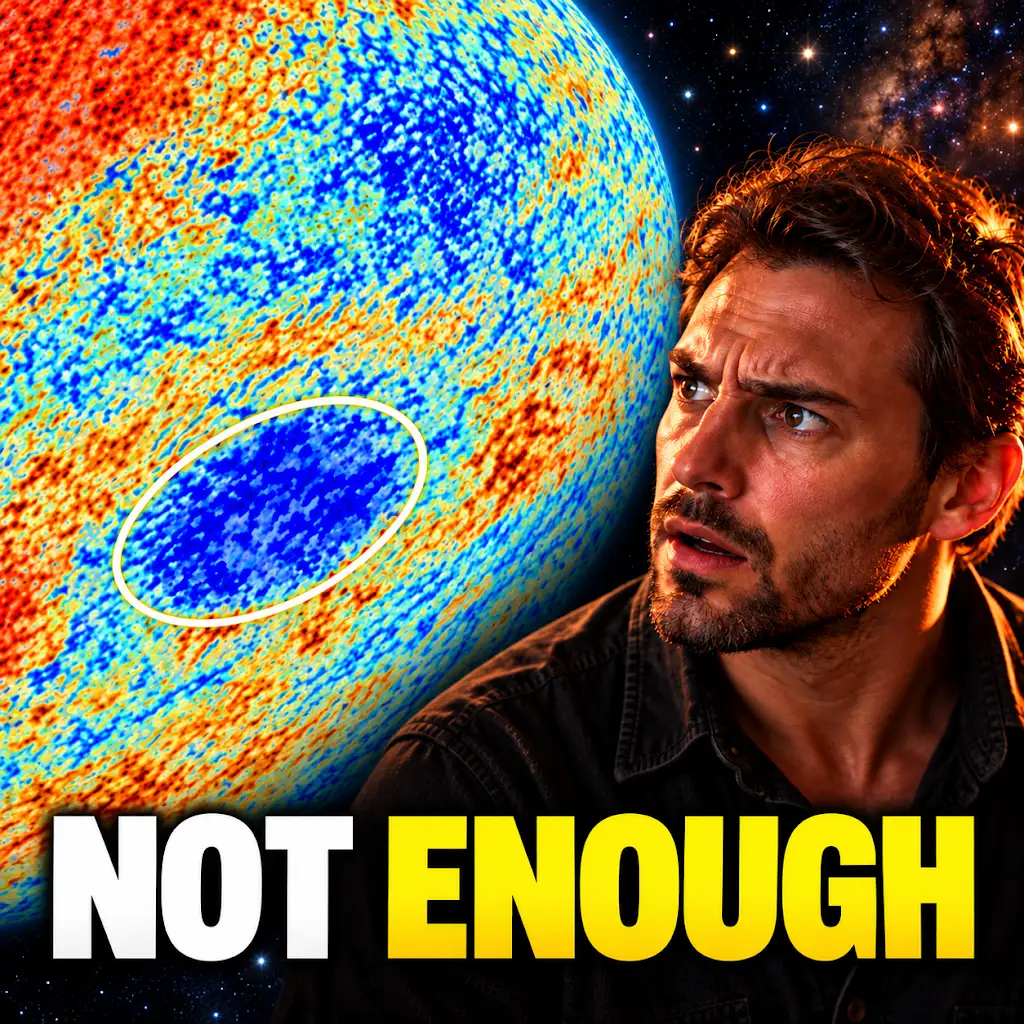
The Universe’s Cold Spot Has an Explanation. It’s Not Enough.
FAQs
What is a void in space?
A void in space refers to a region of space that contains very few or no galaxies, stars, or other celestial bodies.
How are voids in space formed?
Voids in space are believed to have formed due to the expansion of the universe, where regions with lower density of matter have less gravitational pull to attract and form galaxies and other structures.
How large can voids in space be?
Voids in space can vary in size, with some spanning hundreds of millions of light-years across. These vast empty regions are interspersed throughout the universe.
What are the characteristics of voids in space?
Voids in space are characterized by their low density of matter, absence of galaxies, and relatively low temperature compared to the surrounding regions.
What is the significance of studying voids in space?
Studying voids in space can provide insights into the large-scale structure of the universe, the distribution of matter, and the effects of dark energy. Researchers use voids to better understand the evolution and dynamics of the cosmos.