The Unsettling Secrets of the Cosmos
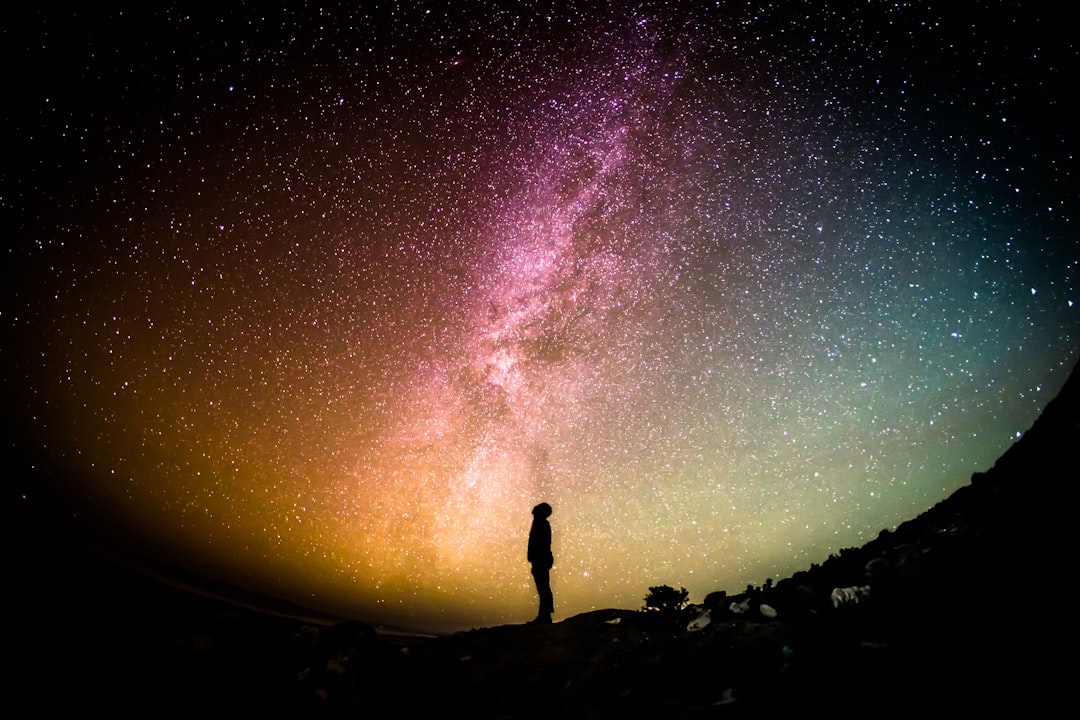
The human gaze has long been drawn to the celestial sphere, seeking patterns, meaning, and understanding in the twinkling lights of distant stars. While science has unveiled a universe of staggering beauty and complexity, it has also revealed a cosmos brimming with phenomena that challenge our intuition and provoke a profound sense of the unknown. These are the unsettling secrets of the cosmos, aspects of reality that, upon closer examination, leave us with more questions than answers, acting as cosmic riddles that continue to elude our complete comprehension.
One of the most pervasive and perhaps the most unsettling revelations of modern cosmology is the sheer dominance of invisible components in the universe’s composition. We live, it turns out, in a universe fundamentally shaped by forces and substances that are undetectable by our current scientific instruments.
The Ghostly Glue: The Evidence for Dark Matter
For decades, astronomers observed discrepancies in the motion of galaxies within clusters. The gravitational pull required to hold these luminous islands of stars together was far greater than could be accounted for by the visible matter – stars, gas, and dust – that astronomers could detect. This led to the hypothesis of dark matter, a form of matter that does not emit, absorb, or reflect light, making it invisible to electromagnetic observation.
Imagine a cosmic dance, where galaxies are the dancers. We observe their movements, their graceful pirouettes and energetic spins. However, the music that dictates their choreography, the underlying gravitational force, seems to be played by an unseen orchestra, far more powerful than the visible performers themselves. This unseen orchestra, or at least the collective force it exerts, is what we attribute to dark matter. Its gravitational influence is not theoretical; it is inferred from the dynamic behavior of visible structures. Galaxy rotation curves, the way stars orbit the centers of their galaxies, are a prime example. Stars in the outer regions of galaxies orbit much faster than predicted by the visible mass alone, suggesting a halo of dark matter extending far beyond the luminous disk. Gravitational lensing, the bending of light from distant objects by the gravity of intervening mass, provides another powerful confirmation. The observed distortions of background galaxies are consistent with the presence of a vast, invisible mass distribution.
The Accelerating Universe: The Enigma of Dark Energy
If dark matter is the unseen scaffolding that holds galaxies together, dark energy is the inexplicable force pushing the universe apart at an ever-increasing rate. The discovery of cosmic acceleration in the late 1990s, through observations of distant supernovae, sent shockwaves through the scientific community. Instead of slowing down due to the mutual gravitational attraction of all matter, the universe is expanding faster and faster.
Think of the universe as a loaf of raisin bread rising in an oven. Initially, one might expect the expansion to be driven by the initial heat, but as time progresses, the entire loaf expands, and the raisins move further apart. Now, imagine that the raisins themselves are generating a force that actively pushes them away from each other with increasing vigor as the dough expands. This growing push, counteracting gravity, is analogous to dark energy. Its nature remains one of the most profound mysteries in physics. Is it an intrinsic property of space-time itself, a cosmological constant that Einstein once proposed and later discarded? Or is it a dynamic field, evolving over cosmic history? The precise answer to this question holds the key to understanding the ultimate fate of the universe.
If you’re intrigued by unsettling science facts about the cosmos, you might find the article on Freaky Science particularly captivating. It delves into the bizarre and often eerie aspects of our universe, exploring phenomena that challenge our understanding of reality. To read more about these mind-bending concepts, check out the article here: Freaky Science.
The Extreme Laboratories: Black Holes and Neutron Stars
The cosmos, in its vastness, contains regions where the laws of physics are pushed to their absolute limits, creating environments of unimaginable density and power. Black holes and neutron stars represent these extreme laboratories, pushing our understanding of gravity and matter to the breaking point.
The Ultimate Gravitational Trap: Black Holes
Black holes are perhaps the most notorious and enigmatic objects in the universe. They are regions of space-time where gravity is so strong that nothing, not even light, can escape. This boundary of no return is known as the event horizon.
Imagine a cosmic waterfall, where the flow of water is so intense that anything falling in is irrevocably lost to the depths below. The event horizon of a black hole is the edge of this cosmic waterfall. Once an object crosses this boundary, it is destined to fall towards the singularity at the black hole’s center, a point of infinite density and curvature in space-time, according to classical general relativity. Their existence, once purely theoretical, is now firmly established through observational evidence, such as the detection of gravitational waves emanating from merging black holes and the imaging of the shadow cast by the supermassive black hole at the center of the galaxy M87. Yet, what happens inside a black hole, what the singularity truly represents, remains a profound mystery, a testament to the limitations of our current theoretical frameworks.
The Stellar Corpses: Neutron Stars
When massive stars exhaust their nuclear fuel, they can collapse under their own gravity in a cataclysmic event known as a supernova. If the star’s core is massive enough, it will not entirely succumb to a black hole but will instead be compressed into an incredibly dense object called a neutron star.
Consider a microscopic grain of sand, but imagine that it contains the mass of an entire mountain. This analogy, while imperfect, hints at the astonishing density of neutron stars. A teaspoonful of neutron star material would weigh billions of tons. These objects are veritable factories of extreme physics, where atoms are crushed, and protons and electrons are forced together to form neutrons. They are often observed as pulsars, rapidly rotating neutron stars that emit beams of radiation, sweeping across the Earth like a cosmic lighthouse. The behavior of matter under such extreme pressures and densities is not fully understood, pushing the boundaries of nuclear physics and materials science. The discovery of gravitational waves from the merger of two neutron stars has also opened up new avenues for understanding the formation of heavy elements and the extreme physics at play in these celestial noggins.
The Cosmic Genesis and Beyond: The Limits of Our Observational Horizon
Our understanding of the universe is fundamentally limited by what we can observe. The very origins of the cosmos and the vastness that lies beyond our immediate grasp present some of the most unsettling unanswered questions.
The Echoes of Creation: The Cosmic Microwave Background Radiation
The Big Bang theory, the prevailing cosmological model for the universe’s early development, posits that the universe began in an extremely hot, dense state and has been expanding and cooling ever since. The cosmic microwave background (CMB) radiation is a faint afterglow of this primordial event, a uniform bath of microwave photons permeating the entire universe.
Imagine a grand, ancient fire that once illuminated the entire cosmos. As the universe expanded and cooled, the embers of that fire have dimmed, but their lingering warmth is still detectable. The CMB is this residual warmth, a snapshot of the universe when it was only about 380,000 years old. The tiny fluctuations, or anisotropies, in the CMB are the seeds from which all large-scale structures in the universe, including galaxies and galaxy clusters, eventually grew. While the CMB provides strong evidence for the Big Bang, the precise conditions at the moment of the Big Bang, and what preceded it, remain beyond the reach of this observational echo. The singularity of the Big Bang itself is a point where our known laws of physics break down, a true frontier of our ignorance.
The Search for Answers Beyond the Illumination: The Observable Universe and the Edge of Knowledge
Our perception of the universe is constrained by the speed of light and the age of the universe. We can only see objects whose light has had enough time to reach us since the Big Bang. This defines the observable universe, a sphere with Earth at its center, approximately 93 billion light-years in diameter.
Think of being on a ship sailing on an endless ocean. You can see the horizon stretching out before you, but you know there is more water beyond it, even if you cannot see it. The observable universe is our celestial horizon. Beyond it lies more of the cosmos, but we cannot directly perceive it. The question of what lies beyond, whether the universe is finite or infinite, and what its ultimate extent might be, are fundamental philosophical and scientific inquiries. The expansion of space itself, driven by dark energy, means that distant regions are receding from us at speeds exceeding the speed of light, rendering them forever unobservable. This cosmic isolation, the realization that a vast portion of reality may be forever out of our reach, is a deeply unsettling thought.
The Unfathomable Lottery: The Anthropic Principle and the Fine-Tuning Problem
The universe appears to be remarkably well-suited for the emergence of life, particularly intelligent life. This observation has led to some of the most perplexing philosophical debates in cosmology, revolving around the apparent fine-tuning of fundamental physical constants.
The Precarious Balance: The Conditions for Life
Many fundamental constants – such as the strength of gravity, the electromagnetic force, and the masses of subatomic particles – seem to be exquisitely balanced. If these values were even slightly different, the universe would likely be a very different place, perhaps devoid of stars, planets, or complex chemistry necessary for life as we know it. For example, a slightly stronger nuclear force would cause stars to burn out too quickly, while a slightly weaker force would prevent the formation of heavier elements. The delicate interplay of these constants suggests a remarkable cosmic lottery.
Consider a cosmic dial with countless switches, each representing a fundamental constant. It seems we have landed on a configuration where all the switches are set just right for life to arise. If even one switch were nudged, the entire system could collapse into something barren. This observation has led to the formulation of the anthropic principle.
Explanations and Speculations: The Weak and Strong Anthropic Principles
The weak anthropic principle states that the universe must have properties that allow for the existence of observers at some stage of its history. This is a tautological statement: we observe the universe as it is because if it were different, we wouldn’t be here to observe it.
The strong anthropic principle, on the other hand, suggests that the universe must have properties that allow life to develop within it. This implies a deeper purpose or design, a concept that treads into philosophical and even theological territory, often met with skepticism from the scientific community due to its lack of testability. An alternative explanation for the fine-tuning problem is the multiverse hypothesis.
The Multiverse: An Infinite Canvas of Possibilities
The multiverse hypothesis proposes that our universe is just one of an infinite number of universes, each with its own set of physical laws and constants. In such a scenario, it simply becomes a matter of probability that at least one universe would possess the right conditions for life to emerge.
Imagine an infinite library, where each book represents a universe. In this library, there are countless books with wildly different stories and rules. It’s not surprising that at least one book would contain a narrative suited for our existence, simply because there are so many to choose from. While the multiverse remains a theoretical construct, it offers a compelling, albeit unprovable, solution to the fine-tuning problem that avoids invoking teleology or inherent design. However, the lack of observational evidence makes it a speculative but persistent idea in our quest to understand our place in the grand cosmic scheme.
Exploring the mysteries of the universe often leads to unsettling science facts that challenge our understanding of reality. For those intrigued by the bizarre and the unknown, a related article delves deeper into these cosmic curiosities, revealing astonishing truths about black holes and dark matter. You can read more about these captivating phenomena in the article found here. The vastness of space continues to inspire both awe and fear, reminding us of how little we truly know about the cosmos.
Alien Intelligence: The Silence of the Cosmos
| Fact | Description | Metric/Value |
|---|---|---|
| Dark Matter | Invisible matter that makes up most of the universe’s mass but cannot be directly observed. | ~27% of the universe’s total mass-energy |
| Dark Energy | Mysterious force causing the accelerated expansion of the universe. | ~68% of the universe’s total mass-energy |
| Observable Universe Size | The diameter of the part of the universe we can observe. | ~93 billion light-years |
| Cosmic Microwave Background | Radiation leftover from the Big Bang, filling the universe almost uniformly. | Temperature ~2.7 K |
| Black Hole Density | Singularities with infinite density where known physics breaks down. | Density approaches infinity |
| Neutron Star Density | Extremely dense remnants of supernova explosions. | ~4 × 10^17 kg/m³ (about the density of an atomic nucleus) |
| Age of the Universe | Time elapsed since the Big Bang. | ~13.8 billion years |
| Number of Galaxies | Estimated total galaxies in the observable universe. | ~2 trillion |
| Vacuum Energy | Energy present in empty space, contributing to cosmic acceleration. | ~10^-9 joules per cubic meter |
| Multiverse Hypothesis | Proposes existence of multiple or infinite universes beyond our own. | Currently unmeasurable |
Despite the immense size and age of the universe, and the high probability that other habitable planets exist, we have yet to detect any definitive evidence of extraterrestrial intelligence. This “Great Silence” is one of the most profoundly unsettling aspects of our cosmic journey.
The Fermi Paradox: Where is Everybody?
The Fermi paradox, named after physicist Enrico Fermi, highlights this disparity between the high probability of extraterrestrial life and the lack of observed evidence. Given the billions of stars in our galaxy alone, and the potential for billions of planets orbiting them, it seems statistically likely that intelligent civilizations should have arisen elsewhere.
Think of a vast, bustling city, teeming with millions of inhabitants. If you were to shout into the city, expecting a response, the silence you receive would be profoundly puzzling. The Fermi paradox is this cosmic silence, this lack of a discernible signal from a vast cosmic metropolis. Various hypotheses attempt to explain this paradox, ranging from the idea that intelligent life is incredibly rare, to the possibility that civilizations destroy themselves before they can achieve interstellar communication, or that we are simply not looking in the right way.
Possible Explanations for the Great Silence: Filter Theories and Rare Earth
One category of explanations involves filter theories. These propose that there are one or more significant evolutionary steps that are extremely difficult for life to pass through, acting as a cosmic bottleneck. This “Great Filter” could lie in our past (making the emergence of life exceptionally rare) or in our future (suggesting that advanced civilizations are inherently self-destructive).
Alternatively, the Rare Earth hypothesis suggests that the specific conditions that allowed for the evolution of complex, intelligent life on Earth – such as the presence of a large moon, plate tectonics, and a stable planetary system – are exceedingly rare in the universe. The geological and astronomical history of Earth is a complex tapestry of fortunate accidents. Should any of these threads be different, the outcome of complex life might have been drastically altered.
The search for extraterrestrial intelligence (SETI) continues, employing radio telescopes and other nascent technologies to listen for possible signals from other civilizations. However, the vastness of space, the limits of our current technology, and the unknown nature of alien communication methods present formidable challenges. The persistent silence fuels the unsettling thought that perhaps we are truly alone in this vast expanse, or perhaps, more disturbingly, that something is preventing us from hearing the voices of our cosmic neighbors.
The universe, in its magnificence, has thus far proven to be a more enigmatic and less hospitable place than we might have initially imagined. Its secrets, woven into the fabric of space-time and the interactions of fundamental forces, continue to challenge our deepest intuitions and push the boundaries of human understanding. As we gaze upwards, the unsettling secrets of the cosmos serve not as pronouncements of futility, but as tantalizing invitations to explore further, to question more boldly, and to continue our relentless pursuit of knowledge in the face of profound mystery. The journey of discovery is ongoing, and the universe, in its silent grandeur, still has much to reveal.
FAQs
What is dark matter and why is it considered unsettling?
Dark matter is a mysterious substance that makes up about 27% of the universe’s mass-energy content. It does not emit, absorb, or reflect light, making it invisible and detectable only through its gravitational effects. Its unknown nature and invisibility make it one of the most unsettling aspects of cosmology.
How does the concept of cosmic inflation challenge our understanding of the universe?
Cosmic inflation refers to the rapid expansion of the universe fractions of a second after the Big Bang. This theory suggests the universe grew exponentially in an instant, which is difficult to fully comprehend and challenges traditional ideas about space and time.
What is the significance of black holes in unsettling cosmic science facts?
Black holes are regions of space where gravity is so strong that nothing, not even light, can escape. Their existence challenges our understanding of physics, especially at the intersection of quantum mechanics and general relativity, and raises questions about the nature of space, time, and information.
Why is the concept of the multiverse considered an unsettling scientific idea?
The multiverse theory proposes that our universe is just one of many universes that exist simultaneously. This idea is unsettling because it suggests that everything we know might be just a small part of a much larger and possibly infinite reality, which is difficult to test or observe directly.
What does the cosmic microwave background radiation tell us about the universe?
The cosmic microwave background (CMB) radiation is the afterglow of the Big Bang, providing a snapshot of the early universe. Its uniformity and slight fluctuations reveal information about the universe’s origin, composition, and large-scale structure, but also raise questions about the initial conditions and fine-tuning of the cosmos.