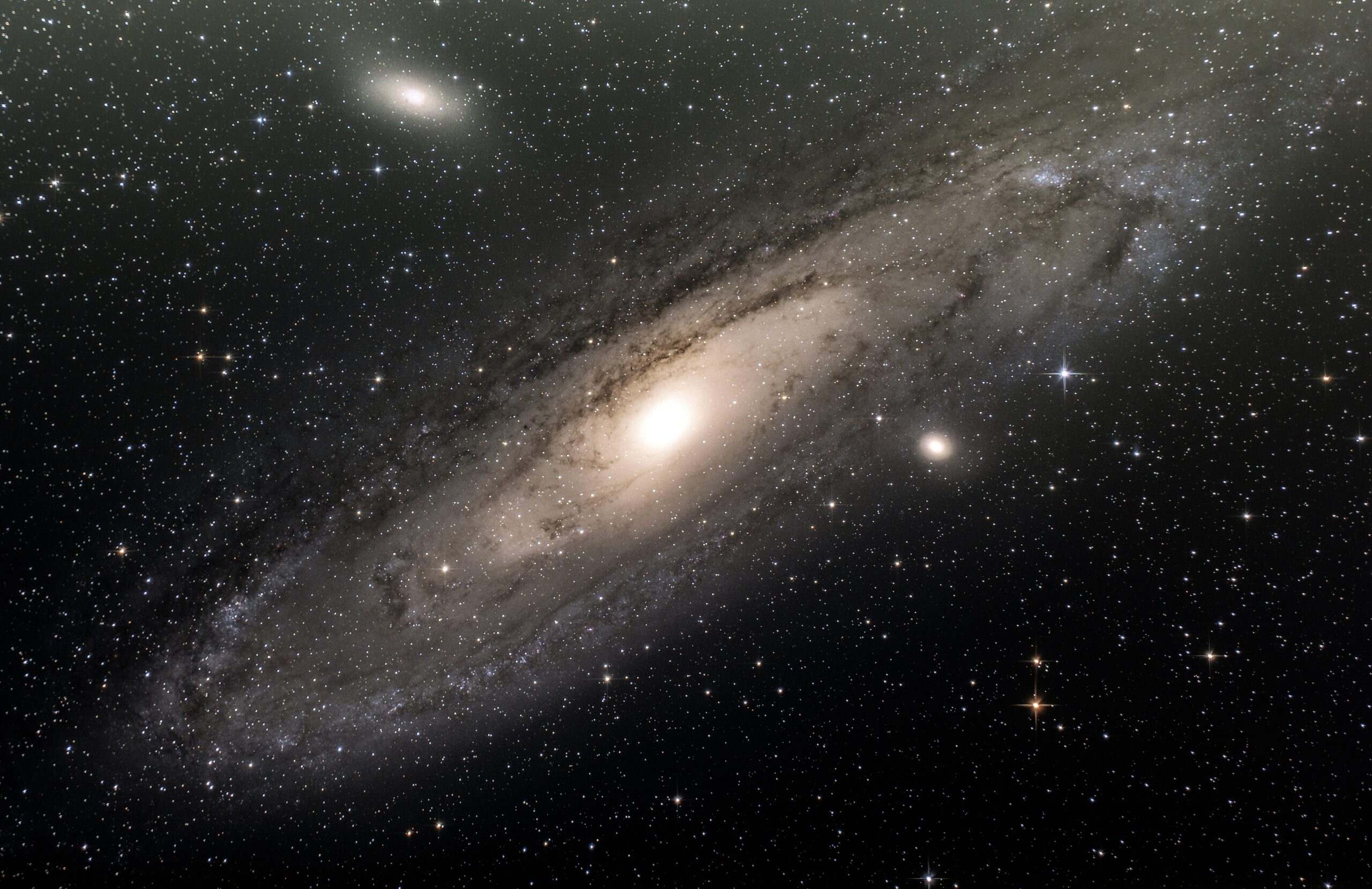
The Universe’s Thickness: Exploring the Fabric of Existence
The question of our universe’s “thickness” delves into the very nature of its structure and dimensionality. Far from being a simple, flat expanse, scientific inquiry suggests that the fabric of existence might possess a complexity that challenges our everyday perceptions. This exploration ventures into the realms of cosmology, theoretical physics, and advanced mathematics to understand what “thickness” could mean in a cosmic context, moving beyond a two-dimensional canvas to consider higher dimensions and the fundamental constituents of reality.
When we speak of thickness in everyday terms, we are referring to a measurable dimension, a third axis perpendicular to length and width. For a sheet of paper, thickness is a few hundredths of a millimeter. For a book, it’s measured in centimeters. However, when applied to the universe, the concept of “thickness” requires careful definition, as our observable universe appears to us as a three-dimensional space.
The Observable Universe: A Sphere of Light
The observable universe, the portion of the cosmos from which light has had time to reach us since the Big Bang, is often conceptualized as a sphere. This sphere does not imply a physical boundary or edge in the traditional sense, but rather a limit imposed by the finite age of the universe and the speed of light.
The Cosmic Horizon
The “edge” of the observable universe is not a wall, but rather a horizon. Imagine standing on a vast plain and seeing only as far as the curvature of the Earth allows. The observable universe is similar, with the cosmic microwave background radiation acting as a sort of “surface” beyond which we cannot currently see due to time and distance.
Expanding Dimensions?
While our perceived reality is three-dimensional (plus time), theoretical models propose that the universe could possess more dimensions than we can directly perceive. In these models, “thickness” might refer to the extent or behavior of these hidden dimensions. Are they curled up so tightly that they are imperceptible, or do they stretch out in ways we haven’t yet grasped?
Beyond Three Dimensions: The Realm of Theory
Theoretical physics, driven by the quest to unify fundamental forces and explain observed phenomena, has explored the possibility of extra spatial dimensions. These are not mere hypothetical constructs but arise from mathematical consistency in various theoretical frameworks.
String Theory and the Multiverse
String theory, for instance, postulates that the fundamental constituents of reality are not point-like particles but tiny, vibrating strings. The behavior of these strings, in order to be mathematically consistent, requires the existence of more than the three spatial dimensions we experience. Depending on the specific formulation of string theory, the number of extra dimensions can vary, often suggesting a total of 10 or 11 spacetime dimensions.
Compactification: Where Extra Dimensions Hide
If these extra dimensions exist, why don’t we see them? The prevailing explanation is “compactification,” a process where these extra dimensions are curled up into incredibly small sizes, rendering them undetectable by our current observational capabilities. To visualize this, consider a garden hose. From a distance, it appears to be a one-dimensional line. But up close, you can see its circumference, a second dimension curled up. In this analogy, the garden hose is our three-dimensional space, and its circumference represents a compactified extra dimension.
Brane Cosmology: Our Universe as a Membrane
Brane cosmology offers another perspective. In this framework, our universe might exist as a “brane” – a multidimensional membrane – within a higher-dimensional space, often referred to as the “bulk.” In this scenario, concepts of “thickness” could relate to the properties or extent of this bulk space, or even the thickness of our own brane.
The Role of Gravity
One intriguing aspect of brane cosmology is its potential explanation for the weakness of gravity compared to other fundamental forces. If gravity can “leak” into or propagate through these extra dimensions, it would appear weaker to us confined to our 3+1 dimensional brane. This offers a unique interpretation of our universe’s perceived dimensions and the forces that govern it.
The concept of the thickness setting of the universe is a fascinating topic that explores the dimensional aspects of our cosmos. For those interested in delving deeper into this subject, a related article can be found at Freaky Science, which discusses various theories and discoveries regarding the structure and fabric of the universe. This resource provides valuable insights that can enhance our understanding of the universe’s complexities and its potential implications on our existence.
Measuring the Cosmic Fabric: Tools and Techniques
The investigation into the universe’s potential “thickness” involves a sophisticated array of tools and techniques, ranging from astronomical observations to cutting-edge particle accelerators. These instruments are designed to probe the universe at its most fundamental scales and over the vastest distances.
Observing Cosmic Structures
The distribution and behavior of large-scale structures in the universe can provide indirect clues about its underlying geometry and dimensionality. Cosmologists analyze the cosmic microwave background radiation, the distribution of galaxies, and the expansion of the universe to test their models.
The Cosmic Microwave Background (CMB)
The CMB is a faint afterglow of the Big Bang, a snapshot of the universe when it was about 380,000 years old. Its subtle temperature variations, imprinted on this ancient light, carry information about the universe’s composition, geometry, and early evolution. Analyzing these anisotropies can help constrain cosmological parameters, including the curvature of spacetime.
Isotropy and Anisotropy
While the CMB appears remarkably uniform (isotropic) on large scales, meaning it looks the same in all directions, it also possesses tiny fluctuations (anisotropic). The pattern of these fluctuations is predicted by different cosmological models, and precise measurements of these patterns are crucial for refining our understanding of the universe’s fundamental properties.
Large-Scale Structure Surveys
Mapping the distribution of galaxies and galaxy clusters across vast cosmic volumes allows cosmologists to study the formation and evolution of structures. The way these structures grow and cluster can be influenced by the underlying geometry and number of dimensions of the universe.
Baryon Acoustic Oscillations (BAO)
BAO are distinctive patterns in the distribution of matter that act as a “standard ruler” in the universe. By measuring the apparent size of these BAO at different cosmic epochs, astronomers can determine the expansion history of the universe and infer its geometry, offering insights into its dimensionality.
Particle Physics and Quantum Gravity
At the most fundamental level, the nature of spacetime and its dimensions are explored through particle physics experiments and theoretical research into quantum gravity.
The Large Hadron Collider (LHC)
Particle accelerators like the LHC are designed to collide subatomic particles at extremely high energies. The outcomes of these collisions can reveal new particles and interactions, and sometimes, deviations from the predictions of the Standard Model of particle physics could hint at the existence of extra dimensions.
Evidence for Extra Dimensions?
Some theoretical models predict that at very high energies, such as those achieved in particle collisions, we might observe phenomena that are only explainable if extra dimensions exist. These could include the production of exotic particles or unusual energy loss patterns.
Gravitational Wave Astronomy
The detection of gravitational waves, ripples in spacetime caused by cataclysmic cosmic events, provides a new window into the universe. These waves offer a direct probe of the dynamics of spacetime itself and could potentially carry information about phenomena occurring in higher dimensions.
Black Hole Mergers and Neutron Star Collisions
The precise way gravitational waves propagate and interact can be sensitive to the number and nature of spacetime dimensions. Studying these signals from events like black hole mergers and neutron star collisions could offer indirect evidence for or constraints on theories involving extra dimensions.
The Thickness Analogy: Visualizing the Undetectable
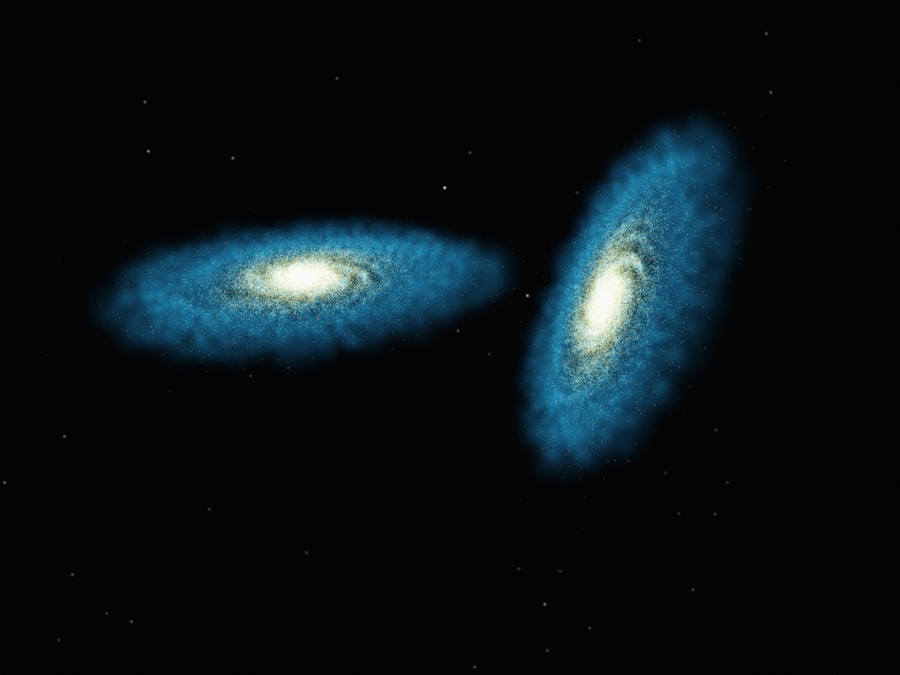
The concept of the universe’s “thickness” can be difficult to grasp when we are accustomed to thinking in terms of our visible three spatial dimensions. Analogies, while imperfect, can help to illuminate these abstract ideas.
The Sheet of Paper: A Flat Analogy
Imagine a perfectly flat, infinitely large sheet of paper. This is our everyday experience of a two-dimensional surface. Now, consider something placed on this paper – a tiny ant. The ant can move forward, backward, left, and right, but it cannot move “up” or “down” off the paper. This is analogous to our perceived three-dimensional universe if it were truly only two-dimensional.
Experiencing the World
Our senses and the tools we use are calibrated to detect and interact within these three dimensions. We perceive length, width, and depth. When we talk about the universe’s “thickness,” we are essentially asking if there are dimensions beyond these three that shape its reality.
The Rolled-Up Carpet: Hidden Dimensions at Hand
Consider a long, tightly rolled carpet. From a distance, it appears as a one-dimensional line. However, if you get very close and touch it, you can feel its circular dimension. This is often used to illustrate how extra dimensions might be “compactified” – rolled up into tiny spaces, making them undetectable to us.
The Universe’s Unseen Dimensions
In this analogy, the length of the carpet is our familiar three-dimensional space. The circular dimension of the roll represents a hidden, compactified extra dimension. If the universe has such dimensions, they are likely curled up far smaller than the scales we can directly probe, much like the circumference of the rolled carpet is imperceptible from afar.
The Stacked Sheets: Multiple Universes?
Another analogy involves imagining our universe as a single sheet of paper, but then envisioning a vast stack of these sheets, one on top of the other. Each sheet represents a separate universe, and the dimension connecting them is the “thickness” of the stack.
Multiverse Theories and Branes
This analogy is particularly relevant to certain multiverse theories, especially those involving brane cosmology. In this context, “thickness” might refer to the separation or interaction between different branes, each representing a distinct universe. Our universe, as a brane, could have a limited “thickness” within a larger, higher-dimensional framework.
Implications of a “Thick” Universe: From Gravity to Cosmic Fate

The existence of extra dimensions, or a more complex structure to spacetime, has profound implications for our understanding of fundamental physics and the ultimate fate of the universe.
Rethinking Fundamental Forces
The behavior of gravity is a key area where extra dimensions could play a significant role. If gravity can propagate into these unseen dimensions, it would explain why it appears so much weaker than the electromagnetic, strong nuclear, and weak nuclear forces.
The Hierarchy Problem
The vast difference in strength between gravity and the other fundamental forces is known as the “hierarchy problem.” Theories involving extra dimensions offer a potential solution, suggesting that gravity’s apparent weakness is an illusion caused by its dispersal across higher dimensions.
Gravity’s Cosmic Reach
Imagine pouring water onto a flat surface; it spreads out. If that surface has an invisible drain, some water will flow down the drain, making the amount of water remaining on the surface appear less substantial. Similarly, gravity’s influence might be diluted by its presence in extra dimensions.
The Nature of Dark Matter and Dark Energy
The enigmatic phenomena of dark matter and dark energy, which constitute the vast majority of the universe’s mass and energy content, could also be explained by the presence of extra dimensions.
Axions and Kaluza-Klein Particles
Some theories propose that dark matter could be composed of particles that only interact weakly with our observable universe, potentially due to their existence or origin in extra dimensions. These could include theoretical particles like axions or Kaluza-Klein particles, which are predicted by some higher-dimensional theories.
Unseen Influences
Just as unseen currents can affect the flow of a river, unseen influences from extra dimensions might account for the gravitational effects attributed to dark matter and the accelerating expansion of the universe attributed to dark energy.
The Universe’s Ultimate Fate
The geometry of spacetime, which is influenced by the presence and nature of its dimensions, is intimately linked to the universe’s fate. A universe with different dimensional properties might expand indefinitely, eventually collapse, or undergo other dramatic transformations.
Flat, Open, or Closed Universes
Cosmological models often categorize universes as flat, open, or closed, based on their overall curvature. The specific geometry of spacetime, and by extension its dimensionality, dictates which of these fates is most likely. For example, a universe with a specific kind of curvature might lead to a Big Crunch, while another could experience eternal expansion.
Beyond Our Observable Horizon
The question of “thickness” also touches upon what lies beyond our observable horizon. If our universe is a brane in a larger bulk, then the ultimate fate of our brane might be influenced by interactions or phenomena occurring in that larger space, far beyond our current observational reach.
The concept of the thickness setting of the universe is a fascinating topic that delves into the intricate balance of cosmic forces. For those interested in exploring this subject further, an insightful article can be found at Freaky Science, which discusses various theories and implications surrounding the universe’s structure. Understanding how these dimensions interact can provide a deeper appreciation of the cosmos and our place within it.
Current Frontiers and Future Prospects
| Parameter | Description | Typical Value | Units | Notes |
|---|---|---|---|---|
| Thickness of the Observable Universe | Diameter of the observable universe | 8.8 | Gigaparsecs (Gpc) | Approximate radius ~46 billion light years |
| Cosmic Microwave Background Thickness | Thickness of the last scattering surface | ~10 | Megaparsecs (Mpc) | Represents the “thickness” of the CMB shell |
| Thickness of Cosmic Filaments | Width of large-scale structure filaments | 1-10 | Megaparsecs (Mpc) | Varies depending on filament |
| Thickness of Galactic Disks | Vertical thickness of typical spiral galaxy disk | 0.3-1 | Kiloparsecs (kpc) | Example: Milky Way disk thickness ~0.3 kpc |
| Thickness of Dark Matter Halo | Extent of dark matter halo around galaxies | 100-300 | Kiloparsecs (kpc) | Depends on galaxy mass |
The exploration of the universe’s “thickness” is an ongoing scientific endeavor, pushing the boundaries of theoretical and observational physics. Future research promises to refine our understanding and potentially uncover direct evidence of phenomena that defy our current three-dimensional intuition.
Theoretical Advancements
Physicists continue to develop and refine theories that incorporate extra dimensions, such as various models of string theory and M-theory. These theoretical frameworks aim to provide a unified description of all fundamental forces and particles, often requiring a higher-dimensional spacetime for mathematical consistency.
Seeking a Grand Unified Theory
The ultimate goal of many of these theoretical pursuits is a “theory of everything” that can explain all observed phenomena from a single, coherent framework. Extra dimensions are often seen as a crucial component in achieving this unification.
The Elegance of Higher Dimensions
From a mathematical standpoint, incorporating extra dimensions can sometimes lead to more elegant and complete theories, resolving persistent paradoxes and inconsistencies found in lower-dimensional models.
Observational Targets
Future astronomical observations and particle physics experiments will be critical in testing these theoretical predictions. Scientists are constantly developing more sensitive instruments and innovative approaches to probe the cosmos.
Next-Generation Telescopes
Next-generation telescopes, both ground-based and space-based, are designed to observe the universe with unprecedented detail and sensitivity. These instruments will allow for more precise measurements of the cosmic microwave background, the distribution of galaxies, and the expansion history of the universe, providing crucial data to constrain cosmological models.
Detecting Gravitational Wave Signatures
Improvements in gravitational wave detectors will allow for the observation of fainter and more distant events. Analyzing the polarization and propagation of gravitational waves could offer direct signatures of higher-dimensional phenomena.
High-Energy Particle Physics Experiments
Future particle accelerators, potentially more powerful than the LHC, could reach energy scales where the effects of extra dimensions might become directly observable. The search for new particles and interactions will continue to be a key focus.
The Quest for Understanding
The investigation into the universe’s “thickness” is more than just an academic exercise. It represents humanity’s enduring curiosity about the fundamental nature of reality and our place within it. The answer to whether our universe possesses hidden dimensions and a greater “thickness” than we perceive could revolutionize our understanding of physics, cosmology, and indeed, existence itself.
FAQs
What does the “thickness setting” of the universe refer to?
The “thickness setting” of the universe is a conceptual term used to describe the dimensional or structural properties of the universe, particularly in theories that explore its shape, size, and the number of spatial dimensions it possesses.
How is the thickness of the universe measured or defined?
The thickness of the universe is not measured in a conventional sense like physical objects. Instead, it relates to cosmological models and theories, such as string theory or brane cosmology, which propose additional spatial dimensions or layers that could be considered the universe’s “thickness.”
Why is understanding the thickness of the universe important?
Understanding the thickness or dimensional structure of the universe helps scientists explore fundamental questions about the nature of reality, the behavior of gravity, the unification of forces, and the origins and fate of the cosmos.
Does the thickness setting affect the universe’s expansion?
The thickness or dimensional properties of the universe can influence cosmological models that describe its expansion. For example, extra dimensions in some theories might impact gravitational forces and the rate of expansion, but these effects are still theoretical and under investigation.
Is the thickness of the universe observable with current technology?
Currently, the thickness or extra-dimensional aspects of the universe are not directly observable with existing technology. Scientists rely on indirect evidence, mathematical models, and experiments in particle physics to explore these concepts.