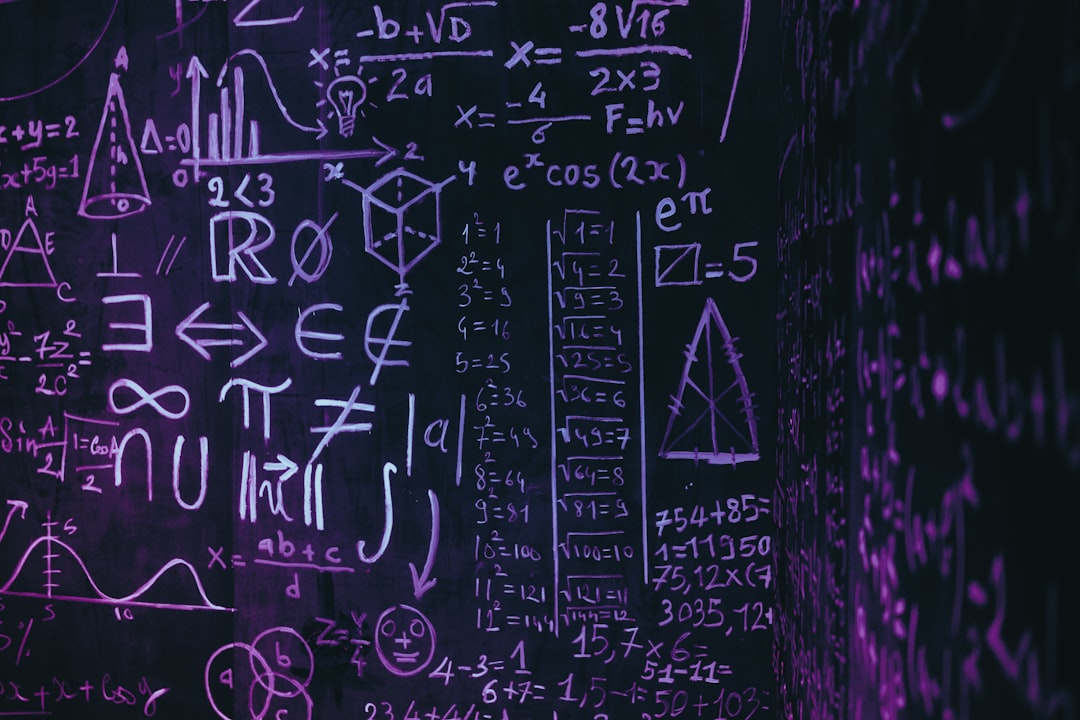
The universe, in its vastness and apparent complexity, often evokes a sense of awe. However, beneath the swirling nebulae and the silent dance of galaxies lies a profound order, a framework that governs every interaction, from the subatomic to the cosmological. This order is not arbitrary; it is deeply rooted in mathematics, a language of pure logic and abstraction that seems to be the very blueprint of reality. The universe doesn’t just possess mathematical laws; one could argue it is mathematical laws, manifesting in physical phenomena.
The perception of chaos in the universe often stems from our limited perspective and our struggle to grasp the sheer scale and intricate interconnectedness of cosmic events. We observe supernovae, the violent deaths of stars, as acts of cosmic destruction. Yet, these explosions are governed by precise physical principles, dictated by mathematical equations that describe the evolution of stellar masses, nuclear fusion, and the expulsion of elements into the interstellar medium. The distribution of galaxies, seemingly random clumps across the sky, also adheres to statistical distributions, governed by gravity and the expansion of space-time. The very fabric of reality, it appears, is woven with predictable threads.
The Language of Physics
Physics, the discipline dedicated to understanding the fundamental constituents of the universe and their interactions, is inextricably linked to mathematics. Concepts like force, energy, momentum, and fields are not merely descriptive terms; they are quantified and precisely defined by mathematical expressions. Newton’s laws of motion, for instance, are elegantly simple equations that predict the trajectory of an object under the influence of forces. Maxwell’s equations unify electricity and magnetism, revealing a deeper connection between these seemingly disparate phenomena and predicting the existence of electromagnetic waves, such as light, traveling at a constant speed.
From Classical Mechanics to Quantum Fields
The progression of physics has seen an ever-increasing reliance on sophisticated mathematical tools. Classical mechanics, built on calculus and geometry, provided a remarkably accurate description of the macroscopic world. However, as scientists delved into the realm of the very small, new mathematical frameworks were required. Quantum mechanics, with its probabilistic nature and wave-particle duality, necessitated the development of linear algebra, differential equations, and a wholly new way of conceptualizing physical reality. Quantum field theory, the current frontier, employs abstract mathematical structures like Hilbert spaces and Lie groups to describe the fundamental forces and particles of the universe.
The Cosmological Constant and General Relativity
Albert Einstein’s theory of general relativity is a prime example of how mathematics can describe the grandest scales of the universe. The theory itself is a complex web of tensor calculus, describing gravity not as a force, but as a curvature of spacetime. The presence of mass and energy warps this fabric, dictating how objects move. The mathematical elegance of general relativity allows for predictions of phenomena like the bending of light by gravity, the existence of black holes, and the expansion of the universe itself. Even the seemingly problematic cosmological constant, initially introduced by Einstein to maintain a static universe, has found renewed relevance in explaining the accelerating expansion of the cosmos, a phenomenon that underscores the predictive power of mathematical models.
The universe’s adherence to strict mathematical rules has fascinated scientists and philosophers alike, as it suggests an underlying order to the cosmos. This concept is explored in depth in the article “The Mathematical Nature of the Universe,” which discusses how mathematical principles govern everything from the motion of celestial bodies to the fundamental forces of nature. For a more comprehensive understanding of this intriguing topic, you can read the article here: The Mathematical Nature of the Universe.
Fundamental Constants: The Universal Coefficients
At the heart of the universe’s mathematical structure lie fundamental constants. These are dimensionless numbers or quantities with specific units that appear in physical laws and appear to be universal, meaning they are the same everywhere in the universe and at all times. Their existence suggests a deep and inherent order that predates any specific cosmic arrangement. Without these constants, the relationships described by physical laws would be arbitrary and context-dependent, leading to a chaotic and unpredictable reality.
The Speed of Light (c)
The speed of light in a vacuum, denoted by ‘c’, is one of the most iconic fundamental constants. It appears in Einstein’s mass-energy equivalence equation, E=mc², fundamentally linking energy and mass. It also dictates the fundamental speed limit for information and matter in the universe, shaping the causal structure of space-time. The constancy of ‘c’ is a cornerstone of special relativity and has profound implications for our understanding of simultaneity and time dilation.
Electromagnetism and the Fine-Structure Constant (α)
The fine-structure constant, a dimensionless number approximately equal to 1/137, plays a crucial role in electromagnetism. It governs the strength of the electromagnetic interaction between charged particles. Its seemingly arbitrary value has long fascinated physicists, prompting investigations into whether it could be derived from more fundamental principles or if it is a fundamental characteristic of the universe itself. Its precise value influences a wide range of phenomena, from the stability of atoms to the way light interacts with matter.
Gravitational Constant (G)
The gravitational constant, ‘G’, is another fundamental constant that quantifies the strength of the gravitational force. It appears in Newton’s law of universal gravitation and in Einstein’s field equations of general relativity. The value of ‘G’ determines how strongly massive objects attract each other. While seemingly straightforward, its precise measurement has been a challenge, and its fundamental origin remains a subject of research.
Planck Constant (h)
The Planck constant, denoted by ‘h’, is central to quantum mechanics. It relates the energy of a photon to its frequency (E=hf) and is fundamental to understanding the quantized nature of energy. The Planck scale, derived from ‘h’, represents the smallest meaningful units of length, time, and mass, below which our current understanding of physics begins to break down. This suggests that at the very smallest scales, reality itself is quantized and governed by discrete mathematical units.
Symmetry: The Underlying Elegance
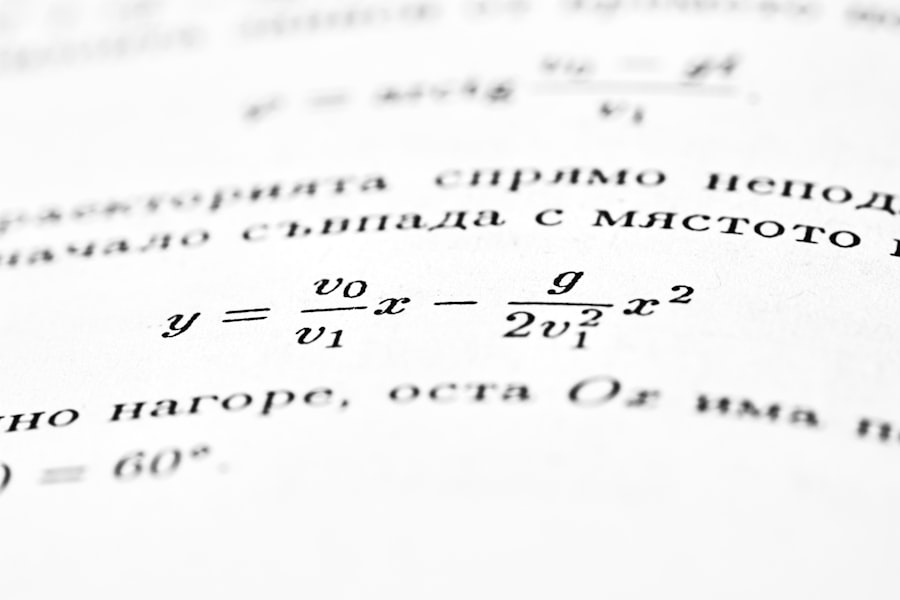
Symmetry is a pervasive theme in the universe, both in its visual appearance and in its underlying physical laws. Mathematical symmetry, the invariance of a system under certain transformations, is not merely an aesthetic principle but a powerful tool for understanding physical phenomena. Noether’s theorem, a fundamental result in theoretical physics, elegantly demonstrates the deep connection between symmetries and conservation laws. Every continuous symmetry of a physical system corresponds to a conserved quantity.
Translational Symmetry and Momentum Conservation
The fact that the laws of physics are the same everywhere in space (translational symmetry) leads to the conservation of linear momentum. If physical laws were to change from one location to another, objects would spontaneously change their motion without any apparent cause, leading to a chaotic and unpredictable universe. The conservation of momentum ensures that in the absence of external forces, an object’s motion remains unchanged, a fundamental principle observed in everything from the collision of billiard balls to the orbits of planets.
Rotational Symmetry and Angular Momentum Conservation
Similarly, the fact that the laws of physics are the same regardless of orientation (rotational symmetry) leads to the conservation of angular momentum. This principle explains why spinning objects tend to continue spinning and why a figure skater can increase their spin rate by pulling in their arms. The conservation of angular momentum is crucial for understanding the formation of galaxies, the orbits of planets, and the rotational behavior of stars.
Time Translation Symmetry and Energy Conservation
The invariance of physical laws with respect to time (time translation symmetry) results in the conservation of energy. This means that the total energy of an isolated system remains constant over time, even if the energy is converted between different forms (e.g., kinetic to potential energy). The conservation of energy is arguably the most fundamental conservation law in physics, underpinning countless phenomena and calculations. Without it, perpetual motion machines would be possible, and energy could be created or destroyed arbitrarily.
Gauge Symmetry and Fundamental Forces
More abstract forms of symmetry, known as gauge symmetries, are fundamental to understanding the interaction of particles via the fundamental forces. Quantum field theories are built upon these gauge symmetries, which dictate the nature of the mediating particles (e.g., photons for electromagnetism, gluons for the strong nuclear force). The mathematical structure of these symmetries explains the properties and interactions of elementary particles, providing a unified framework for the electromagnetic, weak, and strong nuclear forces.
The Unreasonable Effectiveness of Mathematics
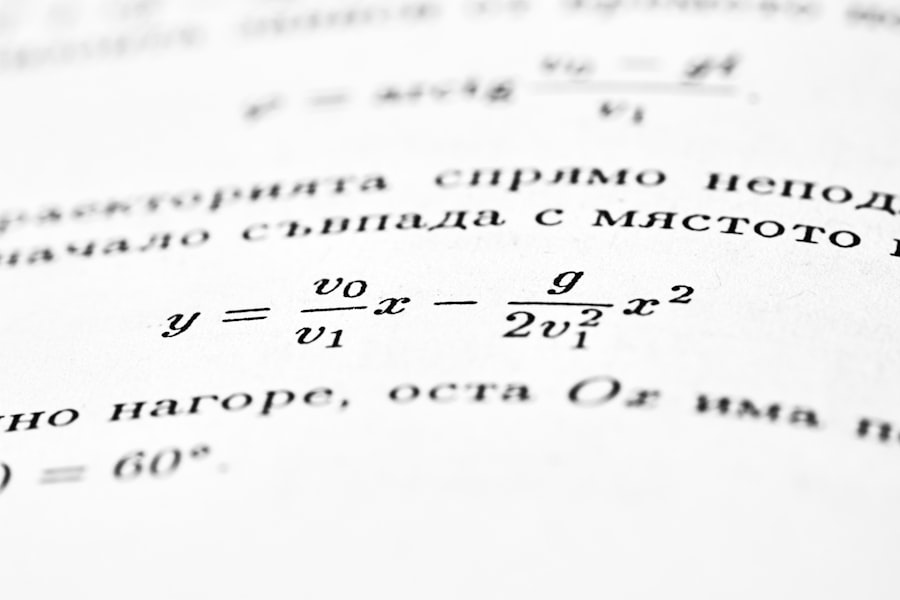
The profound connection between mathematics and the physical universe has been a source of ongoing fascination and philosophical debate. Eugene Wigner famously described the “unreasonable effectiveness of mathematics in the natural sciences,” marveling at how abstract mathematical concepts, developed often without any intended physical application, turn out to be precisely the tools needed to describe the workings of the universe.
Abstract Concepts and Physical Realities
Consider the concept of imaginary numbers, introduced to solve certain algebraic equations. These numbers, involving the square root of negative one, seemed purely abstract. Yet, they are essential in quantum mechanics, particularly in the description of wave functions which represent the probability amplitudes of particles. Similarly, concepts from topology, a branch of mathematics dealing with the properties of space that are preserved under continuous deformations, are proving increasingly relevant in understanding phenomena like the structure of spacetime and the properties of exotic materials.
The Role of Abstraction in Discovery
The ability of mathematicians to explore abstract structures, often divorced from immediate physical reality, has proven to be a powerful engine for scientific discovery. When new phenomena are observed in physics, or when existing theories require refinement, it is often the case that the mathematical tools needed to describe them have already been developed by mathematicians. This suggests that mathematics is not merely a descriptive language for the universe, but rather a fundamental aspect of its underlying structure, waiting to be discovered and applied.
Predictive Power of Mathematical Models
The predictive power of mathematical models in physics is extraordinary. Theories formulated with rigorous mathematical precision have consistently led to the prediction of new phenomena that were subsequently confirmed by observation and experiment. The prediction of the Higgs boson through the Standard Model of particle physics, or the prediction of gravitational waves by general relativity, are prime examples of this predictive prowess. This success suggests that the universe is inherently understandable through mathematical reasoning.
The Search for a “Theory of Everything”
The ongoing quest for a “theory of everything,” a single overarching framework that unifies all fundamental forces and particles, is a testament to the belief in an underlying mathematical simplicity. Physicists are exploring various mathematical structures, such as string theory and loop quantum gravity, in the hope of discovering the ultimate mathematical language that describes the universe at its most fundamental level. The success of these endeavors hinges on the assumption that the universe possesses a coherent and elegant mathematical description.
The intriguing notion that the universe adheres to strict mathematical rules has captivated scientists and philosophers alike for centuries. This concept suggests that the underlying fabric of reality can be described through mathematical equations and principles, revealing a profound connection between mathematics and the physical world. For a deeper exploration of this fascinating topic, you can read a related article that delves into the mathematical foundations of the universe by following this link. Understanding how these principles govern everything from the motion of planets to the behavior of subatomic particles can provide valuable insights into the nature of existence itself.
Implications for Understanding Reality
| Reasons | Explanation |
|---|---|
| Consistency | The use of mathematical rules ensures consistency in the behavior of physical phenomena across the universe. |
| Predictability | Mathematical rules allow scientists to predict the behavior of celestial bodies and natural processes with great accuracy. |
| Universal applicability | Mathematical rules apply universally, allowing for a unified understanding of the cosmos. |
| Order and structure | Mathematical rules provide a sense of order and structure to the universe, making it more comprehensible to human understanding. |
The deep entanglement of mathematics and the universe has profound implications for our understanding of reality itself. It suggests that the universe is not a capricious, random entity, but a structured, logical, and fundamentally knowable system. This order, expressed through the precision of mathematical laws, provides a foundation for scientific inquiry and for our ability to predict and potentially manipulate the world around us.
Determinism vs. Probability
While the mathematical laws of physics often appear deterministic, particularly at the classical level, quantum mechanics introduces an element of inherent probability. However, this probability is not random; it is governed by precise mathematical rules. The outcome of a quantum event may be uncertain, but the probability distribution of possible outcomes is precisely calculable. This nuanced relationship between determinism and probability highlights the complex but still mathematical nature of reality.
The Limits of Predictability
Even with a perfect understanding of the mathematical laws, complete predictability in the universe is not always achievable. Chaotic systems, which are highly sensitive to initial conditions, can exhibit unpredictable behavior over long timescales, despite being governed by deterministic equations. Furthermore, the sheer complexity of many physical systems, from the formation of galaxies to the behavior of living organisms, makes complete prediction practically impossible, even with a profound understanding of the underlying mathematical principles.
The Nature of Mathematical Existence
The “unreasonable effectiveness” of mathematics also raises questions about the nature of mathematical existence itself. Do mathematical objects and laws exist independently of our minds, as some Platonists suggest? Or are they constructs of human consciousness, emergent properties of our cognitive processes? The fact that these abstract constructs so accurately describe the universe might suggest a deeper, objective reality to mathematical truths, implying that these laws are not merely human inventions but inherent features of existence.
The Ongoing Exploration
The exploration of the universe’s mathematical laws is an ongoing endeavor. As our observational capabilities improve and our theoretical frameworks evolve, we continue to uncover deeper layers of mathematical order. From the intricate patterns of quantum entanglement to the grand architecture of the cosmic web, mathematics remains the indispensable tool for deciphering the universe’s profound and elegant logic, revealing that within its apparent chaos lies an architecture of unparalleled mathematical precision.
FAQs
What are the strict mathematical rules that the universe follows?
The strict mathematical rules that the universe follows include principles such as the laws of physics, the laws of thermodynamics, and the principles of quantum mechanics. These rules govern the behavior of matter, energy, and the forces that act upon them.
Why does the universe follow strict mathematical rules?
The universe follows strict mathematical rules because these rules provide a consistent and reliable framework for understanding and predicting the behavior of natural phenomena. Mathematics allows scientists to describe and quantify the relationships between different physical quantities and to make accurate predictions about the behavior of the universe.
How do scientists use mathematics to understand the universe?
Scientists use mathematics to understand the universe by formulating mathematical models and equations that describe the behavior of physical systems. These models can be used to make predictions about the behavior of the universe, and they can be tested and refined through experimentation and observation.
What role does mathematics play in the study of cosmology and astrophysics?
Mathematics plays a crucial role in the study of cosmology and astrophysics by providing the tools and language necessary to describe the behavior of celestial bodies, the structure of the universe, and the fundamental forces that govern its behavior. Mathematical models and equations are used to study phenomena such as the expansion of the universe, the formation of galaxies, and the behavior of black holes.
Can the universe be fully explained and understood through mathematics?
While mathematics provides a powerful framework for understanding and describing the behavior of the universe, it is not yet clear whether the universe can be fully explained and understood through mathematics alone. The universe is a complex and dynamic system, and there may be aspects of its behavior that are beyond the scope of current mathematical models and theories.