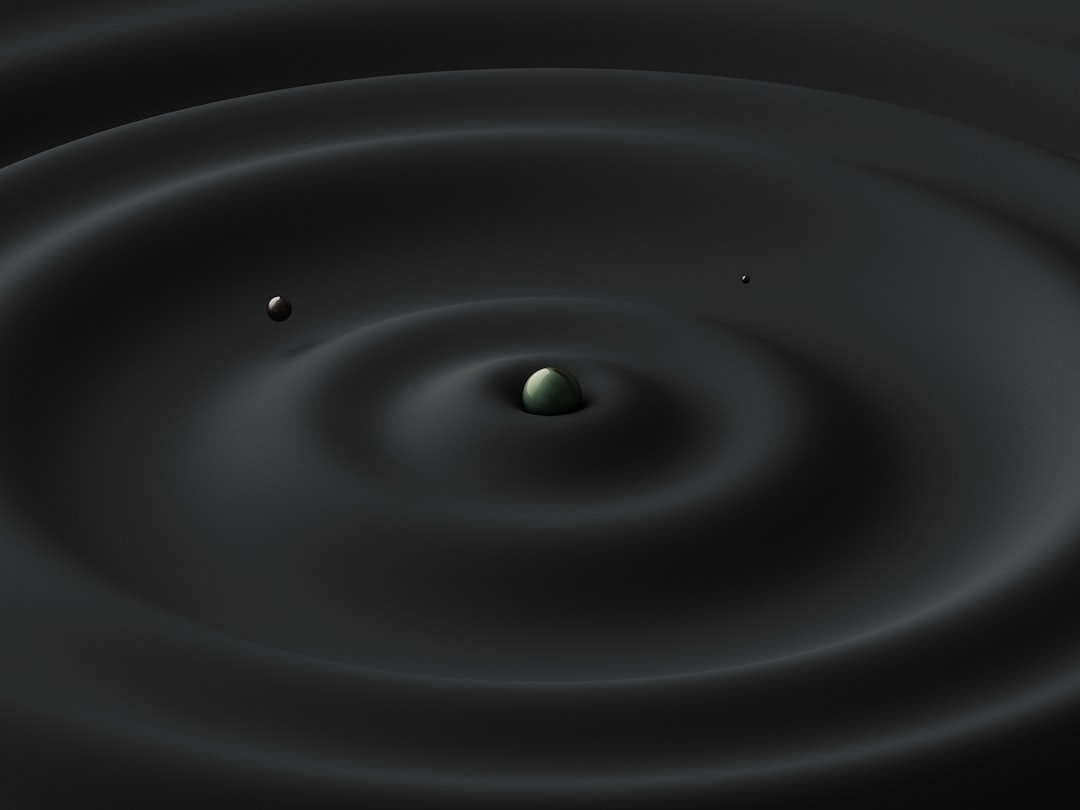
The ultimate disposition of the cosmos, a topic of profound contemplation for cosmologists and philosophers alike, centers on a concept known as heat death. This theory posits a universe that inexorably progresses towards a state of maximum entropy, where all available energy has been uniformly distributed and no further thermodynamic processes can occur. It represents the quintessential endpoint of cosmic evolution, a tranquil, featureless void devoid of any activity or structure.
The concept of heat death is firmly rooted in the laws of thermodynamics, particularly the second law, which states that the entropy of an isolated system never decreases over time; it either stays constant or increases. For the universe, considered an isolated system, this implies a relentless increase in disorder and a decrease in available energy for work.
Carnot’s Insights and Clausius’s Contributions
The genesis of this idea can be traced back to the early 19th century with Sadi Carnot’s work on the efficiency of heat engines. Carnot demonstrated that the maximum efficiency of a heat engine depends on the temperature difference between its hot and cold reservoirs. This foundational understanding laid the groundwork for the later thermodynamic theories.
Rudolf Clausius, in the mid-19th century, formalized the concept of entropy and applied the second law to the entire universe. He famously declared that “the energy of the universe is constant; the entropy of the universe tends to a maximum.” This statement encapsulates the essence of heat death, suggesting a future where all temperature differentials, the very drivers of cosmic processes, would vanish.
The Arrow of Time
The second law of thermodynamics is often referred to as the “arrow of time.” It provides a fundamental directionality to the universe, differentiating past from future. While other physical laws are time-reversible, entropy’s inexorable increase dictates a one-way street for cosmic evolution. This entropic arrow points directly towards the ultimate state of heat death, a universe where time, in a meaningful sense, will cease to have consequence.
The end of the universe is a topic of great intrigue in the field of physics, with various theories suggesting different scenarios for its ultimate fate. One compelling article that delves into these theories is found at Freaky Science, where it explores concepts such as the Big Freeze, Big Crunch, and Heat Death. Each of these theories presents a unique perspective on how cosmic forces and the expansion of the universe could lead to its eventual demise, offering readers a fascinating glimpse into the future of our cosmos.
The Mechanisms of Decline
The journey towards heat death is a multi-stage process, characterized by the gradual decay and ultimate dissolution of all cosmic structures. From the smallest particles to the largest superclusters, the forces of entropy will slowly but surely exert their inevitable influence.
Stellar Extinction and Galactic Decay
Stars, the furnaces of the universe, are finite entities. They burn through their nuclear fuel, evolving through stages of main sequence, giant, and ultimately collapse into white dwarfs, neutron stars, or black holes. As the universe ages, star formation will dwindle due to the depletion of available gas and dust. Eventually, all existing stars will exhaust their fuel, leaving behind a cold, dark graveyard of stellar remnants.
Galaxies, currently vibrant collections of stars, gas, and dark matter, are also subject to decay. Over immense timescales, gravitational interactions will lead to the ejection of stars from galactic halos and the merger of galaxies, coalescing into ever larger, but ultimately less active, supergalaxies. These supergalaxies will then continue to disperse their constituent matter, as gravitational binding becomes less effective in a universe characterized by ever-increasing distances between objects.
Proton Decay and Black Hole Evaporation
Beyond the observable stellar and galactic phenomena, more speculative but crucial mechanisms contribute to the final heat death. Proton decay, a theoretical phenomenon predicted by some grand unified theories (GUTs), suggests that protons, the building blocks of atomic nuclei, are not truly stable. If protons do indeed decay, even with an incredibly long half-life, their eventual disintegration would lead to the dissolution of all ordinary matter over an unimaginable timescale.
Black holes, once thought to be eternal cosmic sinks, are also predicted to eventually evaporate through a process known as Hawking radiation. This quantum mechanical phenomenon, theorized by Stephen Hawking, suggests that black holes slowly emit particles due to quantum fluctuations near their event horizons. Over truly colossal timescales, even the largest supermassive black holes would radiate away their mass, eventually evaporating into a shower of photons and other fundamental particles.
The Ultimate State
The universe’s final embrace with heat death will be a stark contrast to its vibrant beginning. It will be a state of utter uniformity, a cosmic equilibrium where all gradients have been smoothed out.
A Cold, Featureless Expanse
Imagine a universe where there are no stars to illuminate the darkness, no galaxies to coalesce, and no planets to harbor life. This is the ultimate landscape of heat death. The cosmic microwave background radiation, currently a faint echo of the Big Bang, would have redshifted to an extreme degree, becoming virtually undetectable.
The temperature across the universe will be infinitesimally close to absolute zero, with no regions warmer or cooler than any other. This lack of temperature differential means no further energy transfer can occur, rendering any form of work, from the simplest chemical reaction to the most complex biological process, utterly impossible.
Dispersed Matter and Uniform Radiation
All matter, whether it be the remnants of stars, the products of proton decay, or the final emissions of evaporating black holes, will be dispersed to an incredible degree. Photons, neutrinos, and other fundamental particles will drift aimlessly through an ever-expanding void, rarely interacting. The density of these particles will be so low that the probability of any two particles encountering each other will approach zero.
The universe will be a vast, empty canvas, uniformly populated by incredibly dilute radiation and perhaps some exotic, long-lived particles. There will be no structure, no complexity, and no potential for change.
Implications for Life and Consciousness
The prospect of heat death carries profound implications for the existence of life and consciousness in the universe. Our very existence relies on the presence of thermodynamic disequilibrium, on the availability of free energy to power biological processes.
The End of Biological Process
Life, in all its forms, is an exquisitely complex system that extracts energy from its environment and uses it to maintain order and replicate. This process is inherently dissipative, generating entropy as a byproduct. In a heat-death universe, where no free energy exists, biological processes would be impossible. The very concept of “life” as we understand it would cease to have any meaning.
Consider a sophisticated supercomputer, performing complex calculations. Its operation depends on energy inputs and the dissipation of heat. In a heat-death scenario, such a machine would be utterly inert, its components frozen in an unchanging state, unable to process or store information.
The Ultimate Silence
With no life and no processes, there would be no observers, no minds to contemplate the cosmos. The universe, in its heat-death state, would be a realm of ultimate silence. Information itself, the very fabric of our understanding, would degrade and disperse, ultimately vanishing into the uniform noise of thermal equilibrium.
This is not to say that consciousness is tied solely to biological forms. However, any form of consciousness, whether biological, artificial, or something entirely alien, would still be subject to the same thermodynamic constraints. Without energy gradients, the complex interactions necessary for thought and awareness would be impossible.
In exploring the fascinating topic of how the universe will end according to physics, one can delve into various theories that scientists have proposed over the years. From the Big Freeze to the Big Crunch, each scenario presents a unique perspective on the ultimate fate of our cosmos. For a deeper understanding of these concepts and the science behind them, you might find this article on Freaky Science particularly enlightening. It offers insights into the various hypotheses and the implications they hold for the future of everything we know.
Alternatives and Unknowns
| End Scenario | Description | Key Physics Concept | Timescale | Outcome |
|---|---|---|---|---|
| Heat Death (Big Freeze) | The universe continues expanding, stars burn out, and entropy reaches maximum, leading to no usable energy. | Second Law of Thermodynamics, Accelerating Expansion | ~10^100 years | Universe becomes cold, dark, and inert. |
| Big Crunch | The expansion of the universe reverses, causing it to collapse back into a hot, dense state. | Gravitational Attraction, Closed Universe Model | ~10^11 years (if applicable) | Universe ends in a singularity, possibly leading to a new Big Bang. |
| Big Rip | Dark energy causes the expansion to accelerate so much that galaxies, stars, planets, and eventually atoms are torn apart. | Phantom Energy, Dark Energy with w < -1 | ~10^10 years (depending on dark energy properties) | Complete disintegration of all structures in the universe. |
| Vacuum Decay | A quantum tunneling event causes a lower-energy vacuum bubble to expand at the speed of light, destroying the current universe’s structure. | Quantum Field Theory, False Vacuum Metastability | Unknown (could happen anytime) | Radical change in physical laws, destruction of existing matter. |
While heat death is the prevailing scientific consensus for the ultimate fate of the universe, it is important to acknowledge that it is a theoretical model based on our current understanding of physics. There are always possibilities for new discoveries or re-interpretations that could alter our cosmic prognosis.
The Big Crunch and Big Rip
Historically, and still within the realm of possibility depending on the universe’s density and the nature of dark energy, are alternative endpoint scenarios. The “Big Crunch” postulates a universe where gravity eventually overcomes expansion, causing the universe to re-collapse into an infinitely dense singularity, mirroring the Big Bang.
The “Big Rip” is another theoretical end-state, driven by a hypothetical form of dark energy that increases in strength over time. In this scenario, the accelerating expansion of the universe would eventually become so extreme that it would tear apart galaxies, stars, planets, and even atoms themselves, culminating in the “ripping apart” of spacetime.
The Role of Dark Energy
Our understanding of dark energy, the mysterious force driving the accelerated expansion of the universe, is still incomplete. Its exact nature could significantly influence the long-term future. If dark energy itself were to decay or transform over eons, it could alter the predictions for heat death. This remains an active area of research and speculation.
The Limits of Our Knowledge
Ultimately, our understanding of the universe’s ultimate fate is constrained by the limits of our current scientific knowledge. There may be fundamental laws or phenomena yet undiscovered that could drastically change the cosmic narrative. Perhaps the universe is part of a larger multiverse, with cycles of creation and destruction that transcend our current cosmological models.
However, based on the well-established laws of thermodynamics and our current observations of cosmic expansion, heat death remains the most scientifically plausible and compelling vision of the universe’s ultimate end. It offers a humbling perspective on the transient nature of all things, a reminder that even the grandest cosmic structures are ultimately subject to the inexorable march of entropy.
WATCH NOW ▶️ The Universe Is A False State: Is Reality a Simulation?
FAQs
What are the main theories about how the universe will end?
The primary theories include the Big Freeze, the Big Crunch, the Big Rip, and Heat Death. Each theory is based on different assumptions about the universe’s expansion, matter density, and dark energy.
What is the Big Freeze scenario?
The Big Freeze, also known as Heat Death, suggests that the universe will continue expanding forever, gradually cooling as stars burn out and galaxies drift apart, eventually leading to a cold, dark, and lifeless cosmos.
How does the Big Crunch differ from other end-of-universe theories?
The Big Crunch posits that the universe’s expansion will eventually reverse, causing it to collapse back into a hot, dense state, potentially leading to a new Big Bang. This contrasts with theories predicting endless expansion.
What role does dark energy play in the universe’s fate?
Dark energy is believed to drive the accelerated expansion of the universe. Its properties influence whether the universe will expand forever, rip apart, or eventually collapse, making it a critical factor in end-of-universe predictions.
Is it possible to know exactly when the universe will end?
Currently, scientists cannot determine the exact timeline for the universe’s end due to uncertainties in measuring dark energy, matter density, and other cosmic parameters. Estimates range from billions to trillions of years into the future.