You probably have one. That humming, beeping box in your kitchen that transforms cold leftovers into steaming meals in mere minutes. You rely on it, you trust it, but do you really understand what’s happening inside that unassuming appliance? It’s time to pull back the curtain on your microwave’s functionality and uncover the truth about how it actually cooks your food. Forget the myths and the vague notions; we’re diving deep into the science that makes your microwave so undeniably convenient.
You might think of your microwave as a tiny oven, but that’s where the similarities end. Instead of relying on convection or radiant heat, your microwave employs a far more unique approach to heating. It’s not about warming the air around your food; it’s about directly energizing the molecules within your food. This process, at its core, is about harnessing the power of electromagnetic radiation.
The Electromagnetic Spectrum: A Quick Refresher
To truly grasp how your microwave works, a brief understanding of the electromagnetic spectrum is helpful. This spectrum encompasses all forms of electromagnetic radiation, from low-energy radio waves to high-energy gamma rays. We’re talking about a vast range of frequencies and wavelengths, each with distinct properties. Think of it as a rainbow of energy, but with many more colors than just the ones you can see.
Where Microwaves Fit In
The “micro” in microwave isn’t just for show. It refers to the specific wavelength of electromagnetic radiation used. These microwaves fall within a particular band of the spectrum, roughly between 300 megahertz (MHz) and 300 gigahertz (GHz). This is considerably higher in frequency and shorter in wavelength than radio waves, but lower than infrared radiation. It’s this specific frequency that is crucial for their heating capabilities.
The Star of the Show: The Magnetron
The magic begins with a component called the magnetron. This is the heart of your microwave, the device responsible for generating the microwaves themselves. It’s a marvel of engineering, a vacuum tube that uses strong magnetic fields and electric fields to accelerate electrons. As these electrons move at incredibly high speeds, they emit microwave radiation. Think of it as a highly sophisticated oscillator, tuned to produce the precise frequency needed for cooking.
Directing the Energy: The Waveguide
Once generated, the microwaves need to be directed into the cooking chamber. This is the job of the waveguide, a hollow metal tube that acts like a conduit. The dimensions of the waveguide are carefully designed to efficiently transport the microwaves from the magnetron to the turntable or the inside of the oven cavity. It ensures that the energy is channeled where it needs to go, preventing it from escaping prematurely.
If you’ve ever wondered why your microwave doesn’t work the way you think it should, you might find the article on Freaky Science particularly enlightening. It delves into the common misconceptions surrounding microwave technology and explains how factors like uneven heating and the limitations of microwave radiation can affect cooking results. To learn more about these intriguing insights, check out the article here: Why Your Microwave Doesn’t Work the Way You Think.
The Astonishing Science of Molecular Excitation
So, those microwaves are bouncing around inside your oven. Now what? This is where the real culinary magic (and science) happens. It’s not a passive process; your food is actively participating in its own heating. The key players here are water molecules, and to a lesser extent, fats and sugars.
The Polar Nature of Water
Water (H₂O) is a polar molecule. This means it has a slightly positive charge on its hydrogen atoms and a slightly negative charge on its oxygen atom. It’s like a tiny magnet, with a positive and a negative end. This polarity is fundamental to how microwaves interact with food.
The Oscillating Dance
When microwaves enter the food, they interact with these polar molecules. The electromagnetic field of the microwaves rapidly oscillates, meaning it flips its positive and negative poles back and forth billions of times per second. This rapid oscillation forces the polar water molecules to try and align themselves with the changing field. Imagine trying to turn a tiny magnet around and around in sync with a rapidly spinning disco ball – the magnet will constantly be trying to catch up.
Friction Generates Heat
This constant reorientation of water molecules creates friction. As billions of these molecules bump and jostle against each other, trying to keep up with the oscillating electromagnetic field, they generate heat. This is not like the heat from an oven, which radiates outwards. This is a direct, internal heating process, occurring precisely where the water molecules are.
Not All Foods Heat Equally
You’ve likely noticed that some foods heat faster and more evenly than others in the microwave. This is directly related to their water content. Foods with high water content, like vegetables and many sauces, will heat up very quickly. Drier foods, or those with less water and more fat or sugar, might take longer or heat unevenly. Fats and sugars are also affected by microwaves, though to a lesser extent than water.
The Role of Fats and Sugars
While water is the primary heating agent, fats and sugars also contribute. They are also polar molecules, though their polarity is generally weaker than that of water. Nevertheless, they can still oscillate in response to the microwaves, generating some heat. This explains why foods high in fat or sugar can sometimes become very hot, even if their water content isn’t exceptionally high.
Deciphering the Settings: Power Levels and Time
Your microwave isn’t just a one-trick pony. It offers you control over the heating process through its power levels and cooking times. Understanding these settings is crucial for achieving optimal results and avoiding overcooked or undercooked meals.
The Illusion of Lower Power
When you select a lower power level on your microwave, it’s not actually reducing the intensity of the microwaves being produced by the magnetron. Instead, the microwave is cycling the magnetron on and off in rapid bursts. At 50% power, for instance, the magnetron might be on for 5 seconds and then off for 5 seconds, and so on. This creates the effect of lower power, allowing for more gentle cooking or simmering.
Why Use Lower Power Levels?
Lower power levels are particularly useful for delicate foods, foods with high sugar content that can easily burn, or when you want to defrost something without cooking the edges. It allows the heat to penetrate more gradually, reducing the risk of uneven cooking or scorching. Think of it as a gentler approach to heating.
The Importance of Precise Timing
Timing is everything in microwave cooking. Because the heating is so direct and efficient, it’s easy to overcook food. It’s always better to start with a shorter cooking time and add more if needed. Many recipes provide suggested cooking times, but these are often just starting points. Factors like the starting temperature of the food, the density of the food, and even the wattage of your microwave can all influence how long it takes to cook.
Factors Influencing Cooking Time
- Food Density: Denser foods will take longer to heat through than lighter, airier foods.
- Starting Temperature: Frozen foods will naturally take longer to cook than refrigerated or room-temperature foods.
- Food Size and Shape: Smaller, more uniformly shaped pieces will cook faster and more evenly than large, irregularly shaped items.
- Microwave Wattage: Higher wattage microwaves cook faster. If your recipe is based on a higher wattage oven, you’ll need to adjust the time for a lower wattage model.
The “Standing Time” Phenomenon
You’ve probably noticed that many microwave recipes instruct you to let the food “stand” for a minute or two after cooking. This isn’t just a suggestion; it’s an important part of the cooking process.
Residual Heat at Work
During the cooking cycle, the outer layers of your food heat up the fastest. Once the microwave is turned off, the heat continues to conduct inwards from these hotter outer layers to the cooler interior. This standing time allows the heat to distribute more evenly throughout the food, ensuring that the center is fully cooked and at the desired temperature. It’s the internal energy continuing its work.
Evening Out Hot Spots
Microwaves can sometimes create “hot spots” within food, areas that are significantly hotter than others. Standing time helps to mitigate these hot spots by allowing the heat to migrate and equalize. This results in a more uniformly cooked and enjoyable final product.
Beyond the Basics: Advanced Microwave Features and Safety

Modern microwaves come equipped with a surprising array of features designed to simplify your cooking experience and enhance safety. Understanding these can unlock new possibilities in your kitchen.
Sensor Cooking: The Intelligent Approach
Many newer microwaves boast “sensor cooking” technology. These sensors, often using humidity or steam detection, can gauge the amount of moisture being released from your food as it cooks. Based on this information, the microwave automatically adjusts the cooking time and power level to ensure your food is perfectly cooked without overdoing it. It’s like having a little chef inside your microwave, constantly monitoring and adjusting.
How Sensor Cooking Works
When you select a sensor cooking option (e.g., “Popcorn,” “Baked Potato,” “Reheat Plate”), the microwave initiates a short pre-cook cycle. During this cycle, sensors detect the steam or moisture content. The microwave’s internal computer then calculates the remaining cooking time and optimal power settings needed to complete the process.
Benefits of Sensor Cooking
- Convenience: Eliminates the need for guesswork and constant monitoring.
- Consistency: Leads to more consistently cooked meals.
- Versatility: Can be used for a wide range of foods.
Turntables: The Key to Even Heating
The rotating turntable in most microwaves is not just a fancy accessory. It’s a critical component for ensuring even cooking. As the food rotates, it is exposed to the microwaves from different angles, helping to distribute the energy more uniformly and minimize hot and cold spots.
Why Turntables Are Important
Without a turntable, the microwaves would hit the food in a stationary pattern, leading to significant unevenness. Some parts would become overcooked and dry, while others would remain cold. The rotation ensures that the entire surface of the food is subjected to the microwave energy, promoting more consistent heating.
Can You Microwave Without a Turntable?
While some high-end microwaves may have innovative designs that achieve even cooking without a turntable, for most standard models, it’s essential. If your turntable is broken or missing, your microwave will likely cook very unevenly.
Microwave Safety: Essential Precautions
While incredibly useful, microwaves do operate with electromagnetic radiation. Therefore, adhering to safety guidelines is paramount.
The Importance of a Sealed Door
The microwave cavity is designed to contain the microwaves. The door is equipped with a special metal mesh and interlocking mechanisms that prevent any significant leakage of radiation when the door is closed and the microwave is operating. Never operate a microwave with a damaged or improperly closing door.
Approved Cookware: A Crucial Choice
Not all materials are microwave-safe. Metal, for instance, can cause arcing (sparks) and can damage your microwave. Certain plastics can melt or leach chemicals into your food. Always use cookware specifically labeled as microwave-safe.
Microwave-Safe Materials:
- Glass and Ceramic: Most are safe, as long as they don’t have metallic trim.
- Microwave-Safe Plastics: Look for the “microwave-safe” symbol.
- Paper Plates and Towels: Generally safe for short periods, but avoid those with wax coatings or metallic designs.
Materials to Avoid:
- Metal: Including aluminum foil, metal-trimmed dishes, and utensils.
- Styrofoam: Can melt and release harmful chemicals.
- Some Plastics: Check for the microwave-safe label.
Preventing Overheating and Burns
Even with efficient cooking, it’s possible to burn yourself. Always use oven mitts or pot holders when removing food from the microwave. Be cautious of steam, which can cause severe burns. Stirring food midway through cooking can also help to distribute heat and prevent excessively hot spots.
If you’ve ever wondered why your microwave doesn’t seem to heat food evenly or why certain containers are not microwave-safe, you might find the insights in this article enlightening. It delves into the science behind microwave technology and explains common misconceptions that many users have about how microwaves operate. For a deeper understanding of these issues, you can read more in this informative piece on microwave functionality. This knowledge can help you make better choices when using your microwave and improve your cooking experience.
Debunking Microwave Myths: What You Need to Know
| Issue | Possible Cause | Solution |
|---|---|---|
| Microwave not heating food | Malfunctioning magnetron or high voltage diode | Replace the faulty component |
| Turntable not rotating | Broken or worn out turntable motor | Replace the turntable motor |
| Sparks inside the microwave | Metal objects or damaged waveguide cover | Remove metal objects and replace the waveguide cover |
| Unusual noises during operation | Worn out stirrer motor or faulty cooling fan | Replace the stirrer motor or cooling fan |
Over the years, a host of myths and misconceptions have sprung up around microwave ovens. It’s time to address some of the most common ones and provide you with the factual truth.
Myth 1: Microwaves Destroy Nutrients
This is perhaps one of the most persistent myths. The truth is, all cooking methods can lead to some nutrient loss. However, because microwave cooking is so fast and uses so little water, it actually tends to preserve more nutrients than many other cooking methods, especially boiling, which can leach water-soluble vitamins.
The Science Behind Nutrient Retention
Microwaves heat food directly, minimizing the time food is exposed to heat. This reduced exposure time, coupled with the minimal use of water, means that fewer heat-sensitive vitamins and minerals are degraded or leached out of the food compared to methods like boiling or steaming where food is submerged in water for extended periods.
Myth 2: Microwaved Food is Radioactive
This is entirely untrue and a significant misunderstanding of how microwaves work. Microwaves are a form of electromagnetic radiation, similar to radio waves or visible light. They cause molecules to vibrate and generate heat, but they do not make the food itself radioactive. Once the microwave is turned off, the radiation ceases.
Differentiating Radiation Types
It’s crucial to distinguish between ionizing radiation (like X-rays or gamma rays, which can damage DNA) and non-ionizing radiation (like microwaves, which only cause heating). Microwaves are non-ionizing and do not have the ability to make food radioactive.
Myth 3: It’s Dangerous to Stand in Front of a Microwave While It’s On
Modern microwaves are designed with robust safety features to contain the electromagnetic radiation within the oven cavity. The door seal and metal shielding are highly effective at preventing significant leakage. While it’s always good practice to maintain a reasonable distance from any appliance, there’s no scientific basis to suggest that standing directly in front of a functioning, properly maintained microwave is inherently dangerous.
The Role of Safety Standards
Appliance manufacturers must adhere to strict government safety standards regarding microwave radiation leakage. These standards are set to ensure that any radiation that does escape is well below levels that could be harmful to human health.
Myth 4: You Can’t Reheat Water in a Microwave Because It Will Explode
While it is possible for water to superheat in a microwave, leading to a sudden and vigorous boiling eruption when disturbed, this is a phenomenon related to the heating process itself, not a guaranteed explosion. Superheating occurs when water is heated beyond its boiling point without forming bubbles.
How to Prevent Superheating
To avoid superheating, you can:
- Place a non-metallic object in the water: A wooden stir stick or even a non-metallic spoon can provide nucleation sites for bubbles to form.
- Avoid overheating: Heat water only for the necessary amount of time.
- Stir gently: After heating, stir the water carefully before removing it.
By following these simple precautions, you can safely reheat water in your microwave without fear of an uncontrolled eruption.
The Future of Microwave Technology
The microwave oven, while seemingly a mature technology, is not standing still. Innovations continue to push the boundaries of what these appliances can do, making them even more efficient, versatile, and user-friendly.
Combination Microwaves: More Than Just Heating
We’re already seeing the rise of combination microwaves that integrate convection oven capabilities or even air frying functions. These appliances offer the speed of microwave cooking alongside the browning and crisping abilities of traditional ovens, providing a truly all-in-one solution for many kitchens.
Smart Microwaves and Connectivity
The “smart home” revolution is extending to microwaves. Connected microwaves can be controlled remotely via smartphone apps, offer access to online recipe databases, and even provide diagnostic information. This integration promises a more seamless and interactive cooking experience.
Enhanced Energy Efficiency
As energy conservation becomes increasingly important, manufacturers are focusing on making microwaves more energy-efficient. This includes optimizing magnetron performance, improving insulation, and developing more sophisticated power management systems.
Advanced Cooking Technologies
Beyond standard microwave heating, research is exploring new ways to harness microwave energy for cooking. This includes techniques for more precise temperature control, targeted heating of specific food components, and even the potential for accelerated fermentation or aging processes.
In conclusion, your microwave is far more than just a quick-heating box. It’s a sophisticated appliance powered by the fascinating principles of electromagnetic radiation and molecular physics. By understanding how it truly functions, you can unlock its full potential, cook with greater confidence, and appreciate the incredible science that makes your busy life just a little bit easier. So the next time you hear that familiar hum, remember the intricate dance of molecules and energy that’s happening inside, and enjoy the delicious results.
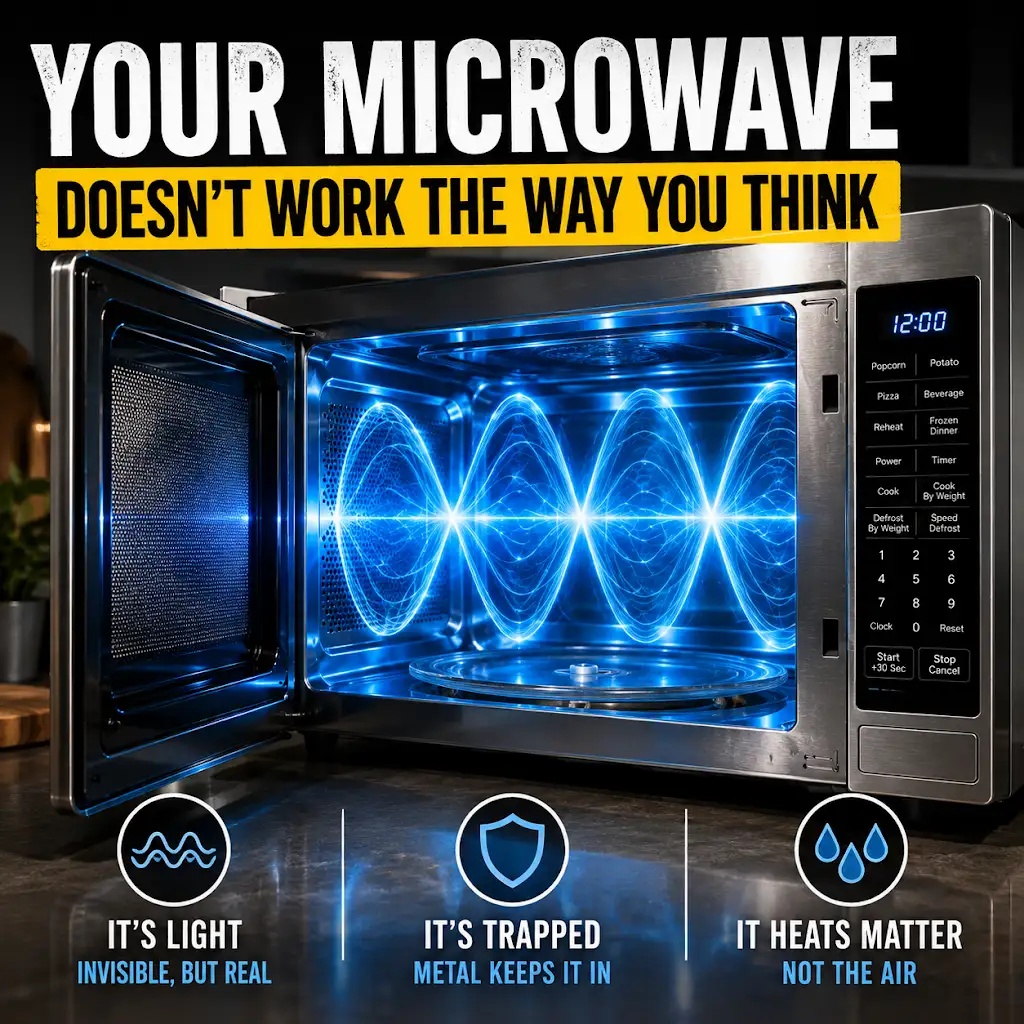
Your Microwave Doesn’t Work the Way You Think
FAQs
1. Why does my microwave take longer to heat up food than it used to?
Microwaves can lose efficiency over time due to wear and tear on the components, such as the magnetron or the waveguide. This can result in longer heating times and uneven cooking.
2. Why does my microwave sometimes heat food unevenly?
Uneven heating can be caused by issues with the microwave’s turntable, the positioning of the food in the microwave, or a malfunctioning magnetron. It’s important to ensure that the turntable is functioning properly and that food is placed in the center of the microwave for more even heating.
3. Why does my microwave make strange noises when in use?
Strange noises, such as buzzing or humming, can indicate a problem with the magnetron, high voltage diode, or cooling fan. These issues can affect the microwave’s performance and should be addressed by a professional technician.
4. Why does my microwave sometimes stop working mid-cycle?
Intermittent power loss during a microwave cycle can be caused by a faulty door switch, a malfunctioning control board, or issues with the power supply. It’s important to have these issues diagnosed and repaired by a qualified technician.
5. Why does my microwave display error codes or messages?
Error codes or messages on the microwave display can indicate various issues, such as a faulty sensor, a malfunctioning control board, or problems with the power supply. It’s important to refer to the manufacturer’s manual or seek professional assistance to diagnose and resolve these issues.