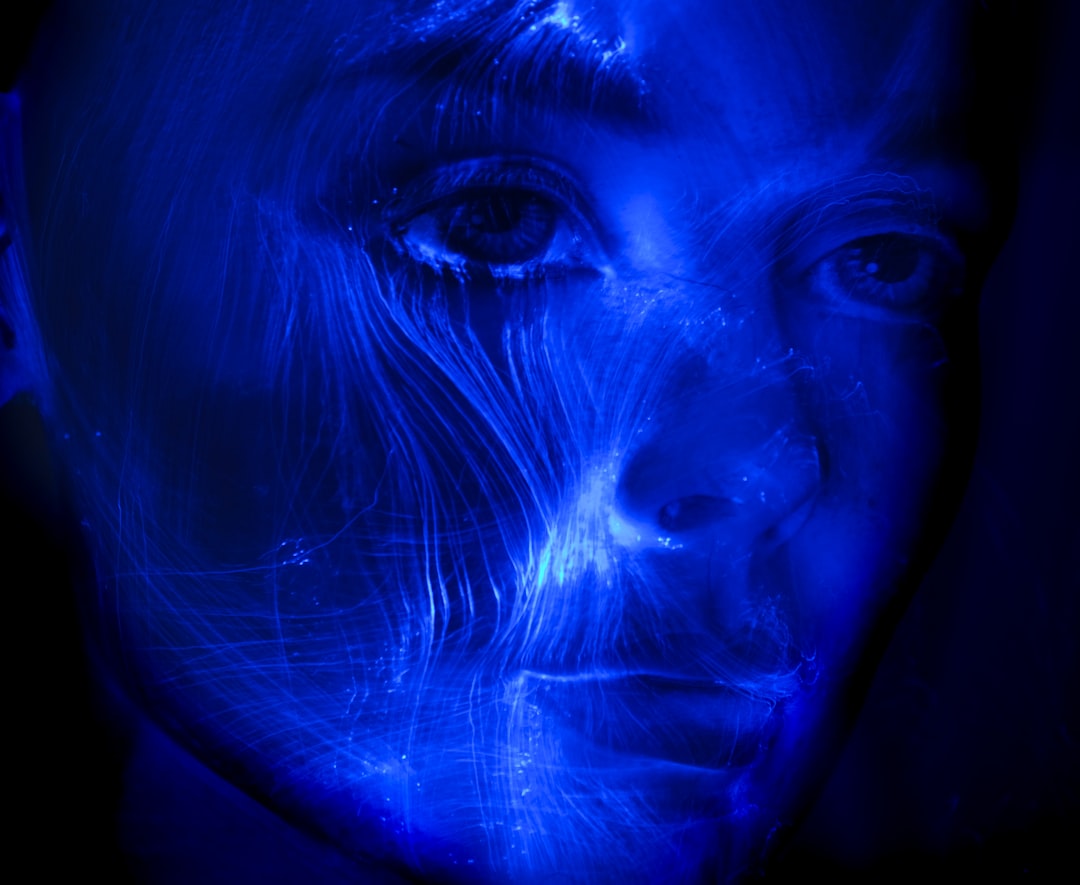
The concept of reality, frequently perceived as a fixed and objective given, has been a subject of profound philosophical and scientific inquiry for centuries. This article aims to deconstruct the commonly held assumptions about reality, presenting a multi-faceted perspective that explores its subjective, constructed, and probabilistic nature. By examining various schools of thought, empirical observations, and theoretical frameworks, we endeavor to unveil the layers of illusion that often obfuscate a more nuanced understanding of existence.
Perception, the process by which individuals interpret and organize sensory information to understand the world, is far from a passive reception of external data. Instead, it is an active and constructive endeavor, heavily influenced by internal states, prior experiences, and cognitive biases. This inherent subjectivity forms a fundamental pillar in understanding the illusory nature of a universally objective reality.
The Brain as a Central Processing Unit
The human brain, far from being a mere recording device, acts as a sophisticated information processor. It filters, interprets, and even extrapolates sensory input, creating a coherent model of the world. This model, while often effective for navigating daily life, is not a direct, unadulterated representation of external phenomena. Consider the phenomenon of “inattentional blindness,” where individuals fail to perceive an object or event that is clearly visible, simply because their attention is focused elsewhere. This demonstrates that what one perceives is not solely determined by what is present, but by what the brain prioritizes.
Cultural and Linguistic Filters
Culture and language exert a profound influence on an individual’s perception of reality. Different cultures categorize and interpret the world in distinct ways, often leading to differing understandings of fundamental concepts such as time, space, and causality. For instance, the Sapir-Whorf hypothesis posits that the structure of a language influences the speaker’s worldview or cognition. While the strong version of this hypothesis remains debated, the weaker version, suggesting an influence rather than outright determination, is widely accepted. A language rich in terms for different shades of blue may lead its speakers to perceive those distinctions more readily than someone whose language uses a single term for all blues.
Personal Biases and Expectations
Each individual carries a unique set of biases, assumptions, and expectations, which act as lenses through which they view reality. Confirmation bias, the tendency to search for, interpret, favor, and recall information in a way that confirms one’s pre-existing beliefs, is a prime example. This phenomenon can lead individuals to selectively interpret evidence, thereby reinforcing their own constructed reality, even when contradictory information is present. The observer effect in quantum mechanics, while distinct, offers a metaphorical parallel: the act of observation, in some interpretations, appears to influence the very properties of subatomic particles. In a similar vein, our cognitive biases influence the “properties” of our perceived reality.
The exploration of reality and its complexities is a fascinating subject that has intrigued philosophers, scientists, and thinkers for centuries. For those interested in delving deeper into this topic, a related article titled “The Truth About Reality” can be found at this link: The Truth About Reality. This article discusses various perspectives on what constitutes reality, examining both scientific and philosophical viewpoints, and encourages readers to question their own perceptions of the world around them.
The Constructed Nature of Reality
Beyond individual perception, reality is also, to a significant extent, a societal and cultural construct. Many of the frameworks and concepts that shape human experience are not inherent features of the universe but rather products of collective agreement, historical development, and shared narrative.
Social Constructs
Many aspects of human reality are not naturally occurring but are instead social constructs, concepts or ideas that exist because society as a whole agrees that they exist. Money, nation-states, legal systems, and even gender roles are examples of social constructs. While these constructs have tangible effects and consequences, their existence is contingent upon human agreement and collective belief. Their reality is not absolute but performative; they are real because humans act as if they are. The perceived value of a piece of paper, for instance, is not inherent in the paper itself but is a product of a shared consensus within a specific economic system.
The Role of Narrative and Storytelling
Human beings are inherently storytelling creatures. Narratives, whether historical accounts, religious myths, or personal anecdotes, play a crucial role in shaping understanding and establishing meaning. These narratives provide frameworks through which individuals interpret events, define their identities, and understand their place in the world. The “truth” of a historical event, for example, is often contested and reinterpreted through new narratives, demonstrating that the reality of the past is not a static entity but a dynamic construction influenced by present perspectives.
Scientific Paradigms and Shifting Truths
Even scientific understanding, often considered the epitome of objectivity, operates within specific paradigms. A scientific paradigm, as described by Thomas Kuhn, is a set of fundamental assumptions, theories, and methodologies that are accepted by a scientific community at a given time. When anomalies accumulate that cannot be explained by the current paradigm, a scientific revolution can occur, leading to a paradigm shift and a new understanding of reality. For centuries, the geocentric model of the universe was considered reality; the heliocentric model, initially met with resistance, ultimately replaced it, fundamentally altering humanity’s understanding of its place in the cosmos. This illustrates that even scientific “truths” are subject to evolution and reinterpretation.
The Probabilistic and Quantum Nature of Existence

At the fundamental level of physical reality, the universe appears to defy intuitive classical notions of determinism and solidity. Quantum mechanics, the most successful theory describing the behavior of matter and energy at the atomic and subatomic levels, presents a picture of reality that is inherently probabilistic, uncertain, and interconnected.
Quantum Indeterminacy
One of the most startling revelations of quantum mechanics is the principle of indeterminacy, exemplified by Heisenberg’s Uncertainty Principle. This principle states that certain pairs of physical properties, such as position and momentum, cannot both be known to arbitrary precision simultaneously. This is not a limitation of measuring instruments but a fundamental property of reality itself. Before measurement, quantum particles often exist in a superposition of states, meaning they simultaneously possess all possible values for a given property. The act of measurement “collapses” this superposition into a single, definite state. This suggests that reality at its most fundamental level is not fixed but fluid and subject to the influence of observation.
Entanglement and Non-Locality
Quantum entanglement is another profound phenomenon where two or more particles become linked in such a way that the quantum state of each particle cannot be described independently of the others, even when separated by vast distances. A measurement on one entangled particle instantaneously influences the state of the other, regardless of the distance between them. This “spooky action at a distance,” as Einstein famously called it, challenges our classical intuitive understanding of locality and causality, suggesting a deeper, non-local interconnectedness within the fabric of reality.
The Multiverse Hypothesis
While still a speculative theory, the multiverse hypothesis proposes that our universe is just one of many, perhaps an infinite number, of universes. Different versions of this hypothesis exist, from parallel universes residing in higher dimensions to an infinite collection of “bubble universes” arising from eternal inflation. If true, this concept would fundamentally alter our perception of reality, diminishing the ‘specialness’ of our own universe and suggesting a vastly larger, more complex tapestry of existence. Each universe, potentially with its own distinct physical laws and constants, would represent a unique manifestation of reality.
The Illusion of Separation

A pervasive illusion that often shapes human experience is the perception of fundamental separation – between self and other, mind and body, observer and observed, and humanity and nature. This perceived dichotomy, while useful for navigating everyday life, can obscure a deeper underlying interconnectedness.
Mind-Body Dualism Reconsidered
For centuries, Western philosophy has grappled with mind-body dualism, the idea that the mind and body are distinct and separable entities. However, contemporary neuroscience and psychology increasingly point towards an integrated view, where mental states are inextricably linked to brain activity and bodily processes. Emotions, thoughts, and consciousness itself are emerging phenomena of complex neural networks, challenging the notion of a disembodied mind. The illusion of a separate mind can lead to a disconnect from the physical self and its profound influence on psychological well-being.
The Interconnectedness of Systems
From ecological systems to social networks, the natural and human worlds are characterized by intricate interdependencies. The illusion of separation can lead to a disregard for the systemic consequences of individual actions. Environmental degradation, for instance, often arises from a perception that human activity operates independently of its natural surroundings. However, the health of ecosystems directly impacts human well-being, demonstrating a profound and undeniable interconnectedness. This illusion acts like a veil, obscuring the intricate web of relationships that constitute reality.
The Observer and the Observed
Quantum mechanics, as discussed previously, directly challenges the classical separation between the observer and the observed. In certain formulations, the act of observation is not a neutral process but an active ingredient in shaping reality. This concept extends metaphorically to human experience: the very act of perceiving and interpreting the world influences its meaning and often, its subsequent unfolding. The illusion of a purely objective, independent reality “out there” often prevents individuals from recognizing their own agency and co-creative capacity in shaping their experience.
In exploring the complexities of existence, many are drawn to the intriguing discussions found in the article about the nature of reality on Freaky Science. This piece delves into various philosophical perspectives and scientific theories that challenge our understanding of what is real. For those interested in a deeper examination of these concepts, you can read more about it in the article here. The insights presented can provoke thought and inspire further inquiry into the very fabric of our perceived world.
The Search for “Ultimate Reality” and its Elusiveness
| Aspect | Description | Key Metric/Concept | Notes |
|---|---|---|---|
| Perception | How humans interpret sensory information | Subjectivity Index | Varies widely; influenced by biology and experience |
| Objective Reality | Existence independent of observers | Physical Constants (e.g., speed of light) | Measured consistently across experiments |
| Quantum Mechanics | Behavior of particles at atomic and subatomic levels | Wavefunction Collapse Probability | Challenges classical deterministic views |
| Consciousness | Awareness and experience of reality | Neural Correlates of Consciousness (NCC) | Still largely unexplained scientifically |
| Simulation Hypothesis | Theory that reality might be a computer simulation | Computational Complexity | Philosophical and speculative; no empirical proof |
| Relativity | Space and time as relative concepts | Time Dilation Factor | Confirmed by experiments with high-speed particles |
| Philosophical Realism | Belief that reality exists independently of perception | Epistemological Validity | Debated in philosophy; foundational to science |
For millennia, philosophers, theologians, and scientists have sought to uncover an “ultimate reality” – a fundamental, unchanging truth that underlies all phenomena. However, the journey toward this ultimate reality frequently encounters the inherent limitations of human cognition and the dynamic, multifaceted nature of existence.
Philosophical Perspectives on Reality
Various philosophical traditions offer divergent perspectives on the nature of ultimate reality. Idealism posits that reality is fundamentally mental or consciousness-based, with the physical world being a manifestation of mind. Materialism, conversely, asserts that matter is the fundamental substance in nature, and all phenomena, including mental ones, are the result of material interactions. Dualism, as previously mentioned, proposes two fundamental kinds of reality: mind and matter. Each of these perspectives offers a framework for understanding, yet none has conclusively proven itself as the sole definitive truth, highlighting the elusive quality of an ultimate, singular reality.
The Limitations of Human Cognition
Human cognitive apparatus, while remarkably sophisticated, is inherently limited in its capacity to fully grasp all aspects of reality. Our senses perceive only a narrow band of the electromagnetic spectrum, and our brains are constrained by their evolutionary history and computational capacities. We are akin to a fisherman with a net, only capturing fish that are large enough to be caught, while a vast ocean of smaller marine life remains unobserved. This inherent limitation suggests that any understanding of ultimate reality will always be filtered through and shaped by human cognitive structures, potentially making a complete, unmediated grasp unattainable.
The Dynamic and Evolving Nature of Reality
Rather than a static, fixed entity, reality itself appears to be dynamic and ever-evolving. From the expanding universe and the continuous formation of stars and galaxies to the ongoing processes of biological evolution and cultural change, existence is characterized by constant flux. To search for a singular, unchanging ultimate reality might be akin to trying to photograph a flowing river and expecting it to remain the same for every frame. The very act of defining and fixing “reality” may be an attempt to impose stasis on something inherently in motion. The illusions, therefore, are not necessarily deceptions but rather static snapshots of a constantly moving picture.
In conclusion, a thorough examination reveals that reality, as commonly perceived, is far from a monolithic, objective truth. Instead, it is a complex tapestry woven from subjective interpretations, societal constructions, quantum probabilities, and interconnected systems. By acknowledging the various layers of illusion that shape human experience, individuals can cultivate a more nuanced understanding of their existence and their place within a dynamic, multifaceted cosmos. This recognition not only deepens intellectual inquiry but also fosters a humility and openness to the ever-unfolding mysteries of being. The journey to unveil these illusions is not about arriving at a definitive answer, but about embracing the profound complexity and inherent wonder of the human experience within a universe of endless possibilities.
FAQs
What is the main focus of the article “The Truth About Reality”?
The article explores the nature of reality, examining scientific, philosophical, and psychological perspectives to understand what constitutes reality and how humans perceive it.
Does the article discuss the role of perception in shaping reality?
Yes, it highlights how human perception influences our understanding of reality, emphasizing that what we experience is often filtered through our senses and cognitive processes.
Are scientific theories about reality covered in the article?
The article reviews key scientific theories, including quantum mechanics and relativity, to explain how modern science challenges traditional notions of an objective, fixed reality.
Does the article address philosophical viewpoints on reality?
Yes, it discusses various philosophical perspectives such as realism, idealism, and phenomenology, providing insight into different interpretations of what reality truly is.
Is the concept of reality considered absolute or subjective according to the article?
The article suggests that reality may not be entirely absolute; instead, it can be subjective and influenced by individual consciousness, cultural context, and scientific understanding.