
You’ve probably heard it a million times: “Don’t put metal in the microwave!” It’s a warning so ingrained that you might not even question it. But what if we told you that the reality of metal in your microwave is a little more nuanced than a simple, absolute “no”? You might be surprised to learn that some metal objects can actually be safely microwaved, while others can indeed cause significant problems. It’s time to separate the fact from the fiction and understand what’s really going on when that fork or foil wrapper gets too close to the magic waves.
The fundamental reason behind the common warning is the way microwaves interact with metal. It’s a fascinating interplay of electromagnetic waves and conductive materials that can, in certain circumstances, lead to spectacular results – and not the good kind. Understanding this core principle is the first step to debunking the myths and understanding the real dangers.
How Microwaves Work: A Quick Refresher
Before we dive into metal, let’s quickly recap how your microwave oven cooks food. A magnetron, a vacuum tube, generates electromagnetic waves, specifically microwaves, at a frequency of around 2.45 gigahertz. These waves are directed into the cooking cavity. Inside the cavity, the microwaves bounce off the metal walls, reflecting and scattering until they reach your food.
The Role of Water Molecules: The Engine of Cooking
Microwaves are particularly good at interacting with polar molecules, the most abundant of which in your food is water. Water molecules have a positive and a negative end. When exposed to the oscillating electromagnetic field of microwaves, these molecules try to align themselves with the field. As the field rapidly flips back and forth (billions of times per second), the water molecules vibrate intensely, generating heat through friction. This heat is what cooks your food.
Metal as a Mirror: Reflection and Absorption
Now, here’s where metal comes into play. Metal is a conductor of electricity. When microwaves hit a metal surface, they behave differently than they do with food. Instead of penetrating and exciting water molecules, the microwaves are largely reflected. This reflection can send the waves bouncing around the oven in unpredictable ways, potentially creating hot spots or, more concerningly, concentrating energy in small areas.
The Electric Current Conundrum: Where the Danger Lies
The electromagnetic field of the microwaves also induces electric currents within the metal itself. If the metal object has sharp edges, points, or is thin (like aluminum foil), these induced currents can become very concentrated. This concentration of electric charge can lead to:
Charge Accumulation and Electric Arcs (Sparks)
Imagine a tiny lightning bolt forming inside your microwave. That’s essentially what an electric arc, or spark, is. When enough electrical charge builds up at a sharp point or edge of the metal, it can overcome the insulating properties of the air and jump to another conductive surface – either the microwave walls or another part of the metal object. This discharge is a visible spark and can be accompanied by a crackling sound.
Potential for Damage to the Microwave
These electric arcs aren’t just visually alarming; they can cause actual damage. The intense heat generated by the spark can scorch or pit the interior walls of your microwave. In severe cases, repeated arcing can damage the magnetron, the very heart of your microwave, rendering it inoperable.
If you’re curious about the safety of using metal in microwave ovens, you might find the article on Freaky Science enlightening. It delves into the science behind microwave technology and explains why certain metals can cause sparks or fires while others may be safe to use. For a deeper understanding of this topic, check out the related article here: Freaky Science.
Fiction Corner: Common Misconceptions About Metal
Just because something is metal doesn’t automatically mean it’s a guaranteed disaster. Years of internet “advice” and anecdotal evidence have woven a tapestry of myths. Let’s unravel some of the most persistent ones.
“All Metal is Fire-Starting Material”
This is a broad generalization. While some metal situations can lead to sparks and potential fires, not every metal object will immediately ignite your microwave. The risk is dependent on the shape, size, and thickness of the metal, as well as how it’s positioned within the oven. A thick, smooth metal bowl is less likely to cause immediate problems than a crinkled piece of foil with sharp edges.
“Even a Tiny Bit of Metal Will Ruin Your Microwave”
Again, this is an oversimplification. While it’s always best to err on the side of caution, a very small, smooth piece of metal that doesn’t create concentrated charge might not cause immediate catastrophic failure. However, it’s a slippery slope, and any metal introduction increases the risk, making it a habit you absolutely want to avoid.
“My Grandma Always Used Metal and Her Microwave Was Fine”
This might be true, but it’s likely due to a combination of factors. Older microwaves may have had different designs or less sensitive components. Furthermore, your grandmother might have been using specific types of metal or techniques that, by chance, avoided the problematic scenarios. Relying on anecdotal evidence for something that can damage your appliance or even pose a fire risk is not advisable.
“Disposable Foil Containers are Safe if You Don’t Touch the Walls”
This is a dangerous myth. While you might not be directly touching the microwave walls, the foil itself can still reflect and concentrate microwaves. The edges of foil containers are often the culprit for arcing. The air gap between the food and the container, or between the container and the microwave wall, can become a pathway for electric discharge.
Fact-Based Scenarios: When Metal Can Be Problematic
Now that we’ve cleared up some myths, let’s focus on the real risks. These are the situations where putting metal in your microwave is a definite no-no, and understanding why is crucial for safe operation.
Thin, Crinkled, or Jagged Metal: The Perfect Storm for Arcing
This is where most of the dramatic sparks you might have seen or heard about originate. Think of:
Aluminum Foil: The Usual Suspect
Aluminum foil is notorious for causing problems. Its thinness and ability to be easily crinkled or torn create sharp edges. When microwaves hit these edges, electric currents can build up rapidly, leading to intense localized fields and, consequently, arcing. Even a small wad of foil can be problematic.
Metal Twist Ties and Edges of Packaging
Those little metal twist ties used to seal bread bags or the metalized edges of some food packaging are also prime candidates for causing arcing. They possess the sharp, concentrated points that electricity loves to jump from.
Utensils with Sharp Points
Forks, with their pointed tines, are a classic example of why metal utensils are generally forbidden. The points can concentrate the induced electrical charge, leading to sparks. Knives, with their sharp edges, can also pose a risk.
Metal Trim on Dinnerware: A Subtle Danger
You might have a beautiful set of plates with delicate gold or silver trim. While these aren’t usually solid pieces of metal, the metallic paint can still cause issues.
The Nature of Metallic Glazes
These glazes often contain fine metallic particles that can conduct electricity. When heated, these particles can react to the microwaves, leading to:
Localized Heating and Scorching
The metallic trim can heat up much faster than the ceramic, potentially causing it to scorch or even detach from the plate. This can not only ruin your dinnerware but also create a fire hazard.
Micro-Arcing and Damage to the Microwave Cavity
Even if you don’t see dramatic sparks, the metallic trim can cause micro-arcing, which is essentially tiny, frequent electrical discharges. Over time, this can degrade the interior of your microwave.
Metal in “Microwaveable” Packaging: A Carefully Engineered Exception (Mostly)
You’ve seen them: frozen meals or snacks that come in special packaging. Some of these do contain metal components, but they are specifically designed for microwave use.
The Purpose of Shielding in Packaging
In some cases, a small amount of metal is used to actually shield certain parts of the food from the microwaves, allowing for more even cooking. For example, a crispy base might have a metalized layer to prevent it from becoming soggy.
The Importance of Following Instructions
It’s crucial to note that these are exceptions, and they come with strict instructions. You must use them precisely as directed, ensuring the metal components are positioned correctly and that the packaging isn’t damaged. If the instructions say to remove a certain part of the packaging, do it. If it says to puncture the film, do it. Ignoring these instructions can negate the safety features.
The Nuances of Metal: When It Might Be (Relatively) Okay
While the general rule is to avoid metal, there are a few specific, limited scenarios where certain metal items might be used without immediate disaster. However, it’s essential to approach these with extreme caution and a clear understanding of the risks involved.
Solid, Smooth Metal Bowls: A Calculated Risk
A plain, solid, and smooth metal bowl, such as a stainless steel mixing bowl, is often cited as potentially safe. Here’s why:
Lack of Sharp Edges or Points
The absence of sharp edges or points means there are fewer places for electrical charge to concentrate, significantly reducing the likelihood of arcing.
Even Reflection of Microwaves
A smooth, curved surface tends to reflect microwaves more evenly rather than concentrating them in specific spots.
Important Caveat: Even with smooth metal bowls, you must ensure they do not touch the microwave walls. If the bowl is too large or positioned incorrectly, it can still cause issues. Furthermore, the food inside will not cook as effectively as it would in a microwave-safe dish, as the metal will reflect the microwaves away from the food. You’re essentially using the microwave to heat the bowl, which then heats the food by conduction, a much slower process.
Metal Racks for Dual-Level Cooking: Designed for the Job
Some microwave ovens come with special metal racks designed to elevate food, allowing for dual-level cooking or to crisp the bottom of items.
Engineered for Microwave Use
These racks are typically made of a specific type of metal and designed with specific shapes and spacing to minimize the risk of arcing. They are engineered to safely reflect and redirect microwaves.
Always Use the Provided Rack
Crucially, only use racks that are specifically designed and provided with your microwave oven. Never improvise with other metal racks or shelving.
Critical Consideration: Even with these exceptions, it’s important to monitor the item closely during cooking. If you notice any signs of sparking, discoloration, or unusual smells, stop the microwave immediately and remove the item.
Many people are often curious about the safety of using metal in microwave ovens, and to explore this topic further, you might find an interesting article on the subject at Freaky Science. This resource delves into the science behind microwave technology and explains why certain metals can cause sparks or fires while others may be safe to use. Understanding these nuances can help you make informed decisions about what materials to use when heating food in your microwave.
The Safe Alternative: Embracing Microwave-Safe Materials
| Metal in Microwave Ovens | Truth |
|---|---|
| Metal containers | Can cause sparks and fires |
| Aluminum foil | Can cause arcing and damage to the microwave |
| Metal utensils | Can cause sparks and damage to the microwave |
| Metal racks | Can disrupt the microwave’s energy distribution |
| Safe metals | Some microwave-safe metal containers are available |
The good news is that you don’t need to be a physicist to safely use your microwave. The vast majority of everyday kitchenware is designed with microwave safety in mind.
Glass and Ceramics: The Reliable Standards
These are your go-to materials for microwaving.
Inert Properties: No Chemical Reactions
Glass and ceramics are largely inert, meaning they don’t react with the microwaves. They allow the waves to pass through them and reach the food, where the heating action occurs.
Heat Resistance: Safe for Hot Foods
They are also designed to withstand the high temperatures generated during cooking.
How to Test for Microwave Safety: If you’re unsure if a glass or ceramic dish is microwave-safe, perform the “water test.” Place the dish in the microwave with a cup of water. Microwave on high for one minute. If the dish remains cool, it’s likely microwave-safe. If it gets hot, it may contain metallic elements and should not be used.
Certain Plastics: The Versatile Option
Many plastic containers are labeled as “microwave-safe.” This designation is important.
BPA-Free and Heat-Resistant
Microwave-safe plastics are specifically formulated to be free of harmful chemicals like BPA and to withstand the heat generated by microwaves without melting, warping, or leaching chemicals into your food.
Look for the Symbol: Always look for the “microwave-safe” symbol, typically a wavy line or a microwave icon, on the bottom of plastic containers. Never use plastic containers that are not explicitly labeled as microwave-safe, as they can melt and contaminate your food.
Paper and Cardboard: For Quick Heating (with Caution)
Plain white paper plates, towels, and some cardboard containers can be used for short heating periods.
Absorbent Properties: For Grease and Moisture
Paper towels are excellent for absorbing grease and moisture, preventing splattering.
Avoid Anything with Metal or Coatings: Never use paper products that have metallic inks, staples, or wax coatings. These can still pose a risk of arcing or melting. Also, be mindful that paper can scorch if heated for too long.
Conclusion: Your Microwave, Your Responsibility
The truth about metal in microwaves is that while the absolute “never” isn’t entirely accurate, the risks associated with improper use are significant. Sparks, damage to your appliance, and even the potential for fire are very real consequences of ignoring the warnings.
By understanding the science behind microwave cooking and the properties of different materials, you can make informed decisions. Stick to microwave-safe dishes, avoid anything with metallic trim, and be extremely cautious with aluminum foil or any other thin, potentially sharp metal. When in doubt, always err on the side of caution and choose a safe alternative. Your microwave is a convenient tool, but like any appliance, it requires respectful and knowledgeable use to ensure both safety and longevity.
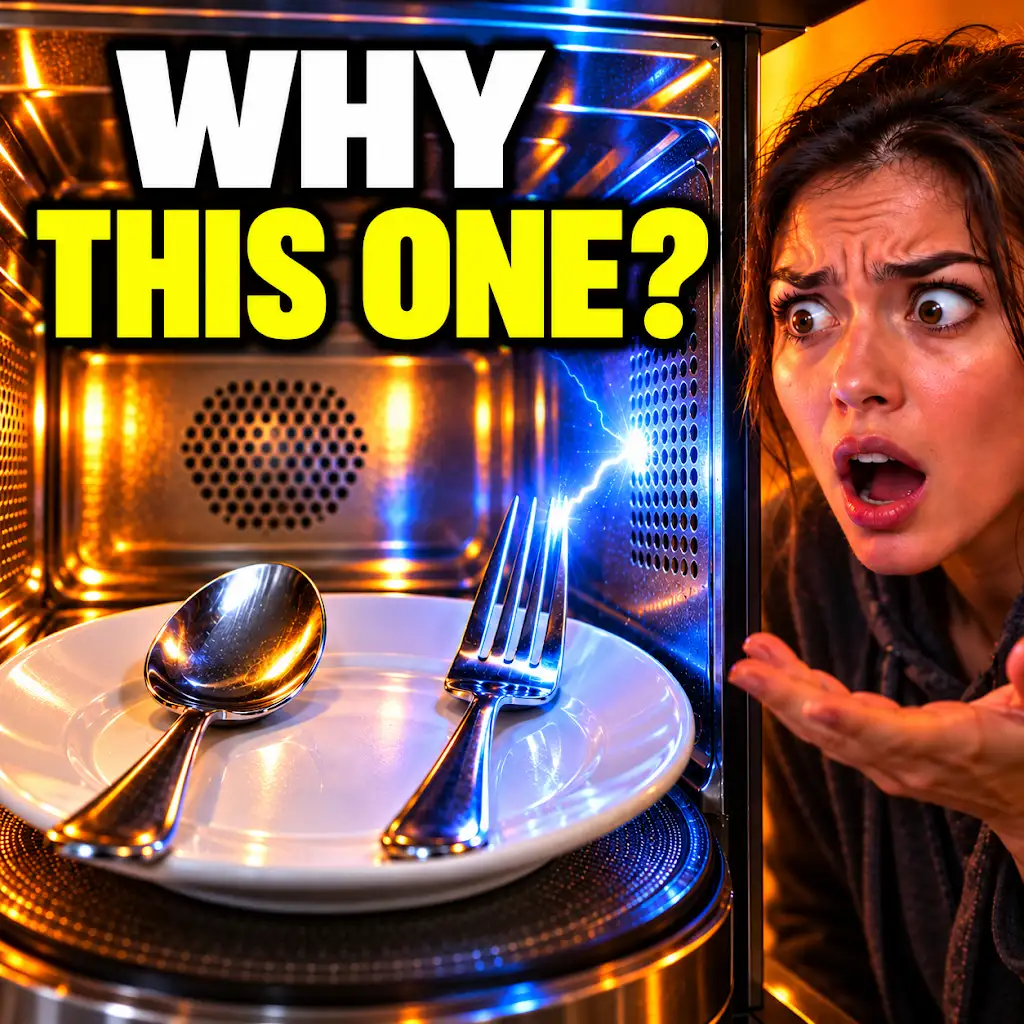
A Fork and a Spoon React Differently in a Microwave. Why?
FAQs
What is the truth about metal in microwave ovens?
Metal should not be used in microwave ovens as it can cause sparks and fires. However, some metal containers or utensils are safe to use in microwaves if they are specifically labeled as microwave-safe.
Why can’t metal be used in microwave ovens?
Metal reflects the microwaves in the oven, which can cause sparks and potentially start a fire. This is why it is generally advised to avoid putting any metal objects in a microwave.
Are there any exceptions to the rule of not using metal in microwave ovens?
Yes, some metal containers or utensils are designed to be safe for use in microwaves. These items are typically labeled as microwave-safe and are designed in a way that prevents them from causing sparks or fires.
What happens if metal is accidentally put in a microwave oven?
If metal is accidentally put in a microwave oven, it can cause sparks, potentially damaging the oven and posing a fire hazard. It is important to remove the metal immediately and carefully inspect the oven for any damage before using it again.
How can I safely use metal in a microwave oven?
To safely use metal in a microwave oven, it is important to only use items that are specifically labeled as microwave-safe. Additionally, it is important to follow the manufacturer’s instructions and guidelines for using metal in the microwave.