The Systemizing Brain: Evolutionary Key to Success
The human capacity for understanding and interacting with the world is often attributed to complex emotional or social intelligences. While these are undeniably vital aspects of our cognitive makeup, a compelling argument can be made for a different, perhaps less celebrated, but equally fundamental driver of human advancement: systemizing. This ability, the drive to understand systems by analyzing their components and how they work together, has likely played a crucial role in our evolutionary trajectory, shaping our innovations, societies, and ultimately, our success as a species.
At its core, systemizing is the process of identifying the rules that govern a system and using those rules to predict behavior and construct new systems. This innate drive, whether conscious or subconscious, has likely been a significant factor in our species’ ability to adapt and thrive in diverse environments.
Instinctual Pattern Recognition
From the earliest hominids, the ability to recognize patterns in the natural world would have been paramount for survival. Identifying recurring seasonal changes, the predictable movements of prey animals, or the subtle signs of approaching danger would have provided a distinct advantage. This rudimentary form of systemizing, focused on understanding the predictable regularities of the physical environment, laid the groundwork for more complex cognitive endeavors.
Toolmaking and Environmental Manipulation
The development of tools represents a significant leap in human ingenuity and a clear manifestation of systemizing in action. The desire to create a sharper edge, a more effective lever, or a more robust shelter required an understanding of the properties of materials, the forces involved, and the causal relationships between actions and outcomes. This was not simply trial and error; it involved a mental model of how the object would function and how it could be improved through systematic manipulation.
Social and Cooperative Structures
Beyond the physical world, systemizing likely extended to the understanding of social dynamics. Recognizing predictable social hierarchies, understanding the benefits of cooperation, and developing rules for group interaction would have facilitated more complex and efficient social structures. These early forms of social systemizing allowed for the formation of larger, more cohesive groups, which in turn offered greater protection and resource acquisition opportunities, further reinforcing the evolutionary advantage of this cognitive trait.
In exploring the fascinating interplay between brain styles and evolutionary success, one can refer to an insightful article on the topic available at Freaky Science. This article delves into how different cognitive styles have emerged as adaptive strategies throughout human evolution, highlighting the significance of systemizing versus empathizing brain types. By understanding these variations, we can gain deeper insights into how our ancestors thrived in diverse environments, ultimately shaping the trajectory of human development and societal structures.
The Mechanics of Systemizing: Deconstructing Complexity
Systemizing is not a monolithic ability but rather a multifaceted cognitive process that involves several intertwined components. Understanding these individual mechanisms provides insight into how humans deconstruct complexity.
Identifying Variables and Rules
A fundamental step in systemizing involves isolating the individual components, or variables, that constitute a system. This is followed by the identification of the underlying rules that govern the interaction between these variables and the overall behavior of the system. For example, understanding how a lever works requires recognizing the fulcrum, the effort arm, and the load arm, and the rule that states how applying force to one arm impacts the other.
Deductive and Inductive Reasoning
The process of systemizing relies heavily on both deductive and inductive reasoning. Deduction allows us to apply general rules to specific instances, predicting outcomes based on established principles. Induction, conversely, helps us to formulate general rules from specific observations, identifying patterns and inferring underlying mechanisms. For instance, observing multiple instances of a particular plant yielding edible fruit would lead to an inductive conclusion that this plant is a food source.
Modeling and Simulation
A key aspect of systemizing is the ability to create mental or explicit models of systems. These models allow us to abstract the essential elements of a system and simulate its behavior under different conditions. This can range from a simple mental picture of how a trap might function to a complex computer simulation of economic markets. The ability to effectively model and simulate allows for prediction, problem-solving, and innovation.
Hierarchical Organization of Knowledge
Systemizing also involves organizing knowledge in a hierarchical manner. This means understanding that systems can be composed of smaller, interconnected subsystems, and that these subsystems can themselves be broken down further. This layered understanding of complexity allows for a more efficient and robust grasp of intricate phenomena, enabling the management of vast amounts of information and the tackling of multi-faceted problems.
Systemizing Across Domains: From Nature to Technology
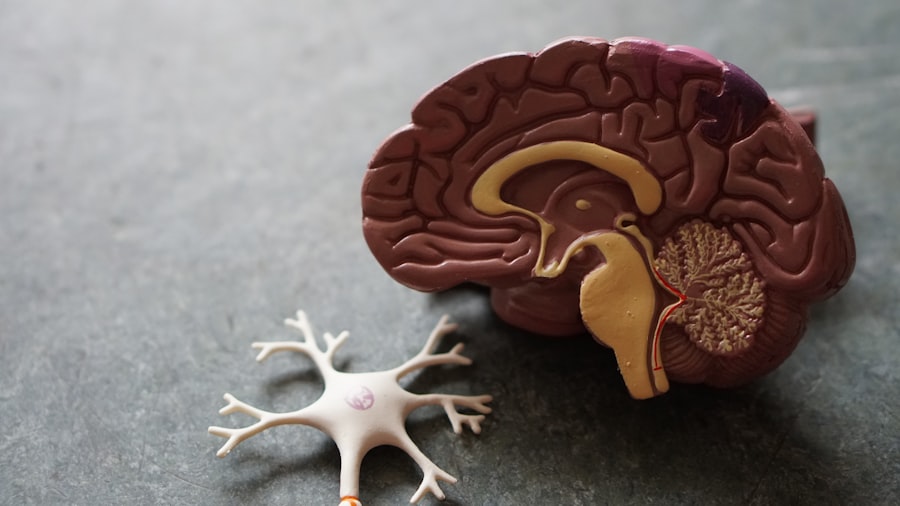
The application of systemizing is not confined to a single area of human endeavor. Its influence can be observed across a wide spectrum of human activities, from the scientific exploration of the natural world to the creation of intricate technological marvels.
Scientific Inquiry and Discovery
Science, in essence, is a highly formalized and systematic approach to understanding the universe. Scientists rigorously apply systemizing principles to identify phenomena, formulate hypotheses, design experiments, and analyze data. The quest to uncover the fundamental laws of physics, the intricate workings of biological organisms, or the evolution of the cosmos is entirely driven by the impulse to systemize, to impose order and understanding upon observed reality.
Technological Innovation and Engineering
The development of any technology, from the simplest hand tool to the most complex computer system, is a testament to the power of systemizing. Engineers and inventors must understand the principles of materials science, physics, mechanics, and numerous other disciplines to design, build, and optimize their creations. The iterative process of design, testing, and refinement in engineering is a direct application of systemizing principles, seeking to understand and improve the causal relationships within a technological system.
Mathematics and Abstract Systems
Mathematics serves as the quintessential domain of abstract systemizing. It provides a language and a framework for describing and manipulating abstract systems governed by precise rules. The elegance and power of mathematics lie in its ability to model phenomena far beyond direct sensory experience, enabling advancements in fields as diverse as economics, computer science, and theoretical physics through the exploration and manipulation of abstract systems.
Social and Economic Structures
Beyond physical and abstract systems, humans also systemize social and economic structures. The development of legal systems, economic theories, and political doctrines reflects an attempt to understand and regulate the complex interactions within human societies. While often more prone to ambiguity and deviation than physical systems, the drive to identify predictable patterns and establish governing principles within social and economic contexts remains a significant application of systemizing.
The Systemizing Brain and its Implications for Human Potential
The prevalence and adaptability of the systemizing drive have profound implications for understanding human potential and the drivers of individual and collective success.
The Role in Problem-Solving and Innovation
Systemizing is intrinsically linked to effective problem-solving and innovation. By breaking down complex problems into smaller, manageable parts and understanding the underlying mechanisms, individuals and groups can develop novel solutions and create new technologies. This ability to deconstruct and reconstruct systems is fundamental to progress and adaptation in a constantly changing world.
The Development of Expertise and Mastery
Achieving mastery in any field, whether it be a complex craft, a scientific discipline, or a creative art form, often involves a deep understanding of the underlying systems at play. Experts develop sophisticated mental models that allow them to navigate complexity, anticipate challenges, and perform with exceptional skill derived from a systematic internalization of knowledge and practice.
The Cognitive Underpinnings of Progress
The cumulative progress of human civilization can be viewed, in large part, as a testament to the power of systemizing. From the agricultural revolution to the digital age, each epochal shift has been driven by a deeper understanding and manipulation of the systems that govern our world, our bodies, and our interactions. This intellectual evolution, fueled by our capacity for systemizing, has continuously expanded the boundaries of what is possible.
Understanding how different brain styles contribute to evolutionary success is a fascinating area of research. A related article explores the intricate connections between cognitive diversity and survival strategies in various species. By examining how systemizing brain styles can enhance problem-solving abilities and adaptability, we gain insights into the evolutionary advantages these traits confer. For a deeper dive into this topic, you can read more in the article found here. This exploration not only sheds light on human evolution but also on the broader implications for understanding intelligence in the animal kingdom.
Systemizing and its Challenges: Understanding the Nuances
| Systemizing Brain Style | Evolutionary Success |
|---|---|
| High systemizing brain style | Potential for innovation and problem-solving abilities |
| Low systemizing brain style | Adaptability and social intelligence |
| Correlation with STEM careers | Impact on technological advancements and scientific discoveries |
| Correlation with social and communication skills | Impact on social cohesion and cooperation within groups |
While the systemizing drive offers significant advantages, it is not without its limitations and potential downsides. Recognizing these nuances is crucial for a balanced understanding.
The Risk of Oversimplification
In the pursuit of understanding complex systems, there is always the risk of oversimplification. Reducing a multifaceted phenomenon to a set of rigid rules can lead to an incomplete or inaccurate picture, potentially hindering effective action or perpetuating unintended consequences. The tendency to categorize and simplify can sometimes lead to overlooking vital exceptions or emergent properties.
The Empathy Gap and Social Disconnect
While some research suggests a correlation between high systemizing tendencies and lower empathizing tendencies (the drive to understand others’ emotions and states of mind), it is crucial to avoid generalizations. Nevertheless, an overreliance on purely logical or systemic analysis, without acknowledging the emotional and subjective dimensions of human experience, can lead to a disconnect in social interactions and a failure to appreciate the nuances of human relationships.
The Unintended Consequences of System Design
The application of systemizing, particularly in complex domains like economics or social policy, can sometimes lead to unintended consequences. A system designed with specific goals in mind may, due to the intricate and often unpredictable nature of reality, produce outcomes that were not foreseen and may even be detrimental. This highlights the importance of rigorous analysis, ongoing evaluation, and a degree of humility when manipulating intricate systems.
The Need for Balance: Systemizing and Empathizing
Ultimately, human success and well-being are likely to be driven by a balanced interplay between systemizing and empathizing abilities. While systemizing provides the tools for understanding and shaping the world, empathizing allows for meaningful connections with others and a deeper appreciation of the human experience. The most effective problem-solvers, innovators, and leaders are likely those who can deftly integrate both cognitive strengths. The evolutionary advantage that systemizing offers becomes truly potent when complemented by a nuanced understanding and appreciation of human emotional and social landscapes.
FAQs
What is systemizing brain style?
Systemizing brain style refers to the cognitive tendency to analyze and build systems, such as understanding how things work, identifying patterns, and creating rules. Individuals with a systemizing brain style are often drawn to fields such as mathematics, engineering, and computer programming.
How does systemizing brain style contribute to evolutionary success?
Systemizing brain style has been linked to evolutionary success as it allows individuals to effectively navigate and manipulate their environment. This cognitive style may have provided advantages in areas such as tool-making, hunting, and problem-solving, which could have contributed to survival and reproductive success.
Is systemizing brain style more common in certain populations?
Research suggests that systemizing brain style may be more common in males compared to females. Additionally, individuals with autism spectrum disorders are more likely to exhibit a strong systemizing brain style.
Can systemizing brain style be developed or enhanced?
While individuals may have a natural inclination towards systemizing, it is also possible to develop and enhance this cognitive style through education, training, and exposure to systematic thinking. Engaging in activities that involve problem-solving, logical reasoning, and pattern recognition can help strengthen systemizing abilities.
What are some potential drawbacks of a strong systemizing brain style?
While systemizing brain style can offer advantages in certain contexts, it may also lead to challenges in social interactions and emotional understanding. Individuals with a strong systemizing brain style may struggle with empathy, communication, and understanding non-verbal cues, which can impact their relationships and social functioning.