
The world often perceives ice as a simple, frozen state of water, a familiar sight during winter months or in our freezers. Yet, beneath its seemingly inert exterior lies a surprisingly complex and scientifically rich substance. From its peculiar expansion upon freezing to its role in shaping landscapes and supporting life, ice possesses a unique set of properties that continue to intrigue and challenge scientists. This article delves into the surprising science of ice, uncovering its distinctive characteristics and the profound implications they hold for our planet and beyond.
Water is a substance that defies typical thermodynamic expectations. Unlike most materials, which contract as they cool and solidify, water exhibits an unusual behavior: it expands when it freezes. This seemingly simple phenomenon is one of ice’s most defining and impactful properties, underpinning a cascade of consequences for the natural world.
The Molecular Dance of Hydrogen Bonds
The root of water’s anomalous expansion lies in its molecular structure and the way its molecules interact. Water molecules, H₂O, are polar, meaning they have a slight positive charge on the hydrogen atoms and a slight negative charge on the oxygen atom. This polarity allows them to form hydrogen bonds with neighboring water molecules. In liquid water, these hydrogen bonds are constantly forming, breaking, and reforming, allowing the molecules to pack relatively closely together.
However, as water cools and approaches its freezing point, the kinetic energy of the molecules decreases. This allows the hydrogen bonds to become more stable and to arrange themselves in a more ordered, crystalline structure. In the solid state, or ice, these hydrogen bonds dictate a specific tetrahedral arrangement of water molecules. Each oxygen atom is bonded to two hydrogen atoms within its own molecule and is also attracted to hydrogen atoms of two other water molecules, forming a network. This highly ordered, hexagonal lattice structure is less dense than the disordered arrangement of molecules in liquid water.
The Delicacy of the Lattice Structure
The stability of this hexagonal ice lattice is crucial. The precise geometry of the hydrogen bonds forces the molecules into a more spread-out configuration than they would occupy in the liquid state. Imagine a tightly packed crowd of people versus the same crowd arranged in a formation where everyone is holding hands and extending their arms outwards – the latter occupies more space. This is analogous to what happens with water molecules as they transition from liquid to solid. This increase in volume upon freezing is what causes ice to be less dense than liquid water, a property that has profound implications for everything from the freezing of lakes to the geological processes on other planets.
The Consequences of Expansion: Cracking Rocks and Protecting Life
The expansive force of freezing water is not merely an academic curiosity; it has tangible and often dramatic effects on our environment. This force is a primary driver of rock weathering, a process that breaks down large rocks into smaller pieces over time. As water seeps into cracks and crevices in rocks, it freezes and expands. This expansion exerts pressure, widening the cracks. Repeated cycles of freezing and thawing can gradually fragment even the most robust rock formations, contributing to soil formation and shaping landscapes.
Furthermore, the buoyancy of ice—its tendency to float—is a direct consequence of its lower density. This property is absolutely vital for aquatic life in temperate and polar regions. When bodies of water freeze, the ice forms a layer on the surface. If water behaved like most other substances and became denser as it froze, the ice would sink to the bottom, freezing the entire water body from the bottom up. This would be catastrophic for fish and other aquatic organisms. Instead, the floating ice layer acts as an insulating blanket, protecting the liquid water below from the frigid air temperatures and allowing life to persist through the winter months. This simple, yet remarkable, property of ice is a cornerstone of many ecosystems on Earth.
The surprising science of ice reveals fascinating insights into its unique properties and behaviors, which can be further explored in the related article found at Freaky Science. This article delves into the various forms of ice, its role in climate change, and the intriguing phenomena that occur when ice interacts with different environments. Understanding these aspects not only enhances our appreciation of this common yet extraordinary substance but also highlights its significance in our planet’s ecosystem.
The Crystalline Beauty and Structural Diversity of Ice
While we often think of ice as a single entity, the reality is far more intricate. Under different temperature and pressure conditions, water can solidify into a remarkable array of crystalline structures, collectively known as polymorphs. These different forms of ice possess distinct molecular arrangements and, consequently, different physical properties, revealing a hidden universe of solid water.
The Familiar Hexagonal Ice (Ice Ih)
The ice we encounter most frequently in our daily lives, from frost on a windowpane to cubes in a drink, is known as Ice Ih (Ice one, hexagonally structured). This is the stable form of ice at atmospheric pressure and below 0°C (32°F). Its structure, as discussed earlier, is characterized by a hexagonal lattice. The precise arrangement of hydrogen bonds creates a relatively open framework. This is the form of ice responsible for snowflakes, which, despite their seemingly infinite variety, all adhere to the fundamental hexagonal symmetry dictated by the underlying ice lattice. The intricate patterns of snowflakes are a testament to the subtle environmental influences on the growth of this common ice form.
Beyond Ice Ih: The Polymorphic Zoo
The world of ice extends far beyond the familiar hexagonal form. Scientists have discovered and synthesized at least seventeen different crystalline forms of ice, each with its own unique arrangement of water molecules. These other forms, collectively known as high-pressure ice phases, become stable under increasing pressures, often at temperatures well below freezing.
High-Pressure Ice Phases: A Realm of Exotic Structures
At pressures exceeding atmospheric levels, water molecules are forced into more compact arrangements. This leads to the formation of exotic ice structures with fascinating properties. For instance, Ice II, stable at pressures between 200 and 350 MPa, has a rhombohedral structure where the hydrogen bonds are still ordered but arranged differently. Ice III, appearing at slightly higher pressures than Ice II, has a tetragonal structure.
As pressures increase further, more exotic forms emerge. Ice V, a cubic structure, becomes stable at pressures of around 350 to 500 MPa. Ice VI, another cubic form, appears at even higher pressures. These high-pressure phases are not just theoretical constructs; they are believed to exist in the interiors of icy moons and planets in our solar system, such as Jupiter’s moon Europa and Saturn’s moon Enceladus, where immense pressures are found beneath their icy crusts. Understanding these exotic ice forms is crucial for planetary science and the search for extraterrestrial life, as they could play a significant role in the geological and chemical processes occurring within these distant worlds.
Amorphous Ice: The Non-Crystalline Counterpart
Not all ice is crystalline. Under very rapid cooling conditions, particularly in laboratory settings or in the vacuum of space, water can solidify into amorphous ice, also known as glassy water. In amorphous ice, the water molecules are disordered, lacking the long-range crystalline order of their solid counterparts.
Water’s Transformation into Glass
The formation of amorphous ice is a testament to the speed at which cooling can occur. When water is cooled extremely rapidly, often by condensing it onto a very cold surface, the molecules do not have sufficient time to arrange themselves into a regular crystalline lattice. Instead, they become locked in place in a disordered, glass-like state. Two primary forms of amorphous ice exist: low-density amorphous ice (LDA) and high-density amorphous ice (HDA). LDA is formed at lower cooling rates, while HDA can be generated by compressing LDA or by cooling liquid water at higher pressures. These amorphous forms are of great interest to astrobiologists, as they are thought to be prevalent in interstellar clouds and on the surfaces of comets and asteroids, potentially playing a role in the origin of life.
Ice as a Lubricant and a Sculptor: Unveiling Its Dynamic Roles
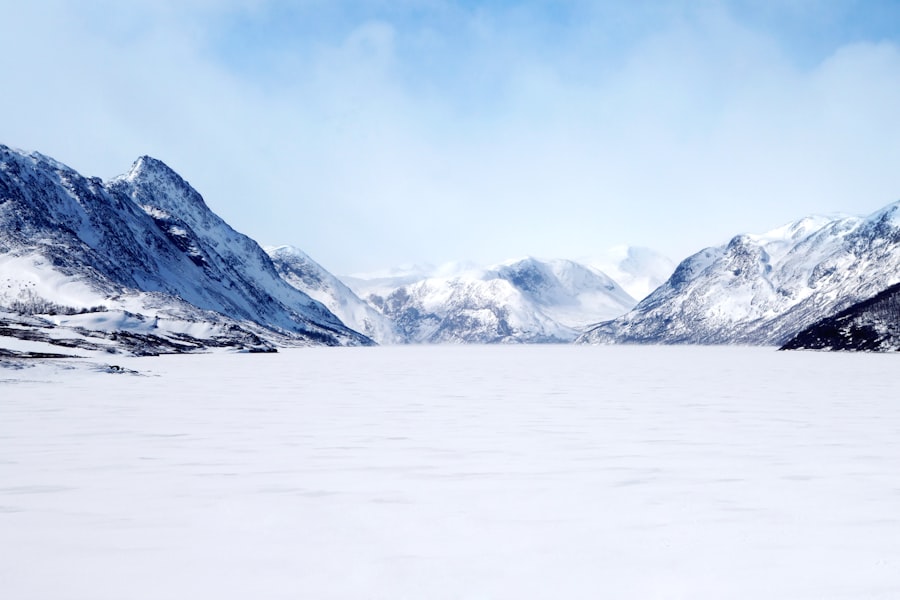
Beyond its structural and molecular complexities, ice exhibits dynamic properties that make it a powerful agent of change in the natural world. Its ability to act as a lubricant and its immense power to sculpt landscapes are often underestimated, yet they are fundamental to geological processes and even the movement of tectonic plates.
The Slippery Secret of Ice Friction
The slick nature of ice is something most people experience when walking on a frozen pond or a frosty sidewalk. This slipperiness is a result of a fascinating interplay between pressure, temperature, and the properties of ice itself. While it was once thought that the surface layer of ice melts due to the pressure of an object placed upon it, the modern scientific understanding is more nuanced.
Pressure Melting and the Thin Film of Liquid Water
When a force is applied to ice, such as the blade of an ice skate or the sole of a shoe, the pressure is concentrated on a small area. This localized pressure can lower the freezing point of the ice directly beneath the object. While the overall temperature might be well below freezing, this pressure can cause a very thin layer of water to form on the surface. This thin film of liquid water acts as a lubricant, allowing the object to slide with remarkable ease. However, this pressure-melting effect is not the sole explanation for ice’s slipperiness.
Viscous Heat and Microscopic Melting
Another significant factor is the generation of heat through friction. As an object moves across the ice surface, even a slightly rough one, microscopic friction occurs. This friction generates a small amount of heat. At the molecular level, this heat can cause localized melting, creating the lubricating film of water. The smoother the ice surface and the faster the movement, the more pronounced this frictional melting effect can be. This combination of pressure-induced melting and frictional heating creates the characteristic slipperiness of ice, enabling activities like ice skating and facilitating the movement of glaciers.
Glacial Power: The Architects of Earth’s Surface
Glaciers, vast rivers of ice, are among the most powerful geomorphological agents on Earth. Their immense mass and slow, relentless movement have shaped and continue to shape landscapes over millennia, carving out valleys, fjords, and cirques, and depositing enormous quantities of sediment.
Erosion by Plucking and Abrasion
Glaciers erode the land beneath them through two primary mechanisms: plucking and abrasion. Plucking occurs when meltwater seeps into cracks in the bedrock, freezes, and expands. The ice then grips the rock fragments, and as the glacier moves, it pulls these fragments away, leaving a ragged surface. Abrasion happens when the ice carries sharp rocks and sediment embedded within it. As the glacier grinds over the bedrock, these embedded particles scratch and polish the surface, much like sandpaper. This continuous process of scraping and grinding can excavate vast amounts of rock, creating dramatic landforms.
The Deposition of Glacial Features
As glaciers advance and retreat, they transport and deposit the eroded material. This deposited material, known as till, can form a variety of distinctive glacial landforms. Moraines, ridges of till deposited at the edges or the snout of a glacier, are common. Outwash plains, formed by meltwater streams carrying sediment away from the glacier, and drumlins, streamlined hills of till shaped by the ice flow, are other significant features sculpted by glacial action. The presence of these landforms across large parts of the Earth’s continents is a direct testament to the immense erosional and depositional power of ice throughout geological history.
Ice in the Cosmos: A Building Block of Planets and a Carrier of Life?

The significance of ice extends far beyond Earth’s atmosphere. It is a ubiquitous component of the universe, playing a crucial role in the formation of stars and planets, and potentially harboring the building blocks of life.
The Cold Nurseries of Stars and Planets
Interstellar clouds, vast, cold regions of gas and dust in space, are the birthplaces of stars and planetary systems. These clouds are permeated with ice particles, which act as critical sites for chemical reactions. Water ice, along with other ices like carbon monoxide and methane, forms the surfaces upon which simple molecules can stick and react, eventually forming more complex organic molecules.
The Role of Ices in Molecular Synthesis
In the extreme cold of interstellar space, molecules move slowly, and their interactions are dominated by surface chemistry on ice grains. These ice surfaces provide a stable platform for atoms and molecules to collide and bond. Water ice, in particular, is thought to be a vital catalyst for the formation of various organic compounds, including amino acids, the fundamental building blocks of proteins. This icy chemistry in space suggests that the ingredients for life might be seeded throughout the cosmos.
Icy Worlds: Potential Havens for Extraterrestrial Life
The search for extraterrestrial life has increasingly focused on icy moons and dwarf planets within our own solar system. Worlds like Europa, Enceladus, and even Jupiter’s moon Ganymede are believed to possess vast subsurface oceans of liquid water beneath their frozen shells.
Subsurface Oceans: The Next Frontier
These subsurface oceans are prime candidates for harboring life because they offer several key ingredients: liquid water, a potential energy source (likely from hydrothermal vents on the seafloor), and essential chemical elements. The presence of ice on the surfaces of these worlds acts as a protective shield, insulating the liquid water below from the harsh conditions of space, including extreme temperatures and radiation. The study of ice on these celestial bodies is therefore intrinsically linked to the exploration for life beyond Earth. Understanding the composition and properties of their icy crusts can provide clues about the conditions within their hidden oceans.
Comets and Asteroids: Cosmic Ice Delivery Systems
Comets and asteroids, remnants from the early solar system, are rich in ice. These celestial bodies are thought to have delivered significant amounts of water and organic molecules to early Earth, potentially playing a crucial role in the planet’s habitability and the origin of life.
The Journey of Ice Across the Solar System
As comets approach the Sun, their icy composition vaporizes, creating the characteristic coma and tail that make them visible. This sublimation releases trapped molecules and dust, providing a snapshot of the primitive materials that formed our solar system. The study of cometary ice, therefore, offers invaluable insights into the conditions and composition of the early solar nebula. Similarly, many asteroids, especially those in the outer asteroid belt, also contain significant amounts of water ice, further supporting the idea that ice has been a widespread and influential component of planetary formation throughout the solar system.
The surprising science of ice reveals fascinating insights into its unique properties and behavior, which can be further explored in a related article that delves into the intricate relationship between ice and climate change. Understanding how ice interacts with our environment is crucial, and you can find more information on this topic by visiting this article. It discusses the implications of melting ice caps and the potential consequences for global sea levels, making it a compelling read for anyone interested in the science behind our planet’s changing climate.
The Future of Ice Science: Climate Change and Beyond
| Aspect | Metric |
|---|---|
| Ice Formation | Ice forms hexagonal crystals due to the arrangement of water molecules |
| Ice Density | Ice is less dense than liquid water, which is why it floats |
| Ice Expansion | Ice expands when it freezes, which can cause damage to structures and pipes |
| Ice Varieties | There are different types of ice, such as ice IX and ice XV, with unique properties |
The study of ice is not merely an academic pursuit; it has profound implications for our planet’s future, particularly in the context of climate change. As global temperatures rise, ice is vanishing at an alarming rate, with far-reaching consequences for sea levels, weather patterns, and ecosystems.
The Melting Menace: Cryosphere’s Response to Warming
The cryosphere, the part of the Earth’s surface where water is in solid form, is incredibly sensitive to changes in temperature. Glaciers, ice sheets, and sea ice are all responding to global warming, and their melting is a stark indicator of the warming planet.
Sea Level Rise and Coastal Vulnerability
The melting of land-based ice, such as glaciers and ice sheets in Greenland and Antarctica, directly contributes to rising sea levels. This poses a significant threat to coastal communities worldwide, increasing the risk of flooding, erosion, and saltwater intrusion into freshwater sources. The rate at which these ice sheets are melting is a subject of intense scientific research, as it is a key factor in predicting future sea level rise.
Changes in Ocean Currents and Weather Patterns
The influx of freshwater from melting ice can also disrupt major ocean currents, such as the Atlantic Meridional Overturning Circulation (AMOC). These currents play a vital role in regulating global climate by distributing heat around the planet. Changes in these currents could lead to significant shifts in regional weather patterns, potentially causing more extreme weather events in some areas and altered temperature regimes in others. The loss of sea ice in the Arctic, for instance, is linked to changes in atmospheric circulation patterns that can influence weather as far south as the mid-latitudes.
Innovative Uses and Future Research
Beyond its role in climate change, the unique properties of ice continue to inspire innovative applications and fuel ongoing scientific inquiry.
Cryogenics and Preservation Technologies
The ability of ice to preserve biological materials at low temperatures has led to advancements in cryogenics and preservation technologies. From cryopreservation of organs for transplantation to the long-term storage of genetic material, ice plays a vital role in modern medicine and biotechnology. Future research may uncover even more sophisticated ways to harness ice’s preservation capabilities.
Advanced Materials and Scientific Exploration
The study of different ice polymorphs and amorphous ice continues to reveal potential for new materials with unique properties. Furthermore, as our understanding of ice on other planets deepens, it opens new avenues for planetary exploration and the search for life. The ongoing scientific endeavor to understand ice, from its molecular intricacies to its cosmic significance, promises to yield further surprising discoveries and essential insights into our planet and the universe. The seemingly simple substance of ice, upon closer scientific inspection, reveals itself to be a remarkably complex and profoundly influential element.

Why Ice Is Slippery Is Stranger Than You Think
FAQs
What is the surprising science of ice?
The surprising science of ice refers to the various unique properties and behaviors of ice that are not immediately obvious or intuitive. This includes its ability to float, expand when freezing, and its impact on the environment and climate.
Why does ice float?
Ice floats because it is less dense than liquid water. When water freezes, its molecules form a crystalline structure that spaces them out, making the ice less dense and causing it to float on the surface of the water.
How does ice expand when freezing?
Water expands when it freezes due to the formation of a crystalline structure. As water molecules arrange themselves into a hexagonal lattice during freezing, they push apart from each other, causing the overall volume of the ice to be greater than that of the liquid water.
What impact does ice have on the environment and climate?
Ice plays a crucial role in regulating the Earth’s climate. It reflects sunlight, helping to cool the planet, and also influences ocean currents and weather patterns. The melting of polar ice caps and glaciers can contribute to rising sea levels and changes in global climate.
What are some other surprising properties of ice?
Some other surprising properties of ice include its ability to absorb a significant amount of heat energy without a large increase in temperature, its role in shaping landscapes through processes like glaciation, and its use in preserving food and biological samples through freezing.