The ticking of the clock, the relentless march of seconds, minutes, and hours – it’s a sensation so universally experienced, so seemingly concrete. Yet, you’ve likely found yourself in conversations where the perception of time diverges wildly. “It felt like only five minutes!” someone exclaims, while another sighs, “That took an eternity.” This isn’t just a matter of differing personal preferences or dramatic flair; you’re encountering the profound subjectivity of time, the fascinating reality that your experience of its passage is not a mirror of some objective, unchanging cosmic meter. It’s a tapestry woven by your own consciousness, your internal state, and the very act of observation itself.
You might assume that your internal sense of time is as reliable as an atomic clock, but the truth is far more complex. Your brain, a marvel of biological engineering, is constantly processing information and generating internal rhythms that influence how you perceive temporal duration. This isn’t a single, easily identifiable “time organ,” but rather a network of interconnected regions and biological processes working in concert.
The Role of Neurotransmitters and Hormones
The chemicals coursing through your brain play a pivotal role in warping your sense of time. Dopamine, for example, a neurotransmitter associated with reward and motivation, can actually make time seem to speed up. When you’re engaged in something exciting or pleasurable, your brain is flooded with dopamine, and the hours can melt away without you even noticing. Conversely, when you’re bored, anxious, or in pain, dopamine levels can fluctuate, and time can drag on excruciatingly slowly. Consider those agonizing minutes spent waiting for a dental appointment or during a particularly dull lecture – the lack of dopamine’s stimulating effect makes each tick of the clock feel like a boulder rolling by.
Hormones, too, exert a significant influence. Cortisol, the stress hormone, is notorious for its ability to distort time. During a stressful event, your body releases a surge of cortisol, which can heighten your senses and make you hyper-aware of your surroundings. This increased sensory input can lead to an experience of time dilation, where the event feels longer in retrospect than it actually was. Think back to a moment of near-accident or intense fear; those few seconds can feel like an extended movie scene because your brain was working overtime to process the overwhelming sensory data and potential threats.
Neural Oscillations and the ‘Tick-Tock’ of Your Brain
Beyond the chemical messengers, your brain also operates through electrical activity, manifesting as rhythmic patterns of neural firing known as brainwaves or neural oscillations. These oscillations, occurring at different frequencies (delta, theta, alpha, beta, gamma), are thought to play a crucial role in how your brain segments and processes information over time. When you’re awake and alert, your brain typically exhibits faster oscillations (beta and gamma waves). In these states, your brain is rapidly processing incoming stimuli, which can contribute to a feeling of time passing more quickly.
During relaxed states, meditation, or sleep, your brain shifts to slower oscillations (alpha, theta, and delta waves). In these slower states, your brain might be less engaged with external stimuli, and consequently, you might perceive time as slowing down or becoming less distinct. Researchers are actively exploring how these neural oscillations might act as internal clocks, synchronizing with incoming sensory information to create a coherent perception of temporal flow. It’s as if your brain has its own internal metronome, and the tempo of that metronome directly affects your sense of how fast or slow the world is moving.
Observers often disagree about the nature of time due to varying perceptions and interpretations influenced by their unique experiences and contexts. This phenomenon is explored in greater depth in the article “The Nature of Time” found on Freaky Science, which discusses how different scientific theories and philosophical perspectives contribute to the ongoing debate about time’s existence and measurement. For more insights, you can read the article here: The Nature of Time.
The Impact of Attention and Engagement on Time’s Flow
One of the most significant factors influencing your subjective experience of time is where you choose to direct your attention. When you are fully immersed in an activity, your perception of time can become remarkably elastic. This phenomenon is so well-documented it even has a name: “flow state.”
The ‘Flow State’ and Time Distortion
Mihaly Csikszentmihalyi, a pioneer in the study of happiness and creativity, described the flow state as a mental state in which a person performing an activity is fully immersed in a feeling of energized focus, full involvement, and enjoyment in the process of the activity. During flow, you lose track of your surroundings, your worries fade into the background, and crucially, your sense of time can become distorted. You might spend hours working on a creative project, engrossed in the task, only to look up and be surprised by how much time has actually passed. Conversely, when you’re eagerly anticipating something, like a holiday or a weekend event, time can seem to crawl by because your attention is constantly drawn to the future, making the present moments feel agonizingly slow.
The reason for this distortion lies in your brain’s resource allocation. When you’re focused and engaged, your brain dedicates significant cognitive resources to processing the task at hand. This intense focus can overshadow the usual mechanisms by which your brain monitors the passage of time. You’re simply too busy doing to be actively counting. It’s like driving on a familiar highway; you pay less attention to the mileage markers when you’re not actively trying to track your progress.
Boredom and the Agony of Waiting
The flip side of engagement is boredom, and its effect on time perception is equally profound, though in the opposite direction. When you’re bored, your attention is not captivated by external stimuli. Your mind might wander, or you might find yourself counting the seconds until the current situation ends. In these moments, your brain’s internal clock seems to tick louder, and each passing moment is keenly registered. The lack of engaging input means your brain has more “processing power” available to monitor the passage of time itself, making it feel like an eternity.
Imagine yourself stuck in a waiting room with nothing to do. Your mind may race, or it may become sluggish, but the feeling is almost always the same: time is moving at a glacial pace. This is because your lack of engagement allows the mundane, moment-to-moment progression of time to become the primary focus of your conscious awareness.
Memory and the Reconstruction of Time’s Passage

Your recollection of past events is not a perfect recording; it’s a reconstruction, and this reconstruction is heavily influenced by your emotional state and the significance of the memories themselves. This means your memory of how long something took can be very different from the objective duration.
The ‘Holiday Paradox’ and Memory Compression
Have you ever noticed how a vacation, which felt so long and filled with experiences while you were on it, seems to have passed by in a blur once you’re back home? This is often referred to as the “holiday paradox.” While you’re on holiday, you’re often encountering new experiences, learning new things, and processing a wealth of sensory information. This novelty and engagement can make the days feel longer and richer in retrospect. However, once you return to your routine, these novel experiences become condensed in your memory. Your brain prioritizes the most salient details, and the more routine days can become less distinct, leading to a feeling of time compression.
Conversely, periods of intense stress or danger, while subjectively feeling very long in the moment, can also become compressed in memory. Your brain is overwhelmed with information and survival-focused processing, and the cohesive narrative of time can be fragmented.
The Emotional Salience of Events
The emotional weight of an event profoundly impacts how you remember its duration. Highly emotional events, whether positive or negative, tend to be etched more vividly in your memory. This vividness can lead to a sense of extended duration when you recall the event. For instance, a single, emotionally charged argument might feel like it lasted for hours in your memory, even if it was objectively much shorter. Similarly, moments of profound joy or profound sadness can feel disproportionately long when you look back on them.
This is because emotions are powerful anchors for memory. Your brain prioritizes the processing and storage of emotionally significant information, leading to a richer and more detailed recall. This detailed recall can, in turn, contribute to the subjective feeling that the event itself was longer.
The Influence of External Factors on Your Timepiece
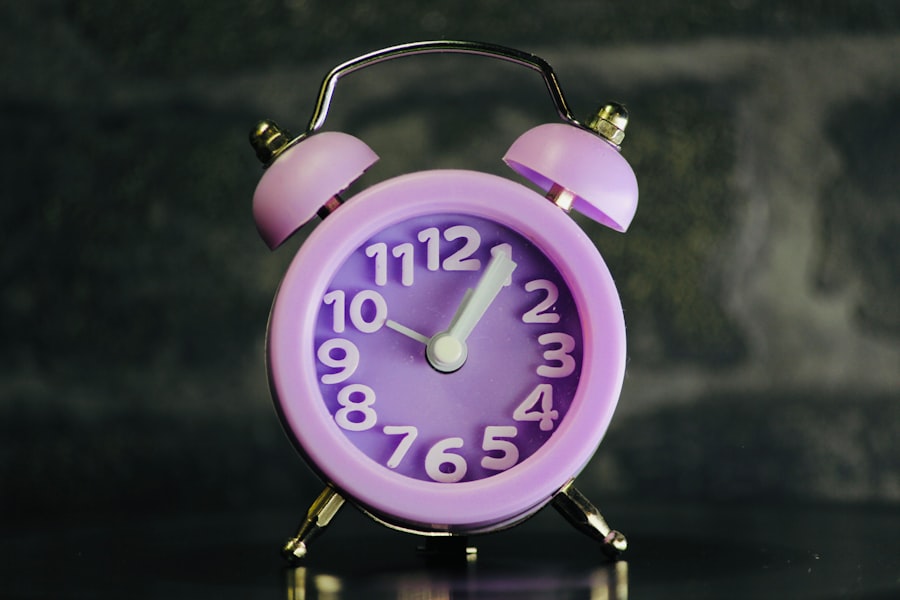
While your internal state is a primary driver of subjective time, the external world also plays a role in shaping your perception. The environment in which you find yourself, the stimuli you receive, and even the passage of others can subtly nudge your internal clock.
Sensory Input and Environmental Cues
The richness and complexity of sensory input you receive can influence your perception of time. A visually stimulating and dynamic environment might make time feel like it’s moving more quickly because your brain is constantly processing new information. Conversely, a monotonous or unchanging environment might lead to a feeling of time slowing down. Think about the difference between walking through a bustling city market compared to sitting in a sparsely furnished waiting room. The former is awash with sights, sounds, and smells, while the latter can feel stark and empty.
External cues, such as the presence of clocks, the changing light of day, or the sounds of activity around you, also serve as anchors for your temporal awareness. When these cues are absent or inconsistent, your subjective experience of time can become more fluid and less anchored.
The ‘Observer Effect’ in Social Contexts
Your perception of time is not formed in a vacuum; it’s often shaped by the temporal experiences of those around you. When you’re with a group of people who are all experiencing the same event, your sense of time can become synchronized. If everyone agrees that an hour has passed, you’re more likely to perceive it that way, even if your internal clock might have suggested otherwise. This social synchronization of time perception is a fascinating aspect of our shared human experience.
Conversely, if you’re in a situation where others are experiencing time differently – for example, if someone is clearly bored while you are engaged – it can highlight the discrepancies in your perceptions. This “observer effect” in social contexts underscores how our understanding of time is often a shared construction.
Observers often disagree about time due to the complex nature of its perception and measurement, which can be influenced by various factors such as relative motion and gravitational fields. This phenomenon is explored in depth in a related article that discusses the intricacies of time perception and the implications of Einstein’s theory of relativity. For more insights on this topic, you can read the article here. Understanding these differences can shed light on why our experiences of time can vary so significantly from one observer to another.
The Unifying Theory: A Dynamic and Personal Construction
| Reasons for Disagreement | Explanation |
|---|---|
| Relativity | Observers moving at different speeds will experience time differently due to the theory of relativity. |
| Perception | Individuals may perceive time differently based on their own experiences, emotions, and cognitive processes. |
| Measurement Methods | Different measurement methods and instruments can lead to discrepancies in recorded time. |
| Cultural Differences | Cultural norms and practices can influence how time is perceived and valued, leading to disagreements among observers. |
Ultimately, the subjectivity of time isn’t a flaw in the universe or a trick of your mind. Instead, it’s a fundamental characteristic of consciousness itself. Your experience of time is not a passive reception of objective reality but an active, dynamic construction.
Why Observers Disagree: A Symphony of Internal and External Factors
You’ve seen how a multitude of factors – your neurochemistry, your attentional state, your memories, and your environment – all contribute to your personal timeline. When you and another person experience the same event, it’s highly unlikely that all these factors will align perfectly. Your unique biological makeup, your individual history, your current emotional state, and the specific way you engage with the world will all lead to a subtly (or not so subtly) different perception of how long that event lasted.
The Beauty and Mystery of Subjective Temporality
The fact that your experience of time is subjective is not a cause for confusion, but rather an invitation to appreciate the intricate workings of your own consciousness. It highlights the rich, internal world you inhabit, where events are not just observed but deeply felt and personally processed. The mystery of time, in its subjective form, is a testament to the profound power of your own mind to shape your reality. So, the next time you find yourself disagreeing with someone about how quickly or slowly time has passed, remember that you’re both right, in your own unique and deeply personal way. You are each navigating your own temporal landscape, a testament to the enduring beauty and complexity of human experience.

Einstein Says There Is No Universal “Now” in the Universe
FAQs
What is the concept of time dilation?
Time dilation is a phenomenon predicted by Einstein’s theory of relativity, where time appears to pass at different rates for observers who are moving relative to one another. This means that time can appear to move slower or faster depending on the relative motion of the observers.
How does time dilation affect the perception of time for different observers?
Time dilation can cause different observers to perceive the passage of time differently. For example, a person traveling at a high speed relative to another observer may experience time passing more slowly, while the stationary observer would perceive time passing at a normal rate.
What factors contribute to disagreements about time among observers?
Disagreements about time among observers can be influenced by factors such as relative motion, gravitational fields, and the speed of light. These factors can lead to differences in the perception of time and disagreements about the order of events.
How do scientists account for time dilation in their measurements and observations?
Scientists account for time dilation in their measurements and observations by using mathematical equations and theoretical frameworks provided by the theory of relativity. They also use precise instruments and techniques to account for the effects of time dilation in their experiments and observations.
What are some real-world examples of time dilation and observer disagreement?
Real-world examples of time dilation and observer disagreement include the time differences experienced by astronauts in space compared to people on Earth, as well as the differences in time perception between objects moving at different speeds. These examples demonstrate the practical implications of time dilation and observer disagreement in the real world.