You stand on the platform, a clock ticking steadily on the wall. To you, time feels normal, a constant, unwavering march forward. The world around you proceeds at its usual pace. But what if I told you that this perception, this fundamental understanding of time and space, is not as absolute as you believe? Welcome to the strange, mind-bending world of special relativity, a realm where intuition takes a vacation and the universe reveals its truly peculiar nature. Forget everything you thought you knew about how things should work; Einstein’s groundbreaking theories will shatter those assumptions and leave you marveling at the elegant, yet baffling, truths of reality.
Your internal clock, that reliable metronome of your existence, is a personal, subjective thing. In the realm of special relativity, the very passage of time is inextricably linked to your motion. This is perhaps the most startling revelation of Einstein’s theory: time is not a universal constant, ticking at the same rate for everyone, everywhere. Instead, it’s a flexible, elastic dimension that can stretch and shrink depending on how fast you’re moving.
Time Dilation: The Faster You Go, The Slower You Tick
Imagine you have a twin. You stay on Earth, enjoying the familiar rhythm of your days. Your twin, however, embarks on a journey aboard a spaceship traveling at a significant fraction of the speed of light. When your twin returns, you’ll find yourself older than them. This isn’t science fiction; it’s the direct consequence of time dilation. The faster you move through space, the slower you move through time, relative to a stationary observer.
The Twin Paradox: A Thought Experiment That Bends Reality
The infamous “twin paradox” isn’t a paradox at all, but a stark illustration of time dilation. If your twin travels at near-light speed and then returns, they will have aged less than you. This is because their journey involved acceleration and deceleration, which special relativity doesn’t directly address, but the principle of time dilation still holds true during their high-speed travel. The discrepancy in age is a tangible, albeit mind-boggling, outcome of their relativistic journey.
Everyday Speed vs. Relativistic Speed: Why You Don’t Notice It
You might be thinking, “I travel in cars and planes all the time, why don’t I experience this?” The answer lies in the speed. The effects of time dilation only become significant at speeds approaching the speed of light. The difference in time experienced by someone traveling in a car versus someone standing still is infinitesimally small, far too small to be perceptible in our everyday lives. It’s like trying to measure the growth of a single hair with a ruler meant for continents – the scale is simply too vast.
Simultaneity is Relative: “Now” Is Not Universal
Another casualty of your intuitive understanding of time is the concept of simultaneity. You likely assume that if two events happen at the same time for you, they happen at the same time for everyone. Special relativity argues otherwise. What appears simultaneous to one observer may not be simultaneous to another observer who is moving relative to the first.
The Train and the Lightning Strikes: A Classic Illustration
Consider a long train moving at a high speed. You are standing on the platform, and your friend is sitting in the exact middle of the train. Lightning strikes the front and back of the train simultaneously, from your perspective on the platform. However, for your friend on the train, the light from the front strike will reach them before the light from the back strike, because they are moving towards the front strike and away from the back strike. Thus, from their perspective, the lightning strikes were not simultaneous. This demonstrates that the concept of “now” is not a universal decree, but rather a personal, observer-dependent experience.
If you’re intrigued by the peculiarities of special relativity, you might find it fascinating to explore more weird facts and concepts related to this theory. A great resource for such intriguing information can be found in the article on Freaky Science, which delves into the bizarre implications of Einstein’s groundbreaking work. To read more about these unusual aspects of special relativity, check out this article: Freaky Science.
The Bending of Space: Length Contraction and the Universe’s Elasticity
Just as time is not an immutable constant, neither is space. Special relativity introduces the concept of length contraction, meaning that objects moving at high speeds appear shorter in the direction of their motion when observed by a stationary observer. This isn’t just an optical illusion; it’s a fundamental change in the spatial dimensions of the object itself, relative to the observer.
Length Contraction: The Faster You Move, The Shorter You Get
Imagine that spaceship again, the one your twin is traveling in. As it zooms past Earth at near-light speed, you would observe its length to be shorter than it was when it was at rest. This contraction occurs only along the direction of motion. If the spaceship is traveling horizontally, you’d see it compressed horizontally, but its height and width would remain unchanged.
The Observer’s Perspective is Key
It’s crucial to remember that this is from the perspective of the stationary observer. For your twin on the spaceship, their own length feels perfectly normal. They don’t experience themselves shrinking. The contraction is a phenomenon that arises from the relative motion between the observer and the observed object. This is a recurring theme in relativity – perspective is paramount.
Why We Don’t See Cars Shrinking on the Highway
Again, the reason you don’t notice this phenomenon in your daily life is the speed. The effects of length contraction, like time dilation, are only significant at speeds approaching the speed of light. The differences are so minuscule at everyday speeds that they are undetectable. Our macroscopic world operates under approximations that are incredibly accurate for our experiences, but they break down dramatically when we venture into the relativistic domain.
The Universal Speed Limit: Nothing Outruns Light
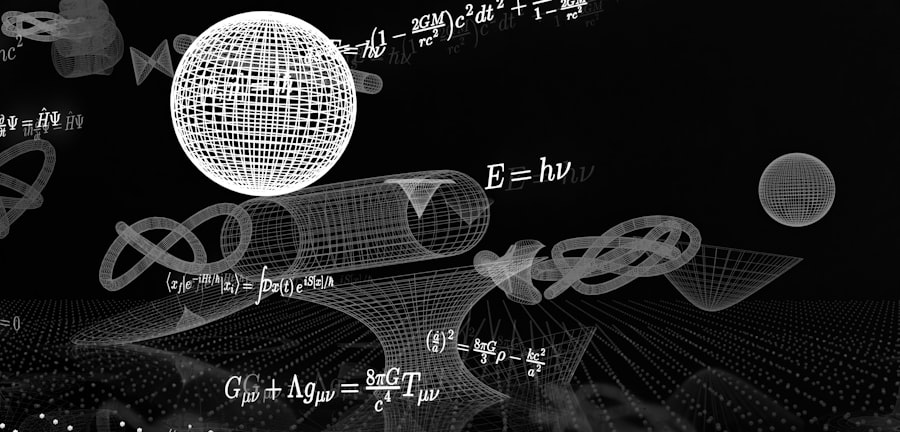
One of the most profound and perhaps frustrating implications of special relativity is the existence of a universal speed limit: the speed of light in a vacuum, denoted by c, approximately 299,792,458 meters per second. Nothing with mass can ever reach or exceed this speed.
Why the Speed of Light is the Ultimate Barrier
As an object with mass approaches the speed of light, its relativistic mass increases, and it requires an infinite amount of energy to accelerate it further. Since an infinite amount of energy is impossible to obtain, reaching the speed of light is an insurmountable barrier for any object possessing mass.
E=mc²: The Dance of Energy and Mass
This brings us to perhaps the most famous equation in physics: E=mc². This equation, derived from special relativity, beautifully illustrates the equivalence of energy (E) and mass (m), with the speed of light squared (c²) acting as the conversion factor. It tells us that mass can be converted into energy, and vice versa. This relationship is fundamental to understanding nuclear reactions, star formation, and the very fabric of the universe.
Cosmic Speeds and the Limits of Travel
This speed limit has profound implications for interstellar travel. Traveling to even the nearest star system would take many years, even at speeds close to the speed of light. While time dilation might make the journey feel shorter for the traveler, the immense distances and the inability to exceed c present significant challenges for humanity’s aspirations to explore the galaxy in person.
Mass-Energy Equivalence: The Intertwined Nature of Matter and Energy
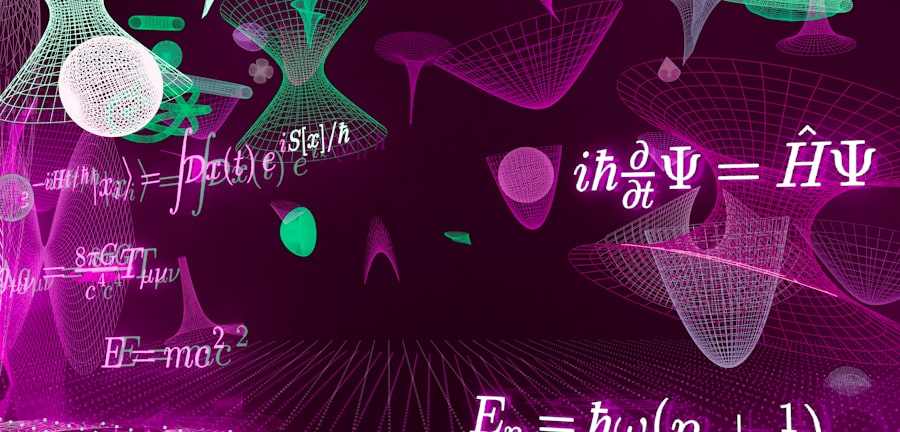
As hinted at with E=mc², special relativity fundamentally changed our understanding of mass and energy. They are not separate entities but are intimately connected, two facets of the same fundamental reality.
Mass is a Form of Energy
Einstein’s insight was that mass itself is a concentrated form of energy. The energy contained within a small amount of mass is enormous, as indicated by the c² factor in E=mc². This is the principle behind nuclear power and nuclear weapons, where a tiny amount of mass is converted into a tremendous release of energy.
The Proton’s Weight: A Surprising Revelation
Consider a proton. While it’s made up of smaller particles (quarks and gluons), the vast majority of its mass doesn’t come from the intrinsic mass of these constituent particles. Instead, it comes from the kinetic energy of the quarks and gluons as they zip around inside the proton, and the energy of the strong nuclear force binding them together. This is a counterintuitive but profound consequence of mass-energy equivalence.
Energy Can Be Converted to Mass
Conversely, energy can also be converted into mass. In particle accelerators, high-energy collisions can create new particles, essentially converting kinetic energy into mass. This is how scientists explore the fundamental building blocks of the universe and discover new particles.
If you’re intrigued by the peculiarities of special relativity, you might find it fascinating to explore some weird facts that challenge our understanding of time and space. For a deeper dive into this captivating subject, check out this related article that covers various mind-bending aspects of the theory. Understanding how time dilation and the speed of light play crucial roles can truly reshape your perspective on the universe. You can read more about it here.
The Lorentz Transformations: The Mathematical Underpinnings of Relativity
| Fact | Description |
|---|---|
| Time Dilation | Time passes more slowly for an object in motion relative to an observer. |
| Length Contraction | Objects appear shorter in the direction of motion when traveling at relativistic speeds. |
| Simultaneity | Events that are simultaneous in one frame of reference may not be simultaneous in another. |
| Relativistic Mass | An object’s mass increases as its velocity approaches the speed of light. |
| Equivalence of Mass and Energy | E=mc^2, where energy and mass are interchangeable. |
While the concepts of time dilation and length contraction are fascinating, they are not arbitrary. They are derived from a set of mathematical equations known as the Lorentz transformations. These transformations are the backbone of special relativity, describing how measurements of space and time change between different inertial frames of reference.
Inertial Frames of Reference: The Basis of Our Understanding
An inertial frame of reference is simply a frame that is not accelerating. Think of a train moving at a constant speed on a straight track. For someone on that train, physics works the same way as it does for someone standing still on the platform. Special relativity deals with how these measurements differ between observers in different inertial frames.
The Algebra of Spacetime: A New Way to See
The Lorentz transformations are more than just algebraic manipulations; they represent a profound shift in how we perceive spacetime. They show that space and time are not independent but are interwoven into a single four-dimensional continuum. Events that appear to happen at different times for one observer might appear to happen at the same time for another, and vice versa, depending on their relative motion.
The Constant Speed of Light: The Invariant Measure
The Lorentz transformations are built upon a single, unwavering principle: the speed of light in a vacuum is constant for all inertial observers, regardless of their own motion or the motion of the light source. This seemingly simple postulate has far-reaching consequences, leading to all the strange and wonderful phenomena of special relativity. It is the rock upon which the entire edifice of special relativity is built.
In conclusion, the world revealed by special relativity is one where our everyday intuitions about time, space, and motion are elegantly but definitively overturned. It’s a universe that is far stranger, far more dynamic, and far more interconnected than we might initially believe. You are not merely an observer in a fixed, absolute reality; you are an active participant in a dynamic spacetime where your motion dictates your experience of time and space. The next time you look at a clock, or consider the distance to a star, remember the profound truths of special relativity, and marvel at the strange, wonderful universe you inhabit.

Einstein Says There Is No Universal “Now” in the Universe
FAQs
What is special relativity?
Special relativity is a theory developed by Albert Einstein in 1905 that describes the behavior of objects moving at speeds close to the speed of light. It is based on two postulates: the laws of physics are the same for all observers in uniform motion, and the speed of light is constant for all observers.
What are some weird facts about special relativity?
Some weird facts about special relativity include time dilation, length contraction, and the equivalence of mass and energy. Time dilation means that time passes more slowly for an object moving at high speeds compared to an object at rest. Length contraction refers to the shortening of an object’s length in the direction of its motion. The equivalence of mass and energy is described by the famous equation E=mc^2, where E is energy, m is mass, and c is the speed of light.
How does special relativity affect our everyday lives?
Special relativity has practical implications in our everyday lives, particularly in the fields of GPS technology and particle accelerators. GPS satellites have to account for the time dilation effects of special relativity in order to provide accurate location information. Particle accelerators, such as the Large Hadron Collider, rely on the principles of special relativity to accelerate particles to high speeds and study their behavior.
What are some common misconceptions about special relativity?
One common misconception about special relativity is that it only applies to objects moving at speeds close to the speed of light. In reality, the effects of special relativity can be observed at everyday speeds, but they are extremely small and usually imperceptible. Another misconception is that special relativity only applies to very large or very small objects, when in fact it applies to all objects regardless of size.
How has special relativity impacted the field of physics?
Special relativity has had a profound impact on the field of physics, leading to the development of new theories and technologies. It has influenced the study of particle physics, cosmology, and quantum mechanics. Special relativity also paved the way for the development of general relativity, which describes the behavior of gravity and the curvature of spacetime. Additionally, special relativity has inspired new ways of thinking about the nature of space, time, and the universe.