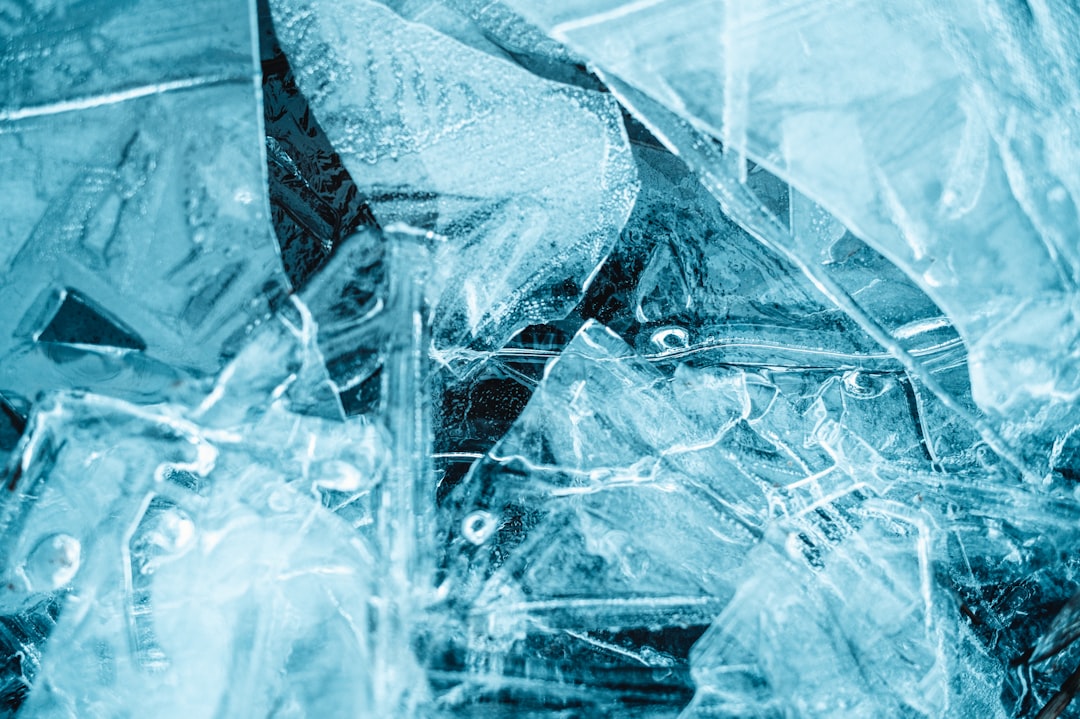
The Slippery Science of Ice Lubrication
Ice, a substance often associated with winter’s chill and a solid, unyielding nature, possesses a surprising and complex characteristic: its slipperiness. This seemingly simple phenomenon, responsible for everything from graceful figure skating to hazardous driving conditions, is the subject of a fascinating and still evolving scientific inquiry. The slippery science of ice lubrication delves into the intricate interplay of pressure, temperature, friction, and the very molecular structure of water to explain why traversing a frozen surface can be so effortlessly smooth, and yet, under certain circumstances, surprisingly resistant.
At first glance, it appears counterintuitive. Solid objects generally generate friction when they rub against each other. Yet, ice, a solid, often exhibits remarkably low friction, allowing objects to glide across its surface with minimal resistance. This fundamental paradox has been a source of scientific curiosity for centuries, prompting investigations that have revealed layers of complexity far beyond a simple understanding of solid-state interactions.
Early Hypotheses and the Pressure Theory
One of the earliest and most enduring explanations for ice lubrication was the pressure theory, first proposed by Michael Faraday in the mid-19th century. This theory posited that the weight of an object placed on ice would increase the pressure on the ice directly beneath it. This increased pressure, in turn, would lower the melting point of the ice, causing a thin film of liquid water to form between the object and the ice surface. This water film then acts as a lubricant, significantly reducing friction.
- The Melting Point Depression: The core of Faraday’s theory rested on the thermodynamic principle of melting point depression. As pressure increases, the solid-liquid equilibrium shifts. For ice, this shift favors the liquid phase, meaning it melts at a lower temperature than it would under atmospheric pressure. This effect is quantifiable and directly related to the pressure applied.
- Limitations of the Pressure Theory: While the pressure theory accurately describes phenomena like ice skating and the formation of slush under heavy loads, it doesn’t fully account for the slipperiness of ice in all situations. For example, the pressure exerted by a single skate blade might not be sufficient to significantly lower the melting point enough to explain the observed low friction. Furthermore, the theory struggles to explain why ice remains slippery even at temperatures well below its normal freezing point, where the pressure required to induce melting would be exceptionally high. This observation necessitated further research and the development of complementary theories.
The Kinetic Friction Theory and Thermal Dissipation
As scientific understanding advanced, it became clear that the pressure theory alone was insufficient. The kinetic friction theory emerged as a crucial addition, focusing on the heat generated by friction itself. When two surfaces slide against each other, kinetic energy is converted into thermal energy. On an ice surface, this generated heat can, under certain conditions, melt a thin layer of ice, creating the lubricating water film.
- Friction as a Heat Source: This theory highlights that the act of sliding is not passive but actively generates heat. The rate at which this heat is produced is directly proportional to the frictional force and the relative velocity between the sliding surfaces.
- The Thin Layer of Water: The heat generated by friction, even if modest, can be concentrated at the interface between the sliding object and the ice. This concentrated heat can melt a minuscule amount of ice, forming a transient layer of liquid water. This layer, though often only a few molecules thick, can drastically reduce the effective contact area between the solid surfaces, thereby lowering the overall frictional force.
- Temperature Dependence: The kinetic friction theory offers a better explanation for ice slipperiness at lower temperatures. Even at sub-zero temperatures, the friction generated can be sufficient to melt a thin layer of ice. This also helps explain why ice can feel “stickier” at certain temperatures, as the rate of heat generation might not be enough to overcome the natural adhesion between the surfaces.
Recent research has shed light on the fascinating phenomenon of how ice lubricates itself, allowing it to slide more easily over surfaces. This self-lubricating property is crucial in various natural processes, including glacial movement and the dynamics of ice sheets. For a deeper understanding of this topic and its implications, you can explore the article on Freaky Science, which delves into the science behind ice and its unique characteristics. To read more, visit Freaky Science.
The Crucial Role of the Quasi-Liquid Layer
Modern understanding of ice lubrication places significant emphasis on the existence of a “quasi-liquid layer” (QLL) on the surface of ice, even at temperatures below freezing. This layer, a dynamic interface of molecules exhibiting properties somewhere between solid and liquid, is now considered a primary driver of ice slipperiness.
Molecular Dynamics and Surface Restructuring
The concept of the QLL is rooted in the behavior of water molecules at the ice-air or ice-solid interface. Unlike the highly ordered crystalline structure of bulk ice, the molecules at the surface experience different bonding environments and are more mobile.
- Disrupted Bonding at the Surface: In the bulk of an ice crystal, each water molecule is typically hydrogen-bonded to four other water molecules in a tetrahedral arrangement. At the surface, however, some of these bonds are to the underlying ice, while others are to the surrounding air or another material. This imbalance of hydrogen bonds leads to a less ordered arrangement and increased mobility of surface molecules.
- The “Melting” at the Nanoscale: This surface disorder is often described as a form of nanoscale melting. While the bulk ice remains frozen, a thin layer of molecules at the very surface exhibits significantly reduced ordering and increased translational and rotational freedom. This layer is not bulk liquid water but a distinct phase with unique properties.
- Factors Influencing QLL Thickness: The thickness and properties of the QLL are influenced by several factors, including temperature, surface roughness, and the presence of impurities. As temperature increases towards the freezing point, the QLL generally becomes thicker and more liquid-like.
Experimental Evidence for the Quasi-Liquid Layer
The existence and influence of the QLL have been supported by a growing body of experimental evidence across various scientific disciplines.
- Spectroscopic Techniques: Techniques like infrared and Raman spectroscopy have been employed to study the vibrational modes of water molecules at the ice surface. Changes in these spectral signatures have indicated the presence of a less ordered, more dynamic phase compared to bulk ice.
- Atomic Force Microscopy (AFM): AFM has allowed researchers to probe the ice surface at the atomic scale. Studies using AFM have revealed that the ice surface behaves as if it were partially melted, supporting the QLL hypothesis. By measuring forces between the AFM tip and the ice, scientists can infer the nature of the surface layer.
- Neutron and X-ray Scattering: These techniques provide insights into the structural and dynamic properties of materials. Experiments using scattering methods on ice surfaces have shown evidence of increased molecular mobility and disorder consistent with a QLL.
The Influence of External Factors on Ice Lubrication

While the intrinsic properties of ice play a significant role, external factors can dramatically alter its slipperiness, either enhancing or diminishing the lubricating effect. Understanding these influences is crucial for practical applications and safety considerations.
Temperature: A Double-Edged Sword
Temperature is arguably the most influential external factor affecting ice lubrication. Its impact, however, is not linear and can lead to complex behaviors.
- Near Freezing Point: As the temperature approaches 0°C, the QLL thickens, and the kinetic friction effect becomes more pronounced due to the ease of melting. This typically results in maximum slipperiness.
- Sub-Zero Temperatures: At significantly sub-zero temperatures, the QLL still exists but is thinner and less liquid-like. The kinetic friction generated might not be sufficient to create a substantial water film, leading to increased friction. However, if friction is high enough to generate localized melting, slipperiness can still be observed.
- Extreme Cold: In extremely cold conditions, the QLL may become very thin, and the ice can become very hard and brittle. Friction might increase significantly, and the ice can behave more like a crystalline solid, leading to reduced slipperiness and potential for cracking.
Pressure: The Direct Melting Effect
As established by Faraday, pressure directly influences the melting point of ice. This effect is particularly significant in scenarios involving concentrated loads.
- Skating and Skiing: The sharp edges of ice skates and skis concentrate the weight of the user over a small area. This high pressure significantly lowers the melting point of the ice directly beneath, creating a substantial water film that enables smooth gliding.
- Tire Traction: On icy roads, the pressure exerted by vehicle tires is distributed over a larger area, but still plays a role. Higher tire pressure can contribute to localized melting, while lower pressure may lead to less melting and potentially reduced traction.
- Practical Implications for Load Bearing: Understanding the pressure-melting effect is vital in designing structures that operate on ice, such as ice roads or temporary structures on frozen lakes. Exceeding the ice’s load-bearing capacity can lead to catastrophic failure.
Surface Roughness and Contaminants
The microscopic topography of the ice surface and the presence of any foreign substances can dramatically alter the frictional properties.
- Smooth vs. Rough Surfaces: A perfectly smooth ice surface, in theory, could lead to very low friction due to maximized contact with a lubricating layer. However, in reality, even seemingly smooth ice has microscopic irregularities. A slightly rougher surface might offer more grip by providing points of higher pressure that can induce melting. Extremely rough surfaces, conversely, can lead to increased drag and reduced slipperiness.
- Impurities and Additives: The presence of dirt, sand, salt, or other chemicals can significantly alter ice lubrication. Salt, for instance, is a common de-icing agent because it lowers the freezing point of water, creating a brine that remains liquid at lower temperatures and prevents ice formation. Other contaminants can either increase or decrease friction depending on their chemical and physical properties.
- The “Friction Melt” Phenomenon: In some cases, a slightly rougher ice surface can actually enhance lubrication. The microscopic asperities (high points) on the ice surface experience higher localized pressure, leading to more efficient melting and the formation of a lubricating water film. This is often referred to as the “friction melt” phenomenon.
The Science of Slipping: Applications and Consequences
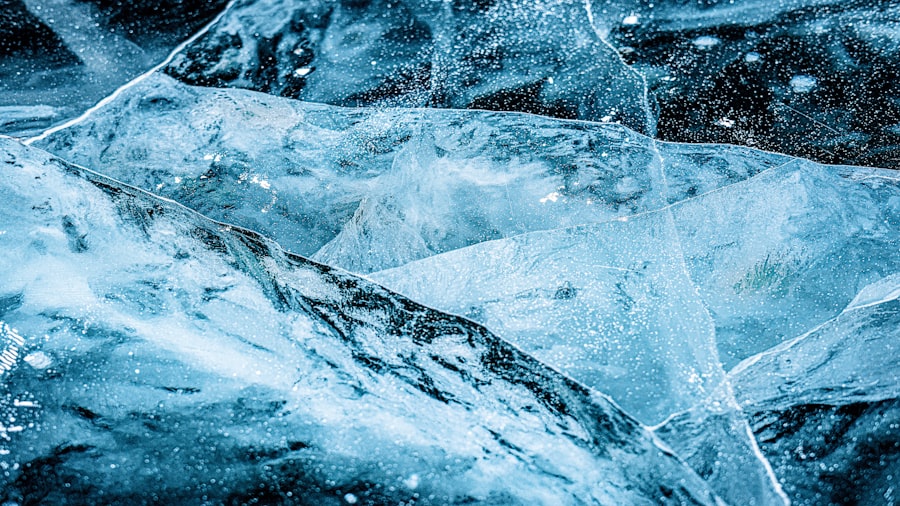
The slippery nature of ice, governed by the principles discussed, has profound implications across a wide range of human activities and natural phenomena. From athletic performance to transportation safety, understanding ice lubrication is crucial.
Athletic Performance: Gliding to Victory
The ability to glide effortlessly is paramount in many winter sports, and the science of ice lubrication directly underpins their success.
- Figure Skating: The intricate spins, jumps, and glides of figure skaters are a testament to controlled ice lubrication. Skaters meticulously maintain their blades to ensure optimal sharpness and a smooth surface, allowing them to exploit the pressure-melting and kinetic friction effects for fluid movement. The precise angle and curvature of the blade are designed to interact with the ice in a way that maximizes lubrication.
- Speed Skating: For speed skaters, minimizing friction is the ultimate goal. Their blades are designed to be incredibly thin and sharp, maximizing pressure and thus melting. The polished surface of the ice in speed skating arenas is also critical for achieving the highest possible speeds.
- Curling: In curling, the smooth, polished surface of the ice is crucial for the stones to travel long distances with minimal resistance. The sweeping action of the curlers is believed to slightly warm the ice surface in front of the stone, further enhancing its glide.
Transportation Hazards: The Perils of Black Ice
Conversely, the same lubricating properties that enable sport can create significant dangers for transportation.
- Black Ice Formation: Black ice, a transparent and often invisible layer of ice on roads, is particularly hazardous. It forms when water freezes on a cold surface, and its transparency makes it difficult to detect. The lack of visual cues combined with the extremely low friction can lead to drivers losing control of their vehicles.
- Tire Grip and Braking: The thin layer of water on icy roads significantly reduces the friction between tires and the road surface. This drastically compromises tire grip, making acceleration, steering, and braking much more challenging and increasing the risk of skidding and accidents.
- Mitigation Strategies: Understanding ice lubrication informs strategies for winter road maintenance, including the use of de-icing agents, abrasive materials like sand, and preventative measures to minimize water accumulation.
Recent research has shed light on the fascinating phenomenon of how ice lubricates itself, revealing the intricate mechanisms that allow it to remain slippery even under pressure. This self-lubrication is crucial for understanding various natural processes, including glacial movements and the behavior of ice in different environments. For those interested in diving deeper into this topic, you can explore a related article that discusses the science behind ice and its unique properties in more detail. Check it out here: this article.
The Future of Ice Lubrication Research
| Experiment | Results |
|---|---|
| Temperature | Ice lubricates itself at temperatures close to its melting point |
| Pressure | Higher pressure reduces the friction between ice surfaces |
| Surface Roughness | Smoother surfaces result in lower friction and better self-lubrication |
| Ice Thickness | Thinner ice layers exhibit better self-lubrication properties |
Despite centuries of study, the slippery science of ice lubrication continues to be an active area of research, with scientists exploring its nuances and potential applications.
Advanced Materials and Surface Engineering
The quest for better understanding and control of ice lubrication is driving innovation in materials science and surface engineering.
- Superhydrophobic and Ice-Repellent Surfaces: Researchers are developing novel materials that repel water and ice, aiming to minimize the formation of lubricating layers in critical applications like aircraft wings and wind turbine blades. These surfaces often feature micro- or nanostructures that trap air, preventing direct contact between the surface and water or ice.
- Tribological Studies of Ice: Continued investigation into the tribology of ice (the science of friction, wear, and lubrication) is crucial for designing more efficient and safer technologies that interact with icy environments. This involves developing advanced simulation models and experimental techniques to probe the complex interactions at the ice interface.
- Biomimicry: Nature offers inspiration for ice-repellent surfaces. For example, some insects and plants have evolved unique surface structures that prevent water and ice from adhering. Studying these natural mechanisms could lead to breakthroughs in artificial ice-repellent technologies.
Computational Modeling and Simulation
The power of computational modeling is increasingly being harnessed to unravel the complexities of ice lubrication at the molecular level.
- Molecular Dynamics Simulations: Researchers are using molecular dynamics simulations to model the behavior of water molecules at the ice surface, gaining insights into the formation and properties of the QLL. These simulations can explore scenarios that are difficult or impossible to replicate experimentally.
- Finite Element Analysis (FEA): FEA is used to model the macroscopic behavior of ice under stress and pressure, predicting areas of potential melting and friction. This is particularly useful in engineering applications where understanding the mechanical response of ice is critical.
- Bridging Scales: A key challenge is to bridge the gap between molecular-level phenomena and macroscopic observations. Future research will focus on developing computational models that can accurately represent ice lubrication across multiple scales, from individual molecules to large-scale engineering structures.
The slippery science of ice lubrication, a seemingly simple phenomenon, reveals a world of intricate physics and chemistry. From the fundamental paradox of low friction on a solid to the dynamic nature of the quasi-liquid layer and the influence of external factors, the journey to understand ice’s slipperiness is an ongoing testament to scientific curiosity. As research continues to advance, our understanding of this ubiquitous material will undoubtedly lead to safer transportation, enhanced athletic performance, and innovative technological solutions for a world that frequently encounters the enigmatic and slippery realm of ice.

Why Ice Is Slippery Is Stranger Than You Think
FAQs
What is the phenomenon of ice lubricating itself?
The phenomenon of ice lubricating itself refers to the ability of ice to reduce friction and glide smoothly over surfaces, even at temperatures well below freezing. This unique property allows ice to act as a lubricant for itself, making it possible for ice skaters and ice hockey players to move with ease on ice rinks.
How does ice achieve self-lubrication?
Ice achieves self-lubrication through a process called pressure melting. When an object, such as an ice skate blade, applies pressure to the surface of ice, it causes a localized increase in temperature, which leads to a thin layer of water forming between the ice and the object. This layer of water reduces friction, allowing the object to glide smoothly over the ice.
What are the implications of ice self-lubrication?
The ability of ice to self-lubricate has significant implications for various applications, such as ice sports, transportation on icy surfaces, and the understanding of glacial movement. It also has potential implications for the development of new materials and lubricants inspired by the self-lubricating properties of ice.
Can ice self-lubrication be utilized in other fields?
Yes, the concept of ice self-lubrication has the potential to be utilized in other fields, such as engineering, materials science, and tribology (the study of friction, wear, and lubrication). Researchers are exploring ways to mimic the self-lubricating properties of ice to develop new technologies and materials that can reduce friction and improve efficiency in various applications.
What are some challenges in studying ice self-lubrication?
Studying ice self-lubrication presents challenges due to the complex nature of ice-water interactions at the molecular level. Additionally, factors such as temperature, pressure, and surface conditions can influence the self-lubricating behavior of ice. Researchers continue to investigate and analyze these complexities to gain a deeper understanding of how ice achieves self-lubrication.