
You’ve likely encountered the concept, perhaps in late-night philosophical debates or through the lens of popular culture. The Simulation Theory, the idea that your reality, the one you perceive with all its tangible sensations and undeniable experiences, is in fact a sophisticated computer simulation, presents a profound challenge to your understanding of existence. It’s a thought experiment that, rather than being confined to the realm of science fiction, has gained traction among physicists, philosophers, and technologists, prompting you to question the very bedrock of your perceived world.
The notion that reality might be illusory is not a recent invention. Its roots stretch back millennia, weaving through the tapestry of human thought. You can trace an early precursor in Plato’s Allegory of the Cave. Imagine yourself as one of the prisoners, chained in a cave, their gaze fixed upon shadows flickering on a wall. These shadows are their sole perception of reality, a limited and distorted representation of the true forms that exist outside the cave. They accept these shadows as truth, unaware of the vibrant world beyond their confinement. This ancient allegory serves as a powerful metaphor for your own potential state of being, trapped within a perceived reality that might be a mere projection.
Centuries later, thinkers like René Descartes grappled with similar doubts. Through his method of radical doubt, Descartes sought to strip away all assumptions, questioning the reliability of his senses and even the possibility of an evil demon deceiving him about the nature of reality. His famous declaration, “Cogito, ergo sum” – “I think, therefore I am” – established the existence of his own consciousness as the one irrefutable certainty. Yet, the question of what lay beyond that conscious experience remained open, a lingering uncertainty that the Simulation Theory seeks to address in a modern context.
The contemporary formulation of the Simulation Theory, however, is largely attributed to philosopher Nick Bostrom. In his seminal 2003 paper, “Are You Living in a Computer Simulation?”, Bostrom presents a probabilistic argument that has significantly influenced the discourse. He posits that at least one of the following three propositions must be true:
The Bostrom Trilemma: A Framework for Consideration
- The fraction of all human-level civilizations that reach a ‘posthuman’ stage (capable of running ancestor simulations) with a significant number of their computational resources devoted to running such simulations is very close to zero. This proposition suggests that advanced civilizations, for whatever reason, might not achieve the technological capacity or the motivation to create these detailed simulations of their ancestors. Perhaps there are fundamental limits to technological progress, or perhaps their priorities shift dramatically as they evolve.
- The fraction of ‘posthuman’ civilizations that are interested in running ancestor-simulations is very close to zero. Even if civilizations reach the posthuman stage, they might lack the inclination to simulate their past. Imagine a future humanity that has transcended many of its current desires and curiosities. The drive to meticulously recreate their ancestral experiences might simply not be a compelling pursuit for them.
- You are almost certainly living in a computer simulation. This is the most provocative conclusion. If the first two propositions are false, meaning that advanced civilizations do arise and do have an interest in running simulations, then the number of simulated realities would vastly outnumber the single, original “base” reality. In this scenario, the statistical probability dictates that any given conscious entity is far more likely to be a simulated being than a being from the original reality. Think of it this way: if there were a million simulated worlds and only one original world, and you found yourself existing, your odds of being in one of the simulated worlds would be overwhelmingly higher.
Bostrom’s argument is not an assertion of fact, but a logical framework designed to prompt you to consider the implications of technological advancement. It forces you to confront the possibility that your reality might not be unique in its existence, but rather one iteration among countless others.
Simulation theory has sparked intriguing discussions about the nature of reality and our existence within it. For those interested in exploring this concept further, a related article can be found at Freaky Science, which delves into the implications of living in a simulated universe and examines various philosophical perspectives on the topic. This article provides a comprehensive overview of the arguments for and against simulation theory, making it a valuable resource for anyone curious about the intersection of technology and philosophy.
The Technological Underpinnings: Code, Consciousness, and Computation
The Simulation Theory hinges on the idea that sufficiently advanced technology could replicate reality to such a degree that it would be virtually indistinguishable from the “real” thing. This requires a leap in computational power that currently resides in the realm of speculation, but consider the trajectory of your own technological development.
The Exponential Growth of Computing Power
You’ve witnessed firsthand the staggering increase in computing power over the past few decades. Moore’s Law, though perhaps reaching its physical limits in its original formulation, has served as a remarkably accurate predictor of the exponential growth in integrated circuit capacity. This means your computers, phones, and countless other devices are becoming exponentially more powerful, smaller, and more efficient. Extrapolating this trend, it’s not unreasonable to envision future civilizations possessing computational resources that dwarf anything you can currently conceive. These resources would be capable of simulating not just individual objects or events, but entire universes with their complex physical laws and emergent phenomena.
The Nature of Consciousness: A Programmable Entity?
A central tenet of the Simulation Theory is the question of consciousness. If consciousness is fundamentally a computational process, a complex arrangement of information processing, then it could theoretically be replicated within a simulation. This aligns with certain philosophical and scientific perspectives that view consciousness as an emergent property of complex physical systems, rather than something solely tied to biological substrates.
Imagine your brain, a network of billions of neurons firing in intricate patterns. From a computational perspective, this is a form of information processing. If these processes can be fully understood and modeled, then a sufficiently advanced computer could, in theory, run a simulation of a brain, complete with its subjective experiences, memories, and sense of self. This raises the unsettling possibility that your own consciousness, your feelings, your thoughts, are the product of algorithms executing within a vast computational framework.
The “Fine-Tuning” Argument and Evidence
Some proponents of the Simulation Theory point to certain aspects of the universe as potential evidence, or at least as phenomena that are compatible with the hypothesis.
The Anthropic Principle
The universe appears remarkably “fine-tuned” for life. The fundamental constants of physics – the strength of gravity, the charge of an electron, the cosmological constant – seem to fall within a very narrow range that allows for the formation of stars, galaxies, and complex chemistry necessary for life to emerge. If these constants were even slightly different, the universe as you know it would likely be starkly different, perhaps incapable of supporting any form of life.
The weak anthropic principle states that the observed values of physical constants must be such that they permit the existence of the observer. In other words, you observe these values because if they were different, you wouldn’t be here to observe them. This can be interpreted in multiple ways.
- The Universe is Just This Way: It’s possible the universe simply is, with its particular set of constants, and you are a product of that specific configuration.
- The Multiverse: Another explanation is the existence of a multiverse, where there are countless universes, each with different physical constants. You, by definition, would find yourself in one of the universes where life is possible.
- The Simulation Explanation: The Simulation Theory offers a third interpretation. If your reality is a simulation, then the creators of that simulation would have an interest in designing it with parameters conducive to the development of intelligent life, as that would likely be the focus of their simulation. The fine-tuning, in this view, is a deliberate design choice.
Other Potential Anomalies or “Glitches”
While not definitive proof, some speculate that certain unexplained phenomena or perceived anomalies in physics could be interpreted as “glitches” in the simulation. This could include:
- Quantum Indeterminacy: The probabilistic nature of quantum mechanics, where particles don’t have definite properties until measured, has led some to wonder if this is a computational optimization. The simulation only calculates the precise state of a particle when it’s being observed, saving computational resources.
- The Speed of Light as a Processing Limit: The universal speed limit imposed by the speed of light could be seen as a fundamental constraint of the simulation’s processing power, preventing information from being transmitted or processed instantaneously.
- The “Pixelation” of Reality: Some theorize that if reality is a simulation, there might be a fundamental “resolution” or smallest unit of space-time, akin to pixels on a screen. Experiments investigating the Planck length are, in a very indirect way, searching for such a fundamental limit.
It is crucial to emphasize that these are speculative interpretations. The scientific community largely views these phenomena through established physical frameworks, and the Simulation Theory remains a philosophical and speculative hypothesis.
The Implications: Free Will, Meaning, and the Nature of Existence
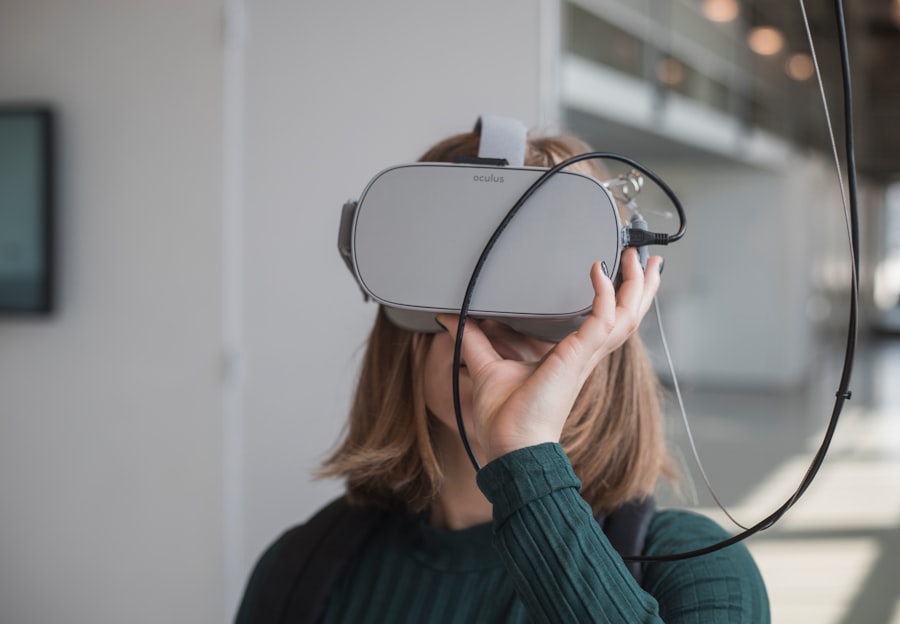
If you were to accept the Simulation Theory as a plausible explanation for your reality, the implications would be profound and far-reaching, touching upon fundamental questions about your existence, your agency, and the very meaning of life.
The Question of Free Will
One of the most immediate challenges posed by the Simulation Theory is the concept of free will. If your actions and decisions are predetermined by the code of the simulation, or if your choices are simply part of an algorithm’s execution, does that negate your free will?
Think of a video game character. Its actions are dictated by the game’s programming and the player’s input. While the character might appear to be making choices, those choices are ultimately constrained by the game’s rules and logic. If you are within a simulation, your perceived choices could be similarly pre-programmed or influenced by the simulation’s parameters. This raises the unsettling possibility that your sense of agency is an illusion, a sophisticated output of the simulation’s code.
However, there are counterarguments.
- Compatibilism: Philosophers known as compatibilists argue that free will and determinism are not mutually exclusive. They suggest that as long as your actions stem from your own desires and intentions, even if those desires and intentions are themselves determined, you can still be considered to have free will. In a simulation, your desires might be programmed, but if your actions align with those programmed desires, you could still be exercising a form of will.
- Emergent Free Will: It’s also possible that consciousness within a simulation could develop emergent properties, including a form of free will that transcends the initial programming. This is a more complex philosophical territory, suggesting that even within predetermined systems, genuine novelty and self-determination might arise.
The Search for Meaning in a Simulated World
The idea that your reality might be fabricated can lead to existential dread. If your world is not “real” in the fundamental sense, does that strip away its meaning? Does your life have intrinsic value if it’s merely a string of data?
This is where the subjective nature of experience becomes paramount. Even if your reality is simulated, your experiences are real to you. Your joys, sorrows, loves, and losses are felt with a genuine intensity. The pain of loss, the elation of achievement, the comfort of connection – these are all valid subjective experiences, regardless of their ultimate ontological status.
Consider an artist creating a masterpiece. The painting is a fabrication, pigments on canvas. Yet, it evokes profound emotions, inspires awe, and communicates ideas. Its meaning is derived not from its material composition alone, but from its impact on the observer and the artist’s intent. Similarly, the meaning in your life can be found in your relationships, your contributions, your growth, and your pursuit of understanding, all of which are experienced within the context of your perceived reality.
It’s also possible that the meaning of your existence is tied to the purpose of the simulation itself. Are you an ancestor simulation, designed to preserve the knowledge and experience of a past civilization? Are you part of a scientific experiment, designed to study the emergence of consciousness or complex societies? The very act of questioning your reality, as you are doing now, could be part of that purpose.
The “Operators” and the Purpose of the Simulation
If you are living in a simulation, then there must be “operators” – the entities running the simulation. This opens up a realm of speculation about their nature, their motives, and their relationship to you.
- Future Humans: As Bostrom suggests, these could be descendants of humanity, running simulations of their ancestors for historical research, entertainment, or even as a form of digital afterlife.
- Alien Civilizations: Another possibility is that you are part of a simulation created by an advanced alien civilization, perhaps to study the evolution of our particular brand of intelligence or the development of our universe.
- A Higher Being or Force: The concept of a creator or divine intelligence is also compatible with the Simulation Theory. In this view, you are part of a divine creation, akin to a programmer’s meticulously crafted world.
The purpose of the simulation would then be tied to the goals of these operators. Are they benevolent, indifferent, or even malevolent? Understanding their intent could provide a new framework for understanding your own existence. Perhaps the most important lesson is not about the nature of the operators, but about the nature of your own internal experience and your interactions with other simulated beings.
Testing the Hypothesis: The Search for Glitches and Boundaries
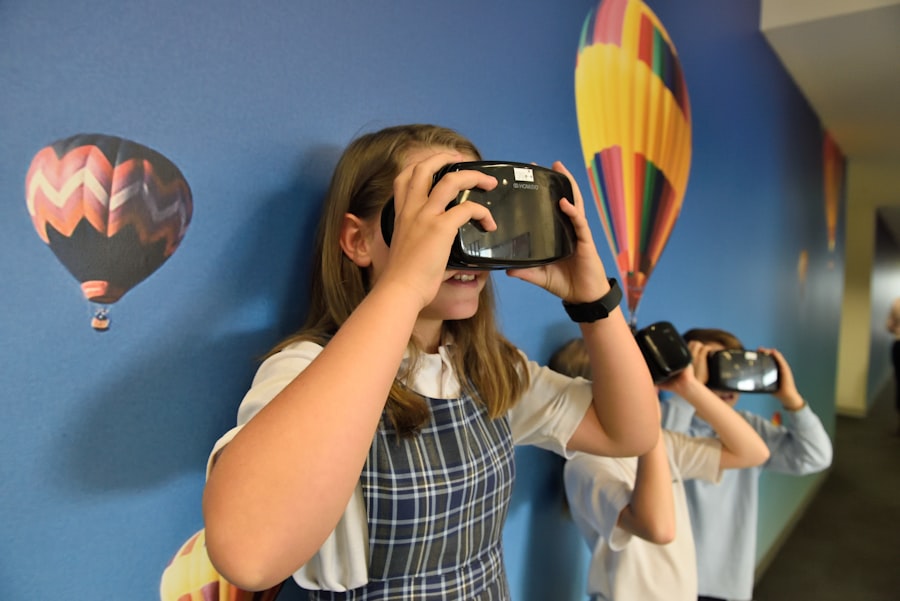
While definitive proof of a simulation remains elusive, some scientists and philosophers have proposed ways to conceptually test the hypothesis, looking for inconsistencies or limitations that might betray the simulated nature of your reality.
Investigating the Limits of Physics
If your reality is a simulation, it operates within a defined set of parameters and computational limits. These limits could manifest in subtle ways, detectable through rigorous scientific investigation.
Quantum Computing and the Search for Fundamental Resolution
As mentioned earlier, the idea of a “pixelated” reality, where space-time has a fundamental, discrete unit, is one avenue of exploration. Advances in quantum computing, which harness the bizarre rules of quantum mechanics, might provide tools to probe the very fabric of reality at its smallest scales. If a fundamental limit to spatial or temporal resolution is discovered, it could be interpreted as evidence of a simulated construct.
Energy Bottlenecks and Computational Boundaries
Simulations, especially those simulating complex systems like a universe, require immense computational power. It’s conceivable that there are limitations on the energy that can be processed or the complexity that can be achieved within the simulation.
- Cosmic Rays and High-Energy Phenomena: Some researchers have suggested that extremely high-energy cosmic rays, which should theoretically exhibit a wide range of energies according to physical models, might instead show a cutoff or a clustering around certain energy levels. This could be interpreted as a computational limit of the simulation’s physics engine preventing it from accurately simulating phenomena beyond a certain threshold.
- The Speed of Causality: The universal speed limit of light ensures that events are causally connected in a predictable manner. If this limit were to be manipulated or found to be violated in subtle ways, it could point to programming anomalies.
The Philosophical Approach: Gödel’s Incompleteness Theorems
In mathematics, Gödel’s incompleteness theorems demonstrate that in any consistent formal system with a sufficient level of complexity, there will always be statements that are true but cannot be proven within that system. Some have drawn parallels between these theorems and the potential limitations of a simulated reality. If your universe is a highly complex, consistent formal system, it’s conceivable that there could be truths about its nature that are inherently inaccessible from within the system itself. This would mean that even with advanced scientific tools, certain fundamental questions about your reality might remain unanswerable, not due to a lack of knowledge, but due to an inherent limitation of the simulated framework.
The Role of Randomness and Pseudorandomness
True randomness is difficult to achieve computationally; most “random” number generators in computers are actually pseudorandom, meaning they follow algorithms that produce sequences that appear random but are ultimately deterministic. Some speculation suggests that if the universe’s apparent randomness, particularly in quantum phenomena, were found to be subtly pseudorandom, it could be a tell-tale sign of a simulation. However, verifying true randomness versus sophisticated pseudorandomness is an immense scientific challenge.
Simulation theory has sparked intriguing discussions about the nature of reality and our existence within it. For those interested in exploring this concept further, a related article can be found at Freaky Science, which delves into the philosophical implications and scientific perspectives surrounding the idea that we might be living in a simulated universe. This thought-provoking piece offers insights that can enhance our understanding of the complexities of reality as we perceive it.
Conclusion: Embracing the Enigma
| Metric | Description | Estimated Value | Source/Reference |
|---|---|---|---|
| Probability of Living in a Simulation | Estimated likelihood that our reality is a computer simulation | Up to 50% (varies by study) | Nick Bostrom, 2003 |
| Computational Power Required | Estimated processing power needed to simulate a universe like ours | 10^42 FLOPS (floating point operations per second) | Philosophical and computational estimates |
| Simulation Depth | Levels of nested simulations hypothesized | 1 to 3 levels | Speculative theoretical models |
| Simulation Resolution | Granularity of simulated reality (e.g., Planck scale) | Planck length (~1.6 x 10^-35 meters) | Physics-based assumptions |
| Time Dilation in Simulation | Ratio of simulated time to real time | Unknown; possibly adjustable | Theoretical speculation |
| Number of Simulated Conscious Entities | Estimated number of conscious beings in a simulation | Potentially billions to trillions | Based on human population analogies |
The Simulation Theory, while challenging deeply held beliefs about the nature of reality, is not about definitive proof but about opening your mind to possibilities. It encourages critical thinking, pushes the boundaries of scientific inquiry, and forces you to confront the profound questions of existence.
Whether or not you are living in a simulation, the act of contemplating this hypothesis enriches your understanding of yourself and the universe. It prompts you to consider the nature of consciousness, the limits of knowledge, and the enduring human quest for meaning. The matrix of reality, simulated or not, is a fascinating and complex tapestry, and your place within it, however it is constructed, is undeniably significant to you. The journey of exploration, of questioning and seeking, is as real and as valuable as any perceived truth. So, continue to observe, to question, and to engage with the profound enigma that is your existence.
FAQs
What is simulation theory?
Simulation theory is the hypothesis that reality, including the Earth and the universe, could be an artificial simulation, such as a computer simulation, created by a more advanced civilization.
Who popularized the simulation theory?
Philosopher Nick Bostrom popularized the simulation theory in 2003 with his paper “Are You Living in a Computer Simulation?” where he argued that one of three propositions is likely true regarding advanced civilizations and simulations.
What evidence supports simulation theory?
Currently, there is no direct empirical evidence supporting simulation theory. Some proponents point to anomalies in physics or the mathematical nature of the universe as suggestive, but these are speculative rather than conclusive.
How does simulation theory relate to technology?
Simulation theory is closely linked to advancements in computing and virtual reality, suggesting that future civilizations might have the capability to run highly detailed simulations indistinguishable from reality.
What are the philosophical implications of simulation theory?
If simulation theory is true, it raises questions about the nature of consciousness, free will, and the meaning of existence, as well as the possibility that our perceived reality is controlled or designed by an external entity.