
The deep, resonant hums, the eerie whistles, the complex clicks and groans – these are the sounds that emanate from the ocean’s giants, the whales. For centuries, these marine mammals have captivated human imagination with their songs, a symphony of sound that travels vast distances through the water. What was once a source of mystery and folklore has now become a vibrant field of scientific inquiry, revealing the intricate science behind whale songs. Researchers are employing sophisticated technologies and analytical tools to decipher these aquatic melodies, unraveling their purpose, structure, and the profound communicative abilities of these intelligent creatures. The study of whale songs, or cetacean acoustics, is a testament to humanity’s enduring curiosity about the natural world and our quest to understand lives so different yet so compelling.
Whales, unlike land mammals, produce sound through a remarkably specialized and efficient system adapted for their aquatic environment. The absence of vocal cords as we know them, and the inability to exhale air to create sound in the same way, necessitated a unique evolutionary path for sound generation. This section delves into the biological structures and processes that enable whales to produce their diverse and melodious vocalizations.
The Laryngeal System and Airflow
The primary organ responsible for sound production in many toothed whales (Odontocetes), such as dolphins and porpoises, is their larynx. However, this larynx is considerably different from that of terrestrial mammals. Instead of vocal folds that vibrate with exhaled air, odontocetes possess a structure called the “phonic lips” or “monkey lips” situated within their nasal passages. Air is forced through these lips, causing them to vibrate and generate sound. The precise control of airflow and the tension of these phonic lips allow for the production of a wide range of frequencies and sound types, from clicks used for echolocation to whistles for social communication.
Mysteries still surround the exact mechanics in baleen whales (Mysticetes), the larger whale species like humpbacks and blue whales. They lack the phonic lips of their toothed counterparts. Current research suggests that sound production in baleen whales may involve the larynx, but the exact mechanism remains elusive. It is theorized that air might be moved back and forth between the lungs and an anterior sac in the larynx, causing vibrations that propagate through the water. Unlike odontocetes, baleen whales do not appear to use sound for echolocation, indicating a primary role for their vocalizations in communication and possibly other functions.
The Role of the Nasal System
The role of the nasal system in sound production, particularly in odontocetes, cannot be overstated. The complex series of air sacs and passages within the whale’s head acts as a resonating chamber and a modulator of sound. By contracting specific muscles, whales can alter the shape and tension of these sacs, effectively tuning the sounds they produce. This sophisticated control allows them to fine-tune frequencies, change amplitude, and create the complex waveforms that constitute their vocal repertoires.
In many toothed whales, a specific pair of phonic lips, often called the “upper” or “anterior” phonic lips, is primarily responsible for generating the high-frequency clicks used for echolocation. Another set of phonic lips, the “lower” or “posterior” phonic lips, is believed to be involved in producing social sounds like whistles. The interaction between these structures and the surrounding fatty tissues of the melon plays a crucial role in directing and shaping the sound.
The Melon: A Bio-Acoustic Lens
The melon, a fatty, bulbous organ located in the forehead of toothed whales, is more than just a cosmetic feature. It acts as a bio-acoustic lens, focusing and directing the sound produced by the phonic lips. The composition and structure of the melon’s lipids are highly organized, allowing for efficient transmission of sound waves. By subtly changing the shape and density of the melon, whales can manipulate the directionality of their vocalizations, sending precise beams of sound towards their intended recipients or environmental targets. This directional capability is vital for both communication and the successful execution of echolocation.
The precise arrangement of different lipid densities within the melon is believed to be critical for its acoustic properties. Studies have shown that these lipids have a higher acoustic impedance than surrounding tissues, allowing them to transmit sound efficiently. The evolution of the melon is a remarkable example of adaptation, showcasing how biological structures can be finely tuned to optimize sensory perception and communication in a challenging environment.
Whale songs have long fascinated scientists and researchers, as they provide insight into the complex communication systems of these majestic creatures. For a deeper understanding of the science behind whale songs, you can explore a related article that delves into the acoustic behaviors of whales and their significance in marine ecosystems. This article can be found at Freaky Science, where you will discover the latest findings and theories surrounding this intriguing topic.
The Diversity of Whale Vocalizations
The sheer variety of sounds produced by different whale species is astounding, reflecting a rich spectrum of communication strategies and potential purposes. From the haunting, melodic phrases of humpback whales to the rapid-fire clicks of sperm whales, each species possesses a unique vocal repertoire honed by millions of years of evolution. Understanding this diversity is key to deciphering the complex social lives and ecological roles of these magnificent marine creatures.
Humpback Whale Songs: Melodic Masterpieces
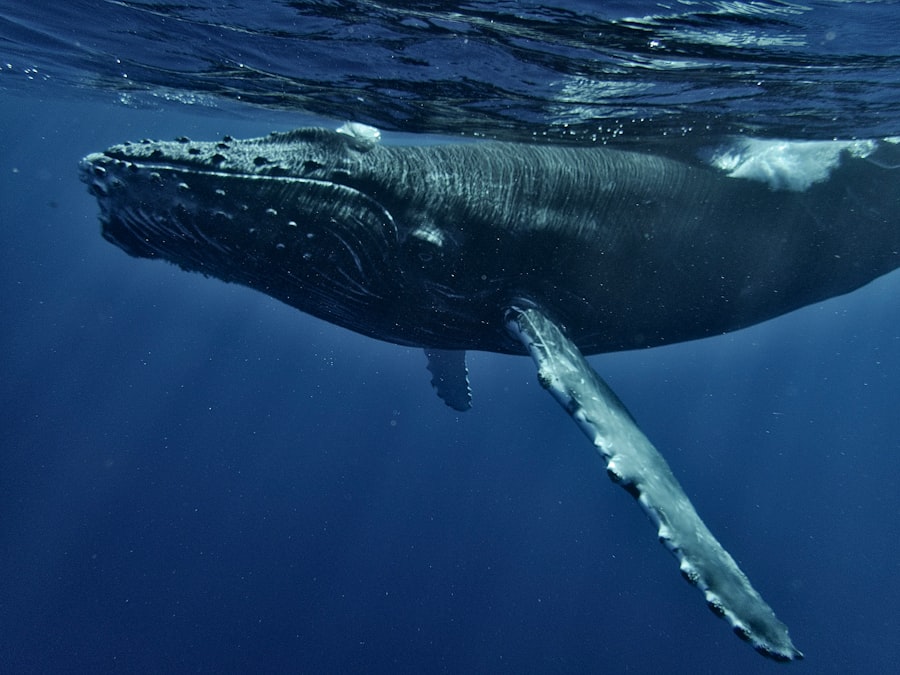
Humpback whale songs are perhaps the most iconic and extensively studied whale vocalizations. These long, complex sequences of sounds, often lasting for minutes and repeating for hours, are primarily sung by male whales during the breeding season. The songs are not static; they evolve over time, with new phrases and themes emerging and spreading through populations, often changing dramatically from one year to the next. This phenomenon is akin to cultural transmission in human societies, where ideas and behaviors are passed down and modified across generations.
The structure of humpback songs is hierarchical, composed of units, phrases, and themes. A unit is the smallest recognizable sound component, several units combine to form a phrase, and a series of phrases constitutes a theme. A complete song is a repetition of these themes. The complexity and variability of these songs suggest a significant role in mate attraction, territorial defense, or perhaps a combination of both. Researchers are still actively investigating the precise function and meaning behind these elaborate performances.
Odontocete Vocalizations: Clicks and Whistles
Toothed whales, with their sophisticated echolocation abilities, possess a different but equally complex vocal repertoire. Their communication largely revolves around clicks and whistles. Clicks are short, broadband pulses of sound that are used for echolocation – the process of emitting sound and interpreting the echoes to navigate, hunt, and perceive their surroundings. The rate and pattern of these clicks can vary depending on the whale’s activity, providing insights into their behavioral state.
Whistles, on the other hand, are tonal sounds that are used for social communication. Each individual dolphin or porpoise often develops a unique signature whistle, a personal acoustic identifier that other individuals can use to recognize them. These whistles are crucial for maintaining social bonds, coordinating group movements, and conveying information within pods. The frequency modulation and intricate patterns within these whistles are the subject of ongoing research, with scientists attempting to decipher the nuances of their social dialogue.
Baleen Whale Communication: Beyond the Song
While humpback whale songs are the most famous, other baleen whales also produce a variety of sounds. Blue whales, the largest animals on Earth, produce extremely low-frequency moans and pulses that can travel for hundreds, even thousands, of miles through the ocean. These calls are thought to be used for long-distance communication, potentially for maintaining contact between individuals spread across vast feeding grounds or for signaling during mating.
Fin whales, another endangered species, also produce a range of low-frequency sounds, including deep pulses and downswept calls. The purpose of these calls is still under investigation, but hypotheses include communication related to foraging, social interactions, and possibly even seismic detection, given the low frequencies involved. The ability of these animals to produce and perceive such low-frequency sounds highlights the unique acoustic environment of the deep ocean.
The Function and Meaning of Whale Songs
The intricate nature of whale songs, particularly those of humpbacks, has long fueled speculation about their purpose. While a definitive dictionary of whale language remains elusive, scientific research has illuminated several key functions and potential meanings behind these aquatic symphonies. Understanding these functions offers a window into the complex social lives, navigational strategies, and reproductive behaviors of these intelligent marine mammals.
Mate Attraction and Reproductive Success
For many whale species, especially male humpbacks, their elaborate songs are strongly linked to reproduction. The complexity and variation in their songs are believed to play a crucial role in attracting females and potentially in competing with other males. A more elaborate and diverse song might signal a male’s health, fitness, and genetic quality, making him a more desirable mate. The spread of new song elements and the rapid changes observed in song repertoires suggest a dynamic form of sexual selection, where novelty and complexity are favored.
In addition to direct mate attraction, songs might also serve to establish dominance hierarchies among males. The ability to produce and sustain long, complex songs could be an indicator of physical prowess and endurance, qualities that would be advantageous in territorial disputes or in attracting mates. The acoustically challenging environment of the ocean means that effective signaling is paramount for reproductive success, and whales have evolved extraordinary ways to achieve this.
Social Cohesion and Group Coordination
Beyond reproduction, whale songs are vital for maintaining social bonds and coordinating group activities, particularly in toothed whales. Signature whistles in dolphins and porpoises act as individual identifiers, allowing members of a pod to recognize each other and re-establish contact when separated. The ability to call to specific individuals or respond to familiar calls is fundamental for maintaining group cohesion, especially in dynamic environments where individuals may frequently move in and out of visual or acoustic range.
In cooperative hunting or foraging, detailed acoustic communication is essential. Whales may use specific calls to signal the location of prey, coordinate maneuvers to herd fish, or alert others to potential dangers. The intricate click trains of sperm whales, for example, are believed to be part of complex social interactions and cooperative foraging strategies. The ability to transmit coordinated sonic signals allows these animals to act as cohesive and efficient units in their pursuit of food and in navigating their environment.
Navigation and Environmental Sensing
While echolocation in toothed whales is explicitly for sensing the environment, some lower-frequency vocalizations in baleen whales might also contribute to navigation and environmental awareness. The ability of blue and fin whales to produce and detect sounds over vast distances suggests that these calls could be used to map out their surroundings, identify distant geographical features, or even detect the presence of other whales or potential threats far beyond visual range.
The ocean is a three-dimensional world, and sound travels much more effectively than light in this medium. Whales have exploited this property to create a sonic landscape that informs their movements and interactions. The presence of certain acoustic signals might indicate favorable feeding grounds, migration routes, or areas of high biological activity, thus playing a role in their long-term navigation and survival strategies.
Territoriality and Information Exchange
The concept of territoriality in whales is complex. While not in the same sense as terrestrial animals, some whale species may use vocalizations to signal their presence and discourage intrusion in certain areas, particularly during breeding or feeding seasons. The repetition of specific song patterns or the emission of distinct calls could serve to demarcate a whale’s space and communicate its intent to other individuals.
Moreover, whale songs can serve as a conduit for information exchange about the environment. The widespread adoption of new song elements in humpback populations suggests that information about successful behaviors or the presence of important resources might be transmitted through their vocalizations. This cultural transmission of information could be a crucial factor in the survival and adaptation of whale populations to changing oceanic conditions.
The Science of Studying Whale Songs

The study of whale songs is a multidisciplinary endeavor, requiring expertise in acoustics, biology, oceanography, computer science, and more. Researchers employ a sophisticated array of technologies to capture, analyze, and interpret these underwater soundscapes, pushing the boundaries of our understanding of marine communication. This section explores the methods and tools that form the backbone of this fascinating scientific field.
Hydrophones and Acoustic Monitoring Networks
The foundation of whale song research lies in the deployment of hydrophones – underwater microphones designed to capture sound in the marine environment. These devices can range from single, tethered units to vast, interconnected acoustic monitoring networks that span entire ocean basins. By deploying hydrophones in strategic locations, scientists can continuously record the ambient soundscape, identifying the vocalizations of various whale species, their geographic distribution, and their behavioral patterns over extended periods.
Passive Acoustic Monitoring (PAM) systems are increasingly vital, allowing researchers to detect and classify whale calls without direct visual contact. These systems are invaluable for studying elusive species, monitoring remote areas, and understanding the vocal behavior of whales in their natural habitats. Data from these networks provide a rich dataset for analyzing trends in whale populations, migration patterns, and the impact of human noise pollution on marine life.
Advanced Signal Processing and Bioacoustic Analysis
Once the raw acoustic data is collected, sophisticated signal processing techniques are employed to extract meaningful information. This involves filtering out background noise, isolating individual vocalizations, and identifying distinct sound patterns. Advanced algorithms are used to classify species, identify individuals within a species (e.g., through signature whistles), and even detect subtle changes in vocalizations that might indicate different behavioral states or meanings.
Bioacoustic analysis often involves spectrographic analysis, which visually represents sound frequencies over time. This allows researchers to visualize the intricate structure of whale songs, identifying individual units, phrases, and themes in humpback songs, or the precise click trains and whistle contours of toothed whales. Machine learning and artificial intelligence are also being increasingly used to automate the process of identifying and classifying whale sounds across massive datasets, accelerating the pace of discovery.
Behavioral Observation and Correlation
To truly understand the meaning behind whale sounds, acoustic data is often correlated with direct behavioral observations. Researchers use visual surveys, aerial observations, and even underwater video recordings synchronized with acoustic data to link specific vocalizations to observed behaviors. For example, identifying a specific call associated with feeding behavior or mating rituals provides strong evidence for the function of that particular sound.
Tagging animals with acoustic and behavioral recording devices offers an even more intimate view. These tags can record a whale’s movements, depth, and ambient sounds, allowing scientists to analyze vocalizations in the context of the animal’s immediate actions and environment. This integrated approach, combining acoustic data with direct observation, is crucial for moving beyond simply describing whale sounds to understanding their ecological and social significance.
Genetic and Physiological Studies
Complementary to acoustic and behavioral research, genetic and physiological studies can offer further insights into whale communication. Analyzing the genetic makeup of different whale populations can reveal information about isolation and gene flow, which can be correlated with acoustic differences between populations. Physiological studies focusing on the anatomy and function of the vocal production apparatus can help us understand how whales produce such diverse sounds.
Understanding the energetic costs associated with producing prolonged and complex songs can also provide clues about their importance. If a significant amount of energy is expended on vocalization, it suggests that the function served by these sounds is of high adaptive value for the species. These multifaceted approaches are essential for building a comprehensive understanding of the complex science of whale songs.
Whale songs have long fascinated researchers and ocean enthusiasts alike, revealing the complex communication methods of these majestic creatures. A recent article explores the science behind these haunting melodies and their potential purposes in the marine environment. For those interested in delving deeper into this captivating topic, you can read more about it in this insightful piece on the science of whale songs. Understanding these vocalizations not only enhances our knowledge of whale behavior but also underscores the importance of preserving their natural habitats.
Challenges and Future Directions in Whale Song Research
| Aspect | Details |
|---|---|
| Frequency Range | 20 Hz to 11 kHz |
| Duration | Whale songs can last from a few minutes to several hours |
| Complexity | Whale songs are complex and can include multiple themes and variations |
| Communication | Whale songs are believed to be a form of communication between whales |
| Research | Scientists are still studying the purpose and meaning of whale songs |
Despite significant advancements, the study of whale songs remains a dynamic and evolving field, fraught with challenges but brimming with exciting future possibilities. The vastness and inaccessibility of the marine environment, coupled with the inherent complexity of animal communication, present ongoing hurdles for researchers. However, technological innovation and a deepening scientific understanding are paving the way for groundbreaking discoveries.
Overcoming the Vastness of the Ocean
The sheer scale of the ocean presents a monumental challenge for comprehensive acoustic monitoring. Deploying and maintaining hydrophones across vast stretches of water is expensive and logistically complex. Furthermore, oceanographic conditions, such as currents and temperature gradients, can affect sound propagation, making it difficult to accurately interpret acoustic data over long distances.
Future research directions will likely involve the development of more robust and autonomous acoustic monitoring systems, including the use of uncrewed vehicles and advanced satellite technology for data transmission. Innovations in materials science for hydrophone construction, allowing for greater durability and sensitivity in extreme conditions, will also be crucial. Understanding and modeling the effects of environmental factors on sound propagation will remain a key area of focus.
Deciphering Complex Communication Systems
The inherent complexity of whale communication systems poses a fundamental challenge. Unlike human language, which has a clear grammatical structure and vocabulary, whale vocalizations are often abstract and their meanings are deeply embedded within social contexts. The possibility of multi-modal communication, where vocalizations are combined with body language or other sensory cues, further complicates interpretation.
Future research will likely focus on developing more sophisticated computational models and artificial intelligence tools to analyze these complex datasets. The integration of acoustic data with other biological and environmental information will be key to uncovering the nuances of whale communication. Long-term studies of individual whales and their social interactions will provide invaluable insights into the evolution and function of specific vocalizations and communication strategies.
The Impact of Anthropogenic Noise
Human activities, from shipping and sonar to offshore construction, are introducing a growing amount of anthropogenic noise into the ocean. This noise pollution can mask whale vocalizations, interfere with their ability to navigate and find prey, and even cause physiological stress, impacting their health and reproductive success. Quantifying the extent of this impact and developing mitigation strategies are critical concerns for the future of whale song research.
Future research will need to focus on understanding the specific frequencies and characteristics of human-generated noise that are most disruptive to different whale species. Developing technologies and policies to reduce noise pollution, such as quieter ship designs and regulated sonar activities, will be paramount. Understanding how whales adapt to noisy environments and identifying resilient communication strategies will also be a vital area of inquiry.
Conservation and Interdisciplinary Collaboration
Ultimately, the science of whale songs is intrinsically linked to conservation. By understanding how whales communicate and interact, we can better identify threats to their populations and develop effective strategies for their protection. This requires a continued interdisciplinary approach, bringing together acousticians, marine biologists, conservationists, policymakers, and the public.
Future efforts will likely see an increased emphasis on citizen science initiatives, where the public can contribute to data collection and awareness campaigns. International collaboration will be essential to address the global nature of whale migration and the challenges of ocean noise pollution. The ongoing exploration of whale songs not only enriches our scientific knowledge but also fosters a deeper appreciation for these magnificent creatures and their vital role in the health of our planet’s oceans. The symphony of the deep continues to hold secrets, and with each passing year, science draws us closer to understanding the profound language of the whales.

The Secret Ocean Layer That Lets Sound Travel for Thousands of Miles
FAQs
What are whale songs?
Whale songs are complex vocalizations produced by various species of whales. These songs can include a series of moans, cries, and other sounds that are used for communication and social interaction.
How do whales produce their songs?
Whales produce their songs by forcing air through their blowholes, which then passes through their nasal passages and larynx to create sound. The sound is then modulated by the whale’s vocal cords and other structures in their respiratory system.
What is the purpose of whale songs?
The purpose of whale songs is not fully understood, but they are believed to play a role in communication, navigation, and social bonding among whales. They may also be used for mating rituals and establishing territory.
Do all whales produce songs?
Not all whale species produce songs, but some of the most well-known singers include humpback whales, blue whales, and sperm whales. Each species has its own unique song patterns and vocalizations.
How do scientists study whale songs?
Scientists study whale songs using hydrophones, which are underwater microphones that can detect and record the sounds of whales. They use this data to analyze the patterns and variations in whale songs, as well as to track the movements and behaviors of different whale populations.