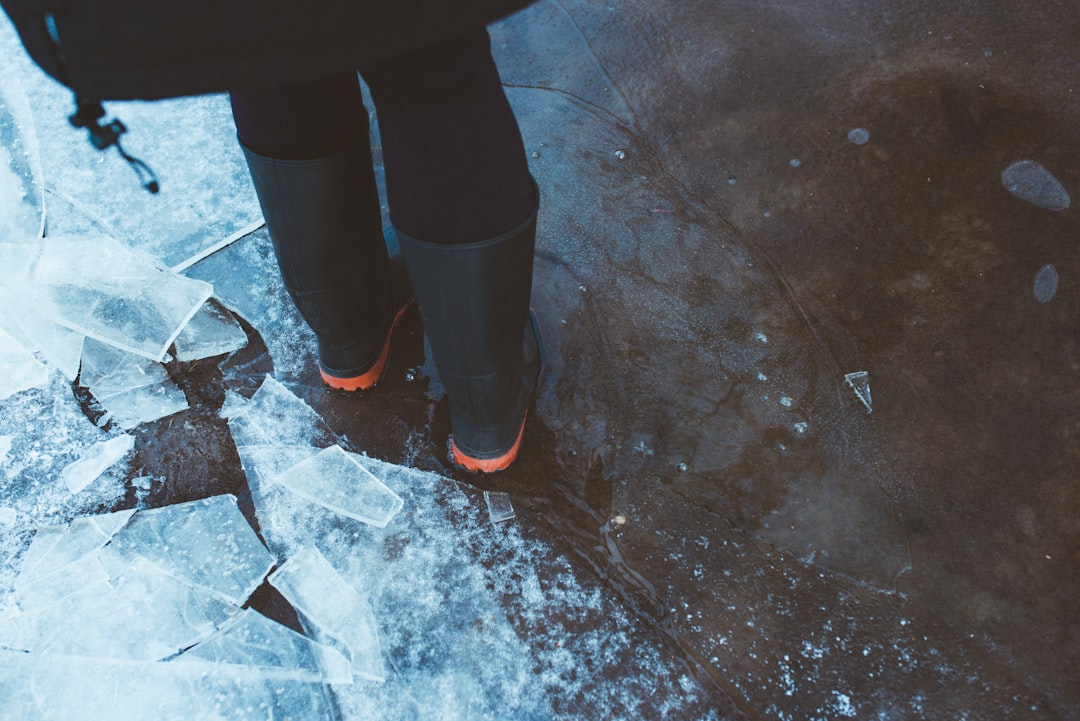
The ephemeral nature of ice, its transformation from solid to liquid, and its notorious slipperiness have long captivated human curiosity. From ancient philosophers pondering its properties to modern engineers designing anti-icing systems, the science behind why frozen water is so slick remains a fascinating area of study. Far from being a simple, uniform solid, ice exhibits complex behaviors at its surface that dictate its interaction with other materials. Understanding these behaviors unlocks the secrets of this ubiquitous phenomenon, explaining everything from the effortless glide of a figure skater to the treacherous conditions on a winter road.
The common perception of ice as a perfectly smooth, crystalline solid is, at the microscopic level, an oversimplification. While the bulk of an ice crystal possesses a rigid, ordered structure, the outermost layer of ice behaves quite differently. This surface layer is not identical to the interior and plays a critical role in its slipperiness. Several factors contribute to the unique characteristics of this icy veneer, making it the key to understanding why frozen water is so slick.
The Role of Pressure and Friction: Melting Under Stress
One of the earliest and most enduring explanations for ice’s slipperiness involved pressure. As an object, such as a skate blade or a shoe sole, presses down on the ice, it exerts pressure. This pressure, proponents argued, melts a thin layer of ice directly beneath the object, creating a film of liquid water that lubricates the interface and allows for smooth motion. This phenomenon is known as pressure melting. The thicker the object’s contact area, the lower the pressure on any given point. Conversely, sharp objects like skate blades concentrate pressure, leading to more significant melting.
However, subsequent research has revealed that pressure melting alone cannot fully account for the slipperiness of ice. For instance, the pressure required to melt ice at typical skating temperatures is far greater than what a skate blade or shoe can generate. While pressure melting might contribute a small amount of water, it’s not the primary driver of ice’s slickness.
The Influence of Heat: Frictional Warming
Another significant factor contributing to the surface water layer is frictional heating. When two surfaces slide against each other, friction is generated. This friction converts kinetic energy into thermal energy, which in turn heats the interface between the two surfaces. Even at temperatures below the freezing point of water, the heat generated by friction can be sufficient to melt a thin layer of ice. This is particularly relevant for activities like skiing and ice skating, where the rapid movement of the blades or skis over the ice generates considerable friction.
The degree of frictional heating depends on several factors, including the speed of motion, the roughness of the surfaces, and the materials involved. For ice, which has relatively low thermal conductivity, the heat generated at the surface can effectively melt a thin layer of water before it can dissipate into the bulk of the ice. This self-lubricating mechanism is a crucial element in understanding why ice feels slippery.
Molecular Motion and Vibrations: The Quasi-Liquid Layer
Beyond macroscopic phenomena like pressure and friction, the very nature of molecules at the ice surface plays a pivotal role. Even at temperatures well below freezing, the molecules at the ice-air interface are not entirely static. They exhibit increased vibrational motion compared to their counterparts deeper within the ice crystal. This increased motion can lead to a disordered, fluid-like layer on the surface, often referred to as the “quasi-liquid layer” or “surface melting.”
This quasi-liquid layer is not a full melt in the macroscopic sense but rather a region where the ice lattice is disrupted and molecules have greater freedom of movement. The thickness of this layer is temperature-dependent, increasing as the temperature approaches the melting point. At temperatures slightly below 0°C, this layer can be on the order of nanometers thick, providing a thin film of liquid-like water that significantly reduces friction. The precise mechanism by which this quasi-liquid layer forms is still an active area of research, with theories suggesting it arises from a combination of surface energy effects and molecular vibrations.
The phenomenon of why frozen water is slippery can be better understood by exploring the molecular structure and behavior of ice. For a deeper dive into this topic, you can check out a related article that discusses the science behind the slipperiness of ice and the role of pressure and temperature in this intriguing process. To learn more, visit Freaky Science.
Factors Affecting Slipperiness: More Than Just Frozen Water
While the presence of a surface water layer is fundamental to ice’s slipperiness, several other factors influence just how slick a particular patch of ice will be. These variables, ranging from the microscopic composition of the ice to the macroscopic environmental conditions, can dramatically alter the frictional properties of frozen water, leading to vastly different experiences on the ice.
The Purity of Ice: Impurities and their Impact
The presence of impurities within or on the surface of ice can significantly affect its slipperiness. Dissolved salts, for instance, lower the freezing point of water. This means that even at temperatures below 0°C, the presence of dissolved salts can lead to a larger or more readily formed liquid water layer on the ice surface. This is why de-icing salts are so effective at melting snow and ice on roads.
Other impurities, such as dirt, sand, or organic matter, can roughen the ice surface at a microscopic level. This increased roughness can lead to higher friction, making the ice feel less slippery. Conversely, very smooth, clean ice, free from any surface contaminants, will generally be more slippery than ice that has accumulated debris. The crystalline structure of pure ice can also be slightly modified by impurities, potentially altering the ease with which a surface layer forms.
Temperature Variations: A Delicate Balance
Temperature is perhaps the most intuitive factor influencing ice’s slipperiness. As mentioned earlier, the quasi-liquid layer thickens as the temperature approaches the melting point. Therefore, ice is generally slipperier at temperatures closer to 0°C than at much colder temperatures, where the quasi-liquid layer is thinner or virtually non-existent.
However, the relationship is not entirely linear. At extremely low temperatures, ice can become brittle and might even feel slightly “grippier” due to the lack of a significant liquid layer. Conversely, at temperatures very close to melting, the increased water content can lead to a very slick surface. The optimal temperature range for maximum slipperiness often lies just below the freezing point, where a stable and effective lubricating layer can form.
Surface Roughness: From Glassy Smooth to Textured Terrain
The macroscopic texture of the ice surface plays a crucial role in determining its slipperiness. Perfectly smooth, glassy ice, often found on freshly frozen lakes or meticulously maintained ice rinks, offers very little resistance to sliding. The uniform nature of the surface allows for continuous contact with a minimal disruption of the lubricating water layer.
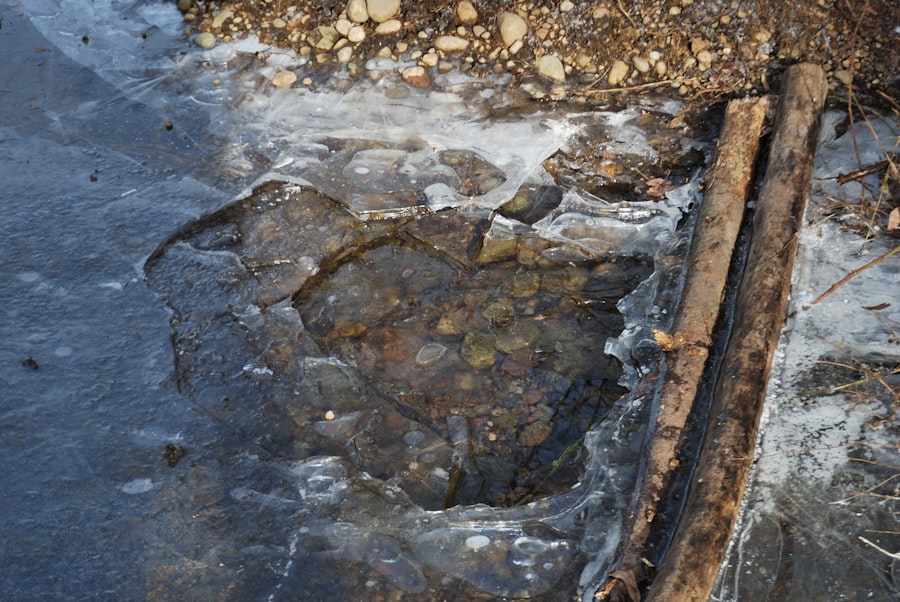
Conversely, ice that is rough or uneven can significantly increase friction. This roughness can arise from various sources: the freezing process itself can create irregular surfaces, especially if it freezes rapidly or under turbulent conditions. Over time, ice can also develop cracks, bumps, and divots from the accumulation of snow, impact from objects, or repeated thawing and refreezing cycles. These irregularities create points of increased resistance, hindering smooth sliding and making the ice feel less slippery.
The Physics of Motion: How Objects Glide on Ice
Understanding the science of why ice is slippery naturally leads to exploring the physics of how objects actually move across its frozen surface. The principles of friction and motion take on a unique character when interacting with this lubricated interface, leading to behaviors that are both predictable and sometimes counterintuitive.
Coefficients of Friction: A Diminishing Force
The slipperiness of ice is often quantified by its coefficient of friction, a dimensionless number that represents the ratio of the force of friction to the normal force pressing the two surfaces together. For ice, particularly when it’s slightly above its freezing point or experiencing significant frictional heating, the coefficient of friction is remarkably low compared to many other material combinations.
This low coefficient means that a relatively small force is required to initiate and maintain motion. This is why it’s possible for a skilled figure skater to glide effortlessly across the ice with minimal effort. The thin layer of water acts as a lubricant, drastically reducing the interaction between the ice and the skate blade, thereby minimizing the resistive force of friction.
Dynamic vs. Static Friction: The Initial Push
A key concept in understanding friction is the distinction between static and dynamic friction. Static friction is the force that must be overcome to initiate movement between two stationary surfaces. Dynamic friction (also known as kinetic friction) is the force that opposes motion once the surfaces are already moving.
For most materials, static friction is greater than dynamic friction. However, on ice, this difference can be less pronounced or even reversed in some circumstances. The presence of a lubricating water layer means that once motion begins, the frictional resistance might not decrease as dramatically as it would with dry surfaces. The initial push to get moving on ice might feel slightly harder than maintaining that glide, but the overall difference is often less pronounced than with, say, trying to slide a heavy box across a carpeted floor.
The Mechanics of Skating and Sliding: Optimizing the Glide
The techniques employed in activities like ice skating and skiing are, in essence, ways to optimize the physics of gliding on ice. Skaters, for instance, use sharp, thin blades that concentrate pressure, promoting melting and the formation of a water layer. Their movements are designed to maintain a constant glide, minimizing the need to overcome static friction repeatedly. The subtle shifts in weight and edge control are all about managing the interaction with the ice surface to maximize efficiency and control.
Similarly, skiers use waxed bases on their skis to further reduce friction and promote a smooth glide. The angle and design of the skis also play a role in how they interact with the snow and ice beneath. Understanding the underlying physics allows athletes to refine their techniques to achieve greater speed and grace.
Beyond the Surface: The Bulk Properties of Ice

While the surface layer is paramount to slipperiness, the bulk properties of ice also contribute to its overall behavior. The crystalline structure, thermal conductivity, and mechanical strength of ice influence how it fractures, melts, and interacts with its environment.
Crystalline Structure: Hexagonal Harmony
Ice exists in various crystalline forms, with the most common being hexagonal ice (Ice Ih). This structure is characterized by a repeating arrangement of water molecules held together by hydrogen bonds. The strength and orientation of these hydrogen bonds dictate the rigidity and cleavage planes of the ice crystal.
The hexagonal structure of Ice Ih is relatively stable and contributes to its characteristic hardness. However, the arrangement of molecules in this structure also influences the surface energy and the ease with which hydrogen bonds can be disrupted at the surface, facilitating the formation of the quasi-liquid layer.
Thermal Conductivity: Heat Dissipation and Melting
Ice’s thermal conductivity refers to its ability to transfer heat. Ice has relatively low thermal conductivity compared to metals, for example. This means that heat generated at the ice surface, whether from friction or external sources, dissipates relatively slowly into the bulk of the ice. This slow dissipation is beneficial for maintaining the thin water layer, as the heat doesn’t immediately escape and cool the surface back down.
The rate at which ice melts is also influenced by its thermal conductivity, as well as the temperature gradient and the amount of heat absorbed. Understanding how heat flows through ice is crucial for predicting melting rates and designing effective de-icing or anti-icing strategies.
Mechanical Strength and Brittleness: Cracking Under Pressure
The mechanical strength and brittleness of ice are important considerations, especially when dealing with significant forces or impacts. While ice can withstand considerable compressive forces, it is relatively brittle and can fracture under tensile stress or impact. This brittleness can lead to the formation of cracks, which, as discussed earlier, can alter the surface texture and affect slipperiness.
The temperature of the ice also influences its mechanical properties. Colder ice tends to be more brittle than ice closer to its melting point. This is why stepping on extremely cold, brittle ice can feel different than stepping on ice that is slightly warmer and may exhibit more deformation before fracturing.
The phenomenon of why frozen water is slippery can be intriguing, as it involves the unique properties of ice and the behavior of water molecules. For a deeper understanding of this topic, you might find it interesting to explore a related article that delves into the science behind ice’s slippery nature. This article explains how the pressure and temperature conditions affect the surface of ice, making it more slick. You can read more about it in this informative piece on Freaky Science.
Applications and Implications: Harnessing and Mitigating Slipperiness
| Reason | Explanation |
|---|---|
| Low Friction | When ice is present, the friction between the ice and an object is reduced, making it slippery. |
| Thin Layer of Water | When pressure is applied to ice, it can melt and create a thin layer of water on the surface, which reduces friction and causes slipperiness. |
| Smooth Surface | The molecular structure of ice creates a smooth surface, which contributes to its slippery nature. |
The scientific understanding of why ice is slippery has profound implications across various fields, from sports and recreation to transportation and engineering. Harnessing its slickness can lead to exhilarating experiences, while mitigating its hazards is a crucial aspect of winter safety.
Sports and Recreation: The Art of the Glide
The low friction of ice is the foundation of numerous sports and recreational activities. Figure skating, speed skating, hockey, curling, and skiing all rely on the ability to glide smoothly across the ice or snow. The development of specialized equipment, such as sharp skate blades, waxed ski bases, and carefully groomed ice surfaces, is a testament to the ongoing effort to optimize the slippery properties of ice for athletic performance.
The aesthetics of these sports also benefit from the inherent slipperiness. The graceful arcs of a figure skater, the powerful strides of a speed skater, and the effortless descent of a skier are all made possible by the controlled reduction of friction.
Transportation and Safety: Navigating Winter Hazards
The slipperiness of ice presents a significant challenge for transportation and public safety during winter months. Icy roads and sidewalks can lead to accidents, injuries, and disruptions to daily life. Consequently, a great deal of research and engineering effort is dedicated to mitigating the hazards of ice.
This includes the use of de-icing agents (salts, chlorides), abrasives (sand, gravel), and mechanical methods (snow plows, ice scrapers) to improve traction. Furthermore, advancements in tire technology, such as winter tires with specialized tread patterns and rubber compounds, aim to provide better grip on icy surfaces. Understanding the physics of ice formation and slipperiness informs the development of these safety measures.
Engineering and Material Science: From Anti-Icing to Ice Formation Control
In fields like aerospace engineering and maritime technology, preventing ice formation or managing its effects is critical. Aircraft wings can accumulate ice, which can disrupt airflow and lead to catastrophic failure. Ships’ hulls can also be affected by ice accumulation, increasing drag and potentially leading to structural damage.
Research in anti-icing and de-icing technologies involves developing specialized coatings that repel water, reduce ice adhesion, or generate heat to melt ice. Understanding the fundamental science of how ice adheres to surfaces and the mechanisms by which it forms is crucial for designing effective solutions. This can range from hydrophobic coatings that prevent water from wetting the surface to active heating systems integrated into critical components. The control of ice formation, rather than just its slipperiness, is a key area of ongoing innovation.
In conclusion, the slipperiness of ice is not a simple property but a complex interplay of microscopic surface phenomena, macroscopic environmental conditions, and fundamental physics. The presence of a thin, lubricating water layer, formed through a combination of pressure melting, frictional heating, and molecular vibrations, is the primary reason why frozen water feels so slick. By understanding these intricate mechanisms, we can better appreciate the beauty of a skater’s glide, navigate the challenges of winter, and develop innovative solutions for a world touched by ice.

Why Ice Is Slippery Is Stranger Than You Think
FAQs
1. Why is frozen water slippery?
Frozen water is slippery because when pressure is applied to the ice, it melts slightly, creating a thin layer of liquid water on the surface. This thin layer reduces the friction between the ice and any object in contact with it, making it slippery.
2. What is the science behind the slipperiness of frozen water?
The slipperiness of frozen water is due to a phenomenon called “pressure melting.” When pressure is applied to ice, it lowers the melting point of the ice, causing it to melt slightly and form a thin layer of liquid water on the surface, which reduces friction and makes it slippery.
3. Can frozen water be slippery even at temperatures below freezing?
Yes, frozen water can still be slippery even at temperatures below freezing. This is because the pressure from an object in contact with the ice can cause it to melt slightly, creating a thin layer of liquid water on the surface, which reduces friction and makes it slippery.
4. Why do we use salt to melt ice on sidewalks and roads?
Salt is used to melt ice on sidewalks and roads because it lowers the freezing point of water. When salt is spread on ice, it dissolves in the thin layer of liquid water on the surface, lowering the freezing point of the water and preventing it from refreezing, making the surface less slippery.
5. How can we reduce the slipperiness of frozen water?
To reduce the slipperiness of frozen water, various methods can be used, such as spreading sand or gravel on the surface to increase traction, using ice melt products that contain chemicals to lower the freezing point of water, or using non-slip mats or footwear with good traction.