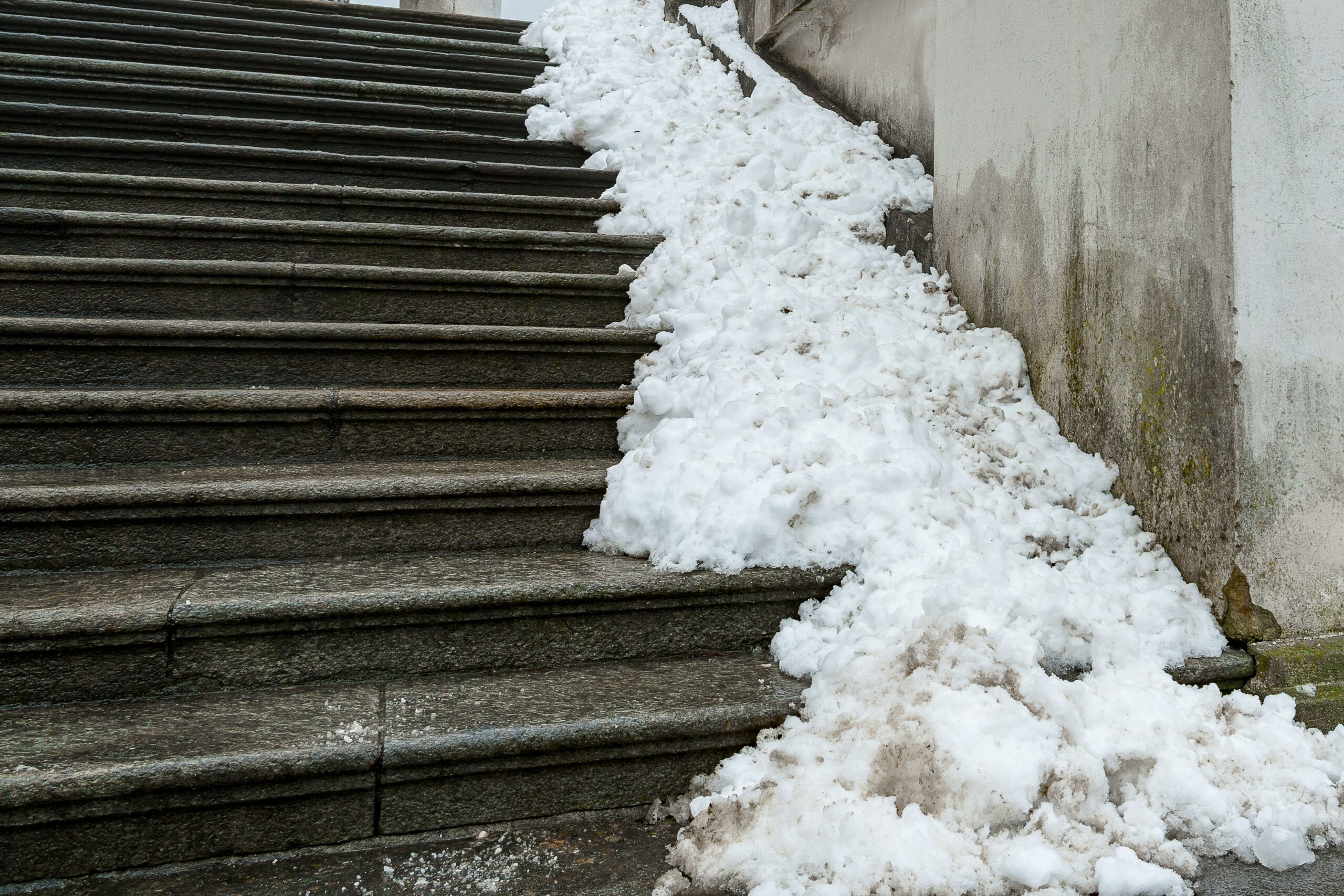
The world often perceives ice as a simple, frozen state of water, and its slipperiness as an intuitive, everyday phenomenon. Yet, beneath this commonplace observation lies a complex and fascinating scientific landscape. The seemingly effortless slide across an icy surface is the result of intricate molecular interactions, thermal properties, and the very nature of friction. Understanding the science of slippery ice requires delving into the physics and chemistry that govern its behavior, revealing a world far more nuanced than a mere absence of traction.
The slipperiness of ice is not an inherent property of solid water in a vacuum. Instead, it is a consequence of the interaction between the ice surface and the object attempting to move across it. This interaction is primarily governed by the behavior of water molecules at the interface.
The Quasi-Liquid Layer Theory
For decades, the prevailing scientific explanation for ice’s slipperiness centered on the existence of a thin layer of liquid water on the ice surface, even at temperatures below freezing. This “quasi-liquid layer” (QLL) is not bulk liquid water but a highly ordered, yet mobile, film of water molecules. The mechanism for its formation is still debated, but several hypotheses exist.
Phonon Interactions and Vibrations
One prominent theory suggests that the vibrational energy of the ice lattice, known as phonons, plays a crucial role. These vibrations, particularly those near the surface, can disrupt the hydrogen bonding network of the ice crystal, leading to a less rigid, more fluid-like layer. The higher the temperature (closer to 0°C), the more energetic these vibrations become, thickening the QLL and increasing slipperiness.
Surface Defects and Impurities
The presence of imperfections or impurities on the ice surface can also contribute to the formation of a QLL. Grain boundaries, cracks, or even adsorbed molecules from the atmosphere can disrupt the regular crystalline structure, creating sites where water molecules are less tightly bound and thus more mobile.
Substrate Interaction
The nature of the material in contact with the ice also influences the QLL. Some materials, like rubber, have a higher affinity for water molecules and can encourage the formation of a thicker liquid layer through stronger intermolecular forces. This is a key principle behind why certain shoe soles are designed for winter conditions.
The Role of Pressure
Another significant factor contributing to ice slipperiness, particularly in activities like ice skating, is pressure. When a skater’s blade, with its sharp edge, exerts pressure on the ice, it lowers the melting point of the ice beneath it. This phenomenon, known as pressure melting, causes a thin film of liquid water to form, facilitating the smooth glide.
Melting Point Depression
The relationship between pressure and melting point is governed by the Clausius-Clapeyron equation. For ice, this equation indicates that increasing pressure decreases the melting point. While the effect is modest at everyday pressures, the sharp edge of an ice skate concentrates this pressure significantly, leading to a measurable reduction in the melting point.
The Skater’s Advantage
A professional ice skater can exert hundreds of pounds of force on a very small surface area. This immense pressure is sufficient to melt a thin layer of ice, creating the lubrication needed for high-speed turns and jumps. Without this pressure-induced melting, ice skating would be an entirely different, and far less graceful, endeavor.
Ice becomes slippery primarily due to a thin layer of water that forms on its surface, which is a result of pressure and temperature changes. This phenomenon is explored in more detail in the article “Why is Ice Slippery?” found on Freaky Science. The article delves into the science behind the slipperiness of ice, explaining how molecular interactions and the unique properties of water contribute to this effect. For further insights, you can read the article here: Why is Ice Slippery?.
Friction: The Silent Opponent of Slipping
While the quasi-liquid layer and pressure melting explain the ease with which ice can become slippery, the concept of friction is essential to understand why we can sometimes gain traction on ice, and why the slipperiness is not absolute. Friction is the force that opposes motion between two surfaces in contact.
Static vs. Kinetic Friction
On ice, as on any surface, two types of friction are relevant: static friction and kinetic friction.
Static Friction: The Unseen Grip
Static friction is the force that prevents an object from starting to move. When a person stands on ice, their shoes exert a normal force, and the ice surface, through static friction, resists any horizontal force that would cause them to slide. The maximum static friction is proportional to the normal force and the coefficient of static friction between the surfaces.
Kinetic Friction: The Resistance to Motion
Once an object is in motion, kinetic friction takes over. This is the force that opposes the sliding motion. The coefficient of kinetic friction is generally lower than that of static friction, meaning it’s easier to keep an object sliding than to get it moving in the first place. This is why it’s harder to stop on ice than to start sliding.
Coefficients of Friction on Ice
The “slipperiness” of ice is often quantified by its coefficient of friction. This dimensionless number represents the ratio of the frictional force to the normal force.
Factors Influencing Coefficients
The coefficients of friction for ice are notoriously variable and depend on several factors, including:
- Temperature: As previously discussed, the presence and thickness of the quasi-liquid layer significantly impact the coefficient of friction. Colder ice (below -5°C) tends to have a higher coefficient of friction than ice closer to its melting point.
- Surface Roughness: Even microscopic imperfections on the ice surface and the sliding object can influence friction.
- Speed: At higher speeds, particularly in the context of ice skating, the dynamic interaction with the QLL can lead to complex changes in friction.
- Material in Contact: The material of the shoe sole, tire tread, or skate blade plays a critical role. Materials with higher surface energy or a greater affinity for water can create more substantial QLLs, leading to lower coefficients of friction.
The Nuances of Traction
Despite its reputation for slipperiness, ice is not entirely devoid of friction. The ability to gain some traction, even minimal, is what allows for controlled movement.
Designing for Traction
Understanding the coefficients of friction on ice is paramount for designing effective winter footwear, tire treads, and sports equipment. The intricate patterns on winter tires are designed to channel away water and snow, increasing contact with the ice itself and improving grip. Similarly, the specialized compounds in winter boots are engineered to create a balance between flexibility and friction.
The Influence of Temperature on Ice Slipperiness
Temperature is arguably the most critical environmental factor dictating how slippery ice will be. The subtle shifts in thermal energy at the molecular level have profound macroscopic consequences.
The “Ideal” Slippery Temperature
While counterintuitive, ice is often most slippery at temperatures just below freezing (around -0.5°C to -5°C). This is the range where a stable, relatively thick quasi-liquid layer can readily form.
The Role of Heat Transfer
When an object slides across ice, friction generates heat. This frictional heat, even if small, can cause a localized increase in temperature at the interface, accelerating the melting process and further enhancing the QLL. At temperatures significantly below freezing, the ice lattice is more rigid, and the energy required to form a QLL is much higher, leading to increased friction.
Transitioning to Greater Friction
As temperatures drop further below freezing, the QLL thins dramatically, and the ice surface becomes more crystalline and rigid. In these conditions, the contact between the sliding object and the ice is more direct, and the friction increases. This is why icy roads can sometimes become treacherous not only due to slipperiness but also due to a lack of predictable grip.
The “Sticky Ice” Phenomenon
At extremely low temperatures, some researchers have observed a phenomenon referred to as “sticky ice.” This occurs when the ice surface is so cold that the QLL is virtually non-existent, and the interaction is dominated by van der Waals forces and other intermolecular attractions between the ice and the sliding object. In these rare instances, the friction can actually be higher than at slightly warmer, sub-zero temperatures.
The Impact on Winter Sports
The temperature-dependent slipperiness of ice has a direct impact on the performance of winter athletes.
Speed Skating and Ice Hockey
For speed skaters and ice hockey players, maintaining a consistent, low-friction surface is crucial. Arena ice is meticulously maintained at temperatures that optimize the QLL, typically between -3°C and -5°C, to ensure maximum glide. Slight variations in temperature can significantly affect lap times and puck control.
Skiing and Snowboarding
While snow is a different medium, the underlying principles of friction and temperature still apply. The crystalline structure of snowflakes and the presence of moisture significantly influence the glide of skis and snowboards. Ski wax is formulated to interact with snow and ice in a way that minimizes friction across a range of temperatures.
The Chemical Composition of Ice: Beyond Pure Water

The assumption that ice is always pure H₂O is often an oversimplification. Impurities and dissolved substances in the water can profoundly alter the properties of the ice, including its slipperiness.
Dissolved Salts and Their Effects
When water containing dissolved salts freezes, the salts can become incorporated into the ice lattice or segregate into brine channels.
Lowering the Freezing Point
Dissolved salts significantly lower the freezing point of water. This means that a saline solution will remain liquid at temperatures where pure water would have already frozen. When applied to roads, de-icing salts work by lowering the freezing point of any accumulated ice or snow, causing it to melt.
Affecting the Quasi-Liquid Layer
The presence of dissolved ions can also influence the behavior of the quasi-liquid layer. Ions can disrupt the hydrogen bonding network and alter the surface tension of the water molecules, potentially leading to changes in the thickness and mobility of the QLL, thus affecting slipperiness.
The Paradox of Salted Ice
While salts are used to de-ice surfaces, salted ice itself can exhibit complex frictional properties. Initially, the melting caused by the salt creates a slippery surface. However, as the salt concentration increases and the temperature drops further, the brine can form a more viscous layer, potentially leading to a different frictional regime.
Biological Contaminants and Surface Coatings
Various biological materials, such as algae or bacteria, can inhabit natural ice formations. These organisms and the substances they secrete can alter the surface properties of ice, influencing its slipperiness.
Biofilms and Lubrication
Some microorganisms can form biofilms on ice surfaces. These biofilms, composed of extracellular polymeric substances, can act as lubricants, potentially increasing slipperiness. This is an area of ongoing research, particularly in understanding ice dynamics in natural environments.
Microscopic Textures and Adhesion
The physical presence of biological matter can also create microscopic textures on the ice surface, which can affect the way an object interacts with it, influencing both friction and adhesion.
The Impact on Natural Ice Formations
Understanding the chemical composition of natural ice, whether it’s a frozen lake or a glacier, is crucial for predicting its behavior.
Lake Ice and River Ice
The dissolved minerals and organic matter present in freshwater bodies will influence the properties of the ice that forms on them. This can affect the safety of activities on frozen waterways and the ability of wildlife to traverse them.
Glacial Ice
Glacial ice, over millennia, can incorporate dust, volcanic ash, and other particles. These inclusions can alter the frictional characteristics of the ice, impacting glacier flow and the dynamics of ice sheets.
The phenomenon of ice becoming slippery is a fascinating topic that has intrigued scientists for years. Recent studies suggest that the pressure exerted on ice can lead to a thin layer of water forming on its surface, which contributes to its slickness. For a deeper understanding of this subject, you might find it interesting to read a related article that explores the science behind this slippery sensation. You can check it out here for more insights into the mechanics of ice and its unique properties.
Technologies and Techniques for Understanding Ice Slipperiness
| Factor | Effect |
|---|---|
| Pressure | Causes a thin layer of water to form on the ice surface, reducing friction |
| Temperature | Warmer temperatures cause the ice to melt slightly, creating a slippery surface |
| Microscopic roughness | Ice may appear smooth but has microscopic roughness that can hold a thin layer of water, making it slippery |
| Chemical reactions | Chemicals from de-icing agents or natural processes can alter the surface of the ice, making it slippery |
Scientists employ a variety of advanced techniques and technologies to probe the complex behavior of ice at the molecular and macroscopic levels, unraveling the secrets of its slipperiness.
Surface Force Apparatus (SFA) and Atomic Force Microscopy (AFM)
These sophisticated instruments allow researchers to measure forces at the nanoscale, providing direct insights into the interactions between surfaces.
Measuring Intermolecular Forces
SFAs can measure the forces between two atomically flat surfaces as they are brought into close proximity. This allows scientists to study the forces acting within the quasi-liquid layer and the van der Waals forces that govern interactions between ice and other materials.
Visualizing Surface Topography
AFM can create high-resolution images of surfaces, revealing microscopic roughness and defects that can influence friction. It can also be used to measure local frictional forces.
Tribometry and Friction Testing
Tribometry is the science and engineering of friction, wear, and lubrication. Specialized tribometers are used to measure the coefficients of friction of ice under controlled conditions.
Simulating Real-World Conditions
Researchers can use tribometers to simulate various conditions, such as different temperatures, pressures, and sliding speeds, to accurately characterize the slipperiness of ice. This is essential for developing new materials and technologies for winter applications.
Reciprocating and Rotating Tribometers
Depending on the application, either reciprocating (back-and-forth) or rotating tribometers are employed. For ice skating, a rotary tribometer might be used to simulate the continuous motion of a blade.
Spectroscopy and Advanced Imaging
Techniques like Raman spectroscopy and infrared spectroscopy can provide detailed information about the molecular structure and vibrational modes of water molecules at the ice surface, helping to confirm the presence and properties of the quasi-liquid layer.
Probing Molecular Vibrations
Raman and infrared spectroscopy can detect the specific vibrational frequencies of water molecules. Changes in these frequencies can indicate alterations in hydrogen bonding and molecular mobility, providing evidence for the QLL.
Understanding Phase Transitions
These spectroscopic techniques can also help researchers understand the subtle phase transitions that occur at the ice surface, contributing to the slipperiness phenomenon.
Computational Modeling and Simulations
Modern computational power allows scientists to create sophisticated models that simulate the behavior of water molecules at the ice interface.
Molecular Dynamics Simulations
Molecular dynamics simulations track the motion of individual atoms and molecules over time, allowing researchers to observe the formation and behavior of the QLL, the impact of impurities, and the mechanisms of friction.
Predicting Material Performance
These simulations can help predict how different materials will interact with ice, aiding in the design of better winter tires, footwear, and lubricants. By understanding the fundamental interactions at the molecular level, scientists can engineer materials with tailored frictional properties.
The science of slippery ice is a testament to the fact that even the most seemingly simple natural phenomena harbor profound complexity. From the subtle dance of water molecules at the surface to the far-reaching effects of temperature and impurities, each factor contributes to the intricate tapestry of ice’s slipperiness. Continued research in this field not only deepens our understanding of the natural world but also drives innovation in materials science, engineering, and sports technology, allowing us to navigate, interact with, and even master this ubiquitous frozen state of water.

Why Ice Is Slippery Is Stranger Than You Think
FAQs
1. Why does ice become slippery?
Ice becomes slippery because when pressure is applied to the ice, it melts slightly, creating a thin layer of water on the surface. This thin layer of water reduces the friction between the ice and any object or person walking on it, making it slippery.
2. At what temperature does ice become slippery?
Ice becomes slippery when it reaches its melting point, which is 32 degrees Fahrenheit (0 degrees Celsius). At this temperature, the ice begins to melt and create a thin layer of water on its surface, causing it to become slippery.
3. How does pressure affect the slipperiness of ice?
When pressure is applied to ice, such as from the weight of a person walking on it, the ice melts slightly, creating a thin layer of water. This thin layer of water reduces the friction between the ice and the object or person, making it slippery.
4. Can ice be slippery even below freezing temperatures?
Yes, ice can still be slippery below freezing temperatures if there is enough pressure applied to it to create a thin layer of water on its surface. This can occur from the pressure of a person walking on the ice, causing it to melt slightly and become slippery.
5. How can we reduce the slipperiness of ice?
To reduce the slipperiness of ice, various methods can be used such as spreading sand, salt, or other abrasive materials on the surface to increase traction. Additionally, using ice cleats or traction devices on shoes can also help to reduce the risk of slipping on ice.