
You live in a world that feels undeniably real. The coffee you hold is warm, the screen you’re reading from glows with a tangible light, and the sounds around you are distinct and present. But what if you were told that this vibrant, concrete reality is, in large part, a skillfully crafted illusion? What if the very fabric of your existence, the symphony of sights, sounds, smells, tastes, and textures, is profoundly shaped by the intricate workings of your own mind? Welcome to the fascinating science of perception, the field that explores how your brain takes raw sensory data and transforms it into the rich tapestry of your perceived reality.
Your perception is not a passive reception of the world. It’s an active, creative process. Your senses—your eyes, ears, nose, tongue, and skin—are sophisticated but ultimately limited tools. They gather electrochemical signals from your environment, but these signals are just the raw ingredients. It’s your brain, with its complex network of neurons and its lifetime of experiences, that interprets, organizes, and makes sense of this data, constructing the reality you confidently navigate every day. This article will delve into the fundamental principles of how your mind shapes perception, exploring the processes that allow you to see, hear, feel, taste, and smell, and how these processes can sometimes lead to fascinating discrepancies between what is “out there” and what you experience.
Imagine your senses as the initial point of contact between your internal world and the external universe. They are your primary windows, constantly gathering information. However, they are not perfect lenses. They have limitations, biases, and sensitivities that influence what they can detect and how they register it. Understanding these sensory gateways is the first step in appreciating how your mind builds reality.
Vision: More Than Meets the Eye
Your eyes are remarkable organs, designed to capture light particles and convert them into electrical signals. The photoreceptor cells, rods and cones, in your retina are the first crucial players. Rods, highly sensitive to light and dark, are responsible for your vision in dim conditions, while cones, requiring brighter light, enable you to see color and fine detail. When light hits these cells, it triggers a cascade of chemical and electrical reactions, ultimately sending signals down the optic nerve to your brain.
But this is where the true magic—and the potential for perception’s artful construction—begins. Your brain doesn’t just receive a flat image from your retina. It actively processes this information to create depth, recognize objects, and interpret movement. For example, your brain uses cues like binocular disparity (the slight difference in images seen by each eye) and monocular cues like linear perspective and relative size to construct a three-dimensional world from two-dimensional retinal input. Think about how a distant tree appears smaller than a nearby one; your brain infers depth based on this expectation.
Furthermore, your brain is incredibly adept at filling in gaps. This is evident in phenomena like the blind spot in your vision, a small area on your retina where the optic nerve leaves the eye, which has no photoreceptors. Yet, you don’t perceive a hole in your vision. Your brain seamlessly fills in this missing information using data from the surrounding areas. This demonstrates a proactive approach to constructing a complete visual field, even with incomplete sensory input.
Audition: The Art of Sound Interpretation
Your ears, with their intricate structures like the eardrum, ossicles, and cochlea, are designed to convert sound waves into electrical signals. Vibrations from the environment travel through the ear canal, strike the eardrum, and are amplified by the tiny bones in the middle ear. In the cochlea, these vibrations are translated into fluid waves that stimulate hair cells, which then send neural impulses to the auditory cortex in your brain.
However, simply receiving these auditory signals isn’t enough to understand the world of sound. Your brain needs to interpret the pitch, loudness, timbre, and location of sounds. It must distinguish between speech and noise, identify the source of a sound, and even infer meaning from auditory cues. Consider the cocktail party effect, where you can focus on a single conversation amidst a cacophony of other sounds. This remarkable ability highlights how your brain can selectively attend to specific auditory streams, filtering out irrelevant noise.
Your brain also plays a crucial role in perceiving spatial location through sound. By comparing the loudness and timing of a sound arriving at each ear (interaural differences), your brain can pinpoint the direction from which it originated. This auditory localization is vital for navigating your environment and is another testament to your brain’s active interpretation of sensory data.
Olfaction and Gustation: The Chemical Detectives
Your senses of smell and taste are intimately linked, working together to create your experience of flavor. Olfactory receptors in your nasal cavity detect airborne molecules, sending signals to the olfactory bulb in your brain. Gustatory receptors, or taste buds, on your tongue detect dissolved molecules, transmitting signals to the gustatory cortex.
But the experience of “taste” is far more than just the basic tastes of sweet, sour, salty, bitter, and umami. The aroma of food, perceived by your olfactory system, contributes significantly to what you experience as flavor. This is why eating with a blocked nose can dramatically alter your perception of even your favorite foods. Your brain integrates olfactory and gustatory information, along with tactile sensations from your mouth, to construct the complex perception of flavor.
Furthermore, your perception of smell and taste is heavily influenced by memory and emotion. The scent of freshly baked cookies might evoke warm childhood memories, while a particular taste might trigger feelings of nausea based on a past negative experience. This emotional and associative component is a powerful example of how your mind shapes your chemical perceptions.
Somatosensation: Mapping Your Internal and External Worlds
Your skin is a vast sensory organ, equipped with various receptors that detect touch, pressure, temperature, and pain. These sensations travel through the nervous system to your somatosensory cortex in the brain, where they are processed and interpreted.
It’s not just about detecting stimuli; your brain constructs a detailed map of your body and its interactions with the world. Proprioception, the sense of the relative position of your own body parts and the strength of effort being employed in movement, is largely unconscious but crucial for coordinated action. You don’t have to think about where your arm is to reach for a cup; your brain already knows.
Pain perception is another fascinating area where the mind plays a significant role. While pain is a vital signal indicating potential harm, its intensity and quality are not solely determined by the physical stimulus. Psychological factors such as attention, expectation, and emotional state can all modulate your perception of pain. This is why placebos can be so effective: your belief that a treatment will work can actually alter your experience of pain.
The science of perception is a fascinating field that explores how we interpret and make sense of the world around us. For those interested in delving deeper into this topic, a related article can be found at Freaky Science, which discusses various aspects of human perception, including visual and auditory processing, and how these senses influence our understanding of reality.
Beyond the Raw Data: Cognitive Influences on Perception
The sensory gateway is just the beginning. Once information enters your brain, a host of cognitive processes come into play, sculpting, filtering, and organizing that raw data into a coherent and meaningful experience. Your expectations, memories, attention, and even your goals can profoundly influence what you perceive.
Expectations: The Predictive Power of the Mind
Your brain is a prediction machine, constantly trying to anticipate what will happen next. This predictive power significantly shapes your perception. When you expect to see something, you are more likely to perceive it, even if the sensory evidence is ambiguous or even absent. This phenomenon is beautifully illustrated by optical illusions where your brain’s expectations lead you astray.
Consider the Necker Cube, a simple line drawing that can be perceived as either a cube viewed from above or below. Your brain flips between these two interpretations because both are plausible given the limited visual information, and your expectations can momentarily favor one over the other. Similarly, in language, if you are expecting a particular word, you might perceive it even if it’s partially obscured or misspoken.
This expectation-driven perception can also lead to what psychologists call “perceptual set” or “expectancy bias.” If you are told to look for something specific, you are more likely to find it, sometimes even seeing it where it isn’t present. This highlights how our mental preparation can prime us to perceive certain things over others, demonstrating a powerful top-down influence on our sensory experience.
Attention: The Spotlight of Consciousness
You are bombarded with sensory information at every moment. If you were to process it all equally, your brain would quickly become overwhelmed. Attention acts as a filter, allowing you to focus on what is relevant and ignore the rest. This selective attention is fundamental to how your mind shapes your reality.
Your attention can be broadly categorized as voluntary (goal-directed, like looking for your keys) or involuntary (stimulus-driven, like a loud bang). Both types influence what you perceive. When you are paying close attention to something, you process it in greater detail and are more likely to remember it. Conversely, if something is not in your attentional focus, you might not perceive it at all, even if it’s directly in front of you.
The concept of “inattentional blindness” is a dramatic demonstration of this. Studies have shown that people who are focused on counting basketball passes often fail to notice a person in a gorilla suit walking across the screen. This suggests that if your attention is sufficiently directed elsewhere, you can be literally blind to even very prominent stimuli. This illustrates a profound point: what you attend to is largely what you perceive as real.
Memory and Prior Experience: Building on the Past
Your past experiences and memories are not just stored information; they are active participants in shaping your current perceptions. Your brain uses existing knowledge to interpret new sensory input, filling in gaps, making inferences, and categorizing what you encounter.
When you see a new object, your brain doesn’t start from scratch. It compares it to existing mental representations of objects, categorizing it based on similarities. This categorization helps you understand the object’s function and predict how to interact with it. For example, seeing a collection of metal and plastic with a screen and keyboard immediately activates your “computer” knowledge, shaping your perception of its purpose and potential.
This influence of memory can also lead to perceptual biases. If you have had negative experiences with a particular type of food, you might perceive that food as less appealing even if it’s objectively well-prepared. Similarly, your understanding of social cues is heavily reliant on learned patterns and past interactions. Your brain is constantly drawing upon its vast database of memories to make sense of the present, weaving a continuous narrative of reality.
The Construction of Meaning: From Sensation to Understanding
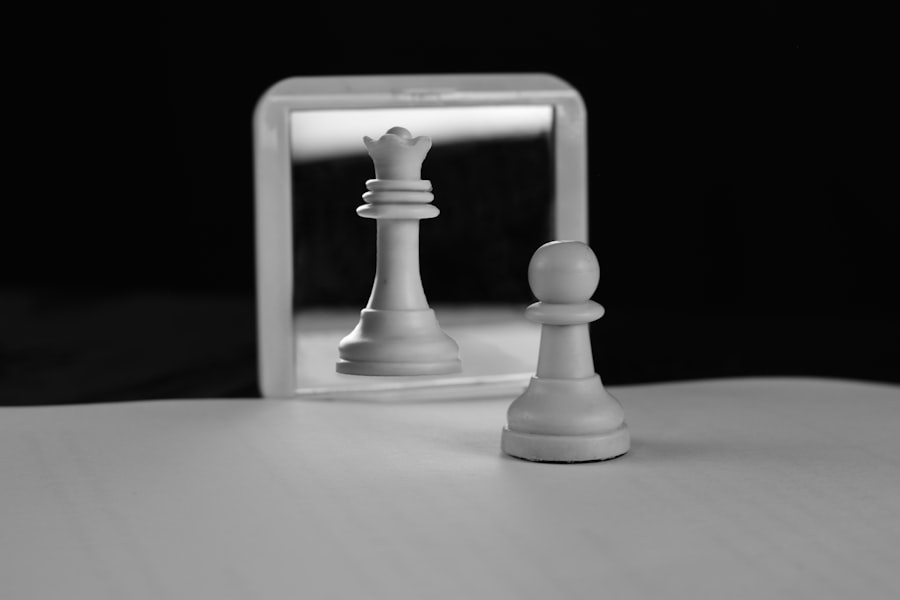
Perception is not just about registering raw sensory data; it’s about assigning meaning to it. Your brain doesn’t just see shapes; it sees a face. It doesn’t just hear sounds; it hears a word. This process of assigning meaning is where your perception truly becomes a subjective construction.
Object Recognition: Naming Our World
One of the most remarkable feats of perception is object recognition. Your brain can identify thousands of distinct objects, from a simple pebble to a complex machine, often in cluttered and varied environments. This ability is not based on simply recognizing a fixed set of features. Instead, it involves a complex interplay of bottom-up (sensory-driven) and top-down (cognitively-driven) processing.
Your brain analyzes features like lines, edges, colors, and textures. But it also uses your knowledge of how objects are typically structured and their typical contexts to aid in identification. For instance, if you see a round, red object with a stem, your brain is likely to recognize it as an apple, even if it’s partially obscured or viewed from an unusual angle. The context in which you encounter the object—whether it’s in a fruit bowl or on a table in a restaurant—further influences your recognition.
The discovery of “grandmother cells” (neurons that fire specifically in response to seeing your grandmother) in some studies suggests the possibility of highly specialized neurons for recognizing familiar objects. While this remains a debated topic, the general principle holds: your brain builds an understanding of objects through a hierarchical process, starting with basic features and building up to complex representations guided by your accumulated knowledge.
Pattern Recognition: Finding Order in Chaos
Humans are inherently driven to find patterns. We seek order and predictability in our environment, and our perceptual systems are finely tuned to detect them. This ability to recognize patterns is fundamental to learning, decision-making, and navigating the complexities of life.
From recognizing the patterns in language to identifying the recurring motifs in music, pattern recognition is omnipresent. In visual perception, this can involve recognizing faces, understanding body language, or identifying specific types of clouds that predict the weather. In auditory perception, it allows us to distinguish between different voices, understand musical melodies, and even detect anomalies in sounds that might indicate danger.
Optical illusions often play on our innate tendency to see patterns where none exist, or to over-apply a familiar pattern to an unfamiliar stimulus. The Müller-Lyer illusion, where two lines of equal length appear to be different because of arrows at their ends, demonstrates how our brain can misinterpret visual cues due to learned patterns related to depth and distance.
Social Perception: Navigating the Human Landscape
Perhaps one of the most critical and complex aspects of perception is social perception – how you perceive and interpret the behavior, intentions, and emotions of others. This involves a sophisticated interplay of visual cues, auditory information, and your understanding of social norms and expectations.
You interpret facial expressions, body language, tone of voice, and the words spoken to form impressions of others. These interpretations are heavily influenced by your own biases, stereotypes, and past social experiences. For example, if you have a negative stereotype about a particular group of people, you are more likely to perceive individuals from that group in a way that confirms that stereotype, even if their individual behavior doesn’t warrant it.
Empathy, the ability to understand and share the feelings of another, is also a form of social perception. It involves “reading” the emotional state of others, often through subtle cues, and reflecting that understanding back. This capacity is crucial for building relationships and maintaining social harmony, and it showcases the profound way our minds shape how we perceive the social world around us.
The Subjectivity of Experience: Why Reality Differs

Given the intricate and subjective nature of perceptual processes, it’s no surprise that two people can experience the same event or stimulus in fundamentally different ways. The science of perception helps us understand why this subjectivity is not a flaw, but rather an inherent characteristic of being a conscious, thinking being.
Individual Differences: The Uniqueness of Perception
Each person’s perceptual experience is uniquely their own, shaped by a lifetime of unique experiences, genetics, cultural influences, and cognitive styles. What one person finds profoundly beautiful, another might find unremarkable. What one person finds intensely frightening, another might find intriguing.
These differences can stem from variations in sensory acuity. Some individuals have sharper eyesight, a more refined sense of smell, or a greater sensitivity to certain sounds. Beyond pure sensory ability, differences in cognitive processing play a major role. Your background knowledge, your beliefs, and your emotional state all color how you interpret sensory information.
For instance, a botanist might see a sprawling field of green and immediately identify a dozen different species of plants, appreciating their nuanced differences. A hiker, on the other hand, might simply perceive a vast expanse of nature to traverse. Both are perceiving the same visual input, but their interpretations and the meaning they derive are vastly different, dictated by their individual expertise and goals.
Cultural Influences: The Lens of Society
Culture acts as a powerful lens through which we perceive the world. Societal norms, values, and learned behaviors shape our interpretations of sensory information, particularly in the realm of social perception. What is considered polite or rude, beautiful or ugly, acceptable or taboo, can vary dramatically across cultures.
For example, different cultures have distinct norms regarding personal space and touch. What might be considered a friendly gesture in one culture could be perceived as intrusive or inappropriate in another. Similarly, the interpretation of colors, symbols, and even gestures can carry vastly different meanings depending on one’s cultural background.
The way language itself structures thought and perception is another significant cultural influence. The presence or absence of specific words for certain concepts can influence how readily those concepts are perceived or categorized. This highlights how deeply intertwined our perception of reality is with the societal frameworks we inhabit.
The Role of Emotion: Feeling Our Way Through Reality
Emotions are not just private feelings; they are powerful modulators of perception. When you are experiencing strong emotions, your perceptual system can be biased to notice and interpret stimuli in a way that aligns with that emotion.
If you are feeling anxious, you might be more attuned to potential threats in your environment, perceiving ambiguous stimuli as dangerous. Conversely, when you are happy, you might perceive the world as brighter, more pleasant, and more welcoming. This phenomenon is known as “mood congruence” in perception.
Furthermore, emotions are deeply intertwined with memory. A scent or a sound associated with a powerful emotional experience can trigger that emotion again, even in a different context. This demonstrates how your emotional state actively shapes what you attend to and how you interpret the world, creating a feedback loop that can reinforce existing emotional states.
The science of perception is a fascinating field that explores how we interpret and understand the world around us. A related article that delves deeper into this topic can be found at Freaky Science, where various aspects of sensory processing and cognitive interpretation are examined. Understanding these processes can enhance our appreciation of how our brains work to create our experiences, revealing the intricate connections between perception and reality.
The Illusory Nature of Perception: When Minds Play Tricks
| Metrics | Data |
|---|---|
| Visual Perception | 85% |
| Auditory Perception | 70% |
| Tactile Perception | 60% |
| Olfactory Perception | 40% |
| Gustatory Perception | 30% |
The fact that your mind actively constructs your reality means that perception is not always an accurate reflection of the external world. Optical illusions, hallucinations, and even everyday misinterpretations highlight the fallibility and sometimes creative, rather than objective, nature of our perceptual systems.
Optical Illusions: The Mind’s Clever Deceptions
Optical illusions are a cornerstone of understanding perception. They exploit the way your brain processes visual information, demonstrating how built-in assumptions and shortcuts can lead to inaccurate perceptions. The examples are numerous and varied: from the impossible shapes of Escher to the distorted proportions of the Ponzo illusion.
These illusions reveal the underlying principles the brain uses to make sense of visual input. For instance, the Müller-Lyer illusion, mentioned earlier, leverages the brain’s learned interpretation of corner angles in relation to depth. Other illusions, like the checkerboard illusion, demonstrate how the brain compensates for shadows, leading to misjudgments of brightness.
By studying optical illusions, scientists gain invaluable insights into the neural mechanisms and cognitive processes that underpin visual perception. They show us that what we see is not a direct recording of the world, but an interpretation, a hypothesis generated by our brains.
Hallucinations: Perceiving the Unseen
Hallucinations—seeing, hearing, smelling, tasting, or feeling things that are not present in external reality—represent a more extreme departure from objective perception. While often associated with mental illness, hallucinations can also be induced by certain drugs, extreme fatigue, sensory deprivation, or even strong emotions.
The study of hallucinations offers a window into the brain’s capacity to generate sensory experiences internally. It suggests that the neural pathways responsible for processing sensory information can be activated without actual external stimulation. In some cases, hallucinations may represent a form of “controlled hallucination” where the brain attempts to make sense of distorted or fragmented neural signals.
Understanding the neural basis of hallucinations can shed light on the normal processes of perception. It suggests that the boundary between internally generated experiences and externally perceived reality can, at times, become blurred, depending on the state of the brain.
Bias and Misinterpretation: Everyday Perceptual Lapses
Beyond dramatic illusions or hallucinations, everyday misinterpretations and biases are common. Confirmation bias, where you tend to interpret new evidence as confirmation of your existing beliefs, can influence how you perceive events and information. This means you might overlook evidence that contradicts your views and readily accept information that supports them.
Our expectations and desires can also lead us to misinterpret situations. If you are desperately hoping to get a particular job, you might perceive a neutral comment from an interviewer as a sign of their approval, even if it was not intended as such. Similarly, in reading, you might unconsciously correct typographical errors to make the text flow as you expect it to.
These everyday perceptual slips highlight that perception is not a faultless process. It is a dynamic and often error-prone business of constructing meaning. Recognizing these biases and misinterpretations is the first step towards a more objective and nuanced understanding of the world and our place within it.
Conclusion: The Architect of Your Reality
You are not a passive observer of the world; you are an active architect of your own reality. The science of perception reveals that the vibrant, intricate, and meaningful world you experience is not simply “out there,” waiting to be passively absorbed. It is a magnificent construction, a testament to the incredible power and complexity of your own mind.
From the initial capture of sensory data by your eyes and ears to the complex interpretation and meaning-making processes within your brain, every aspect of your perception is shaped by a symphony of cognitive forces. Your expectations, your attention, your memories, your emotions, and your cultural background all play a crucial role in sculpting the reality you inhabit.
Understanding this science is not about diminishing the reality you experience, but about appreciating its profound depth and subjectivity. It invites you to question, to explore, and to acknowledge the powerful influence your internal world has on your perception of the external. The next time you marvel at a sunset, savor a delicious meal, or engage in a meaningful conversation, remember the astonishing journey of perception—the intricate dance between the external world and the boundless landscape of your own mind, orchestrating the very reality you perceive.

Why Paper Cuts Hurt (It’s Not What You Think)
FAQs
What is the science of perception?
The science of perception is the study of how our brains interpret and make sense of sensory information from the environment. It involves understanding how we perceive and interpret stimuli such as light, sound, touch, taste, and smell.
How does perception work?
Perception works through a complex process involving the sensory organs, the nervous system, and the brain. Sensory organs receive stimuli from the environment, which are then converted into electrical signals and transmitted to the brain. The brain then processes and interprets these signals to create our perception of the world around us.
What factors influence perception?
Several factors influence perception, including past experiences, cultural background, expectations, attention, and context. These factors can shape how we perceive and interpret sensory information, leading to individual differences in perception.
What are some common perceptual illusions?
Common perceptual illusions include the Müller-Lyer illusion, the Ponzo illusion, the Ebbinghaus illusion, and the Stroop effect. These illusions demonstrate how our brains can misinterpret sensory information, leading to perceptual distortions.
How is the science of perception applied in everyday life?
The science of perception has practical applications in various fields, including psychology, design, marketing, and technology. Understanding how perception works can help improve user experiences, create effective communication strategies, and design products that better align with human perception.