You might be holding a mug of steaming coffee right now, or perhaps you just reheated last night’s leftovers. Chances are, a microwave oven played a role in bringing that comfort or convenience to your fingertips. But have you ever stopped to wonder how that magic box heats your food so quickly? It’s not magic, of course; it’s science, and it all boils down to the fascinating properties of microwave radiation.
Before diving into how microwaves heat your food, it’s essential to understand where they sit within the grand tapestry of the electromagnetic spectrum. Think of the electromagnetic spectrum as a vast continuum of energy waves, each differing in their wavelength and frequency. This spectrum encompasses everything from the incredibly long radio waves used for broadcasting to the incredibly short gamma rays produced by radioactive decay.
Understanding Wavelength and Frequency
To grasp the concept, imagine ripples on a pond. The distance between two consecutive crests of a wave is its wavelength. The number of these waves that pass a fixed point in a given time is its frequency. These two properties are inversely related: longer wavelengths mean lower frequencies, and shorter wavelengths mean higher frequencies.
The Hierarchy of Electromagnetic Waves
The electromagnetic spectrum is typically organized from low frequency/long wavelength to high frequency/short wavelength. You encounter different parts of this spectrum every day:
- Radio Waves: These are the longest waves and lowest frequencies, used for AM/FM radio, television broadcasting, and cellular communication. They carry information without delivering significant heat.
- Microwaves: This is where our focus lies. Microwaves fall between radio waves and infrared radiation. They possess wavelengths typically ranging from about one millimeter to one meter, and corresponding frequencies from about 300 MHz (megahertz) to 300 GHz (gigahertz). This specific range is crucial for their heating ability.
- Infrared Radiation: You feel infrared radiation as heat, like the warmth from a fire or a heated lamp. It’s shorter in wavelength and higher in frequency than microwaves.
- Visible Light: This is the narrow band of electromagnetic radiation that our eyes can detect, comprising the colors of the rainbow.
- Ultraviolet (UV) Radiation: This is what causes sunburn and can be harmful in excess. It’s shorter still and more energetic than visible light.
- X-rays and Gamma Rays: These are the shortest wavelengths and highest frequencies, possessing immense energy and the ability to penetrate matter. They are used in medical imaging and cancer treatment but are also dangerous if not handled with care.
Microwaves, occupying their unique spot, possess just the right amount of energy to interact with water molecules in a way that generates heat, but not so much that they cause DNA damage or ionization like X-rays or gamma rays.
Microwave radiation is a fascinating topic, particularly when it comes to understanding how it heats food. The process involves the absorption of microwave energy by water molecules in the food, causing them to vibrate and generate heat. For a deeper dive into the science behind microwave cooking and its effects on food, you can explore this related article on Freaky Science. It provides insights into the mechanisms at play and the safety of using microwaves in food preparation. For more information, visit Freaky Science.
The Mechanism of Microwave Heating: Dielectric Heating
The primary way microwave ovens heat your food is through a process known as dielectric heating. This is a fascinating interaction between electromagnetic waves and polar molecules, most notably water.
The Role of Polar Molecules
Most food substances contain water. Water molecules (H₂O) are polar. This means they have a slightly positive charge on one end (where the hydrogen atoms are) and a slightly negative charge on the other end (where the oxygen atom is). This creates a tiny electric dipole, much like a miniature magnet with a north and south pole.
How Microwaves Interact with Water
When you turn on your microwave oven, it generates microwave radiation at a specific frequency, typically around 2.45 GHz. This frequency is chosen for a very good reason: it closely matches the resonant frequency of water molecules.
- The Oscillating Electric Field: Microwave radiation consists of oscillating electric and magnetic fields. As these fields pass through the food, the electric field exerts a force on the polar water molecules.
- Molecular Reorientation: The electric field causes the polar water molecules to try and align themselves with the field. As the electric field rapidly oscillates (billions of times per second), the water molecules rapidly spin and twist, attempting to follow this oscillating field.
- Friction and Heat Generation: This constant, rapid reorientation of water molecules causes them to bump into each other and adjacent molecules. This friction generates kinetic energy, which we perceive as heat. It’s similar to how rubbing your hands together quickly can make them warm.
Why Some Foods Heat Faster Than Others
This understanding of dielectric heating explains why some foods heat up faster and more evenly than others.
- Water Content is Key: Foods with higher water content, like vegetables, fruits, and cooked meats, will heat up more efficiently and quickly.
- Fat and Sugar: Fat molecules and sugar molecules also exhibit some polarity and can absorb microwave energy, contributing to heating, though generally to a lesser extent than water.
- Dry Foods: Foods with very low water content, such as dry crackers or rice, will heat very slowly or not at all in a microwave because there are fewer polar molecules to interact with the microwaves.
- Irregular Shapes and Density: The shape and density of the food also play a role. Thicker or denser parts of food will absorb more energy and heat up more slowly because the microwaves have to penetrate deeper. Uneven shapes can lead to hot spots and cold spots.
This is why it’s often recommended to arrange food in a circular pattern or to stir food during microwaving to promote more even heating.
The Microwave Oven: Design and Operation
The seemingly simple microwave oven is a sophisticated piece of engineering designed to harness the power of microwave radiation safely and effectively for cooking. Understanding its components and how they work together reveals the science behind your quick meal.
The Magnetron: The Heart of the Microwave
The most critical component of any microwave oven is the magnetron. This is a high-powered vacuum tube that acts as the source of the microwave radiation.
- Electron Generation: Inside the magnetron, a heated filament (cathode) emits electrons.
- Magnetic Field Influence: A strong magnetic field is applied, which causes these electrons to travel in curved paths.
- Resonant Cavities: The magnetron contains several resonant cavities. As the electrons move through these cavities, they interact with the electromagnetic fields within them, causing the generation and amplification of microwave radiation at the specific frequency of 2.45 GHz.
- Output Waveguide: The generated microwaves are then channeled out of the magnetron through a waveguide.
The Waveguide and Stirrer/Turntable
The waveguide is essentially a metal tube that directs the microwave energy from the magnetron into the cooking chamber. To ensure more even distribution of these waves within the oven cavity, two mechanisms are commonly employed:
- Waveguide Stirrer: Some ovens have a rotating metal fan-like blade, often called a stirrer, located in the waveguide or at the top of the oven cavity. This stirrer reflects the microwaves in different directions, helping to scatter them throughout the oven.
- Turntable: The most common method for ensuring even heating is a rotating turntable. By rotating the food, it exposes different parts of the food to varying intensities of microwave radiation, compensating for the uneven distribution of waves within the oven. This is why many microwave recipes suggest placing food on the outer edge of the turntable.
The Cooking Cavity and Door
The cooking chamber, where you place your food, is essentially a Faraday cage.
- Metal Walls: The walls of the oven are made of metal. Metal reflects microwaves. This reflection helps to contain the microwave energy within the cavity, ensuring that it primarily interacts with the food and not escapes into the surrounding environment.
- The Door and Safety Interlocks: The microwave oven door is a crucial safety feature. It consists of a metal mesh embedded within the glass. The holes in the mesh are significantly smaller than the wavelength of the microwaves, preventing them from escaping. This mesh allows you to see inside the oven while still containing the radiation. Furthermore, the door is equipped with safety interlocks. These are switches that immediately shut off the magnetron if the door is opened, preventing any microwave leakage.
When you select a cooking time and power level, you are essentially controlling how long and how intensely the magnetron generates microwaves, which then bombard your food through the waveguide, stirrer/turntable, and the enclosed cooking cavity.
Penetration Depth and Heating Patterns
The way microwaves penetrate food is a key factor in how evenly it heats. It’s not a uniform process, and understanding its limitations helps explain why some areas might be cooked more than others.
Depth of Penetration
Microwaves typically penetrate food to a depth of about 1 to 1.5 inches (2.5 to 3.8 cm). This means that the heating primarily occurs from the outside in.
- Surface Heating: The outer layers of the food will absorb microwave energy most directly and therefore heat up first and fastest.
- Internal Heat Transfer: The heat generated in the outer layers is then transferred to the inner parts of the food through conduction, the same process that occurs in conventional ovens. This conduction takes time.
Factors Affecting Penetration
Several factors influence how deeply microwaves can penetrate:
- Water Content: As mentioned earlier, water is the primary absorber of microwave energy. Higher water content leads to shallower penetration because the energy is absorbed more readily by the surface layers.
- Density: Denser foods can resist microwave penetration more than less dense foods.
- Fat and Sugar Content: While they absorb some microwave energy, they do so less effectively than water, allowing microwaves to penetrate slightly deeper in areas with higher fat or sugar content.
- Presence of Bones or Air Pockets: Bones, in particular, can reflect microwaves, leading to uneven heating in their vicinity. Air pockets can also create areas where microwaves don’t penetrate as effectively.
Understanding Hot Spots and Cold Spots
The combination of microwave penetration depth and the inherent unevenness of microwave distribution within the oven cavity leads to the formation of hot spots and cold spots.
- Hot Spots: These are areas that receive more direct microwave energy or where the food is denser and absorbs more of the diffused energy. They can become overcooked and dry.
- Cold Spots: These are areas that receive less microwave energy due to their location relative to the wave patterns or because they are thicker and the microwaves haven’t penetrated deeply enough. These areas may remain undercooked.
This is why techniques like rotating food, stirring during cooking, and allowing food to stand for a few minutes after microwaving (to allow heat to equalize through conduction) are so important for achieving evenly cooked results. The standing time allows the heat generated in the outer layers to migrate inwards, completing the cooking process.
Microwave radiation is a fascinating topic, especially when considering how it heats food by agitating water molecules, which generates heat and cooks the food evenly. For those interested in exploring this subject further, you can read a related article that delves into the science behind microwave cooking and its effects on food quality. This insightful piece can be found here, providing a deeper understanding of the mechanisms at play in your kitchen.
Safety Considerations and Food Quality
| Food Type | Heating Time | Heating Method |
|---|---|---|
| Frozen Vegetables | 3-5 minutes | Direct microwave radiation |
| Leftover Pasta | 2-3 minutes | Indirect heating from steam |
| Popcorn | 2-4 minutes | Direct microwave radiation |
| Chicken Breast | 5-7 minutes | Direct microwave radiation |
You might have heard concerns about microwave radiation and its effect on food. It’s important to address these concerns with scientific understanding.
Microwave Leakage and Shielding
Modern microwave ovens are designed with rigorous safety standards to prevent microwave leakage. The metal walls and the mesh in the door act as effective shields, containing the radiation within the oven cavity.
- Door Interlocks: The safety interlocks are crucial. If the door seal is damaged or the interlocks are faulty, the oven will not operate, or will shut off immediately.
- Regular Inspection: It’s wise to periodically inspect the oven door and its seals for any signs of damage. If you notice any dents, warping, or a compromised seal, it’s best to have the oven serviced or replaced.
- Proper Usage: Always use microwave ovens according to the manufacturer’s instructions. Avoid operating an empty oven, as this can damage the magnetron.
Nutritional Changes in Microwaved Food
One of the most significant advantages of microwave cooking, from a nutritional standpoint, is its speed and efficiency.
- Reduced Nutrient Loss: Compared to traditional cooking methods that often require longer cooking times and more water (which can leach out water-soluble vitamins), microwave cooking generally results in less loss of vitamins and minerals. The shorter cooking times mean less exposure to heat, and the reduced need for added water further preserves nutrients.
- No Chemical Additives: Microwaving itself does not add any chemicals to your food. The process relies solely on electromagnetic radiation to generate heat.
- Potential for Overcooking: While microwave cooking can preserve nutrients, overcooking any food, regardless of the method, can lead to some nutrient degradation. Therefore, using appropriate cooking times is essential for maximizing nutritional benefits.
Myth vs. Reality: “Dead” Food and Radiation Effects
There are persistent myths about microwave radiation “killing” food or making it inherently unhealthy.
- “Dead” Food: This is a misconception. Microwave radiation is a form of energy. It causes molecular motion, leading to heat. It does not fundamentally alter the chemical composition of food in a way that makes it “dead” or toxic. The food is still composed of the same proteins, carbohydrates, fats, vitamins, and minerals.
- Ionizing Radiation: It’s crucial to distinguish microwave radiation from ionizing radiation (like X-rays and gamma rays). Ionizing radiation has enough energy to strip electrons from atoms, which can damage DNA and cause cellular mutations. Microwave radiation, at the frequencies used in ovens, does not possess this level of energy. It causes molecular vibration, not ionization.
In conclusion, microwave ovens are a testament to applied physics. They utilize a specific band of electromagnetic radiation to efficiently heat food by causing polar molecules, primarily water, to vibrate and generate heat through friction. While understanding the science behind their operation can help you achieve better cooking results and dispel common myths, the everyday convenience they offer is a direct benefit of this fascinating scientific principle. So, the next time you pop something in the microwave, you can appreciate the intricate dance of electromagnetic waves and molecules that brings your food to warmth.
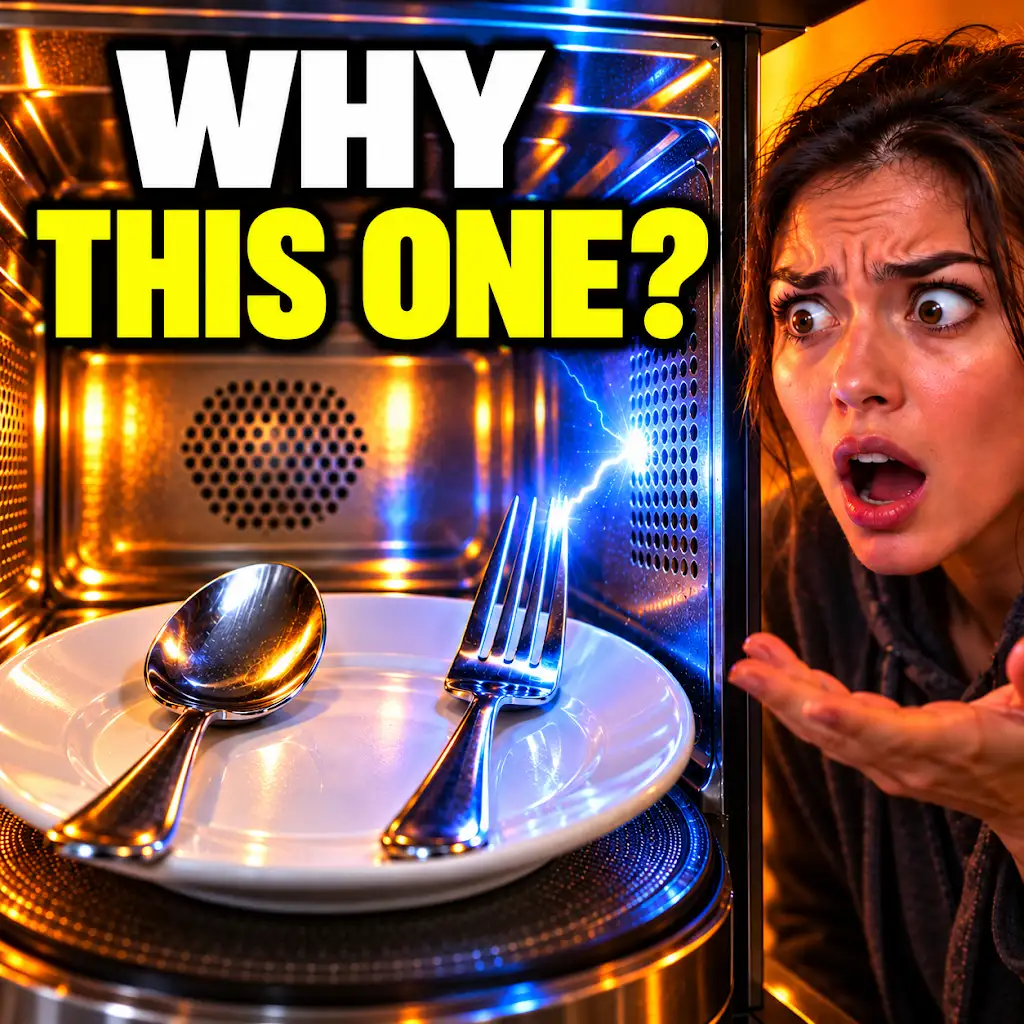
A Fork and a Spoon React Differently in a Microwave. Why?
FAQs
What is microwave radiation?
Microwave radiation is a type of electromagnetic radiation with wavelengths ranging from one meter to one millimeter. It is commonly used in microwave ovens to heat food.
How does microwave radiation heat food?
Microwave radiation heats food by causing water molecules within the food to vibrate, generating heat through friction. This process is known as dielectric heating.
Is microwave radiation harmful to humans?
Microwave radiation used in microwave ovens is non-ionizing, meaning it does not have enough energy to remove electrons from atoms or molecules, and is generally considered safe for heating food. However, exposure to high levels of microwave radiation can cause tissue heating and burns.
What safety precautions should be taken when using a microwave oven?
To ensure safety when using a microwave oven, it is important to follow the manufacturer’s instructions, use microwave-safe containers, and avoid heating certain materials such as metal or aluminum foil. It is also recommended to stand at a safe distance from the microwave oven while it is in use.
Can microwave radiation affect the nutritional value of food?
Microwave radiation can affect the nutritional value of food by causing some nutrients to break down when exposed to heat. However, because microwave cooking times are shorter and require less water, it can help to retain more nutrients compared to other cooking methods.