You probably use your microwave oven every day. It’s a convenient marvel of modern technology, capable of transforming cold leftovers into steaming meals in mere minutes. But have you ever stopped to wonder how it actually works? It’s not magic, though it certainly feels like it sometimes. It’s a fascinating application of physics, specifically the science of electromagnetism and how certain molecules interact with it. Understanding this process can demystify the everyday wonder that sits on your kitchen counter and even help you achieve better results when you heat your food.
Your microwave oven doesn’t generate heat in the traditional sense, like a stovetop burner or an oven element. Instead, it uses a specific type of electromagnetic radiation to excite the water molecules within your food, and it’s this molecular agitation that creates heat.
What Are Microwaves?
To grasp how your microwave works, you need to understand what microwaves are. They are a form of electromagnetic radiation, just like visible light, radio waves, and X-rays. The electromagnetic spectrum is a continuum of energy, and microwaves occupy a specific range within it.
The Electromagnetic Spectrum
Imagine a vast spectrum of waves, each with a different wavelength and frequency. Radio waves have long wavelengths and low frequencies, while gamma rays have very short wavelengths and high frequencies. Microwaves sit somewhere in the middle, with wavelengths typically ranging from about one millimeter to one meter, and frequencies generally between 300 megahertz (MHz) and 300 gigahertz (GHz). Your microwave oven specifically operates at a frequency of around 2.45 GHz. This particular frequency is chosen for a very good reason, as you’ll soon discover.
Wavelength and Frequency: The Key Characteristics
The wavelength of a wave is the distance between two consecutive crests or troughs. Frequency is the number of waves that pass a given point in one second. These two properties are inversely related: the shorter the wavelength, the higher the frequency, and vice versa. The 2.45 GHz frequency translates to a wavelength of approximately 12.2 centimeters, which is a crucial dimension in how the oven functions.
How Microwaves Are Generated
The heart of your microwave oven is a device called a magnetron. This ingenious component is responsible for generating the high-frequency microwaves that do the cooking.
The Magnetron: A Miniature Powerhouse
The magnetron is a vacuum tube that uses a combination of magnetic fields and electric fields to generate microwave radiation. Electrons are emitted from a heated cathode and are then influenced by these fields, causing them to spiral. This spiraling motion excites resonant cavities within the magnetron, producing high-power microwave radiation at the desired frequency. It’s a complex piece of engineering, but its output is the invisible force that heats your food.
The Waveguide: Directing the Energy
Once generated, the microwaves need to be channeled into the cooking cavity. This is the job of the waveguide, a hollow metal tube that efficiently directs the microwave energy from the magnetron to the oven’s interior. The dimensions of the waveguide are specifically designed to match the wavelength of the microwaves, ensuring minimal energy loss during transmission.
Microwave ovens have revolutionized the way we cook and heat food, utilizing electromagnetic radiation to excite water molecules within the food, leading to rapid heating. For a deeper understanding of the science behind this process, you can explore the article on Freaky Science that delves into the mechanisms of microwave heating and its effects on various food types. To read more, visit this article.
The Molecular Dance: Water is Key
The magic of microwave heating lies in its interaction with specific molecules within your food, primarily water. It’s not just about blasting everything with energy; it’s about how that energy causes certain molecules to vibrate and generate heat.
Dipolar Molecules and Their Behavior
Water molecules are polar, meaning they have a slight positive charge on one end and a slight negative charge on the other. This electrical imbalance makes them behave like tiny magnets.
Understanding Polarity
Think of a water molecule (H₂O) as having a bent shape. The oxygen atom is more electronegative than the hydrogen atoms, pulling electrons towards itself. This creates a partial negative charge around the oxygen atom and partial positive charges around the hydrogen atoms. This uneven distribution of charge is what makes water a polar molecule.
The Electric Field’s Influence
When microwaves, which are oscillating electromagnetic fields, enter the food, they interact with these polar molecules. The oscillating electric field causes the polar molecules to try and align themselves with the field. As the electric field rapidly switches direction (billions of times per second due to the high frequency), the water molecules frantically try to keep up, rotating back and forth.
Frictional Heating: The Source of Warmth
This rapid rotation of water molecules is not frictionless. As they spin and bump into each other, they create kinetic energy, which we perceive as heat.
Molecular Rotation and Vibration
The constant reorientation of water molecules creates significant internal friction. This friction causes the molecules to move faster and collide more vigorously. It’s this increased molecular motion and collision that raises the temperature of the food. Other polar molecules present in food, like fats and sugars, also contribute to heating, but water is the most significant player due to its abundance in most foods.
Why Water Heats So Effectively
The 2.45 GHz frequency of your microwave oven is particularly effective at agitating water molecules. This frequency is close to the resonant frequency of water molecules, meaning it efficiently transfers energy to them, causing them to vibrate more intensely than they would at other frequencies. This selective heating of water is what makes microwave cooking so rapid.
The Cooking Cavity: A Controlled Environment
The interior of your microwave oven isn’t just a metal box. It’s designed to ensure the microwaves are distributed effectively and that the energy is contained within the cooking space.
The Metal Walls: Reflecting Microwaves
The interior of a microwave oven is lined with metal. This is a crucial design element for containing and reflecting the microwave energy.
Faraday Cage Principle
The metal walls of the microwave oven act as a Faraday cage. This means they prevent the microwaves from escaping into the surrounding environment. Microwaves are electromagnetic waves, and the conductive metal surfaces reflect them, bouncing them back into the cooking cavity. This ensures that the energy is concentrated on the food.
Preventing Leakage
The reflective nature of the metal also prevents harmful microwave radiation from leaking out of the oven. While microwave leakage is a concern, modern ovens have rigorous safety standards and effective shielding to ensure minimal exposure.
The Turntable: Ensuring Even Heating
You’ve likely noticed the turntable in your microwave. Its presence is not just for aesthetics; it plays a vital role in achieving more uniform heating.
Standing Waves and Hot Spots
Because microwaves are waves, when they bounce around inside the metal cavity, they can interfere with each other. This interference can create areas of high energy (hot spots) and areas of low energy (cold spots), a phenomenon known as standing waves. Without a turntable, food placed in a cold spot would remain largely uncooked, while food in a hot spot could overcook.
Distributing the Energy
The turntable rotates the food, moving it through these areas of varying microwave intensity. This constant movement ensures that all parts of the food are exposed to roughly the same amount of microwave energy over time, leading to more even cooking. Some microwaves also have rotating antennas or stirrers to further improve distribution.
Beyond Water: Other Molecules and Heating

While water is the primary target for microwave heating, other molecules in your food can also absorb microwave energy, though typically to a lesser extent.
Fats and Sugars: Secondary Absorbers
Fats and sugars, like water, are also polar molecules and can absorb microwave energy. However, their absorption is generally less efficient than that of water.
Polarity of Fats and Sugars
Fats are complex molecules composed of glycerol and fatty acids. Many of these fatty acid chains have polar characteristics due to the presence of ester groups and the inherent polarity of carbon-oxygen bonds. Sugars, such as glucose and sucrose, also contain numerous hydroxyl (-OH) groups, which contribute to their polarity.
Contribution to Cooking
When microwaves interact with these molecules, they also cause them to vibrate and rotate, generating heat. This secondary heating mechanism can contribute to the overall cooking process, especially in foods with high fat or sugar content. It explains why some foods can become greasy or develop caramelized edges in a microwave.
The Role of Dielectric Properties
The way a substance interacts with an electric field is described by its dielectric properties. Different materials have different dielectric constants and loss factors.
Dielectric Constant
The dielectric constant (often denoted by ε’) indicates how well a material can store electrical energy when exposed to an electric field. Water has a relatively high dielectric constant, contributing to its efficient energy absorption.
Dielectric Loss Factor
The dielectric loss factor (often denoted by ε”) indicates how effectively a material absorbs electrical energy and converts it into heat. Again, water has a high dielectric loss factor at microwave frequencies, making it an excellent absorber. Fats and sugars also have dielectric loss factors, but generally lower than water.
Microwave ovens are fascinating devices that utilize electromagnetic radiation to heat food, but many people may not fully understand the science behind this process. For those interested in exploring the mechanics of how microwaves work and their impact on cooking, a related article can provide valuable insights. You can read more about this intriguing topic in the article on Freaky Science, which delves into the principles of microwave technology and its applications in everyday life.
Limitations and Best Practices: Optimizing Microwave Cooking
| Aspect | Explanation |
|---|---|
| Microwave radiation | Microwave ovens use electromagnetic radiation to heat food by causing water molecules in the food to vibrate, generating heat. |
| Penetration depth | Microwaves penetrate food and cause the water molecules to vibrate, heating the food from the inside out. |
| Uniform heating | Microwaves can heat food more evenly than traditional ovens, as they penetrate the food and heat it throughout. |
| Speed | Microwaves can heat food much faster than traditional ovens, due to the direct action on the water molecules. |
| Effect on nutrients | Microwaving food can preserve more nutrients compared to other cooking methods, as it requires less water and shorter cooking times. |
While incredibly convenient, microwave ovens aren’t perfect for every cooking task. Understanding their limitations can help you use them more effectively and safely.
Uneven Heating: The Persistent Challenge
Despite the turntable, some degree of uneven heating can still occur. Certain areas of food might absorb more energy than others.
Food Shape and Density
The shape and density of food play a significant role. Denser foods or foods with thicker parts may heat less evenly than thinner, more uniform items. For example, a dense potato might have a cold center while its edges are hot.
Stratification and Moisture Content
The distribution of moisture within food can also lead to uneven heating. Areas with higher moisture content will heat up faster. This is why some microwave cooking instructions suggest stirring or rotating food midway through the cooking process.
What Doesn’t Heat Well (or At All)
Not all materials are suitable for microwave ovens. Some materials can be damaged or pose safety risks.
Metals: A No-Go Zone
Never put metal in a microwave oven. Metal reflects microwaves, which can cause arcing (sparking) and potentially damage the magnetron or even start a fire. The reflected energy can also build up, creating dangerous electrical discharges.
Certain Plastics and Styrofoam
While many plastics are microwave-safe, some can melt or leach chemicals into your food when heated. Always look for the “microwave-safe” symbol. Similarly, styrofoam containers are generally not recommended for microwave use.
Tips for Better Microwave Cooking
To get the most out of your microwave, follow these simple tips:
Covering Your Food
Covering food helps to trap steam, which not only keeps the food moist but also distributes the heat more evenly. Use a microwave-safe lid, plastic wrap (vented), or a paper towel.
Stirring and Rotating
As mentioned, stirring or rotating food midway through cooking helps to break up hot spots and ensure more consistent heating. This is especially important for larger or denser items.
Arranging Food Appropriately
When heating multiple items, place them in a circle on the turntable, leaving a gap in the center. This allows microwaves to reach all items more effectively. Thicker parts of food should be placed towards the outside edge of the turntable.
Letting Food Stand
After microwaving, allow your food to stand for a minute or two. This “standing time” allows the heat to equalize throughout the food, completing the cooking process and reducing the risk of burnt mouths from superheated spots.
Using Appropriate Cookware
Always use cookware that is labeled “microwave-safe.” Glass, ceramic, and certain plastics are generally safe. Avoid metal, and be cautious with anything that has metallic trim or decorative elements.
By understanding the science behind how your microwave oven heats your food, you can move beyond simply pressing buttons and start to cook with greater intention and precision. It’s a testament to human ingenuity, transforming invisible waves into delicious, hot meals.
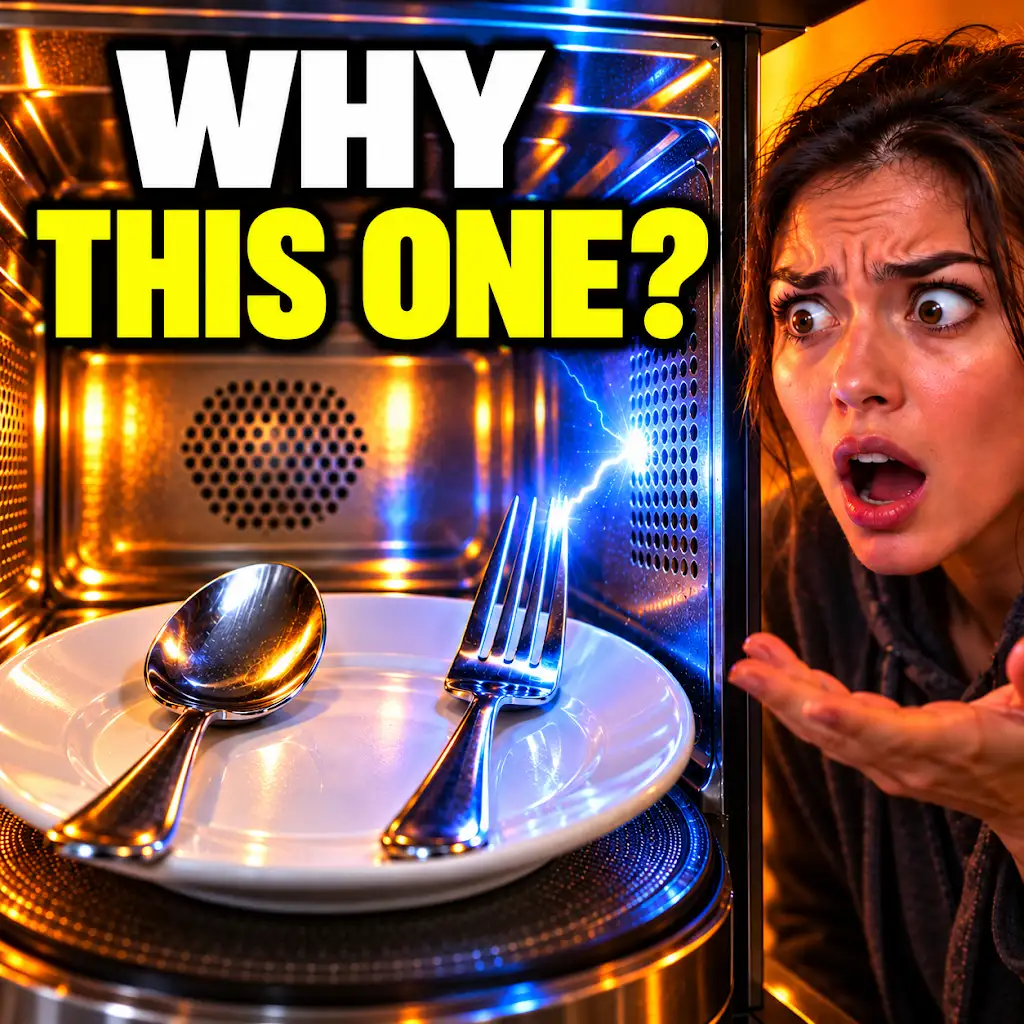
A Fork and a Spoon React Differently in a Microwave. Why?
FAQs
1. How do microwave ovens heat food?
Microwave ovens heat food by emitting microwave radiation, which causes water molecules in the food to vibrate and generate heat through friction.
2. Are microwave ovens safe for heating food?
Yes, microwave ovens are safe for heating food when used according to the manufacturer’s instructions. The radiation they emit is non-ionizing, meaning it does not have enough energy to damage DNA or cells in the body.
3. Can microwave ovens cause food to become radioactive?
No, microwave ovens cannot make food radioactive. The radiation they emit is not the same as nuclear radiation, and it does not make the food or the microwave itself radioactive.
4. What types of containers are safe to use in microwave ovens?
Microwave-safe containers are typically made of glass, ceramic, or certain types of plastic that are labeled as microwave-safe. Metal containers and containers with metal trim should not be used in microwave ovens.
5. How does the size and shape of food affect heating in a microwave oven?
The size and shape of food can affect how evenly it heats in a microwave oven. Larger or thicker pieces of food may require longer cooking times, and irregularly shaped foods may heat unevenly. It’s important to follow recommended cooking times and to stir or rearrange food as needed for even heating.